What Are the First Signs of PCOS? 8 Early Symptoms
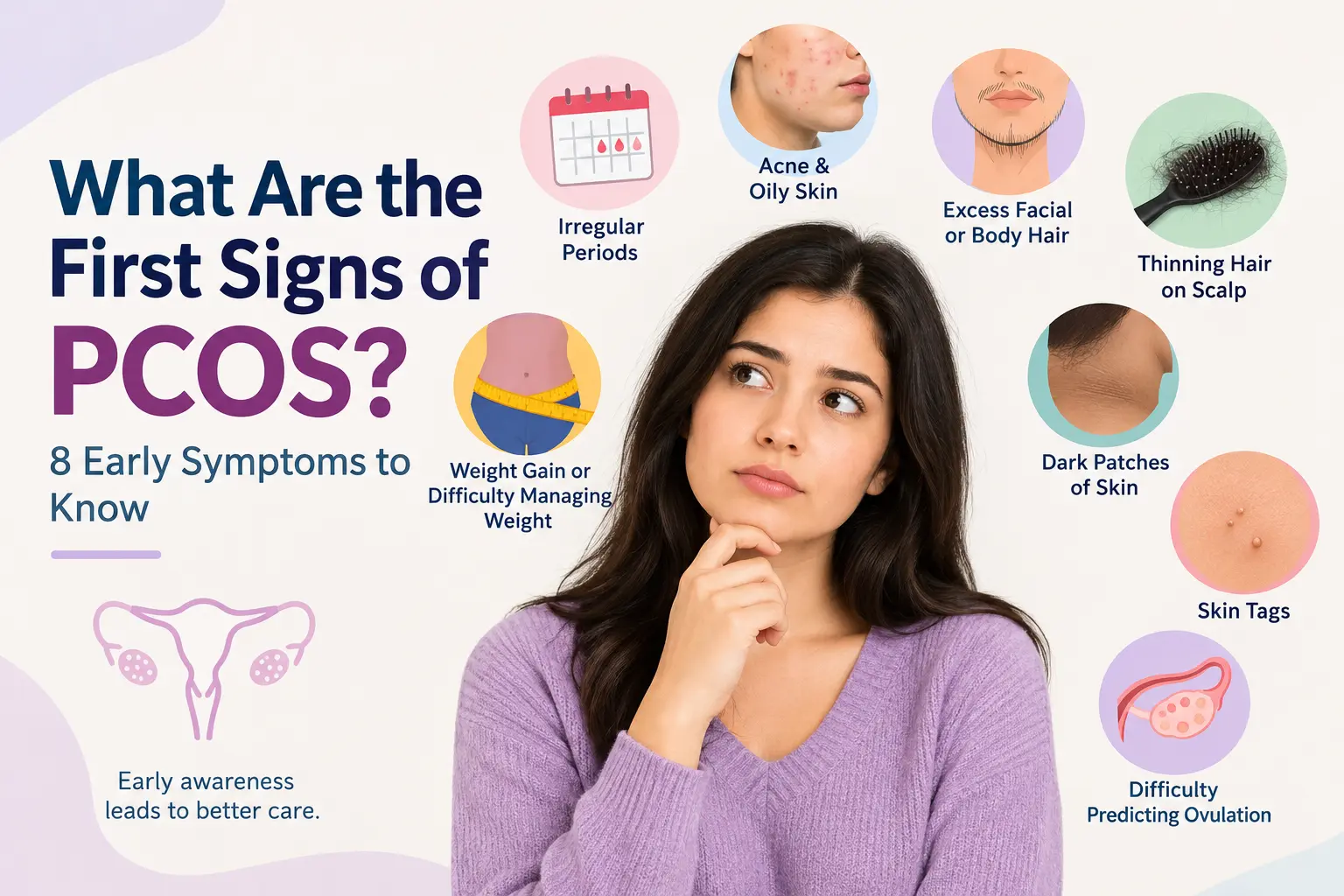
The first signs of polycystic ovary syndrome (PCOS) may include irregular periods, missed periods, persistent acne, excess facial hair, and thinning hair on the scalp. Some people also notice weight changes or dark patches of skin. However, the first signs of PCOS can vary from person to person. Not everyone has the same symptoms.
PCOS is a common hormonal condition that can affect menstrual cycles, skin, hair growth, and fertility. Some people notice symptoms during their teenage years. Others discover the condition later in adulthood.
If you notice ongoing changes in your periods, skin, or hair, speak with a healthcare professional. These symptoms do not always mean you have PCOS. A proper medical evaluation can help identify the cause.
Quick Answer: What Are the First Signs of PCOS?
The first signs of polycystic ovary syndrome (PCOS) may include irregular periods, persistent acne, excess facial hair, and thinning scalp hair. Some people also experience weight changes or darkened skin patches.
Symptoms vary from person to person. Having one or more of these signs does not confirm PCOS. A healthcare professional can assess your symptoms and determine whether testing is needed.
- Irregular or missed periods
- Persistent acne or oily skin
- Increased facial or body hair
- Thinning hair on the scalp
- Possible signs of insulin resistance, such as darkened, velvety skin
8 Early Signs and Symptoms of PCOS
At a Glance
PCOS can affect menstrual cycles, skin, hair growth, and metabolic health. This table summarizes possible signs and what they may mean.
| Possible sign | What you may notice | Important note |
|---|---|---|
| Irregular periods | Missed periods or long gaps between cycles | Other hormonal conditions can cause this too. |
| Acne | Persistent breakouts or oily skin | Acne alone does not diagnose PCOS. |
| Excess hair growth | Coarse hair on the chin, upper lip, or abdomen | New or rapid changes deserve medical assessment. |
| Scalp hair thinning | Gradual thinning around the crown or parting | Iron deficiency and thyroid problems can also cause hair loss. |
| Darkened skin | Thick, velvety patches around the neck or underarms | This can be associated with insulin resistance. |
| Ovulation changes | Unpredictable cycles or difficulty conceiving | A healthcare professional can assess possible causes. |
Remember: These signs can suggest a need for evaluation, but no single symptom or combination of symptoms confirms PCOS without an appropriate clinical assessment.
The early symptoms of PCOS can develop slowly or appear at different stages of life. Here are eight signs to know.
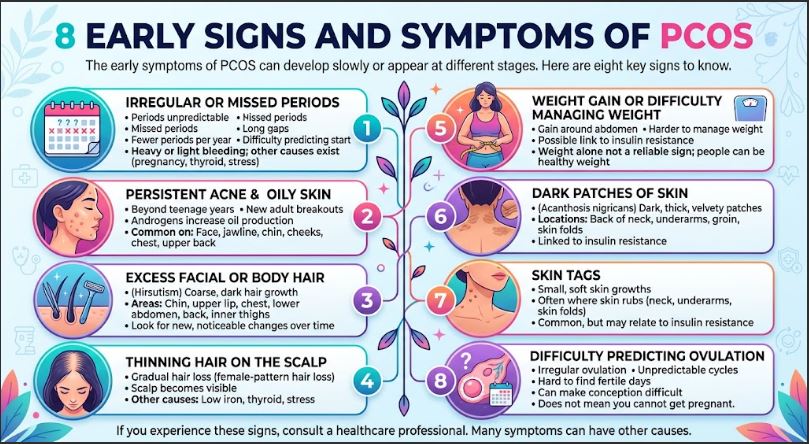
1. Irregular or Missed Periods
Irregular periods are one of the most common signs of PCOS. The condition can affect ovulation, which is the release of an egg from an ovary.
As a result, your menstrual cycle may become unpredictable. You might notice:
- Periods that come much earlier or later than expected.
- Missed periods.
- Fewer periods each year.
- Long gaps between menstrual cycles.
- Difficulty predicting when your next period will start.
Some people with PCOS have very light periods. Others may have heavy or prolonged bleeding after a long gap.
However, irregular periods can also result from pregnancy, thyroid problems, stress, or other hormonal changes. If your periods become irregular or stop, a healthcare professional can help find the cause.
2. Persistent Acne and Oily Skin
Acne can be another early sign of PCOS. Some people develop pimples that continue beyond their teenage years. Others notice new breakouts during adulthood.
PCOS can increase androgen activity. Androgens are hormones that are present in people of all sexes. Higher androgen levels or activity can increase oil production in the skin.
You may notice acne on your:
- Face and jawline.
- Chin and cheeks.
- Chest.
- Upper back.
Hormonal acne may be stubborn and return even after using regular skin care products.
Still, acne alone does not mean you have PCOS. Genetics, skin care products, and other hormonal changes can also cause breakouts.
3. Excess Facial or Body Hair
Excess hair growth is another possible sign of PCOS. Doctors call this condition hirsutism.
It happens when androgen levels or activity affect hair growth. You may notice coarse, dark hair in areas where this type of hair is less common in women.
These areas may include:
- The chin and upper lip.
- The chest.
- The lower abdomen.
- The back.
- The inner thighs.
Fine body hair is normal. The more important change is the growth of new, coarse hair or a noticeable increase in hair growth over time.
If facial or body hair increases alongside irregular periods or persistent acne, discuss these changes with your doctor.
4. Thinning Hair on the Scalp
PCOS can also affect the hair on your head. Higher androgen activity may cause gradual scalp hair thinning, sometimes called female-pattern hair loss.
You might notice that your hair becomes thinner around the crown or parting. Your scalp may also become more visible over time.
This type of hair loss usually develops gradually. It does not always cause complete baldness.
However, hair thinning has many possible causes. Low iron levels, thyroid disorders, stress, and other health conditions can also affect hair growth.
A doctor can help determine whether PCOS or another condition may be responsible.
5. Weight Gain or Difficulty Managing Weight
Some people with PCOS experience weight gain, particularly around the abdomen. Others find it harder to manage their weight than before.
Insulin resistance may play a role in some cases. Insulin helps move glucose from your blood into your cells. When your body does not respond to insulin as well as it should, your body may produce more of it.
Higher insulin levels can contribute to hormonal changes associated with PCOS.
However, you do not need to be overweight to have PCOS. People with a healthy weight or lower body weight can also develop this condition.
Weight gain alone is not a reliable sign of PCOS. A doctor will consider your menstrual history, other symptoms, and test results before making a diagnosis.
6. Dark Patches of Skin
Some people with PCOS develop dark, thick, or velvety patches of skin. This change is known as acanthosis nigricans.
These patches often appear around the:
- Back of the neck.
- Underarms.
- Groin.
- Skin folds.
This skin change can be linked to insulin resistance. It may occur in people with PCOS, but it is not specific to the condition.
Dark patches of skin do not confirm PCOS on their own. A healthcare professional can examine the affected areas and check for possible causes.
7. Skin Tags
Skin tags are small, soft growths that often appear where skin rubs together. They may develop around the neck, underarms, or other skin folds.
Some people with PCOS have skin tags, particularly when insulin resistance is also present.
However, skin tags are common and can occur without PCOS. Their presence alone is not a reason to assume you have a hormonal disorder.
If you notice skin tags alongside irregular periods, acne, or increased facial hair, mention these changes during a medical appointment.
8. Difficulty Predicting Ovulation
Ovulation is the process in which an ovary releases an egg. PCOS can interfere with this process.
When ovulation happens irregularly, your menstrual cycles may become unpredictable. You may also find it harder to identify your fertile days.
Some people discover they may have PCOS when they try to become pregnant. Irregular ovulation can make conception more difficult.
However, PCOS does not mean you cannot get pregnant. Many people with PCOS conceive naturally, while others benefit from medical treatment.
If you are trying to conceive and have irregular periods, speak with a healthcare professional about your options.
Key Takeaways About Early PCOS Symptoms
- Irregular or missed periods are common signs of PCOS, but they can have other causes.
- Persistent acne, excess facial hair, and scalp hair thinning may be linked to higher androgen activity.
- PCOS can affect people of all body sizes. Weight gain is not required for diagnosis.
- Not everyone with PCOS has ovarian cysts or experiences the same symptoms.
- Doctors assess symptoms, medical history, and appropriate tests to diagnose PCOS.
- Seek medical advice if menstrual changes or other possible symptoms persist.
What Are the First Signs of PCOS in Teenagers?
The first signs of PCOS in teenagers may include irregular menstrual cycles, persistent acne, and excess facial or body hair.
However, normal puberty can cause similar changes. Periods may be irregular during the first years after menstruation begins. Acne is also common during adolescence.
For this reason, doctors use special diagnostic considerations when evaluating teenagers for PCOS.
Symptoms that deserve medical attention include:
- Periods that remain very irregular beyond the expected changes of early puberty.
- Persistent or severe acne.
- Increasing coarse facial or body hair.
- Other symptoms that suggest excess androgen activity.
A single symptom is not enough to confirm PCOS in a teenager. A healthcare professional can assess the pattern of symptoms and decide whether further testing is needed.
Can You Have PCOS Without Irregular Periods?
Yes. Some people with PCOS have menstrual cycles that appear regular. However, regular periods do not always mean ovulation occurs consistently.
PCOS symptoms also vary widely. One person may have acne and excess facial hair. Another may mainly experience irregular ovulation or fertility problems.
For this reason, doctors consider several factors before making a diagnosis. These include menstrual patterns, signs of excess androgen activity, blood tests, and other possible causes.
You should not rule out PCOS based on one symptom alone. Likewise, having acne or irregular periods does not automatically mean you have it.
Can You Have PCOS at a Normal Weight?
Yes. PCOS can affect people of all body sizes.
Although weight gain and insulin resistance are common concerns for some people with PCOS, they are not required for diagnosis.
People at a normal weight may still experience irregular periods, excess facial hair, acne, or scalp hair thinning. Some may also have metabolic changes that need medical attention.
Your body weight alone cannot confirm or rule out PCOS. A doctor should assess your symptoms and medical history rather than relying on weight as the main indicator.
How Is PCOS Diagnosed?
PCOS Symptoms vs. Medical Diagnosis
| What you notice | What a doctor may assess |
|---|---|
| Irregular or missed periods | Whether ovulation is irregular or absent |
| Coarse facial hair or certain patterns of hair thinning | Clinical signs or blood-test evidence of excess androgen activity |
| Possible signs of hormonal or metabolic changes | Appropriate hormone tests and metabolic health checks |
| Possible ovarian changes | Ultrasound when needed for diagnosis |
Important: Symptoms alone cannot confirm PCOS. In adults, diagnosis commonly relies on at least two of three features after other causes are excluded: ovulatory dysfunction, androgen excess, and polycystic ovarian morphology when applicable. An ultrasound is not always necessary.
When Should You See a Doctor About Possible PCOS?
When Should You Get Medical Advice?
Consider booking an appointment with a healthcare professional if you notice:
- Repeatedly missed or very irregular periods.
- Persistent acne or new, increasing facial hair.
- Gradual scalp hair thinning.
- Difficulty becoming pregnant.
- Darkened, velvety patches of skin alongside other possible symptoms.
You do not need to have every symptom before seeking an evaluation. A doctor can review your menstrual history, assess other symptoms, and decide whether tests are appropriate.
Seek prompt medical assessment for rapid, significant changes such as a deepening voice or sudden increases in coarse facial or body hair. Seek urgent care for severe bleeding accompanied by fainting, severe pain, or other concerning symptoms.
Final Thoughts
The first signs of PCOS may include irregular periods, persistent acne, increased facial hair, scalp hair thinning, and other hormonal or metabolic changes. However, symptoms vary, and some people have only a few noticeable signs.
You cannot diagnose PCOS based on a symptom checklist alone. If you notice ongoing menstrual changes or other possible signs, speak with a healthcare professional. The right evaluation can help identify the cause and guide your next steps.
Medical note: This article is for educational purposes only. It does not replace professional medical advice, diagnosis, or treatment.