Why Am I Spotting on Birth Control After Years?

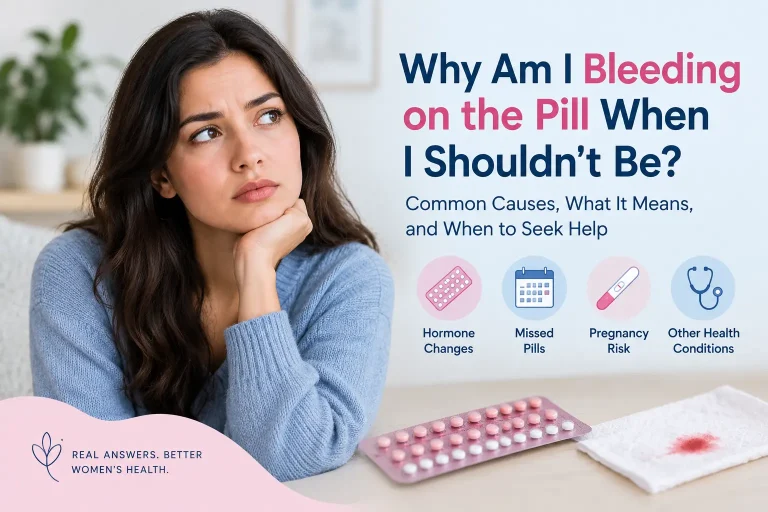
Spotting on birth control after years of regular use can be confusing. You may take your pill at the same time every day and still notice light bleeding between periods. This is called breakthrough bleeding. It can happen for several reasons, including missed doses, medication changes, hormonal changes, pregnancy, or an underlying health condition.
Spotting does not automatically mean your birth control has stopped working. However, new or persistent bleeding after years of stable use should not always be dismissed as a normal side effect. Understanding the possible causes can help you decide what to do next.
Why Am I Spotting on Birth Control After Years?
You may start spotting after years on birth control because something has changed in your medication routine, hormone levels, or reproductive health. Sometimes, there is no clear cause.
Hormonal birth control changes the lining of your uterus. These changes can sometimes lead to light, irregular bleeding. However, spotting that begins after years of predictable bleeding patterns deserves attention, especially if you have other symptoms.
Common reasons include:
- Missing pills or taking them late.
- Starting a new medicine or supplement.
- Vomiting or severe diarrhea that affects pill absorption.
- Taking active pills continuously without a break.
- Pregnancy.
- A sexually transmitted infection (STI).
- Cervical irritation, uterine fibroids, or polyps.
- Thyroid changes or other hormonal conditions.
The most likely explanation depends on your birth control method, recent changes, symptoms, and pregnancy risk.
9 Possible Reasons for Breakthrough Bleeding on Birth Control
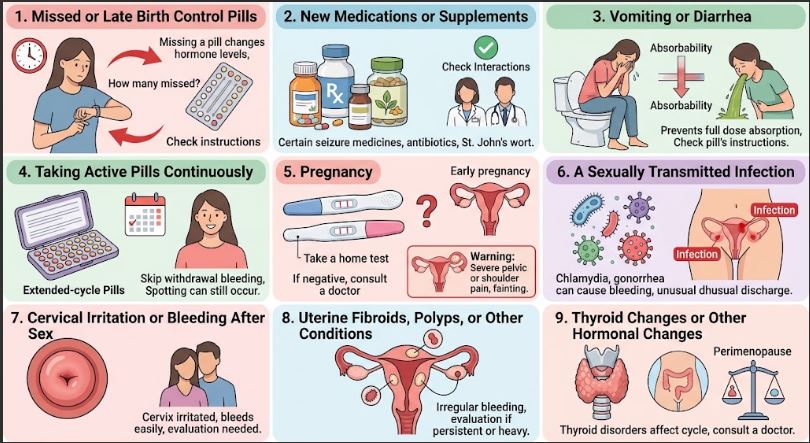
1. Missed or Late Birth Control Pills
Missing a pill or taking it later than recommended can change your hormone levels. This may cause spotting or breakthrough bleeding.
The risk depends on the type of pill and how many doses you missed. Progestin-only pills have different timing rules from combined birth control pills.
If you have missed pills, check the instructions for your specific product. You may need backup contraception, depending on the circumstances.
2. New Medications or Supplements
Some medicines can affect hormonal birth control. These include certain seizure medicines, some treatments for infections, and supplements such as St. John’s wort.
Not all antibiotics reduce birth control effectiveness. The risk depends on the specific medicine and contraceptive method.
Ask your pharmacist or healthcare professional to check for interactions when you start a new medicine or supplement. Do not stop a prescribed medicine on your own.
3. Vomiting or Diarrhea
Vomiting soon after taking a birth control pill may prevent your body from absorbing the full dose. Severe or prolonged diarrhea may also affect absorption.
This can sometimes contribute to spotting and may reduce pregnancy protection, depending on the timing and severity.
Check your pill’s instructions for what to do after vomiting or diarrhea. Use backup contraception if recommended.
4. Taking Active Pills Continuously
Some people take active birth control pills continuously to skip withdrawal bleeding. Others use an extended-cycle pill with fewer scheduled bleeding days.
Spotting can happen with these regimens, even after a period of stable use. It does not necessarily mean anything is wrong.
If bleeding becomes persistent, heavy, or painful, contact your healthcare professional. Do not change your pill schedule without checking the instructions or getting appropriate advice.
5. Pregnancy
Pregnancy is possible while using birth control, although the risk depends on the method and how consistently it is used.
Spotting alone cannot confirm or rule out pregnancy. Some people experience light bleeding during early pregnancy, while others have no bleeding at all.
Consider taking a home pregnancy test if pregnancy is possible. Follow the test instructions, and seek medical advice if the result is negative but you still suspect pregnancy.
Important: If you might be pregnant and have severe or one-sided pelvic pain, shoulder pain, fainting, or significant dizziness, seek urgent medical care. These symptoms can occur with an ectopic pregnancy, which requires prompt treatment.
6. A Sexually Transmitted Infection
Some sexually transmitted infections, including chlamydia and gonorrhea, can cause bleeding between periods or after sex.
Other possible symptoms include unusual vaginal discharge, pelvic discomfort, pain during sex, or burning when urinating. However, many STIs cause no noticeable symptoms.
If you have a possible exposure or new symptoms, ask a healthcare professional about testing. Do not assume that birth control is the cause of all unusual bleeding.
7. Cervical Irritation or Bleeding After Sex
Spotting after sex may occur because the cervix is irritated or bleeds easily. Cervical inflammation and certain infections can also cause this symptom.
Repeated bleeding after sex should be evaluated, even if it is light. A healthcare professional can check for cervical changes, infection, or other causes.
8. Uterine Fibroids, Polyps, or Other Conditions
Uterine fibroids and endometrial polyps can cause irregular bleeding. Other reproductive health conditions may also change your bleeding pattern.
Depending on your symptoms and medical history, a clinician may consider these causes when spotting begins after years of stable birth control use.
You may need further evaluation if bleeding keeps returning, becomes heavier, occurs after sex, or comes with pelvic pain.
9. Thyroid Changes or Other Hormonal Changes
Your thyroid helps regulate several body functions, including aspects of your menstrual cycle. Thyroid disorders can contribute to irregular bleeding.
Hormonal changes associated with perimenopause may also affect bleeding patterns, depending on your age and circumstances.
Your healthcare professional can decide whether blood tests or other checks are appropriate. Do not assume that a hormonal change is the cause without considering other possibilities.
Can You Have Breakthrough Bleeding While Taking Birth Control Correctly?
Yes. You can experience breakthrough bleeding even when you take your birth control correctly.
Hormonal contraception can affect the uterine lining in ways that sometimes cause spotting. Continuous pill use and some low-dose hormonal methods may also be associated with irregular bleeding.
However, correct use does not rule out every other cause. Pregnancy, an infection, or a new medical condition may still need consideration.
If spotting starts after years without problems, review any recent medication changes and new symptoms. If the bleeding persists or keeps returning, arrange a medical appointment.
Does Spotting on Birth Control Mean Pregnancy?
No. Spotting does not automatically mean you are pregnant.
Breakthrough bleeding is a known side effect of hormonal contraception. However, no birth control method is completely effective, so pregnancy remains possible.
Consider taking a pregnancy test if you have missed pills, had a contraceptive failure, or otherwise think pregnancy is possible. Follow the test’s timing instructions.
If you are unsure whether your contraception has protected you, ask a pharmacist or healthcare professional what steps to take. Depending on the circumstances, you may need emergency contraception or temporary backup protection.
Do not use the presence or absence of spotting to determine whether you are pregnant.
What Does Spotting on Birth Control Look Like?
Spotting is usually lighter than a regular period. It may appear as a few spots on your underwear, a small amount of blood when wiping, or light bleeding that does not require a regular pad.
The color may vary:
- Pink spotting: A small amount of blood mixed with vaginal fluid.
- Brown spotting: Blood that has taken longer to leave the body.
- Red spotting: Fresh blood that may appear as light bleeding.
Color alone cannot identify the cause. Pay attention to how much you bleed, how long it lasts, and whether you have pain, unusual discharge, or other symptoms.
If you also notice unusual tissue-like material during your period, read our guide to decidual casts during menstruation. Passing tissue is different from ordinary spotting and may need separate assessment.
How to Stop Breakthrough Bleeding on Birth Control
The right treatment depends on the cause. There is no single method that stops spotting for everyone.
Here are some steps that may help.
Take Your Birth Control as Directed
Take your pills according to the product instructions. If you use another contraceptive method, follow its recommended schedule and care instructions.
Do not double doses or change your pill schedule unless your product instructions or a healthcare professional advises you to do so.
Review New Medicines
Think about whether you recently started a prescription medicine, over-the-counter product, or supplement.
Ask a pharmacist to check for possible interactions. If a medicine affects your contraceptive method, you may need a different approach to pregnancy prevention.
Track Your Bleeding
Record when spotting begins, how long it lasts, and how heavy it is. Note missed pills, medication changes, sex-related bleeding, and other symptoms.
This information can help your healthcare professional identify patterns and decide whether further testing is needed.
Discuss Other Birth Control Options
If spotting continues or affects your daily life, your clinician may discuss a different pill formulation or contraceptive method.
Do not stop your current birth control without a plan for pregnancy prevention if you need it. Stopping may increase your risk of pregnancy.
Avoid Self-Treating Persistent Bleeding
Do not take extra hormones or other medicines to stop spotting without medical advice. Treatment depends on your medical history and the reason for the bleeding.
If spotting continues, returns frequently, or begins after years of stable use, arrange an evaluation.
When Should You See a Doctor About Spotting?
New spotting after years of stable birth control use is worth discussing with a healthcare professional, particularly if it persists or keeps returning.
Arrange a medical appointment if you notice:
- Repeated bleeding between periods.
- Bleeding after sex.
- New pelvic pain or painful sex.
- Unusual vaginal discharge or a possible STI exposure.
- Bleeding that becomes heavier than usual.
- Spotting with a possible pregnancy.
Seek urgent medical care if you have very heavy bleeding, severe pelvic pain, fainting, or significant dizziness. If pregnancy is possible, severe or one-sided pain and shoulder pain can be warning signs of an ectopic pregnancy.
Do not wait for a routine appointment if symptoms are severe or you feel faint.
How Will a Doctor Find the Cause of Spotting?
Your healthcare professional will ask about your birth control method, bleeding pattern, missed doses, medicines, and other symptoms.
Depending on your situation, the evaluation may include:
- A pregnancy test.
- A review of your medications and contraceptive use.
- STI testing when appropriate.
- A pelvic or cervical examination.
- Blood tests, such as thyroid testing, when indicated.
- An ultrasound or other tests if symptoms suggest an underlying condition.
Not everyone needs every test. Your symptoms, age, medical history, and examination findings help guide the next steps.
Taking care of your health also means paying attention to your surroundings and daily well-being. In the same way that unexpected symptoms deserve attention, household issues such as basement water buildup should not be ignored. If excess water is collecting in your basement, a professional sump pump repair service can help identify the cause and restore proper drainage.
Conclusion:
Spotting on birth control after years of stable use can happen for several reasons. Missed pills, medication changes, hormonal effects, pregnancy, infections, and other health conditions may all play a role.
Spotting alone does not mean your birth control has failed. However, new or persistent bleeding should not always be dismissed as normal. Review your contraceptive routine, consider pregnancy testing when appropriate, and speak with a healthcare professional if the bleeding continues or you have other symptoms.
Medical note: This article is for general education and does not replace individual medical advice. A qualified healthcare professional can help determine the cause of your bleeding and recommend appropriate care.