Why Am I Bleeding on the Pill When I Shouldn’t Be?
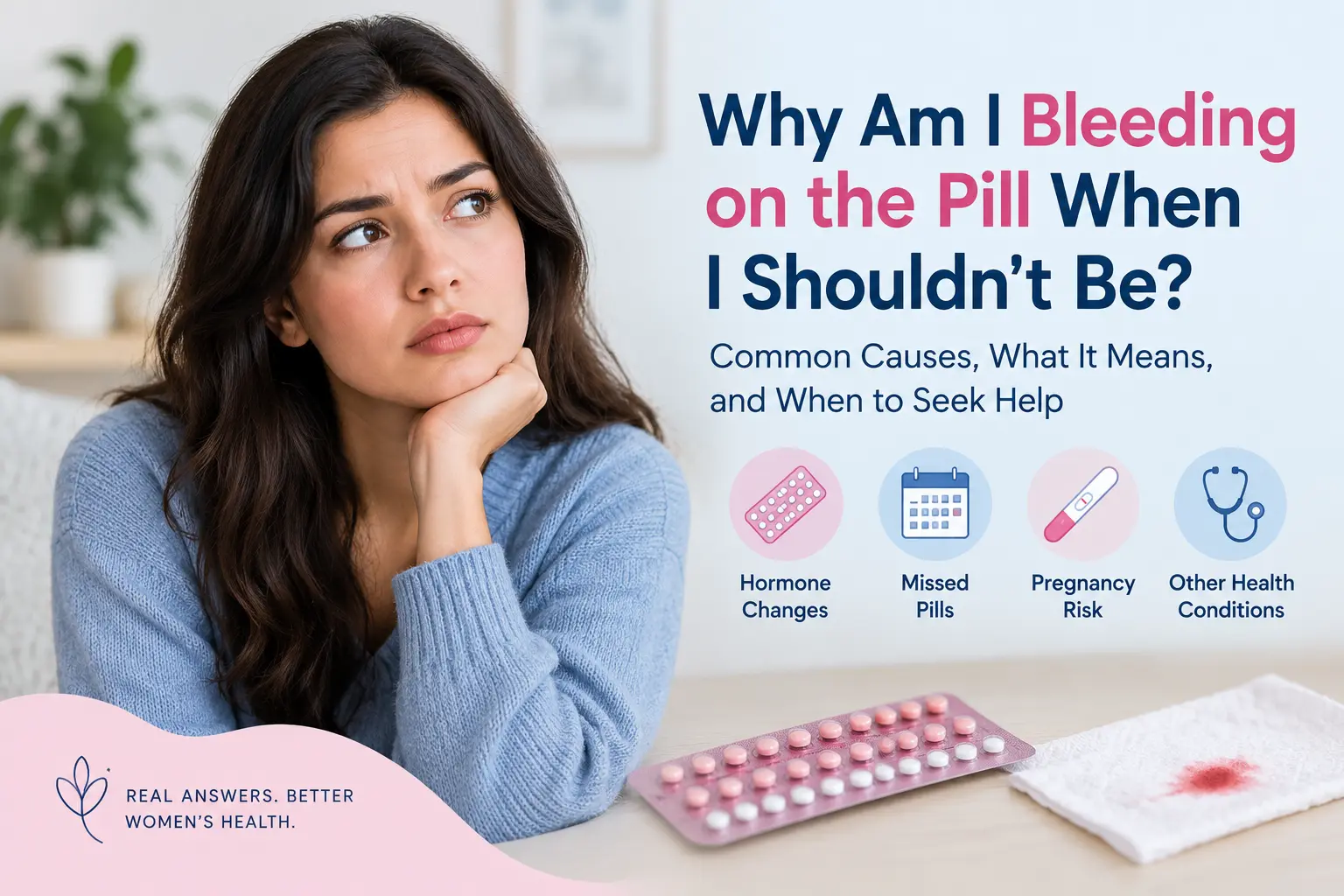
If you are bleeding while taking birth control pills, you may be experiencing breakthrough bleeding. This is spotting or bleeding that happens outside your expected period. It can occur even when you take your pill correctly.
Common causes include starting a new pill, missing a dose, taking pills continuously to skip periods, or using a low-dose birth control pill. In some cases, an infection, pregnancy, or another health condition may cause the bleeding.
Light spotting is often not a sign of a serious problem. However, bleeding alone cannot tell you whether your birth control is working. The amount of bleeding, your pill type, and how you take it all matter.
Key Takeaways
- Unexpected bleeding is often breakthrough bleeding. It can happen even when you take birth control pills correctly.
- Common causes include starting a new pill, missed doses, continuous pill use, and hormonal changes.
- Bleeding alone cannot tell you if you are pregnant. Take a pregnancy test when appropriate if pregnancy is possible.
- Do not change your pill schedule on your own. Follow your specific pill’s instructions or ask a pharmacist.
- Persistent, new, or worsening bleeding deserves attention. A healthcare professional can check for other causes.
Important: Seek urgent medical care for very heavy bleeding, severe pelvic pain, fainting, or possible pregnancy with severe pain or dizziness.
Why Am I Bleeding on the Pill When I Shouldn’t Be?
You may bleed while taking the pill because your body is adjusting to changes in hormone levels. Birth control pills contain hormones that affect your menstrual cycle and the lining of your uterus.
When hormone levels change, the uterine lining may become unstable and shed small amounts of blood. This can cause light spotting or bleeding before your expected period.
Common Causes of Bleeding on the Pill at a Glance
The timing of your bleeding and any recent changes can help you understand what may be happening.
| Possible cause | What you may notice | What to do |
|---|---|---|
| Starting or switching pills | Spotting during the first few months | Take your pill as directed and track the pattern. |
| Missed or late pills | Bleeding after a change in your dosing routine | Check your product’s missed-pill instructions. |
| Low-dose or progestin-only pill | Unpredictable spotting or irregular bleeding | Ask your clinician about persistent symptoms. |
| Continuous pill use | Spotting while skipping scheduled periods | Follow your prescribed schedule; do not add a break yourself. |
| Medicine or illness | Bleeding after starting a medicine, vomiting, or severe diarrhea | Ask a pharmacist whether contraceptive protection may be affected. |
| Pregnancy or another condition | Unexpected bleeding, sometimes with other symptoms | Consider pregnancy testing and seek medical advice when appropriate. |
Remember: These patterns are clues, not diagnoses. Bleeding color, timing, or amount alone cannot identify its cause or confirm that your birth control is working.
7 Common Causes of Breakthrough Bleeding on the Pill
1. Your Body Is Adjusting to a New Birth Control Pill
Spotting is common during the first few months after starting birth control pills. It may also happen when you switch to a different brand or formulation.
Your body needs time to adjust to the new hormone levels. During this period, you may notice light pink, red, or brown discharge.
For many people, the bleeding becomes less frequent with continued use. However, the adjustment period can vary.
What you can do: Take your pill as directed. Track your bleeding and any other symptoms. If the bleeding continues, becomes heavy, or worries you, talk with your healthcare professional.
2. You Missed a Pill or Took It Late
Missing a birth control pill is a common reason for breakthrough bleeding. Taking pills inconsistently can cause changes in hormone levels. This may lead to spotting between periods.
The effect of a missed pill depends on the type of birth control you use and how many doses you missed.
Missing active pills may also reduce pregnancy protection. This is especially important if you miss pills at the start of a new pack or extend the pill-free interval.
What you can do: Check the instructions for your specific pill. Follow its missed-dose guidance, and ask a pharmacist or healthcare professional if you are unsure whether you need condoms or emergency contraception.
Do not assume that spotting means your pill has stopped working. Likewise, do not assume that you are protected simply because you are still taking some pills.
3. You Take a Low-Dose or Progestin-Only Pill
Some birth control pills are more likely to cause irregular bleeding than others.
Low-dose combined pills contain lower amounts of estrogen than some other formulations. Progestin-only pills, sometimes called mini-pills, can also cause unpredictable bleeding.
With a progestin-only pill, you may experience light spotting, irregular bleeding, shorter bleeding episodes, or no period at all.
The exact pattern depends on the formulation and your body’s response.
What you can do: Continue following your prescribed schedule. If the bleeding is persistent or difficult to manage, your healthcare professional can discuss whether another formulation may suit you better.
Never change your dose on your own to control spotting.
4. You Are Taking Pills Continuously to Skip Your Period
Some people take birth control pills continuously or use an extended schedule to reduce or avoid monthly bleeding.
This can be a suitable option for many people. However, spotting may still occur, especially during the first few months.
Continuous use changes the usual hormone-free interval. Small changes in the uterine lining can lead to unexpected bleeding even when you take the pills correctly.
What you can do: Keep taking your pills according to your prescribed schedule. Do not add a break or stop active pills without checking the instructions for your specific regimen or speaking with your healthcare professional.
If breakthrough bleeding continues, your clinician can review safe options to manage it.
5. Another Medicine or Illness May Affect Your Pill
Certain medicines can interact with hormonal birth control. Some may reduce contraceptive effectiveness, while others may cause changes in bleeding.
Examples include certain medicines used to treat seizures, rifampin or rifabutin antibiotics, and some herbal products, such as St. John’s wort.
Not all antibiotics interfere with birth control pills. The specific medicine matters.
Severe vomiting or diarrhea may also affect how well your body absorbs an oral contraceptive.
What you can do: Tell your pharmacist or healthcare professional about all medicines and supplements you take. If you have been vomiting, have severe diarrhea, or have started a new medicine, ask whether you need additional pregnancy protection.
6. You Could Be Pregnant
Bleeding while taking birth control does not automatically mean you are pregnant. However, pregnancy can occur while using the pill, especially if doses were missed or other factors reduced its effectiveness.
Some people experience light bleeding in early pregnancy. But bleeding cannot confirm pregnancy, and it should not be used to rule it out.
Consider a pregnancy test if you missed pills, started a pack late, had sex when your contraceptive protection may have been reduced, or have other reasons to suspect pregnancy.
What you can do: Follow the pregnancy test instructions. If you do not know when your next period is due, a home pregnancy test is generally useful at least 21 days after the last sex that could have resulted in pregnancy.
If you had unprotected sex within the past five days and your pill protection may have been reduced, seek prompt advice about emergency contraception. Options and timing matter.
Seek emergency care if you may be pregnant and have severe or one-sided pelvic pain, shoulder pain, fainting, or significant dizziness. These can be warning signs of an ectopic pregnancy.
7. Another Health Condition May Be Causing the Bleeding
Not all unexpected bleeding comes from birth control pills.
Other possible causes include:
- Cervical irritation: The cervix may bleed after sex or an examination.
- Sexually transmitted infections: Infections such as chlamydia can cause bleeding between periods or after sex.
- Uterine fibroids or polyps: These growths can cause irregular or heavy bleeding.
- Thyroid problems: Changes in thyroid function can affect menstrual patterns.
- Other reproductive health conditions: Some conditions involving the uterus or cervix can cause unusual bleeding.
These conditions cannot be diagnosed from spotting alone.
What you can do: Arrange a medical assessment if bleeding starts after months of stable pill use, keeps returning, occurs after sex, or comes with pelvic pain, fever, or unusual discharge.
Your healthcare professional may recommend a pregnancy test, infection testing, an examination, or other tests based on your symptoms.
Does Breakthrough Bleeding Mean Your Birth Control Is Not Working?
No. Breakthrough bleeding does not automatically mean your birth control has stopped working.
Spotting can happen even when you take your pills correctly. It is a known side effect of hormonal contraception.
However, bleeding alone cannot confirm that you are protected against pregnancy.
Your level of protection depends on factors such as:
- Whether you missed any active pills.
- Whether you started your pack on time.
- Which type of pill you use.
- Whether another medicine affects your contraception.
- Whether vomiting or severe diarrhea affected pill absorption.
If you have missed pills, follow the instructions for your exact product. Some pills have stricter timing rules than others.
For example, missed-dose guidance differs between combined pills and progestin-only pills. You may need condoms for a period of time or emergency contraception, depending on your situation.
For more information, read the CDC’s guidance on combined hormonal contraceptives and progestin-only pills.
Can You Be Pregnant If You Are Bleeding on the Pill?
Yes, pregnancy is possible while taking birth control pills. However, bleeding does not mean that pregnancy has occurred.
Breakthrough bleeding can happen because of normal hormone changes. Early pregnancy can also involve bleeding, so the symptoms may overlap.
Consider taking a pregnancy test if:
- You missed pills and had sex during a time when protection may have been reduced.
- You started a new pack late.
- You have pregnancy symptoms or other reasons to suspect pregnancy.
- Your expected bleeding pattern has changed and pregnancy is possible.
If you are unsure when to test, a home pregnancy test is generally appropriate at least 21 days after the last sex that could have resulted in pregnancy.
If you test too early, the result may be negative even if you are pregnant. Repeat the test at the appropriate time if needed.
Do not stop or change your birth control schedule based only on spotting. If you receive a positive pregnancy test, contact a healthcare professional for advice.
How Long Does Breakthrough Bleeding Last?
Breakthrough bleeding may last a short time or occur on and off for several weeks. The duration depends on the pill, how long you have been taking it, and the cause of the bleeding.
It is more common during the first few months after starting or changing hormonal contraception. Spotting may also happen when you take pills continuously to skip periods.
There is no single timeline that applies to everyone.
Consider speaking with a healthcare professional if:
- Bleeding continues beyond the initial adjustment period.
- Spotting keeps returning after your periods were stable.
- Bleeding becomes heavier or lasts longer than usual.
- You develop pain, fever, unusual discharge, or other new symptoms.
- The bleeding affects your daily life or causes concern.
You do not have to wait several months for help if the bleeding is heavy, painful, or difficult to manage.
How Can You Manage Bleeding While Taking the Pill?
The right approach depends on the cause. These steps may help you manage breakthrough bleeding safely.
Take Your Pill as Directed
Try to take your pill according to its prescribed schedule. Use a phone reminder or pill-tracking app if you often forget doses.
If you miss a pill, follow the instructions for your specific product rather than guessing.
Track Your Bleeding
Record when the bleeding begins and ends. Note whether it is light spotting or heavier bleeding.
Also record missed pills, new medicines, pain, and other symptoms. This information can help your healthcare professional identify possible causes.
Review New Medicines
If the bleeding starts after you begin a new medicine or supplement, ask a pharmacist whether it could affect your contraception.
Do not stop a prescribed medicine without medical advice.
Discuss Your Pill Options
If breakthrough bleeding continues, your clinician may review your pill type, dosing schedule, and medical history.
Depending on the cause, they may suggest another formulation or a different contraceptive method. They may also check for pregnancy, infection, or another health condition.
Do not take extra hormones or change your pill schedule on your own to stop the bleeding.
When Should You Worry About Bleeding on Birth Control?
Light spotting is often not an emergency. However, some symptoms need prompt medical attention.
Seek emergency care if you experience:
- Very heavy bleeding, such as soaking through a pad or tampon every hour for two consecutive hours.
- Severe abdominal or pelvic pain.
- Fainting, severe dizziness, or signs of significant blood loss.
- Possible pregnancy with severe or one-sided pelvic pain, shoulder pain, or faintness.
Heavy bleeding with shortness of breath, chest pain, or marked weakness also needs urgent assessment.
Arrange a medical appointment if:
- Bleeding persists or repeatedly returns.
- You bleed after sex.
- You have fever or unusual vaginal discharge.
- Your bleeding pattern changes after months of stable pill use.
- You have ongoing pain or other symptoms that concern you.
Your healthcare professional can help determine whether the bleeding is a side effect or a sign of another condition.
The Bottom Line
Bleeding on the pill when you are not expecting your period is often breakthrough bleeding. It may occur when you start a new pill, miss a dose, take pills continuously, or use a formulation that causes irregular spotting.
Bleeding does not automatically mean your birth control has failed, but it cannot rule out pregnancy either. Follow your pill’s instructions, consider a pregnancy test when appropriate, and seek medical advice if bleeding persists, becomes heavy, or occurs with other symptoms.
If you experience severe pain, fainting, or very heavy bleeding, seek urgent medical care.
Medical disclaimer: This article is for general education and does not replace personal medical advice, diagnosis, or treatment. Consult a qualified healthcare professional about persistent, unusual, or concerning bleeding.