Maximum Delay in Periods If Not Pregnant: What’s Normal?
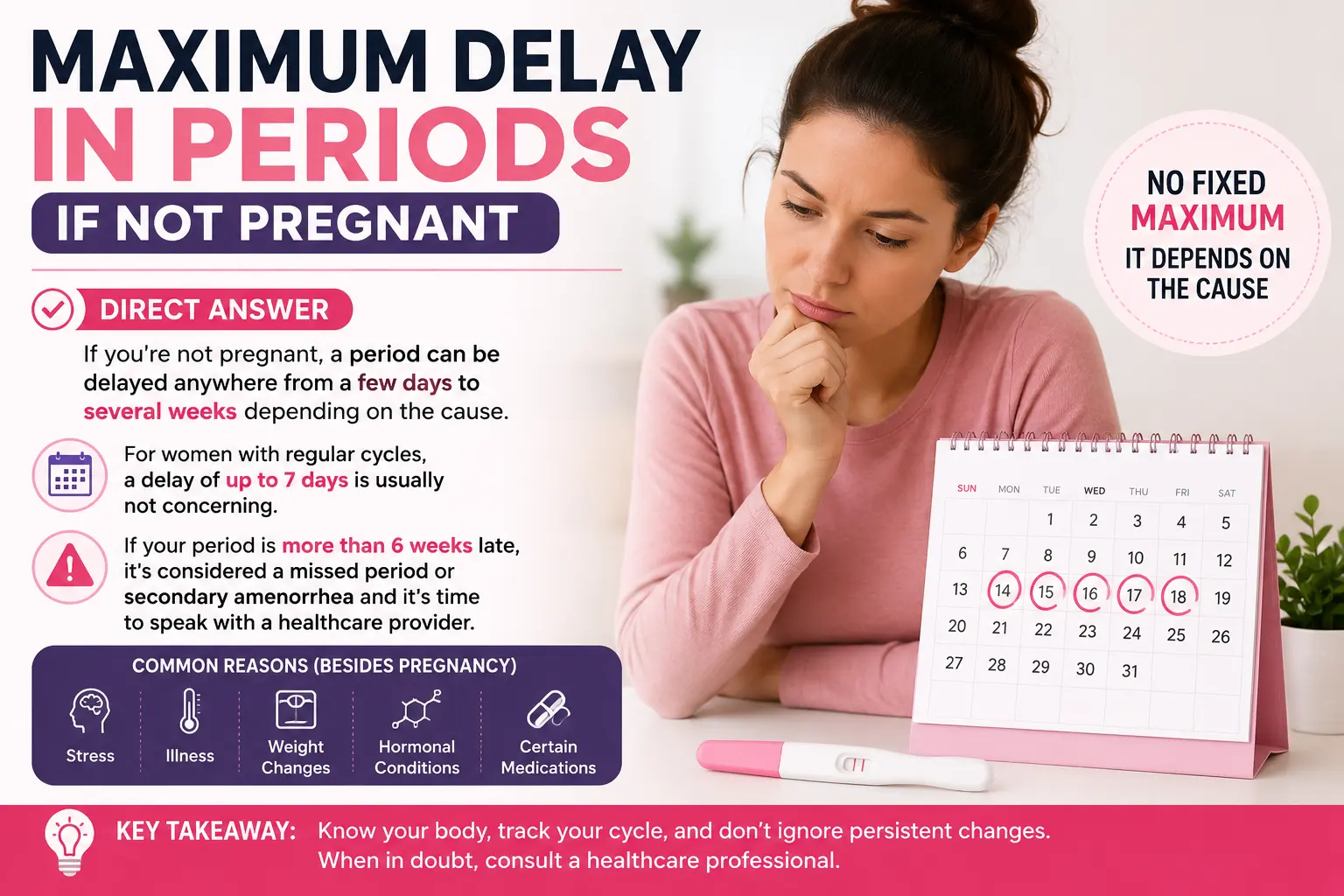
If you’re not pregnant, a period can be delayed by anywhere from a few days to several weeks, depending on the underlying cause. For people with regular menstrual cycles, a delay of up to 7 days is often considered within the normal range. If your period is more than 6 weeks late, or you repeatedly miss periods after pregnancy has been ruled out, it’s important to speak with a healthcare provider to identify the cause. Common reasons for delayed periods include stress, illness, significant weight changes, hormonal conditions such as PCOS or thyroid disorders, intense exercise, and certain medications.
The good news is that a late period is not always a sign of a serious health problem. Still, understanding the cause can help you decide whether you should wait or speak with a healthcare provider.
In this guide, you’ll learn what causes delayed periods, how long a delay can be normal, when to take a pregnancy test, and when it’s time to seek medical advice.
What Is a Normal Menstrual Cycle?
Before discussing delayed periods, it’s helpful to understand what a normal menstrual cycle looks like.
A menstrual cycle starts on the first day of your period and ends the day before your next period begins. While many people think every cycle lasts 28 days, that is only an average.
For most adults, a healthy menstrual cycle lasts between 21 and 35 days. Teenagers may have cycles that range from 21 to 45 days because their hormones are still developing.
It is also normal for your cycle to vary by a few days from month to month. For example, one month your period may arrive on day 28, while the next month it may start on day 31.
Small changes like these are usually nothing to worry about.
Normal Menstrual Cycle at a Glance
| Cycle Length | What It Means |
|---|---|
| 21–35 days | Normal for most adults |
| 21–45 days | Normal for teenagers |
| 1–7 days late | Often a normal variation |
| More than 6 weeks late | Considered a missed period |
What Is the Maximum Delay in Periods If Not Pregnant?
There is no fixed maximum delay that applies to every woman. Your menstrual cycle is controlled by hormones. If those hormones change, your period can arrive later than expected.
For someone with regular periods, a delay of up to one week is often considered normal. Beyond that, the cause becomes more important than the number of days.
For example:
- A stressful month may delay your period by one or two weeks.
- A severe illness may delay it for several weeks.
- Hormonal conditions such as PCOS can cause periods to become irregular or disappear for months.
- Breastfeeding may stop periods for several months after childbirth.
This is why doctors focus on why your period is late, not just how late it is.
How Long Can a Late Period Be?
The table below shows what different delays may mean.
| Delay | What It Usually Means |
|---|---|
| 1–3 days | Normal variation |
| 4–7 days | Still common for many women |
| 1–2 weeks | Often linked to stress, illness, or delayed ovulation |
| 3–6 weeks | Missed period that should be evaluated |
| More than 3 months | May indicate secondary amenorrhea and requires medical assessment |
Remember that everyone’s body is different. One late period does not always mean something is wrong.
Why There Is No Fixed Maximum Delay
Many articles simply give a number, but that can be misleading.
Your period only begins after ovulation takes place. If ovulation happens later than usual, your period will also arrive later.
In some months, your body may not release an egg at all. This is called anovulation. Without ovulation, your period may be delayed for weeks or even skipped.
Think of your menstrual cycle like a schedule.
If the first event starts late, everything else moves later too.
This is why doctors often say a delayed period is really a delayed ovulation problem rather than a delayed period problem.
The Most Common Causes of Delayed Periods Besides Pregnancy
The infographic below summarizes the eight most common reasons your period may be late even when you are not pregnant.
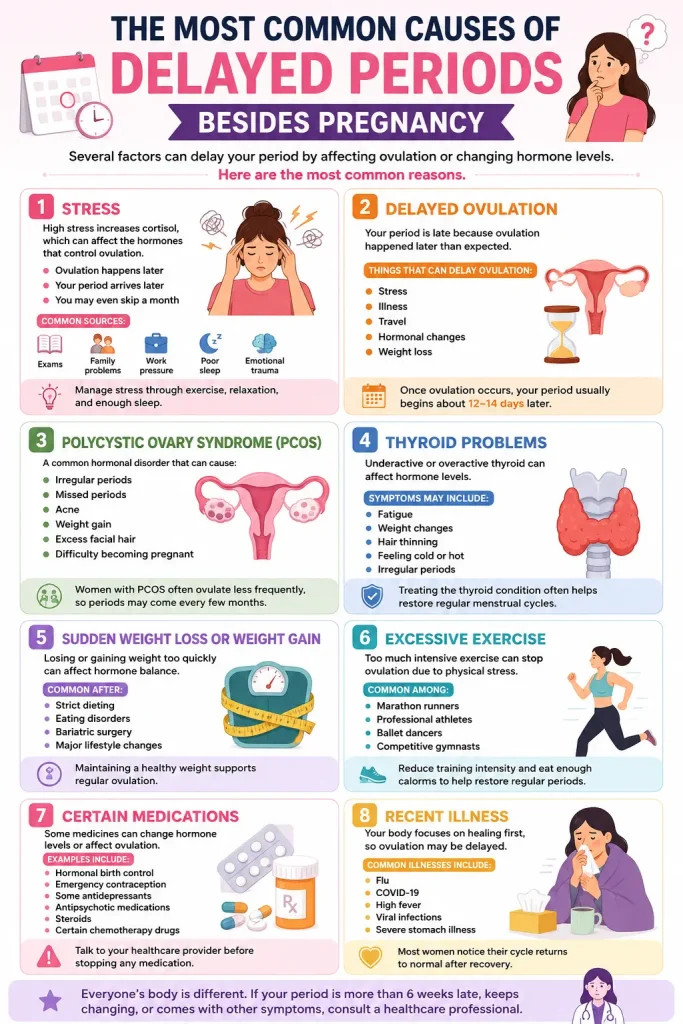
Pregnancy is the first thing many people think about. However, it is far from the only reason for a late period.
Let’s look at the most common causes.
1. Stress
Stress is one of the biggest reasons periods arrive late.
When you experience emotional or physical stress, your body produces more cortisol, the stress hormone.
High cortisol levels can affect the hormones that control ovulation.
As a result:
- Ovulation happens later.
- Your period arrives later.
- Sometimes your period may skip an entire month.
Common sources of stress include:
- Exams
- Family problems
- Work pressure
- Poor sleep
- Emotional trauma
Managing stress through exercise, relaxation, and enough sleep may help your cycle return to normal.
2. Delayed Ovulation
Many women believe their period simply “decided to be late.”
That is not usually what happens.
In most cases, your period is late because ovulation happened later than expected.
Several things can delay ovulation, including:
- Stress
- Illness
- Travel
- Hormonal changes
- Weight loss
Once ovulation occurs, your period usually begins about 12 to 14 days later.
3. Polycystic Ovary Syndrome (PCOS)
PCOS is one of the most common hormonal disorders in women of reproductive age.
It can cause:
- Irregular periods
- Missed periods
- Acne
- Weight gain
- Excess facial hair
- Difficulty becoming pregnant
Women with PCOS often ovulate less frequently, which explains why their periods may come every few months instead of every month.
4. Thyroid Problems
Your thyroid gland helps regulate many body functions, including your menstrual cycle.
Both an underactive thyroid and an overactive thyroid can affect hormone levels.
Symptoms may include:
- Fatigue
- Weight changes
- Hair thinning
- Feeling cold or hot
- Irregular periods
Treating the thyroid condition often helps restore regular menstrual cycles.
5. Sudden Weight Loss or Weight Gain
Your body needs enough energy to produce reproductive hormones.
Losing weight very quickly or gaining a large amount of weight in a short time can affect those hormones.
This is common after:
- Strict dieting
- Eating disorders
- Bariatric surgery
- Major lifestyle changes
Maintaining a healthy weight supports regular ovulation.
6. Excessive Exercise
Exercise is healthy, but too much can disrupt your menstrual cycle.
Women who train intensely every day may stop ovulating because their bodies are under physical stress.
This is especially common among:
- Marathon runners
- Professional athletes
- Ballet dancers
- Competitive gymnasts
Reducing training intensity and eating enough calories often helps restore regular periods.
7. Certain Medications
Some medicines can change hormone levels or affect ovulation.
Examples include:
- Hormonal birth control
- Emergency contraception
- Some antidepressants
- Antipsychotic medications
- Steroids
- Certain chemotherapy drugs
If your period changed after starting a new medication, speak with your healthcare provider before stopping it.
8. Recent Illness
Even a short illness can delay your period.
Your body focuses on healing first. During that time, ovulation may happen later than usual.
Common illnesses linked to delayed periods include:
- Flu
- COVID-19
- High fever
- Viral infections
- Severe stomach illness
Most women notice their cycle returns to normal after recovery.
Late Period but Negative Pregnancy Test: What Does It Mean?
Many women take a pregnancy test as soon as their period is late.
If the result is negative, they often wonder what happened.
A negative pregnancy test can mean several things.
You tested too early.
Your body may not have produced enough pregnancy hormone (hCG) yet.
Ovulation happened later than expected.
If ovulation was delayed, implantation and hormone production also happen later.
Pregnancy is not the cause.
Stress, illness, PCOS, thyroid disorders, or lifestyle changes may be responsible instead.
If your period still has not started after one week, consider taking another pregnancy test using your first morning urine. If the test remains negative and your period does not return, contact your healthcare provider for further evaluation.
Symptoms That May Explain a Delayed Period
A late period often comes with other symptoms. These signs can provide clues about what is happening in your body. However, they cannot confirm a diagnosis on their own.
Use the table below as a general guide.
| Symptom Along With a Late Period | Possible Cause |
|---|---|
| Mild cramps but no bleeding | Period may start soon or delayed ovulation |
| Breast tenderness | PMS, pregnancy, or hormonal changes |
| Acne and oily skin | PCOS or hormone imbalance |
| Weight gain and unwanted hair growth | PCOS |
| Fatigue and feeling cold | Underactive thyroid |
| Hot flashes and night sweats | Perimenopause |
| Severe pelvic pain | Ovarian cyst or another medical condition |
| Recent weight loss | Low body fat or nutritional deficiency |
| Increased stress or anxiety | Stress-related hormone changes |
| Fever and unusual discharge | Possible infection that needs medical care |
Keep in mind that the same symptom can have more than one cause. If your symptoms are severe or continue for several weeks, schedule an appointment with your healthcare provider.
When Should You Take a Pregnancy Test?
Even if you think pregnancy is unlikely, taking a pregnancy test is often the first step when your period is late.
Most home pregnancy tests are most accurate after the first day of a missed period. Testing too early may produce a false-negative result because your body has not made enough human chorionic gonadotropin (hCG) yet.
Follow these simple steps:
- Wait until your period is late.
- Use your first morning urine if possible.
- Follow the instructions carefully.
- If the test is negative but your period does not start, repeat the test in 48 to 72 hours.
If you continue to have negative tests and still do not get your period, it is time to speak with a healthcare provider.
When Should You See a Doctor?
An occasional late period is common. However, some situations need medical attention.
Make an appointment if:
- Your period is more than 6 weeks late and you are not pregnant.
- You miss three periods in a row.
- Your periods suddenly become very irregular.
- You have severe acne or excess facial hair.
- Your periods are very heavy or very painful.
- You have symptoms of thyroid disease.
- You are trying to become pregnant and your cycles remain irregular.
Getting an early evaluation can help identify conditions such as PCOS, thyroid disorders, or hormone imbalances before they become more serious.
When Is a Late Period an Emergency?
Most delayed periods are not emergencies. However, some symptoms should never be ignored.
Seek immediate medical care if you have a late period along with:
- Severe or sudden pelvic pain
- Heavy vaginal bleeding that soaks through pads every hour
- Fainting or dizziness
- High fever
- A positive pregnancy test with one-sided abdominal pain
- Shoulder pain along with a positive pregnancy test
These symptoms could point to an ectopic pregnancy, severe infection, or another urgent medical condition.
Natural Ways to Support a Healthy Menstrual Cycle
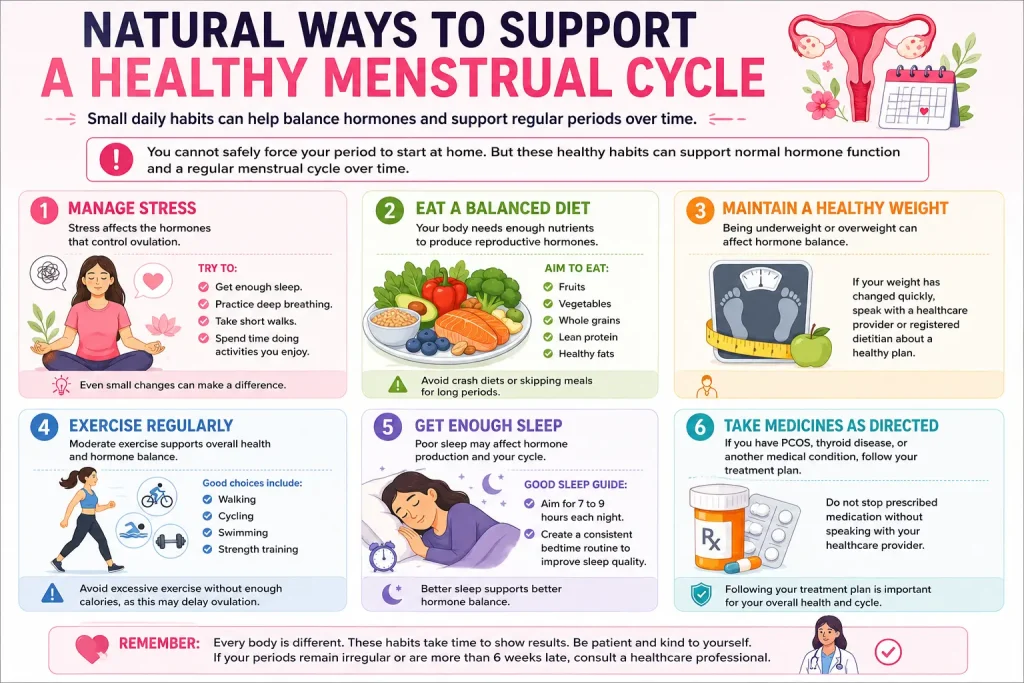
You cannot safely force your period to start at home. However, healthy habits can support normal hormone function and regular menstrual cycles over time.
Manage Stress
Stress affects the hormones that control ovulation.
Try to:
- Get enough sleep.
- Practice deep breathing.
- Take short walks.
- Spend time doing activities you enjoy.
Even small changes can make a difference.
Eat a Balanced Diet
Your body needs enough nutrients to produce reproductive hormones.
Aim to eat:
- Fruits
- Vegetables
- Whole grains
- Lean protein
- Healthy fats
Avoid crash diets or skipping meals for long periods.
Maintain a Healthy Weight
Being underweight or overweight can affect hormone balance.
If your weight has changed quickly, speak with a healthcare provider or registered dietitian about a healthy plan.
Exercise Regularly
Moderate exercise supports overall health.
Walking, cycling, swimming, and strength training are all good choices.
However, avoid excessive exercise without enough calories, as this may delay ovulation.
Get Enough Sleep
Poor sleep may affect hormone production.
Most adults should aim for 7 to 9 hours of sleep each night.
Creating a consistent bedtime routine may also improve sleep quality.
Take Medicines as Directed
If you have PCOS, thyroid disease, or another medical condition, follow your treatment plan.
Do not stop prescribed medication without speaking with your healthcare provider.
Key Takeaways
A late period can be frustrating, but it does not always mean you are pregnant. For many women, a delay of up to one week is a normal part of menstrual cycle variation. Stress, illness, weight changes, delayed ovulation, PCOS, thyroid disorders, and certain medications are all common reasons why a period may arrive later than expected.
The most important thing is to look at the whole picture, not just the number of days your period is late. Pay attention to other symptoms, take a pregnancy test if needed, and seek medical advice if your period is more than six weeks late, you miss several periods in a row, or you develop severe pain or heavy bleeding.
Knowing what is normal for your body makes it easier to recognize when something has changed. If you are ever unsure about a delayed period, speaking with a qualified healthcare provider is the safest way to get answers and peace of mind.