What Does Spotting Look Like Pregnancy?
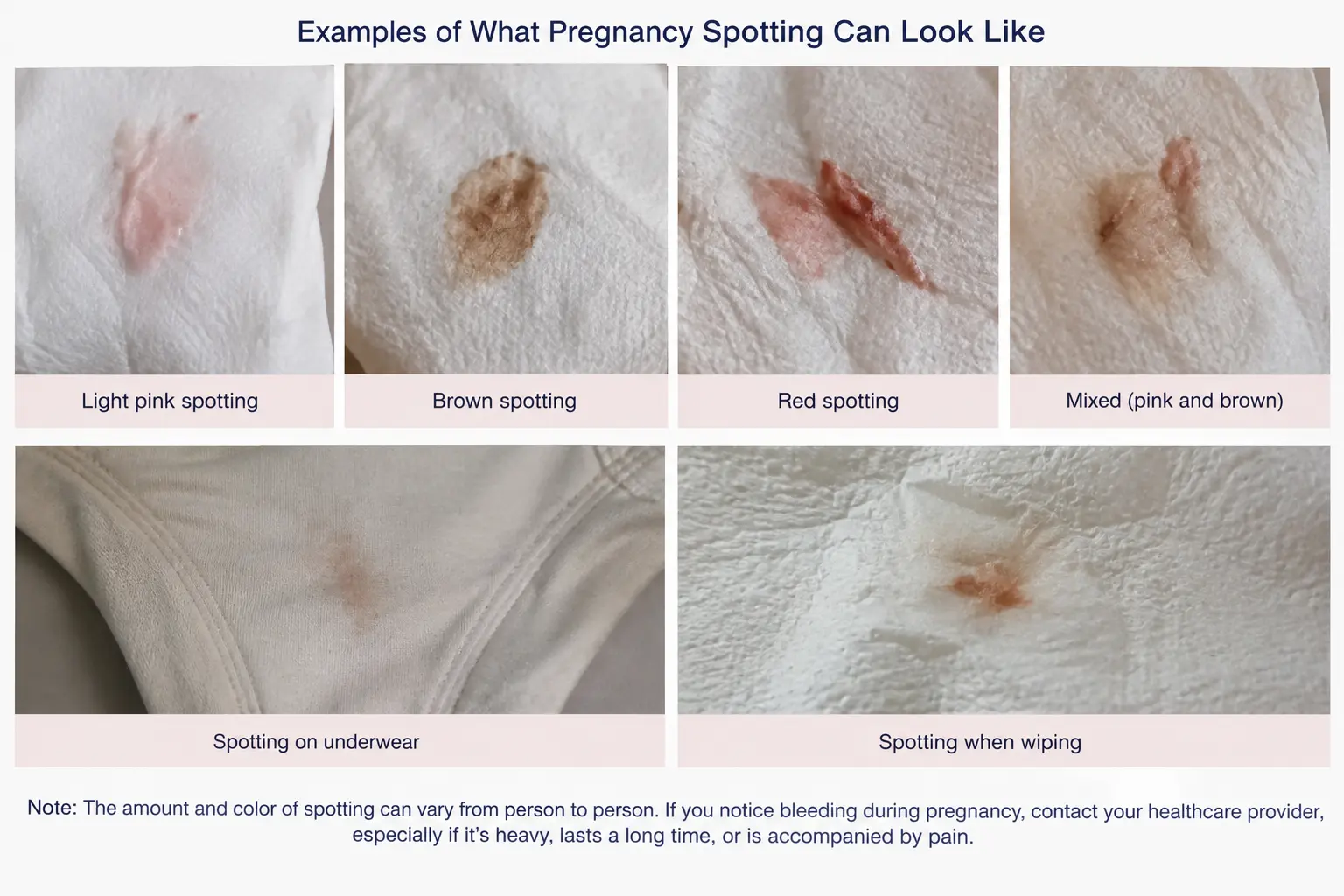
Pregnancy spotting usually looks like a few small spots or streaks of pink, brown, or red blood. You may notice it only when wiping with toilet paper or see a small stain on your underwear. Spotting is much lighter than a typical period and usually does not fill a pad.
Seeing blood when you think you are pregnant can be scary. The good news is that spotting does not automatically mean miscarriage. But bleeding during pregnancy has several possible causes, so the amount, color, timing, and other symptoms all matter.

What Does Spotting Look Like in Pregnancy?
Pregnancy spotting is usually light bleeding or a few spots of blood, rather than a normal period. It may look pink, red, or brown and is often noticeable only when wiping or on underwear. Light spotting can happen in early pregnancy, but bleeding that is heavy, persistent, or accompanied by severe pain needs medical attention.
Key Takeaways
- Spotting is usually light: You may see a few drops or small spots rather than enough blood to soak a pad.
- The color can vary: Pregnancy spotting may appear pink, light red, dark red, or brown.
- It can happen when wiping: Some people notice spotting only on toilet paper or underwear.
- Spotting does not always mean something is wrong: Light bleeding can occur for several reasons during early pregnancy.
- It is different from a typical period: A period generally becomes heavier and lasts several days, while spotting is usually much lighter.
- Heavy bleeding needs attention: Seek medical care promptly if bleeding becomes heavy or occurs with severe abdominal or pelvic pain, dizziness, fainting, or shoulder pain.
Cleveland Clinic describes pregnancy spotting as a few drops of pink, red, or dark brown blood that may appear on toilet paper or underwear. If you use a panty liner, spotting generally does not fill it.
The exact appearance can vary from person to person. Bodies, as usual, did not agree to follow one neat color chart.
Pregnancy spotting by color
| What you see | What it may look like |
|---|---|
| Pink spotting | Pale pink streaks or a small amount of pink mixed with discharge |
| Brown spotting | Light brown, rust-colored, or dark brown spots |
| Red spotting | Small amounts of fresh-looking red blood |
| Blood-tinged discharge | Clear, white, or mucus-like discharge with pink, brown, or red streaks |
Color can help you describe what you are seeing, but color alone cannot tell you why you are spotting. Pink does not automatically mean implantation, and brown does not automatically mean everything is fine. Your healthcare provider may also want to know how much blood you have, how long it has lasted, and whether you have pain or other symptoms.
What Does Spotting Look Like When You Wipe?
This is one of the most common ways people notice spotting.
You may wipe after using the bathroom and see:
- One or two small pink spots
- A thin red streak
- Brown marks on the toilet paper
- A small amount of blood mixed with mucus or discharge
That is different from seeing blood that continues to flow after wiping.
If you are unsure what counts as spotting, focus on the amount and pattern, not just the color. A small mark that appears when wiping is more consistent with spotting than blood that continues to flow and requires menstrual protection.
What Does Pregnancy Spotting Look Like in Underwear?
Spotting may appear as a small isolated stain rather than a large area of blood.
For example, you might notice:
- A tiny pink dot
- A few brown spots
- A narrow red streak
- A small blood stain mixed with normal discharge
If the bleeding spreads, continues, or becomes enough to soak a pad, it is no longer what most healthcare sources mean by simple spotting. NHS guidance describes heavier bleeding as larger areas of blood that may require a pad, with heavy bleeding potentially soaking through one.
Spotting vs. Bleeding During Pregnancy
The words spotting and bleeding are often used interchangeably online, which can make an already stressful situation even more confusing.
A useful way to think about them is:
| Spotting | Heavier bleeding |
|---|---|
| A few drops or small spots | More continuous blood flow |
| May appear only when wiping | May continue without wiping |
| Small stains on underwear | Larger areas of blood |
| Usually does not fill a liner | May require a pad |
| May be pink, brown, or red | May also be pink, brown, or red |
There is no magic number of drops that suddenly turns spotting into bleeding. The important thing is whether the amount is increasing and whether you have other symptoms.
ACOG recommends contacting your ob-gyn about any bleeding during pregnancy, because the significance depends on where you are in pregnancy and what else is happening.
What Causes Spotting During Pregnancy?
Spotting can happen for several reasons. Some causes are relatively minor, while others require medical evaluation.
During early pregnancy, possible causes include changes in the cervix, implantation-related bleeding, infection, early pregnancy loss, and ectopic pregnancy. The cervix can also bleed more easily during pregnancy, including after sex or a pelvic examination.
Implantation-related spotting
Light spotting can occur around the time an embryo implants in the uterine lining. ACOG notes that light bleeding or spotting can occur about 1 to 2 weeks after fertilization.
However, you cannot confirm implantation bleeding simply by looking at the blood.
Pink or brown spotting does not prove implantation happened, and spotting after a positive pregnancy test can have other explanations.
Cervical changes
Pregnancy increases blood flow to the cervix, making it more sensitive. This can sometimes cause light spotting, including after sex or a Pap test or pelvic examination.
Infection
Some infections can cause vaginal bleeding or blood-tinged discharge. Unusual discharge, a bad smell, itching, burning when urinating, fever, or pelvic pain are reasons to contact a healthcare professional.
Miscarriage
Spotting can occur with a miscarriage, but spotting by itself does not diagnose a miscarriage.
Mayo Clinic notes that miscarriage may involve vaginal bleeding, pelvic or lower-back pain, cramping, or passage of fluid or tissue. At the same time, light bleeding in early pregnancy does not always mean pregnancy loss.
Ectopic pregnancy
An ectopic pregnancy occurs when a pregnancy develops outside the uterus, most commonly in a fallopian tube. It can cause vaginal bleeding along with abdominal or pelvic pain.
Severe one-sided pain, shoulder pain, dizziness, fainting, or significant weakness with bleeding can be an emergency. ACOG and Mayo Clinic recommend immediate medical attention for these warning signs.
Does Spotting Look Different at Different Stages of Pregnancy?
It can.
In the first trimester, light spotting is relatively common. ACOG reports bleeding during the first trimester in about 15 to 25 out of 100 pregnancies. Even when the bleeding is light, it is still worth telling your pregnancy care provider.
In the second and third trimesters, bleeding deserves particular attention because the possible causes are different and some can be more serious. ACOG recommends contacting your ob-gyn right away for bleeding later in pregnancy.
Near the end of pregnancy, you may also notice blood mixed with mucus, sometimes called a bloody show. This can happen as the cervix changes in preparation for labor.
So, if you are wondering whether spotting at 5 weeks should be treated exactly like spotting at 35 weeks, the answer is no. Pregnancy stage matters.
Can Spotting Have Clots or Tissue?
Typical spotting is a small amount of blood and does not usually involve passing large clots or tissue.
If you pass tissue, have heavier bleeding, or experience significant cramping, do not try to identify the cause from appearance alone. Contact your healthcare provider for guidance.
This distinction is especially important if you are comparing pregnancy spotting with something you have seen during your period. A large piece of tissue during menstruation can sometimes be a decidual cast, which is different from ordinary spotting.
If you have seen unusual tissue during your period, our guide on what a decidual cast is and what it means explains how a decidual cast differs from ordinary menstrual clots and tissue.
When Should You Worry About Spotting During Pregnancy?
Contact your pregnancy care provider if you notice vaginal bleeding during pregnancy, even if it seems light. They can decide whether you need an examination, ultrasound, blood tests, or simply monitoring based on your symptoms and stage of pregnancy.
Seek urgent medical care if bleeding is accompanied by:
- Heavy or rapidly increasing bleeding
- Severe or worsening abdominal or pelvic pain
- Severe pain on one side
- Shoulder pain
- Dizziness, fainting, or marked weakness
- Fever or chills
- Passing tissue
- Contractions or other signs of preterm labor
Heavy bleeding, severe pain, shoulder pain, and fainting can be warning signs of an ectopic pregnancy or another pregnancy complication and should not be watched at home.
The Bottom Line
Pregnancy spotting usually means a small amount of pink, brown, or red blood that you may notice when wiping or as a small stain on your underwear. It is generally much lighter than a period.
But there is an important catch: you cannot diagnose the cause by color alone.
Pay attention to how much blood you see, whether it is increasing, how far along you are, and whether you have pain, dizziness, tissue passage, fever, or other symptoms. And if you are pregnant and bleeding, let your healthcare provider know. A little information from you can give them a much clearer picture of what is happening.