Fibroids in the Toilet: Can a Fibroid Come Out During Your Period?
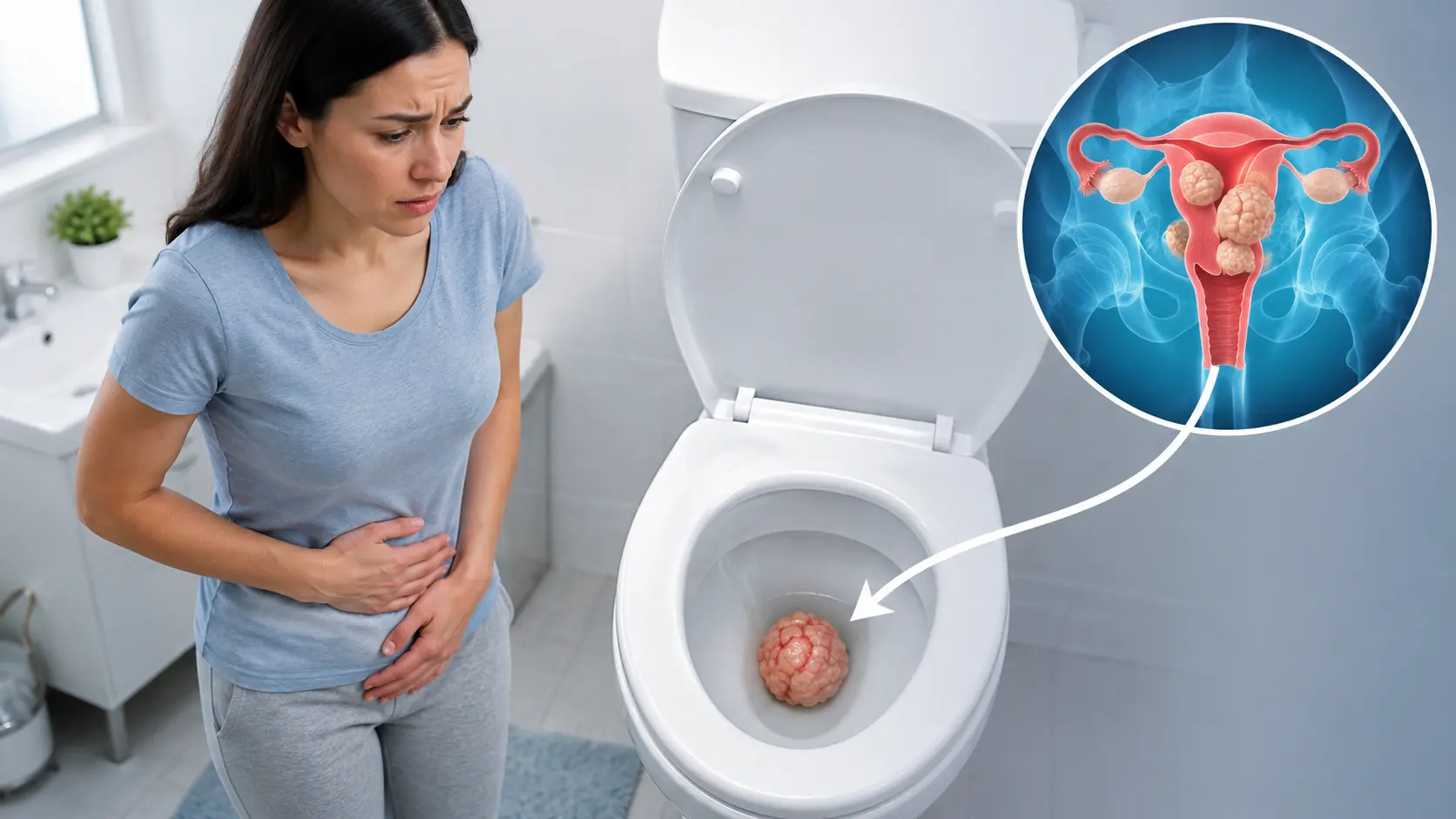
If you found a fleshy piece of tissue or a large lump in the toilet during your period, you may wonder if it was a fibroid. This situation can be frightening. The good news is that most fibroids stay attached to the uterus and do not come out on their own. However, in rare cases, certain fibroids can detach and pass through the cervix.
💡 Can Fibroids Come Out in the Toilet?
Yes, but it is very rare. Most fibroids stay attached to the wall of the uterus and do not come out on their own.
In rare cases, a pedunculated submucosal fibroid can lose its blood supply. When this happens, it may break away from the uterus, pass through the cervix, and come out through the vagina. You may notice it in the toilet during your period or while using the bathroom.
What Most People Actually See
In most cases, the tissue is not a fibroid. It is usually one of the following:
- 🩸 A large menstrual blood clot
- 🧬 A decidual cast (the uterine lining coming out in one piece)
- 🩷 Thick uterine (endometrial) tissue
- 🤰 Pregnancy tissue after a miscarriage (if you are pregnant)
🚨 When Should You See a Doctor?
Get medical help right away if you have:
- Heavy bleeding that soaks through a pad every hour
- Severe pelvic or stomach pain
- Fever or chills
- Dizziness or fainting
- A positive pregnancy test or you think you might be pregnant
What Did You Actually See?
Seeing a large piece of tissue in the toilet during your period can be frightening. Your first thought might be that it is a fibroid. However, that is not always the case.
In fact, most women do not pass a fibroid naturally. The tissue is usually something else, such as a blood clot, a decidual cast, or part of the uterine lining.
Here are the most common possibilities and how to tell them apart.
🩸 Large Blood Clot (Most Common)
A large menstrual blood clot is the most common reason women notice unusual tissue during their period.
Blood clots form when menstrual bleeding is heavy. They are usually:
- Dark red or maroon
- Soft and jelly-like
- Slippery to the touch
- Easy to break apart
Heavy periods caused by uterine fibroids, hormone changes, or adenomyosis often lead to large blood clots. Although they can look alarming, they are not the same as a fibroid.
🟣 Expelled Fibroid (Rare)
Passing a fibroid naturally is rare, but it can happen in some cases.
An expelled fibroid usually feels:
- Firm or rubbery
- Gray, white, tan, or light pink
- More solid than a blood clot
- Meat-like instead of jelly-like
This usually happens with a pedunculated submucosal fibroid. These fibroids grow on a thin stalk inside the uterus. If the stalk twists or loses its blood supply, the fibroid may break away and pass through the cervix.
Severe cramping and heavy bleeding often happen before the fibroid comes out.
🧬 Decidual Cast
A decidual cast happens when the entire uterine lining comes out in one piece instead of breaking apart during your period.
It often:
- Keeps the shape of the inside of the uterus
- Looks thick and fleshy
- May be mistaken for a fibroid
A decidual cast is uncommon but can occur after stopping birth control, during hormone changes, or in early pregnancy.
🤰 Pregnancy Tissue
If there is any chance you are pregnant, do not assume the tissue is a fibroid.
Tissue from an early miscarriage can look very similar to an expelled fibroid or a decidual cast.
Possible signs include:
- Positive pregnancy test
- Missed period
- Heavy bleeding
- Severe cramping
- Gray or pink tissue
If you think you could be pregnant, contact your healthcare provider immediately.
🌸 Endometrial Tissue
Sometimes the tissue is simply part of your uterine lining (endometrium).
During your period, small pieces of the uterine lining naturally leave the body with menstrual blood. These pieces may look thicker than usual, especially during a heavy period.
This is often normal. However, if you regularly pass large pieces of tissue or have very heavy periods, schedule an appointment with your OB-GYN to find the underlying cause.
💡 Quick Summary
If you found tissue in the toilet during your period, it is much more likely to be one of the following than a naturally expelled fibroid:
- 🩸 Large menstrual blood clot (most common)
- 🌸 Thick endometrial tissue
- 🧬 Decidual cast
- 🤰 Pregnancy tissue (if pregnant)
- 🟣 Expelled fibroid (rare)
Because these conditions can look very similar, only a healthcare provider can confirm exactly what the tissue was. If you have severe pain, heavy bleeding, fever, or think you may be pregnant, seek medical care right away.
What to Do After Passing a Fibroid
Passing what looks like a fibroid can be scary. Even if the pain gets better or the bleeding slows down, you should still contact your healthcare provider. They can check whether the tissue was really a fibroid or something else, such as a blood clot, decidual cast, or pregnancy tissue.
Follow these simple steps after passing unusual tissue.
1️⃣ Stay Calm and Check Your Symptoms
Take a few minutes to see how you feel. Ask yourself these questions:
- Is the bleeding getting heavier?
- Has the pain improved or become worse?
- Do you have a fever or chills?
- Do you feel dizzy, weak, or like you might faint?
Mild cramps and moderate bleeding may improve after the tissue passes. However, severe pain or heavy bleeding should never be ignored.
2️⃣ Save the Tissue If You Can
If you have not flushed the tissue, place it in a clean container or plastic bag.
Your doctor may want to send it to a laboratory for testing. This is the best way to find out what it really was.
The tissue could be:
- An expelled fibroid
- A large blood clot
- Endometrial (uterine lining) tissue
- A decidual cast
- Pregnancy tissue
3️⃣ Take a Photo
If you feel comfortable, take a clear photo before throwing the tissue away.
A photo cannot confirm a diagnosis, but it can help your healthcare provider understand what happened.
4️⃣ Schedule an Appointment with Your OB-GYN
Contact your doctor as soon as possible, especially if:
- You have been diagnosed with uterine fibroids.
- This has never happened before.
- Your bleeding is heavier than your normal period.
- You still have severe pelvic pain.
- You notice a bad-smelling vaginal discharge.
Your doctor may perform a pelvic exam, ultrasound, or MRI to see if any fibroids remain inside your uterus.
🚨 5️⃣ Get Emergency Medical Help If You Have
- Heavy bleeding that soaks one pad every hour for two hours or more
- Severe pelvic or stomach pain that does not improve
- Fever above 100.4°F (38°C)
- Chills
- Bad-smelling vaginal discharge
- Fainting or severe dizziness
- Fast heartbeat
- Shortness of breath
- A positive pregnancy test with heavy bleeding
These symptoms could be signs of heavy blood loss, an infection, an incomplete miscarriage, or another serious medical condition. Do not wait to seek emergency care.
6️⃣ Follow Your Doctor’s Treatment Plan
If your doctor confirms that you passed a fibroid, the next step depends on your symptoms and whether other fibroids are still present.
Your treatment may include:
- Monitoring your symptoms
- Medicine to reduce heavy bleeding
- Iron supplements if you have anemia
- Hormone treatment to manage future symptoms
- Surgery if large or multiple fibroids remain
Your healthcare provider will recommend the best treatment based on your age, future pregnancy plans, overall health, and the size and location of your fibroids.
Can Fibroids Come Out Naturally?
Yes but in rare situations.
Most fibroids develop deep inside the muscular wall of the uterus. These are called intramural fibroids. Others grow on the outside of the uterus and are known as subserosal fibroids. Neither type usually comes out naturally because they remain firmly attached to the uterus.
The fibroids most likely to pass are pedunculated submucosal fibroids.
These fibroids grow inside the uterine cavity on a thin stalk. If that stalk twists or the blood supply is interrupted, the fibroid may begin to die, shrink, and eventually detach.
Once detached, the uterus may contract to push it through the cervix. This process is called fibroid expulsion.
Although rare, it can happen naturally or after treatments such as uterine artery embolization or certain medications used to shrink fibroids.
How Does a Fibroid Pass Out of the Body?
Fibroid expulsion usually follows a sequence of events.
First, the fibroid loses part of its blood supply.
Next, the tissue begins to break down. This process is known as degeneration.
The uterus then responds by contracting, much like it does during labor or menstruation.
As the contractions continue, the detached fibroid moves through the cervical opening and into the vagina.
Finally, it may pass into the toilet during urination or menstrual bleeding.
This entire process may take several hours or even a few days.
Many women describe intense cramping before the fibroid passes.
What Does an Expelled Fibroid Look Like?
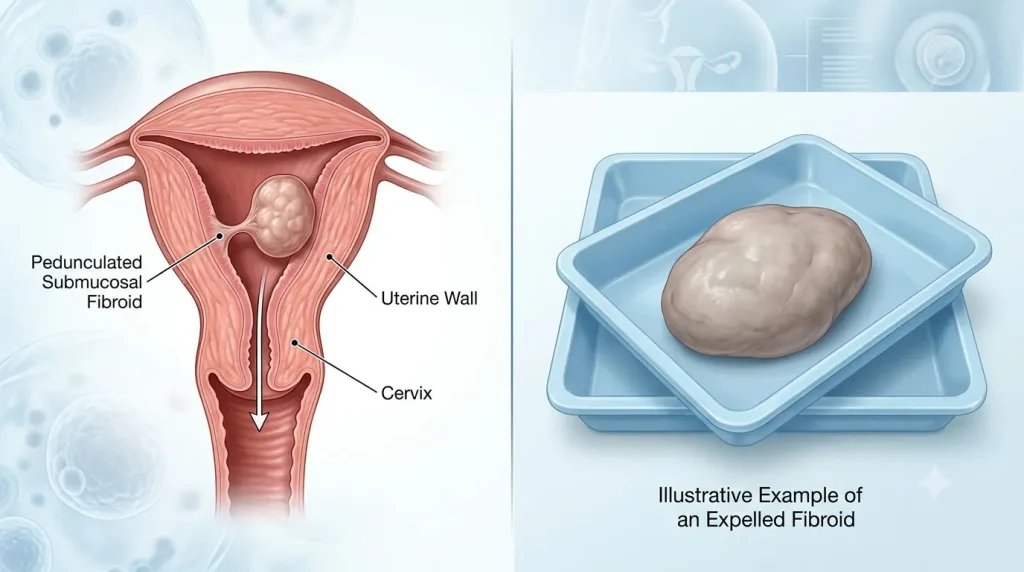
An expelled fibroid does not always look the same.
Its appearance depends on its size, blood supply, and how long it has been detached.
Many people describe it as:
- Firm rather than soft
- Rubbery to the touch
- Gray, white, tan, or pale pink
- Irregular in shape
- Fleshy or meat-like
- Larger than a typical menstrual blood clot
Some expelled fibroids are only a few millimeters wide.
Others can be several centimeters across.
Unlike blood clots, fibroids usually keep their shape when touched because they contain solid muscle tissue.
Can Fibroids Come Out During Your Period?
Yes. If fibroid expulsion happens naturally, it often occurs during a menstrual period.
There are two main reasons for this.
First, menstrual contractions become stronger during your period. These contractions can help move detached tissue through the cervix.
Second, the cervix may become slightly more open during menstruation, making it easier for tissue to pass.
Because bleeding is already happening, many women first notice the fibroid when they see something unusual in the toilet or on a sanitary pad.
Even though this can happen, it remains uncommon.
Most women with fibroids never experience spontaneous fibroid expulsion.
Instead, they are more likely to notice symptoms such as:
- Heavy menstrual bleeding
- Large blood clots
- Pelvic pressure
- Frequent urination
- Pain during periods
- Lower back pain
If you experience severe pain, unusually heavy bleeding, fever, or foul-smelling discharge after passing tissue, seek immediate medical care. These symptoms may indicate infection or another complication.
Can Fibroids Grow Back After One Passes?
Yes. Passing one fibroid does not mean all fibroids are gone.
Many women have multiple fibroids growing in different parts of the uterus. Even if one fibroid is expelled naturally, others may continue to grow over time.
The risk of recurrence depends on several factors, including:
- Your age
- Hormone levels
- Family history
- Number of existing fibroids
- Previous treatments
Regular follow-up appointments can help monitor your condition and detect new fibroids before they cause significant symptoms.
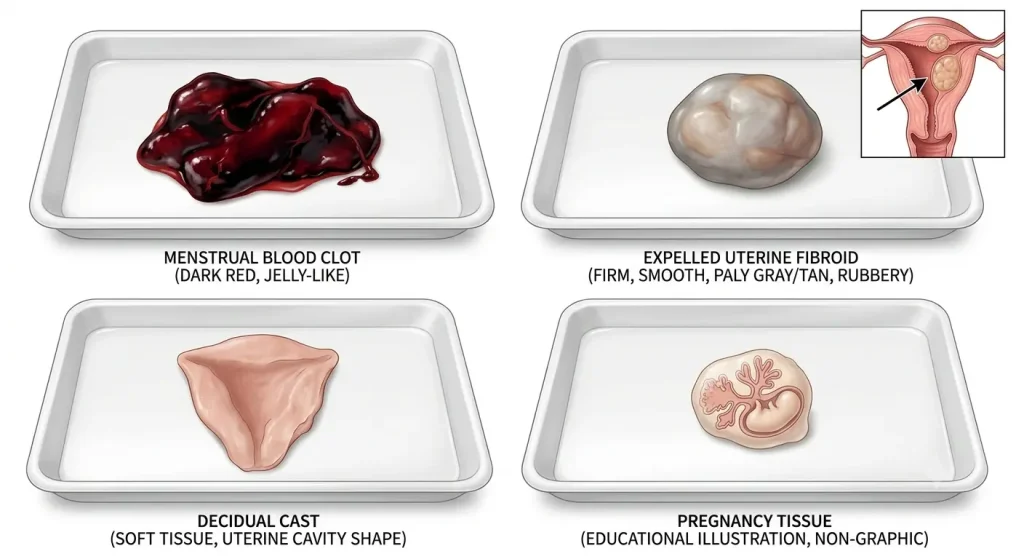
Fibroid vs Decidual Cast vs Miscarriage Tissue vs Large Blood Clots
If you passed a large piece of tissue during your period, it can be difficult to know what it was. Blood clots, fibroids, decidual casts, and miscarriage tissue can all look similar. However, they have different causes, symptoms, and treatments.
Here is the complete comaparison to understand the key differences.
| Feature | 🟣 Fibroid | 🧬 Decidual Cast | 🤰 Miscarriage Tissue | 🩸 Large Blood Clot |
|---|---|---|---|---|
| What is it? | A non-cancerous growth made of muscle tissue. | The entire uterine lining comes out in one piece. | Pregnancy tissue passed after pregnancy loss. | Clotted menstrual blood. |
| How common? | Rare to pass naturally. | Uncommon. | Occurs only during pregnancy loss. | Very common during heavy periods. |
| Texture | Firm and rubbery. | Soft but thick. | Soft, fleshy, or spongy. | Soft, slippery, jelly-like. |
| Color | Gray, white, tan, or pink. | Pink, red, or dark brown. | Gray, pink, red, or white. | Dark red or maroon. |
| Shape | Round or irregular lump. | Often shaped like the inside of the uterus. | Irregular pieces of tissue. | Round or shapeless. |
| Pain | Severe cramping is common. | Strong cramps while passing the tissue. | Moderate to severe cramping. | Usually mild to moderate cramps. |
| Bleeding | Often heavy. | Heavy bleeding may occur. | Heavy vaginal bleeding is common. | Occurs during heavy periods. |
| Pregnancy related? | No. | Sometimes. | Yes. | No. |
| Needs urgent medical care? | If severe pain, fever, or heavy bleeding develops. | If symptoms are severe or pregnancy is possible. | Yes. Medical evaluation is recommended. | If bleeding is excessive or keeps happening. |
| How is it diagnosed? | Pelvic exam, ultrasound, MRI, or pathology. | Medical history and pelvic examination. | Pregnancy test, ultrasound, and examination. | Usually based on symptoms and examination. |
💡 Key Takeaway
Although these conditions can look similar, they are not the same. Large blood clots are the most common cause of passing tissue during a period. Passing a fibroid naturally is rare. A decidual cast happens when the uterine lining comes out in one piece, while miscarriage tissue is related to pregnancy loss. If you have severe pain, heavy bleeding, fever, or think you may be pregnant, seek medical care immediately for an accurate diagnosis.
Conclusion
Seeing a large piece of tissue in the toilet can be frightening, especially if you have never experienced it before. Although the internet often suggests it could be a fibroid, the reality is that most fibroids remain attached to the uterus and do not pass naturally. More commonly, the tissue people notice is a blood clot, a decidual cast, or another type of uterine tissue.
The most important thing to remember is that you do not have to diagnose this on your own. If you pass unusual tissue, experience persistent pain, have heavy bleeding, or develop fever or dizziness, seek medical attention promptly. An accurate diagnosis can provide peace of mind and ensure you receive the right care.