What Helps With Period Cramps? 10 Ways to Find Relief
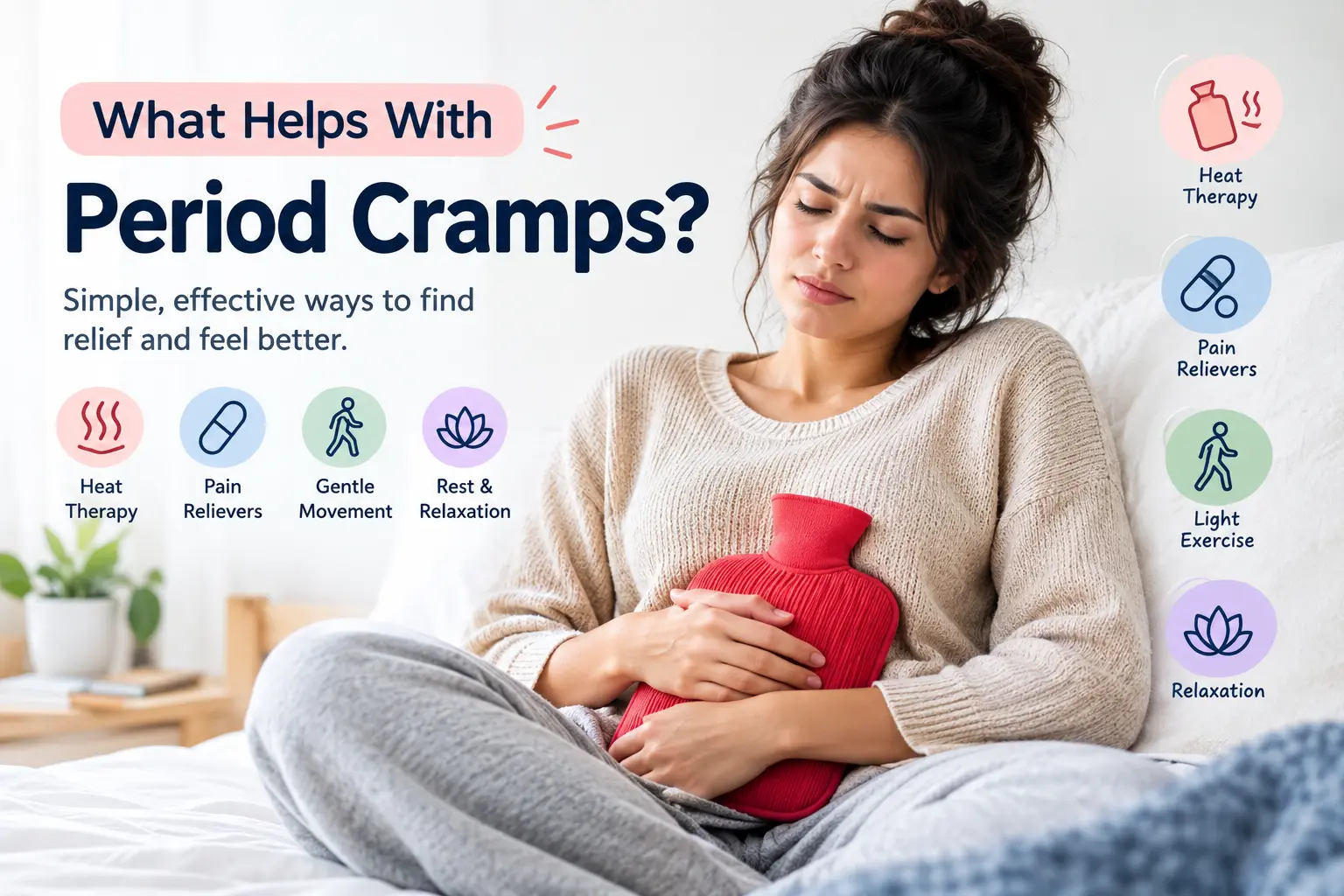
Period cramps can cause pain in your lower belly, back, and thighs. They may also make it hard to sleep, work, or enjoy your day. If you want to know what helps with period cramps, several options may bring relief. These include heat therapy, anti-inflammatory pain relievers, gentle exercise, and rest.
The best option depends on your symptoms and health needs. Some remedies work better for certain people than others. This guide explains how to relieve period cramps, which treatments may help, and when you should see a doctor.
What Helps With Period Cramps?
Heat therapy, suitable pain relievers, and gentle movement can help ease period cramps. The best option depends on your health, symptoms, and personal needs.
- Apply gentle heat: Use a heating pad or warm compress on your lower belly.
- Consider pain relief: Ibuprofen or naproxen may help when NSAIDs are safe for you.
- Move gently: Try a short walk or comfortable stretches if you feel able.
- Rest and relax: A warm bath and enough sleep may improve comfort.
Severe, worsening, or unusual pelvic pain needs medical attention. Seek urgent care for sudden severe pain, fainting, or possible pregnancy with pain or bleeding.
What Helps With Period Cramps the Fastest?
Heat therapy and anti-inflammatory pain relievers can help ease menstrual cramps. A heating pad may soothe lower belly pain. Medicines such as ibuprofen or naproxen can reduce the chemicals that cause uterine contractions. Gentle movement and a warm bath may also help.
Here are some options to consider when period pain starts:
- Use a heating pad: Apply gentle heat to your lower belly or back. Follow the device instructions to avoid burns.
- Consider an appropriate pain reliever: An over-the-counter medicine may help if it is safe for you.
- Try gentle movement: Walking or stretching may ease discomfort.
- Take a warm bath: Warm water may help relax your body.
- Rest when needed: Find a comfortable position and allow yourself time to recover.
You do not need to try every remedy at once. Start with an option that feels comfortable and safe. If your pain is severe or unusual, do not rely on home remedies alone.
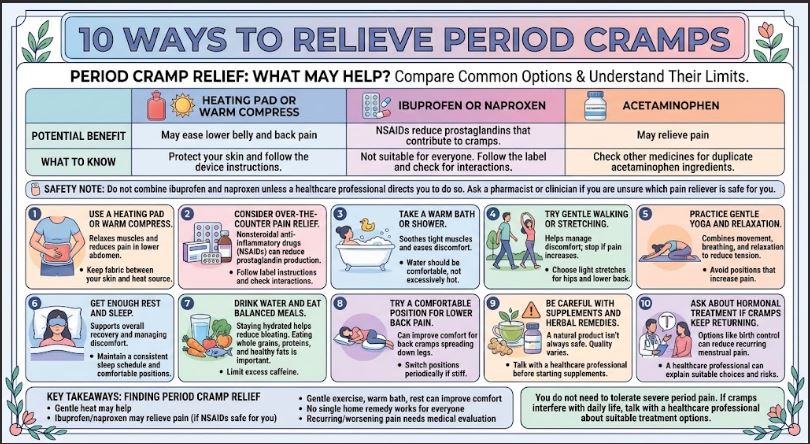
10 Ways to Relieve Period Cramps
Several home treatments may help reduce period pain. You can choose one or combine suitable methods. The following options explain how each approach may help.
Period Cramp Relief: What May Help?
Different treatments offer different benefits. Use this guide to compare common options and understand their limits.
| Relief option | Potential benefit | What to know |
|---|---|---|
| Heating pad or warm compress | May ease lower belly and back pain. | Protect your skin and follow the device instructions. |
| Ibuprofen or naproxen | NSAIDs reduce prostaglandins that contribute to cramps. | Not suitable for everyone. Follow the label and check for interactions. |
| Acetaminophen | May relieve pain. | Check other medicines for duplicate acetaminophen ingredients. |
| Gentle walking or stretching | May help some people manage discomfort. | Stop if movement makes pain worse. |
| Warm bath and relaxation | May support comfort and relaxation. | Use comfortably warm water, not excessively hot water. |
| Clinician-guided hormonal treatment | May reduce recurring menstrual pain. | A healthcare professional can explain suitable options and risks. |
Safety note: Do not combine ibuprofen and naproxen unless a healthcare professional directs you to do so. Ask a pharmacist or clinician if you are unsure which pain reliever is safe for you.
1. Use a Heating Pad or Warm Compress
Heat is one of the most practical ways to manage period cramps. It may relax muscles and reduce pain in your lower abdomen. You can also apply heat to your lower back if that area hurts.
Place a heating pad or warm compress over your lower belly. Keep a layer of fabric between your skin and the heat source when needed. Follow the product’s safety instructions and avoid excessive heat.
A warm water bottle or heat wrap may also help. Never place boiling water in a bottle that is not designed for it. Avoid falling asleep with an electric heating pad switched on.
2. Consider Over-the-Counter Pain Relief
Over-the-counter (OTC) pain relievers may help when cramps interfere with daily activities. Nonsteroidal anti-inflammatory drugs (NSAIDs), such as ibuprofen and naproxen, are common treatments for menstrual pain.
These medicines reduce the production of prostaglandins. Prostaglandins are chemicals that help the uterus contract during menstruation. High levels can contribute to painful cramps.
NSAIDs often work best when started at the first sign of cramps or shortly before an expected period, when appropriate. Always follow the product label.
NSAIDs are not safe for everyone. They may be unsuitable if you have certain stomach ulcers, kidney problems, bleeding disorders, or an allergy to these medicines. They can also interact with other drugs. Ask a pharmacist or healthcare professional if you are unsure.
Acetaminophen is another pain-relief option. It works differently from NSAIDs and may help some people. Check the label and avoid taking multiple products that contain acetaminophen.
If you are pregnant, may be pregnant, or are trying to manage unusual pelvic pain, seek advice from a healthcare professional before choosing a medicine.
3. Take a Warm Bath or Shower
A warm bath can help you relax when menstrual cramps begin. The warmth may soothe tight muscles and ease discomfort. A warm shower may offer similar comfort.
Keep the water at a comfortable temperature. Very hot water can irritate your skin or cause dizziness.
You can combine a warm bath with slow breathing. This may help you feel calmer when pain and stress occur together.
A bath may not stop cramps completely. However, it can be a useful part of your home care routine.
4. Try Gentle Walking or Stretching
Exercise may be the last thing you want when your period hurts. However, gentle movement can help some people manage menstrual pain.
Try a short walk around your home or outside. You can also do light stretches for your hips, lower back, and legs.
Do not force yourself to exercise through severe pain. Stop if movement makes your symptoms worse. Rest is also reasonable when you feel unwell.
Regular physical activity between periods may help some people manage recurring cramps. Choose an activity you can maintain without discomfort.
5. Practice Gentle Yoga and Relaxation
Yoga combines movement, breathing, and relaxation. Some people find it helpful for period cramps and lower back tension.
Try gentle poses that feel comfortable. These may include child’s pose, a supported forward fold, or lying on your back with your knees bent.
Avoid positions that increase your pain. You do not need to complete a full workout to benefit from gentle movement.
Slow breathing may also help you relax. Breathe in gently through your nose and breathe out slowly. Repeat for a few minutes if it feels comfortable.
Yoga is a supportive option, not a guaranteed treatment. Research on specific poses and their effects on menstrual pain remains limited.
6. Get Enough Rest and Sleep
Period pain can make it harder to fall asleep or stay asleep. Poor sleep may also make discomfort more difficult to manage.
Try to keep your bedtime and wake-up time consistent. Use pillows to support your body in a comfortable position.
If your lower belly hurts, lying on your side with your knees slightly bent may feel soothing. You can also place a pillow between your knees to support your hips.
A warm compress before bed may help. Use it safely and remove it before sleeping if the product instructions require this.
If cramps regularly wake you up or stop you from sleeping, talk with a healthcare professional. Severe pain that disrupts daily life deserves attention.
7. Drink Water and Eat Balanced Meals
Staying hydrated supports your general health. Drinking enough water may also help if you feel bloated during your period.
Choose water throughout the day. You can also get fluids from soups and other drinks.
Eat balanced meals that include vegetables, fruit, whole grains, protein, and healthy fats. These foods provide nutrients that support your body.
Some people find that limiting excess caffeine helps them feel better. Others may notice that very salty foods increase bloating. Pay attention to your own symptoms rather than following strict food rules.
No single food or drink is proven to stop period cramps immediately. A balanced diet supports overall health, but it should not replace effective treatment for severe pain.
8. Try a Comfortable Position for Lower Back Pain
Period cramps may spread to your lower back or thighs. This can make sitting, standing, or lying down uncomfortable.
Try lying on your side with your knees slightly bent. Another option is lying on your back with a pillow under your knees.
You may also apply gentle heat to your lower back. Change positions if you feel stiff or uncomfortable.
These methods may improve comfort, but they do not treat every cause of pelvic pain. Seek medical advice if your back pain is severe, new, or different from your usual period symptoms.
9. Be Careful With Supplements and Herbal Remedies
You may see claims that magnesium, ginger, vitamin supplements, or herbal teas can reduce period pain. Some studies suggest that certain supplements may help, but the quality of evidence varies.
A natural product is not always safe. Supplements can cause side effects or interact with medicines. Their strength and ingredients may also vary between products.
Talk with a healthcare professional before starting a supplement, especially if you take medication, have a medical condition, or could be pregnant.
You can enjoy a warm, caffeine-free drink if it helps you relax. However, do not rely on herbal remedies instead of medical care when cramps are severe or persistent.
10. Ask About Hormonal Treatment if Cramps Keep Returning
If period cramps happen every month, a healthcare professional may suggest treatments beyond home remedies.
Hormonal birth control can reduce menstrual pain for some people. Depending on the method, it may make periods lighter, less frequent, or stop them altogether.
Options may include birth control pills, hormonal intrauterine devices (IUDs), or other hormonal methods. The best choice depends on your health, symptoms, and reproductive goals.
Hormonal treatment is not suitable for everyone. A clinician can explain the benefits, risks, and alternatives.
If ordinary pain relievers do not help, do not assume that severe cramps are something you must tolerate. A medical assessment may identify the cause and help you find a better treatment plan.
Key Takeaways: Finding Period Cramp Relief
- Gentle heat may help ease lower abdominal and back discomfort.
- Ibuprofen or naproxen may relieve cramps when NSAIDs are safe for you.
- Gentle exercise, a warm bath, and rest may improve comfort.
- No single food, drink, or home remedy works for everyone.
- Recurring or worsening pain deserves medical evaluation.
- Sudden severe pelvic pain or possible pregnancy with pain or bleeding may require urgent care.
You do not need to tolerate severe period pain. If cramps interfere with daily life, talk with a healthcare professional about suitable treatment options.
Which Pain Reliever Is Best for Period Cramps?
The best pain reliever depends on your health history, other medicines, and the type of pain you experience.
| Pain relief option | How it may help | Important safety point |
|---|---|---|
| Ibuprofen | Reduces prostaglandins and menstrual pain | May not be suitable for people with certain stomach, kidney, or bleeding problems |
| Naproxen | Reduces prostaglandins and may provide longer-lasting relief than some other NSAIDs | Follow the label and check for interactions |
| Acetaminophen | May relieve pain through a different mechanism | Avoid taking multiple products containing acetaminophen |
| Heating pad | Provides warmth that may ease cramps | Avoid burns and follow device instructions |
| Gentle exercise | May help some people manage recurring discomfort | Stop if pain becomes worse |
Do not combine ibuprofen and naproxen unless a healthcare professional specifically directs you to do so. Both are NSAIDs, and taking them together can increase the risk of side effects.
If you have a medical condition or take prescription medicine, ask a pharmacist or clinician which option is appropriate.
What Helps With Period Cramps at Night?
Period cramps can feel especially frustrating at bedtime. They may keep you awake or make it hard to find a comfortable position.
Try these steps before going to sleep:
- Take a warm shower or bath.
- Apply gentle heat to your lower belly before bed.
- Lie on your side with your knees slightly bent.
- Use a pillow to support your hips or knees.
- Consider an appropriate pain reliever if it is safe for you.
- Keep your room comfortable and allow time to relax.
Avoid using a heating device while sleeping unless the manufacturer explicitly states that it is designed for that use.
If night-time cramps regularly interrupt your sleep, discuss them with a healthcare professional. Pain that affects your normal routine may need further evaluation.
How Can You Prevent Period Cramps?
You may not be able to prevent every cramp. However, a consistent care plan may help reduce discomfort over time.
Consider these habits:
- Stay physically active: Choose regular movement that suits your fitness level.
- Track your symptoms: Record when cramps begin, how long they last, and how severe they feel.
- Plan ahead: If your periods are predictable, discuss when to start pain relief with your clinician.
- Prioritize sleep: Keep a regular sleep routine when possible.
- Eat balanced meals: Include a variety of nutrient-rich foods.
- Seek help for recurring pain: Ask about treatment options if cramps interfere with daily life.
Tracking your cycle can help you notice changes. Record bleeding patterns, pain severity, medicines used, and any other symptoms.
If your cramps become more severe over time, do not rely on prevention tips alone. A healthcare professional can help determine whether an underlying condition needs treatment.
Why Are My Period Cramps So Painful?
Menstrual cramps happen when the uterus contracts to shed its lining. Prostaglandins help trigger these contractions. Higher levels of prostaglandins are linked to more painful cramps.
Doctors call painful periods dysmenorrhea. There are two main types.
Primary dysmenorrhea refers to menstrual pain that is not caused by another pelvic condition. It often begins around the time periods start and may improve with age for some people.
Secondary dysmenorrhea refers to pain caused by an underlying condition. The pain may become worse over time or start later in life.
Possible causes include:
- Endometriosis: Tissue similar to the uterine lining grows outside the uterus.
- Adenomyosis: Tissue similar to the uterine lining grows into the muscular wall of the uterus.
- Uterine fibroids: Noncancerous growths develop in or around the uterus.
- Pelvic inflammatory disease: An infection affects the reproductive organs.
These conditions can cause symptoms that overlap with ordinary menstrual cramps. You cannot identify the cause based on pain alone.
If your cramps are severe, keep getting worse, or occur outside your period, seek medical advice. A clinician can review your symptoms and decide whether an examination or ultrasound is needed.
When Should You Worry About Period Cramps?
Period cramps are common, but severe or changing pain should not be ignored. Your symptoms and how they affect daily life can help guide the next step.
Make a medical appointment if:
- Your cramps regularly interfere with work, school, sleep, or daily activities.
- Your pain is getting worse or does not improve with appropriate treatment.
- You have pelvic pain between periods or pain during sex.
- Your bleeding becomes much heavier or your periods change unexpectedly.
- You have recurring pelvic pain, fever, or unusual vaginal discharge.
When to seek urgent care
Get urgent medical help for sudden, severe pelvic pain, fainting, or severe pain with heavy bleeding. If pregnancy is possible and you have pelvic pain or bleeding, seek prompt medical assessment.
If cramps repeatedly disrupt your life, a healthcare professional can check for causes such as endometriosis, adenomyosis, or uterine fibroids.
Conclusion
If you are wondering what helps with period cramps, start with practical options such as gentle heat, suitable pain relief, and light movement. Rest, sleep, and balanced meals can support your overall comfort.
Not every remedy works for everyone. You should not have to accept severe pain as a normal part of your period. If cramps keep returning, become worse, or affect your daily life, speak with a healthcare professional about the cause and treatment options.
This article is for educational purposes and does not replace personal medical advice, diagnosis, or treatment.