How to Lose Weight With PCOS: 9 Practical Tips
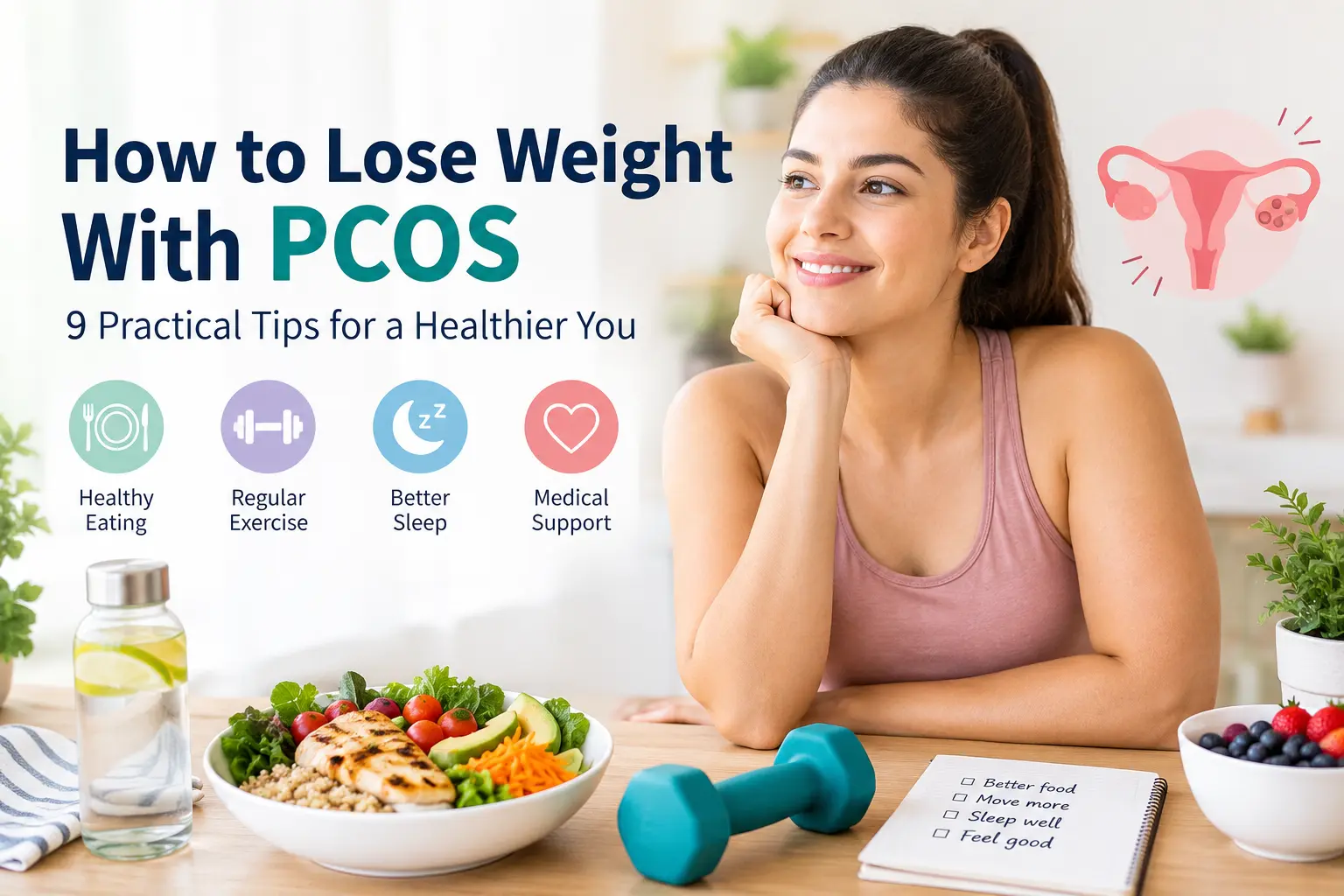
Losing weight with PCOS can feel challenging, but small, steady changes can help. The best approach includes balanced meals, regular physical activity, enough sleep, and support from your healthcare provider. You do not need to follow a strict diet or avoid all carbohydrates to manage your health.
Polycystic ovary syndrome (PCOS) is a hormonal condition that can affect your periods, skin, fertility, and metabolic health. Some women with PCOS also struggle with weight gain or weight management. However, PCOS affects everyone differently, and weight loss is not necessary for every person with this condition.
In this guide, you will learn how to lose weight with PCOS, what foods to eat, which exercises to try, and what to do if your progress slows down.
Quick Answer: How to Lose Weight With PCOS
To manage weight with PCOS, focus on balanced meals, regular exercise, enough sleep, and sustainable daily habits. There is no single diet or workout that works best for everyone with PCOS.
- Eat protein-rich foods, vegetables, fruit, and fiber-rich carbohydrates.
- Combine walking or other aerobic activity with strength training.
- Get at least seven hours of sleep each night.
- Avoid crash diets and overly restrictive eating plans.
- Talk to your healthcare provider if weight management remains difficult or you need treatment options.
Remember: PCOS affects people differently, and weight loss is not necessary or appropriate for everyone. Healthy lifestyle changes can offer benefits even without weight loss.
Why Is It Hard to Lose Weight With PCOS?
PCOS can affect how your body responds to insulin and manages hormones. These changes may make weight management harder for some women. However, there is no single reason why every woman with PCOS gains weight or finds weight loss difficult.
Here are some factors that may play a role.
1. Insulin Resistance
Insulin is a hormone that helps move sugar from your blood into your cells. Your body uses this sugar for energy.
With insulin resistance, your cells respond less effectively to insulin. Your body may then need to produce more insulin to manage blood sugar levels.
Insulin resistance is common in PCOS, but not everyone with PCOS has it. It can affect metabolic health and may contribute to weight-management difficulties.
2. Hormonal Changes
PCOS can affect hormones called androgens. These hormones are present in everyone, but some women with PCOS have higher levels.
Hormonal changes can affect periods, skin health, and ovulation. They may also interact with other factors involved in metabolic health.
However, hormones do not explain every case of weight gain. Your health history, activity, sleep, medicines, and other conditions may also matter.
3. Sleep Problems and Stress
Poor sleep can affect hunger, energy, and food choices. Stress may also make it harder to maintain regular meals and exercise.
Some women with PCOS have sleep problems, including a higher risk of obstructive sleep apnea. This condition can cause loud snoring, interrupted sleep, and daytime tiredness.
If you often feel tired despite getting enough sleep, speak with your healthcare provider.
How to Lose Weight With PCOS: 9 Practical Tips
You do not need to change everything at once. Start with habits that fit your daily life and build on them over time.
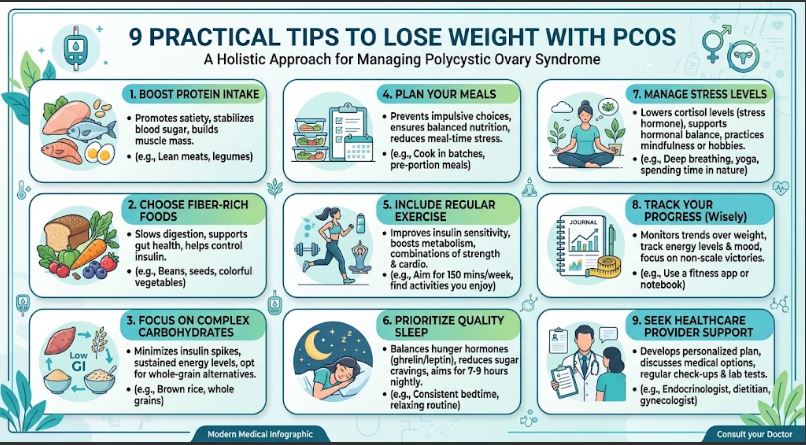
1. Eat Balanced Meals With Enough Protein
Protein helps build and maintain muscle. It can also help you feel full after meals.
Try to include a source of protein in your main meals. You do not need expensive protein powders or special PCOS foods to get started.
Good protein choices include:
- Eggs and plain Greek yogurt
- Chicken, fish, and lean meat
- Beans, lentils, and chickpeas
- Tofu and other soy foods
- Nuts and seeds
For example, you could eat eggs with whole-grain toast for breakfast. For lunch, try chicken or beans with vegetables and brown rice.
The goal is to build balanced meals that keep you satisfied. You do not need to eat a high-protein diet unless it suits your needs and health goals.
2. Choose High-Fiber Foods
Fiber supports digestion and can help you feel full for longer. Fiber-rich foods may also support healthy blood sugar levels.
Try adding more of these foods to your meals:
- Oats and whole-grain bread
- Brown rice and whole grains
- Beans, lentils, and chickpeas
- Apples, berries, and pears
- Broccoli, carrots, and leafy greens
You do not need to remove white rice, bread, or other familiar foods completely. Instead, try adding vegetables, beans, or another fiber-rich food to your usual meals.
Increase fiber gradually and drink enough water to help your digestive system adjust.
3. Do Not Cut Out All Carbohydrates
You may have heard that women with PCOS should avoid carbohydrates. This is not necessary for everyone.
Carbohydrates provide energy, and many carbohydrate-rich foods contain important nutrients. The type of food, portion size, and overall eating pattern all matter.
Choose more whole grains, fruit, beans, lentils, and vegetables when possible. You can still enjoy foods such as potatoes, rice, and bread as part of a balanced diet.
If you enjoy pasta or rice, try pairing it with protein and vegetables. This can help make your meal more balanced and satisfying.
There is no single diet that has been proven best for every woman with PCOS. Choose an eating pattern that meets your needs and that you can maintain.
4. Create a Simple PCOS-Friendly Meal Plan
Planning meals can make healthy eating easier, especially on busy days. Your meals do not need to be complicated or expensive.
Here is an example of a balanced day of eating.
| Meal | Example food choices |
|---|---|
| Breakfast | Eggs, whole-grain toast, and fruit |
| Morning snack | Plain Greek yogurt or a small handful of nuts |
| Lunch | Chicken or chickpeas, brown rice, and vegetables |
| Afternoon snack | Apple slices with peanut butter |
| Dinner | Baked fish or tofu, potatoes, and broccoli |
| Drinks | Water, unsweetened tea, or other low-sugar drinks |
This is an example, not a strict PCOS diet plan. Your portion sizes and energy needs will depend on your age, activity level, health, and personal goals.
You can also use familiar foods. Lentils, beans, eggs, vegetables, and whole grains can all fit into a balanced eating pattern.
If you have food allergies, diabetes, digestive problems, or a history of disordered eating, ask a qualified healthcare professional for advice tailored to you.
5. Combine Walking With Strength Training
Exercise can support metabolic health, improve fitness, and help maintain muscle. You do not need to complete intense workouts to benefit from physical activity.
Walking is a good place to start if you are new to exercise. Try a short walk after a meal or add a few minutes to your usual daily routine.
Strength training is also helpful. It can include exercises with weights, resistance bands, or your own body weight.
Here is a simple weekly example:
| Day | Activity |
|---|---|
| Monday | 20–30 minutes of walking |
| Tuesday | Beginner strength training |
| Wednesday | Walking or another activity you enjoy |
| Thursday | Rest or gentle movement |
| Friday | Strength training |
| Saturday | Walking, swimming, or cycling |
| Sunday | Rest or light activity |
Adjust the plan to your fitness level. Start with less time if needed and increase gradually.
For general health, adults can work toward at least 150 minutes of moderate activity each week, along with muscle-strengthening activities on two days. Your starting point may be lower, and that is okay.
No single type of exercise is best for every woman with PCOS. Choose activities that you enjoy and can continue.
6. Get Enough Sleep
Sleep is an important part of weight management and overall health. Too little sleep can affect appetite, mood, energy, and your ability to stay active.
Most adults need at least seven hours of sleep each night.
Try these simple habits:
- Go to bed and wake up at similar times.
- Keep your bedroom dark, quiet, and comfortable.
- Reduce caffeine late in the day.
- Limit screen use before bedtime if it keeps you awake.
- Make time to relax before going to sleep.
If you snore loudly, wake up gasping, or feel very sleepy during the day, ask your healthcare provider whether you should be checked for sleep apnea.
A comfortable home environment can also make it easier to maintain healthy daily routines and get quality sleep. If you notice damp patches, unexplained increases in your water bill, or the sound of running water when no tap is open, a hidden plumbing leak may need attention. Professional Water Leak Detection Services can help locate the source before the problem causes further damage.
7. Manage Stress Without Blaming Yourself
Living with PCOS can be stressful. You may have concerns about your periods, skin, fertility, weight, or long-term health.
Stress can make healthy routines harder to maintain. However, it does not mean that stress alone causes PCOS or explains all weight changes.
Try activities that help you feel calmer, such as walking, reading, breathing exercises, or talking with someone you trust.
You can also make your goals smaller. For example, start with a 10-minute walk instead of aiming for a long workout every day.
If stress, anxiety, or low mood affects your daily life, consider speaking with a qualified mental health professional.
8. Track Your Progress Beyond the Scale
The number on the scale does not tell you everything about your health. Body weight can change because of fluid shifts, digestion, menstrual changes, and other factors.
Instead of focusing only on weight, consider tracking habits and health measures that matter to you.
You could record:
- How often you walk or exercise
- Whether you eat regular, balanced meals
- How well you sleep
- Your energy levels and general well-being
- Changes in symptoms discussed with your clinician
If weight loss is an appropriate goal for you, weigh yourself only as often as feels helpful. Daily weighing is not necessary.
You may notice improvements in fitness, blood sugar, or other health markers even if your weight changes very little. Healthy lifestyle habits can provide benefits without weight loss.
9. Speak With Your Healthcare Provider About Treatment Options
Lifestyle changes are an important part of PCOS care. However, they are not the only options available.
If you struggle with weight management or other PCOS symptoms, your healthcare provider can review your health history and discuss suitable treatments.
Depending on your needs, treatment may include the following.
Metformin: This medicine helps the body respond to insulin more effectively. Clinicians may consider it for certain people with PCOS, especially when metabolic concerns are present. It is not a weight-loss medicine for everyone, and its benefits vary.
Prescription weight-management medicines: Some people may be candidates for medicines that support weight management. These require an individual medical assessment. Potential benefits, side effects, cost, and plans for pregnancy should be discussed with your clinician.
Support from a registered dietitian: A dietitian with PCOS experience can help you build a realistic meal plan that fits your food preferences, budget, and health needs.
Do not start, stop, or change a medicine or supplement without discussing it with your healthcare provider. Supplements marketed for PCOS are not all well studied, and natural does not always mean safe.
What Should You Eat to Support PCOS Weight Loss?
There is no special food that cures PCOS or guarantees weight loss. A balanced eating pattern can help you meet your nutritional needs and support your metabolic health.
The following table offers practical food choices.
| Food group | Examples | How they can help |
|---|---|---|
| Protein foods | Eggs, fish, chicken, beans, tofu | Support muscle and help with fullness |
| High-fiber carbohydrates | Oats, beans, lentils, whole grains | Support digestion and provide energy |
| Vegetables | Broccoli, spinach, carrots, peppers | Provide fiber, vitamins, and minerals |
| Fruits | Apples, berries, oranges, pears | Provide fiber and important nutrients |
| Healthy fats | Olive oil, nuts, seeds, avocado | Provide essential fats and help make meals satisfying |
| Dairy or alternatives | Milk, plain yogurt, fortified soy milk | Can provide protein, calcium, and other nutrients |
You do not need to eat perfectly at every meal. Focus on your overall eating pattern rather than labeling foods as good or bad.
If you are unsure how much food you need, a registered dietitian can help you find an approach that supports your health without unnecessary restrictions.
How Long Does It Take to Lose Weight With PCOS?
There is no fixed timeline for weight loss with PCOS. Results depend on your starting point, health, eating habits, activity level, medicines, and other factors.
Some people notice changes in their habits or fitness before they notice changes in body weight. Others may need help adjusting their plan or managing a health condition that affects progress.
Avoid crash diets and plans that promise rapid results. Very restrictive diets can make it harder to get enough nutrients and maintain your progress.
If weight loss is appropriate for you, focus on gradual, sustainable changes. Your healthcare provider can help you set a realistic goal based on your health and individual needs.
Why Am I Not Losing Weight With PCOS?
If you have been making changes but your weight has not changed, it does not mean you have failed.
Start by reviewing your routine. Are your meals satisfying? Are you sleeping well? Have you found physical activities that fit your schedule? Are you following a plan that is realistic for your daily life?
Also, remember that weight can fluctuate. A short period without change does not always mean that your plan is not working.
If you have ongoing concerns, speak with your healthcare provider. They can review your medicines, symptoms, metabolic health, and other possible factors. They may also check for other conditions when your symptoms suggest a need.
Do not respond to a plateau by severely restricting food or exercising beyond your limits. A safe, personalized plan is more useful than an extreme one.
Can You Lose Weight With PCOS Without Medication?
Yes, some people with PCOS can manage their weight through sustainable lifestyle changes without weight-management medication. However, results vary, and medication may be appropriate for others.
A helpful starting point is to build balanced meals, increase activity gradually, get enough sleep, and choose goals you can maintain.
You should not feel that you must lose weight to deserve treatment for PCOS. If your weight is already within a healthy range for you, your care may focus on symptoms, menstrual health, metabolic health, or preventing future health problems.
Your healthcare provider can help determine which goals and treatments are right for you.
Final Thoughts
Learning how to lose weight with PCOS starts with understanding that there is no single solution for everyone. Balanced meals, regular movement, better sleep, and support from a healthcare professional can help you build a routine that fits your needs.
Start with one or two changes instead of trying to change everything at once. Give yourself time to build habits, and avoid comparing your progress with someone else’s.
Most importantly, remember that your health is about more than a number on the scale. You deserve care and support whether your goal is weight loss, symptom management, or better overall health.
Medical disclaimer: This article is for educational purposes only. It does not replace medical advice, diagnosis, or treatment. Speak with a qualified healthcare professional about your individual PCOS symptoms and treatment options.