Decidual Hemorrhage: Causes, Symptoms, Ultrasound, Treatment & Pregnancy Risks
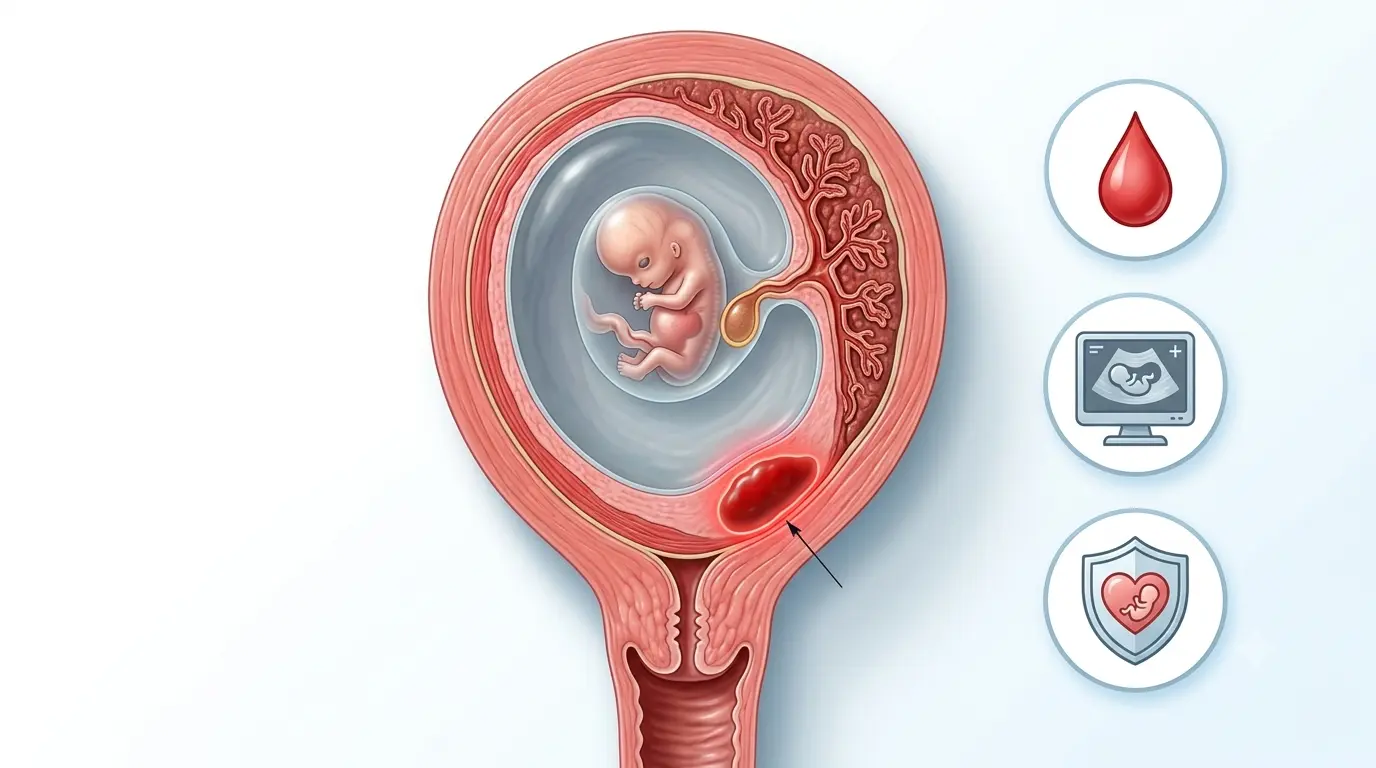
A decidual hemorrhage means bleeding inside the lining of the uterus (the decidua) during pregnancy. It usually happens in early pregnancy and may appear on an ultrasound as a small blood collection. Many women have healthy pregnancies after a small decidual hemorrhage, but larger hemorrhages can increase the risk of complications.
Pregnancy bleeding can be frightening, especially during the first trimester. While many women worry that it always means a miscarriage, that is not always the case. A decidual hemorrhage is one possible cause of bleeding during pregnancy. In many cases, it is small, causes few or no symptoms, and heals on its own. However, every episode of bleeding during pregnancy should be evaluated by a healthcare provider.
The decidua is the specialized lining of the uterus that supports a developing pregnancy. When bleeding occurs within this tissue, it is known as a decidual hemorrhage. Depending on its size and location, it may cause light spotting, heavier bleeding, pelvic cramping, or no symptoms at all. Some hemorrhages are only discovered during a routine pregnancy ultrasound.
Although hearing the word “hemorrhage” can be alarming, it does not always mean the pregnancy is in danger. Many small decidual hemorrhages resolve naturally without harming the baby. However, larger or persistent hemorrhages may require closer monitoring because they can increase the risk of pregnancy complications.
In this guide, you’ll learn what a decidual hemorrhage is, what causes it, its symptoms, how it is diagnosed and treated, and what it may mean for your pregnancy. You’ll also discover how it differs from similar conditions, such as a subchorionic hematoma, placental abruption, and miscarriage.
What Is a Decidual Hemorrhage?
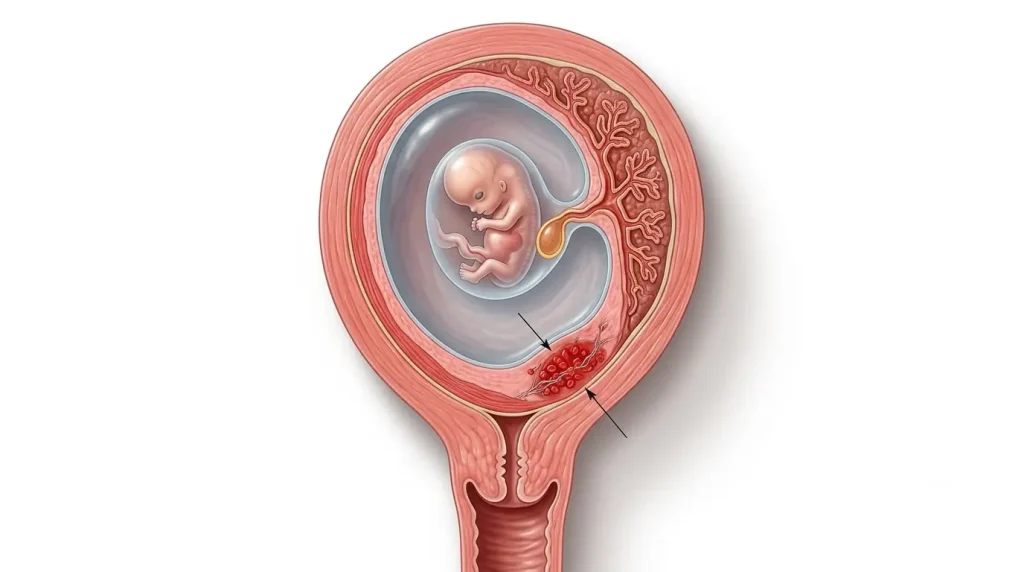
A decidual hemorrhage is bleeding that occurs inside the decidua, the lining of the uterus that forms during pregnancy. The decidua provides nutrients and support to the developing embryo before the placenta is fully established. When small blood vessels in this lining break, blood can collect within or around the decidual tissue. Doctors refer to this bleeding as a decidual hemorrhage.
Although the word hemorrhage sounds serious, it does not always mean a life-threatening condition. In medicine, the term simply means bleeding. The severity depends on how much bleeding occurs, where it happens, and whether it affects the pregnancy.
Many decidual hemorrhages happen during the first trimester. They may develop as the fertilized egg implants into the uterine lining or while the placenta is forming. In some cases, doctors discover the hemorrhage during an ultrasound before any symptoms appear. In other cases, women seek medical care because of vaginal bleeding or cramping.
A decidual hemorrhage is not a disease. Instead, it is a finding that may occur for different reasons during pregnancy. Your healthcare provider will consider your symptoms, ultrasound results, and medical history before deciding if any treatment or additional monitoring is needed.
Understanding the Decidua
The decidua is the thickened inner lining of the uterus during pregnancy. It develops from the endometrium after a fertilized egg implants. This tissue plays an important role in supporting the pregnancy during its early stages.
The decidua has several important functions. It helps nourish the embryo, supports the developing placenta, and creates a protective environment for the baby. It also contains many blood vessels that deliver oxygen and nutrients to the pregnancy.
Because the decidua has a rich blood supply, small blood vessels can sometimes break or leak. When this happens, blood collects within the tissue and forms a decidual hemorrhage. The amount of bleeding can range from very small to more extensive collections.
What Happens During a Decidual Hemorrhage?
A decidual hemorrhage begins when blood leaks from small blood vessels within the uterine lining. The blood may stay in one area or spread slightly between the layers of tissue. Depending on its size, the body may gradually absorb the blood over several weeks.
Some women experience vaginal bleeding because part of the blood leaves the uterus. Others have no visible bleeding because the blood remains inside the tissue. This is one reason why some hemorrhages are found only during an ultrasound examination.
The body’s natural healing process often removes small collections of blood. As healing occurs, follow-up ultrasounds may show that the hemorrhage has become smaller or disappeared completely.
Is a Decidual Hemorrhage Common?
A decidual hemorrhage is considered an uncommon but recognized finding during pregnancy. It is most often seen during the first trimester, when the uterus and placenta are changing rapidly.
Healthcare providers may detect more cases today because early pregnancy ultrasounds are more common than in the past. Some small hemorrhages never cause symptoms and may resolve before they are even discovered.
Although the exact number of cases is unknown, early pregnancy bleeding itself is relatively common. Not every woman with bleeding has a decidual hemorrhage, and not every decidual hemorrhage causes bleeding. This is why an ultrasound is important for finding the cause.
Is a Decidual Hemorrhage Dangerous?
A decidual hemorrhage is not always dangerous. In many pregnancies, especially when the hemorrhage is small, the bleeding stops naturally and the pregnancy continues without further problems. However, the condition should never be ignored because larger hemorrhages may increase the risk of complications.
The outlook depends on several factors. These include the size of the hemorrhage, where it is located, how far along the pregnancy is, and whether bleeding continues over time. Your healthcare provider will use these factors to decide how closely the pregnancy should be monitored.
Many women become worried after hearing the word hemorrhage. However, it is important to remember that this medical term simply means bleeding. It does not automatically mean that the pregnancy is in danger.
Mild vs. Severe Cases
Small decidual hemorrhages usually have the best outlook. The body often absorbs the blood over time without harming the pregnancy. Many women have healthy pregnancies after a small hemorrhage.
Larger hemorrhages may need closer medical follow-up. They can sometimes interfere with normal placental development or increase the chance of ongoing bleeding. In these situations, your healthcare provider may recommend additional ultrasounds and more frequent prenatal visits.
Can It Harm the Baby?
In many cases, a small decidual hemorrhage does not harm the developing baby. The pregnancy often continues normally, especially if the bleeding resolves during the first trimester.
A larger hemorrhage may increase the risk of pregnancy complications because it can affect the tissues that support the pregnancy. Even then, many pregnancies still have positive outcomes with careful monitoring.
Every pregnancy is different. Your doctor is the best person to explain how the location and size of the hemorrhage may affect your individual situation.
Can It Cause a Miscarriage?
A decidual hemorrhage does not always lead to a miscarriage. Many women continue their pregnancies without serious problems. However, research suggests that larger or persistent hemorrhages may increase the risk of pregnancy loss, especially when they occur alongside other complications.
It is also important to understand that vaginal bleeding does not always mean a miscarriage is happening. Many women experience light bleeding during early pregnancy and go on to deliver healthy babies.
If you have bleeding during pregnancy, contact your healthcare provider as soon as possible. An ultrasound and medical evaluation can help identify the cause and check the baby’s well-being.
Does Every Decidual Hemorrhage Lead to Pregnancy Complications?
No. Most decidual hemorrhages do not automatically lead to pregnancy complications. Many remain small and gradually heal without affecting the baby’s growth.
The risk becomes higher when the hemorrhage is large, continues to grow, or occurs together with other pregnancy problems. This is why doctors often recommend follow-up ultrasounds to monitor changes over time.
Early diagnosis and regular prenatal care play an important role in managing the condition. Following your healthcare provider’s advice gives you and your baby the best chance for a healthy pregnancy.
Signs and Symptoms of a Decidual Hemorrhage
The symptoms of a decidual hemorrhage can vary from one woman to another. Some women notice obvious bleeding, while others have no symptoms at all. In many cases, the condition is discovered during a routine pregnancy ultrasound.
The type and amount of bleeding do not always show how serious the hemorrhage is. A small hemorrhage may cause noticeable spotting, while a larger one may produce few or no symptoms. Because of this, medical evaluation is always important.
Vaginal Bleeding
Vaginal bleeding is the most common symptom of a decidual hemorrhage. The bleeding may appear as light spotting or a heavier flow. Some women notice only a few drops of blood, while others experience bleeding that resembles a menstrual period.
The color of the blood can also vary. It may be bright red, dark red, pink, or brown. Brown blood usually means the blood is older and leaving the body more slowly.
Any bleeding during pregnancy should be reported to your healthcare provider, even if it seems mild.
Pelvic Pain and Cramping
Some women experience mild pelvic discomfort or cramping along with bleeding. The cramps may feel similar to menstrual cramps and can range from mild to moderate.
However, many women with a decidual hemorrhage have no pain at all. The presence or absence of pain does not always reflect the size of the hemorrhage.
Severe abdominal pain, heavy bleeding, or dizziness should be treated as an emergency and requires immediate medical care.
Brown Spotting vs. Bright Red Bleeding
Brown spotting often indicates older blood that has remained in the uterus before leaving the body. Bright red bleeding usually suggests newer or active bleeding.
Both types of bleeding can occur with a decidual hemorrhage. However, bleeding alone cannot determine the exact cause. Other pregnancy conditions can produce similar symptoms, which is why an ultrasound is often needed.
Can You Have a Decidual Hemorrhage Without Symptoms?
Yes. Some women have no symptoms at all. A decidual hemorrhage may be found accidentally during an early pregnancy ultrasound performed for another reason.
Silent hemorrhages are often small and may heal without causing problems. Even if you feel well, your healthcare provider may recommend follow-up scans to make sure the hemorrhage is shrinking and the pregnancy is progressing normally.
What Causes a Decidual Hemorrhage?
A decidual hemorrhage develops when small blood vessels in the decidua break and bleed. The exact cause is not always clear. In many pregnancies, doctors cannot identify a single reason why the bleeding happened. Instead, several factors may contribute to the condition.
During early pregnancy, the uterus changes quickly to support the growing embryo. New blood vessels form, the placenta begins to develop, and the uterine lining becomes thicker. These normal changes can sometimes make small blood vessels more likely to leak.
Although many decidual hemorrhages resolve without causing serious problems, understanding the possible causes can help explain why they occur.
Implantation-Related Bleeding
One possible cause is the natural process of implantation. After fertilization, the embryo attaches to the lining of the uterus. As it burrows into the decidua, tiny blood vessels may break and cause bleeding.
Most implantation bleeding is light and short-lived. However, in some cases, the bleeding may collect within the decidual tissue and appear as a small hemorrhage on an ultrasound.
Changes in Blood Vessels
Pregnancy causes major changes in the blood vessels that supply the uterus. These vessels expand to provide more oxygen and nutrients to the developing baby.
Sometimes, small blood vessels become fragile or rupture during these changes. This can allow blood to collect within the decidua, leading to a decidual hemorrhage.
Placental Development
The placenta begins forming during the first trimester. As it attaches to the uterine wall, small areas of bleeding may occur.
Most of these changes are harmless and heal naturally. However, if bleeding continues or becomes larger, it may result in a decidual hemorrhage that requires monitoring.
Trauma or Physical Injury
Although uncommon, direct trauma to the abdomen may increase the risk of bleeding during pregnancy.
Examples include:
- A fall
- A car accident
- A strong impact to the abdomen
Even after minor trauma, it is important to contact your healthcare provider if you notice bleeding or abdominal pain.
Blood Clotting Disorders
Some women have medical conditions that affect how their blood clots. These disorders may increase the chance of bleeding during pregnancy.
Examples include inherited clotting disorders or conditions that affect platelet function. If your doctor suspects a clotting disorder, additional blood tests may be recommended.
High Blood Pressure
Chronic high blood pressure or pregnancy-related hypertension can affect blood vessels throughout the body, including those in the uterus.
Although high blood pressure is more commonly linked with complications later in pregnancy, it may also contribute to abnormal bleeding in some women.
IVF and Fertility Treatments
Women who become pregnant through in vitro fertilization (IVF) or other fertility treatments may have a slightly higher chance of early pregnancy bleeding.
This does not mean IVF causes a decidual hemorrhage. Instead, pregnancies achieved through fertility treatment often receive earlier and more frequent ultrasounds, which can detect small hemorrhages that might otherwise go unnoticed.
Multiple Pregnancy
Carrying twins or higher-order multiples places greater demands on the uterus and placenta.
The increased blood supply and larger placental area may slightly raise the chance of bleeding during early pregnancy.
Smoking and Lifestyle Factors
Smoking damages blood vessels and reduces oxygen delivery throughout the body. It is also linked to several pregnancy complications.
Quitting smoking before or during pregnancy can improve both maternal and fetal health. If you smoke, ask your healthcare provider about safe ways to quit.
Unknown Causes
Sometimes, no clear cause can be found.
Many women develop a decidual hemorrhage despite having a healthy pregnancy and no known risk factors. This can be frustrating, but it is common in obstetric care.
Finding no obvious cause does not always mean the pregnancy is at higher risk. Instead, doctors focus on monitoring the hemorrhage and checking that the baby continues to develop normally.
Risk Factors for a Decidual Hemorrhage
A risk factor does not guarantee that you will develop a decidual hemorrhage. It simply means the condition may be more likely to occur.
Some women have no risk factors at all, while others have several. Knowing these factors helps doctors decide whether closer monitoring is needed.
| Risk Factor | Why It May Increase Risk |
|---|---|
| Previous miscarriage | May indicate a pregnancy that needs closer monitoring. |
| IVF or fertility treatment | Early ultrasounds detect more hemorrhages, and some pregnancies have a slightly higher bleeding risk. |
| Multiple pregnancy | More placental tissue and increased blood flow may raise the chance of bleeding. |
| Maternal age over 35 | Pregnancy complications become more common with age. |
| High blood pressure | Can affect healthy blood vessel function. |
| Blood clotting disorders | May increase abnormal bleeding. |
| Smoking | Damages blood vessels and increases pregnancy risks. |
| Previous placental complications | May increase the likelihood of bleeding in future pregnancies. |
Having one or more of these risk factors does not mean a hemorrhage will occur. Many women with these risk factors have healthy pregnancies, while others without any known risk factors may still develop a decidual hemorrhage.
How Is a Decidual Hemorrhage Diagnosed?
Doctors diagnose a decidual hemorrhage by combining your symptoms, medical history, physical examination, and imaging studies. Ultrasound is the most important tool because it allows healthcare providers to see the location and size of the bleeding.
Early diagnosis helps doctors monitor the pregnancy and identify any changes that may need additional care.
Medical History
Your healthcare provider will first ask about your symptoms.
Questions may include:
- When did the bleeding start?
- How much bleeding have you had?
- What color is the blood?
- Are you having cramps or pain?
- Have you had previous pregnancy complications?
- Are you carrying twins?
- Did you conceive naturally or through IVF?
These answers help narrow the possible causes of bleeding.
Physical Examination
Your doctor may perform a gentle physical examination to check for signs of active bleeding and rule out other causes.
In some cases, a pelvic examination may be recommended if it is considered safe for your pregnancy.
Ultrasound Examination
Ultrasound is the primary method used to diagnose a decidual hemorrhage.
Most women have either:
- A transvaginal ultrasound during early pregnancy, or
- An abdominal ultrasound later in pregnancy.
The scan helps doctors:
- Confirm that the pregnancy is inside the uterus.
- Check the baby’s heartbeat.
- Measure the size of the hemorrhage.
- Determine its location.
- Monitor whether it is getting smaller or larger.
Ultrasound findings also help distinguish a decidual hemorrhage from other causes of pregnancy bleeding, such as a subchorionic hematoma or placental abruption.
Blood Tests
Blood tests may be recommended depending on your symptoms.
These may include:
- Complete blood count (CBC) to check for anemia.
- Blood type and Rh factor, especially if bleeding occurs during pregnancy.
- Beta-human chorionic gonadotropin (beta-hCG) in early pregnancy to help evaluate pregnancy progression when needed.
Not every woman requires these tests. Your healthcare provider will decide which tests are appropriate based on your condition.
Ongoing Pregnancy Monitoring
After diagnosis, many women need one or more follow-up ultrasounds.
These appointments allow doctors to:
- Measure the hemorrhage.
- Confirm normal fetal growth.
- Check the baby’s heartbeat.
- Watch for new bleeding.
- Make sure the placenta continues to develop normally.
Most small hemorrhages become smaller over time and eventually disappear.
What Does a Decidual Hemorrhage Look Like on Ultrasound?
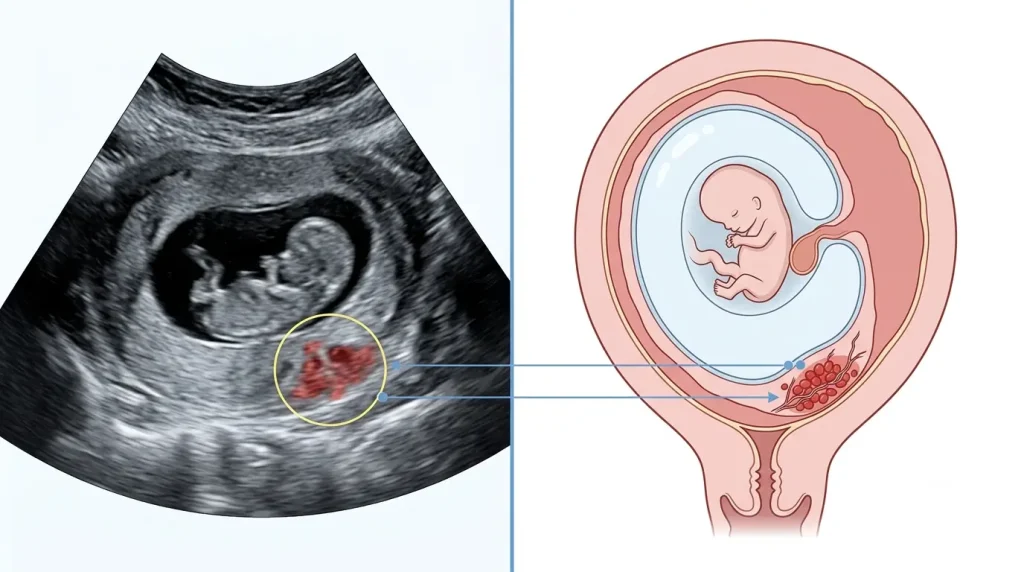
Ultrasound is the best way to evaluate a decidual hemorrhage. It allows doctors to see where the bleeding is located and whether it is changing over time.
Because ultrasound does not use radiation, it is considered safe during pregnancy when performed by trained healthcare professionals.
Typical Ultrasound Appearance
A decidual hemorrhage usually appears as a small collection of blood within or near the decidual tissue.
Depending on the age of the bleeding, it may look:
- Dark or black on the scan
- Gray in appearance
- Irregular or crescent-shaped
- Small and localized or larger and more widespread
The appearance changes as the body gradually absorbs the blood.
Measuring the Hemorrhage
Your healthcare provider will usually measure the hemorrhage during the ultrasound.
The report may include:
- Length
- Width
- Depth
- Estimated size
- Exact location
These measurements help determine whether the hemorrhage is stable, shrinking, or growing.
Small vs. Large Hemorrhages
Small hemorrhages generally have a better outlook. They often disappear naturally over several weeks without affecting the pregnancy.
Larger hemorrhages require closer observation because they may increase the chance of ongoing bleeding or other pregnancy complications.
However, size alone does not predict the outcome. The location of the hemorrhage and the overall health of the pregnancy are also important.
Can a Decidual Hemorrhage Disappear?
Yes. Many decidual hemorrhages gradually resolve on their own.
The body slowly reabsorbs the trapped blood, and follow-up ultrasounds may show that the hemorrhage has become smaller or disappeared completely.
Some women continue to have light spotting while the blood leaves the body, while others notice no symptoms during the healing process.
Your healthcare provider will decide how often follow-up ultrasounds are needed based on your symptoms, the size of the hemorrhage, and your stage of pregnancy.
Decidual Hemorrhage vs. Subchorionic Hematoma
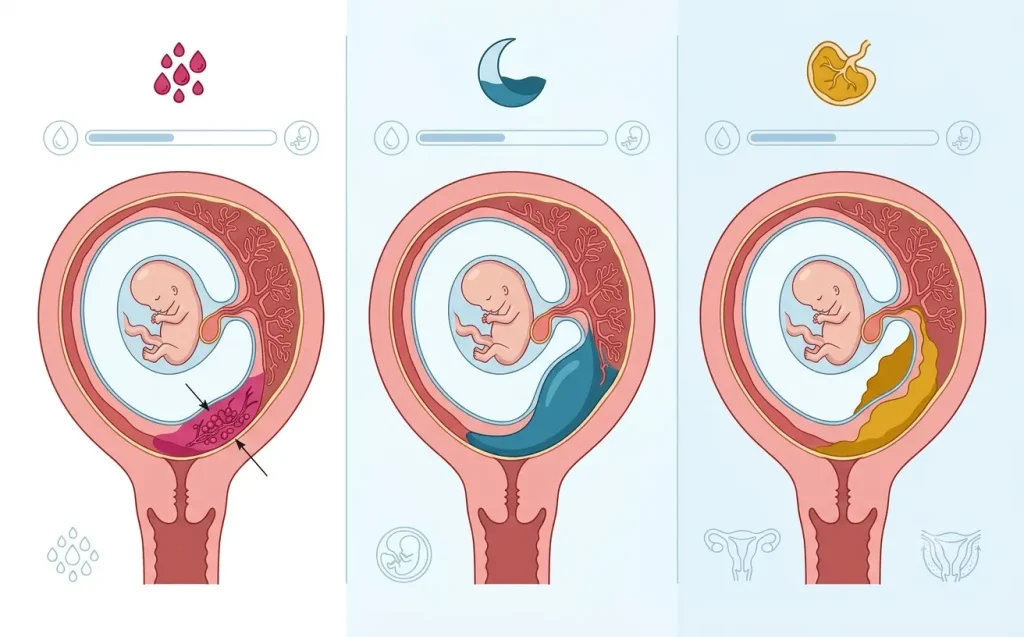
A decidual hemorrhage and a subchorionic hematoma are closely related conditions. Both involve bleeding during pregnancy, and both may be found during an ultrasound. However, they are not exactly the same.
A decidual hemorrhage occurs within the decidual tissue, which is the lining of the uterus during pregnancy. A subchorionic hematoma develops when blood collects between the chorion (the outer fetal membrane) and the uterine wall.
Because both conditions can cause vaginal bleeding, they are sometimes confused. An ultrasound helps doctors identify the exact location of the bleeding.
| Feature | Decidual Hemorrhage | Subchorionic Hematoma |
|---|---|---|
| Location | Inside the decidua (uterine lining) | Between the chorion and uterine wall |
| Main Cause | Bleeding from decidual blood vessels | Separation between the chorion and uterine wall |
| Common Symptoms | Spotting, bleeding, cramping, or no symptoms | Spotting, bleeding, cramping, or no symptoms |
| Diagnosis | Ultrasound | Ultrasound |
| Pregnancy Risk | Depends on size and location | Depends on size and location |
| Outlook | Often resolves naturally | Many resolve without affecting the pregnancy |
Although they are different conditions, both require medical evaluation and follow-up during pregnancy.
Decidual Hemorrhage vs. Placental Abruption
Placental abruption is a much more serious condition than a decidual hemorrhage.
A placental abruption happens when the placenta separates from the wall of the uterus before delivery. This separation can reduce the baby’s oxygen supply and may become a medical emergency.
A decidual hemorrhage usually develops earlier in pregnancy and is often much smaller.
| Feature | Decidual Hemorrhage | Placental Abruption |
|---|---|---|
| Usually Occurs | Most often in early pregnancy | Usually after 20 weeks of pregnancy |
| Bleeding | Light to moderate | Moderate to heavy, but bleeding may also remain hidden |
| Pain | Mild cramps or no pain | Sudden, severe abdominal pain is common |
| Risk Level | Often low if small | Medical emergency in many cases |
| Treatment | Monitoring and follow-up | Immediate medical evaluation and treatment |
If you experience severe pain, heavy bleeding, or contractions during pregnancy, seek emergency medical care immediately.
Decidual Hemorrhage vs. Miscarriage
Many women fear that any bleeding means they are having a miscarriage. Fortunately, this is not always true.
A decidual hemorrhage may cause bleeding while the pregnancy continues normally. A miscarriage involves the loss of a pregnancy before 20 weeks.
The symptoms can overlap, which is why medical evaluation is essential.
| Feature | Decidual Hemorrhage | Miscarriage |
|---|---|---|
| Vaginal Bleeding | Light to heavy | Usually becomes heavier over time |
| Cramping | Mild to moderate | Often stronger and more persistent |
| Baby’s Heartbeat | Usually present | May be absent depending on the stage |
| Ultrasound | Shows hemorrhage | May show pregnancy loss or no fetal heartbeat |
| Pregnancy Outcome | Many pregnancies continue normally | Pregnancy does not continue |
Only an ultrasound and examination by a healthcare provider can determine the cause of bleeding.
Treatment for a Decidual Hemorrhage
There is no single treatment that removes a decidual hemorrhage. Instead, treatment depends on the size of the hemorrhage, your symptoms, and how your pregnancy is progressing.
Many small hemorrhages heal naturally without medical intervention. The main goal is to monitor both the mother and the baby while the body absorbs the blood.
Observation and Monitoring
For most women, careful observation is the first step.
Your healthcare provider may recommend:
- Regular prenatal visits
- Repeat ultrasounds
- Monitoring your symptoms at home
- Reporting any increase in bleeding or pain
Small hemorrhages often become smaller over time without causing problems.
Follow-Up Ultrasounds
Your doctor may schedule additional ultrasounds every few weeks.
These scans help monitor:
- The size of the hemorrhage
- The baby’s growth
- The baby’s heartbeat
- Placental development
- Signs that the bleeding is resolving
Many women see gradual improvement on follow-up scans.
Medications
There is no medication that directly removes a decidual hemorrhage.
However, your healthcare provider may recommend treatment based on your individual situation.
This may include:
- Progesterone therapy in selected pregnancies when clinically appropriate
- Iron supplements if bleeding has caused anemia
- Rh(D) immune globulin for Rh-negative women when indicated after bleeding
Always take medications exactly as prescribed. Do not start over-the-counter medicines without speaking to your healthcare provider.
Activity and Lifestyle Recommendations
Your doctor may suggest temporary lifestyle changes while monitoring the hemorrhage.
Recommendations may include:
- Avoiding heavy lifting
- Limiting strenuous exercise
- Staying well hydrated
- Getting enough rest
- Attending all prenatal appointments
Some healthcare providers recommend pelvic rest in certain situations. However, the advice varies depending on your individual pregnancy. Follow your doctor’s instructions rather than general advice found online.
When Hospital Care Is Needed
Most women with a small decidual hemorrhage do not need hospitalization.
However, hospital care may be necessary if you develop:
- Heavy vaginal bleeding
- Severe abdominal pain
- Signs of preterm labor
- Significant anemia
- Concerns about the baby’s well-being
Doctors will decide the safest treatment based on your condition.
Can a Decidual Hemorrhage Heal on Its Own?
Yes. Many decidual hemorrhages heal without any invasive treatment.
As the pregnancy progresses, the body slowly absorbs the trapped blood. Follow-up ultrasounds often show that the hemorrhage becomes smaller or disappears completely.
The healing process varies from person to person.
Some hemorrhages resolve within a few weeks, while others take longer. Factors such as the size of the hemorrhage, its location, and the stage of pregnancy all influence recovery.
Even if the hemorrhage heals, continue attending all prenatal appointments. Your healthcare provider will monitor your pregnancy to make sure both you and your baby remain healthy.
Possible Pregnancy Complications
Most small decidual hemorrhages do not cause serious complications. However, larger or persistent hemorrhages may increase certain pregnancy risks.
Possible complications include:
Miscarriage
A large hemorrhage, especially in early pregnancy, may increase the risk of pregnancy loss. However, many women with a decidual hemorrhage continue to have healthy pregnancies.
Preterm Birth
Some studies suggest that significant bleeding during pregnancy may increase the chance of delivering before 37 weeks.
Placental Abruption
In some pregnancies, ongoing bleeding may be associated with problems involving the placenta later in pregnancy.
Preterm Premature Rupture of Membranes (PPROM)
Persistent bleeding has also been linked with an increased risk of the membranes breaking before labor begins.
Fetal Growth Restriction
In rare cases, placental problems associated with ongoing bleeding may affect the baby’s growth.
These complications are possible, not inevitable. Your individual risk depends on many factors, including the size of the hemorrhage and your overall pregnancy health.
When Should You Contact a Doctor?
Contact your healthcare provider if you notice any vaginal bleeding during pregnancy, even if it is only light spotting.
Seek immediate medical care if you experience:
- Heavy vaginal bleeding
- Severe abdominal or pelvic pain
- Passing large blood clots or tissue
- Fever or chills
- Dizziness or fainting
- Fluid leaking from the vagina
- Regular contractions before your due date
- Decreased fetal movement later in pregnancy
Prompt medical evaluation can help identify the cause and ensure that you receive the right care.
Can You Prevent a Decidual Hemorrhage?
Unfortunately, there is no guaranteed way to prevent a decidual hemorrhage.
Many cases occur without any known cause and cannot be avoided.
However, maintaining a healthy pregnancy may reduce your overall risk of complications.
Healthy habits include:
- Attend every prenatal appointment.
- Eat a balanced diet.
- Stay hydrated.
- Avoid smoking, alcohol, and recreational drugs.
- Manage chronic conditions such as high blood pressure or diabetes.
- Follow your healthcare provider’s recommendations throughout pregnancy.
Remember that developing a decidual hemorrhage does not mean you did something wrong.
Key Takeaways
A decidual hemorrhage is bleeding within the uterine lining during pregnancy. It is most often diagnosed during the first trimester and may cause spotting, vaginal bleeding, cramping, or no symptoms at all.
Although the condition can be worrying, many small decidual hemorrhages heal naturally without affecting the pregnancy. Regular prenatal care, follow-up ultrasounds, and communication with your healthcare provider are the best ways to monitor recovery.
If you experience heavy bleeding, severe pain, fever, dizziness, or any other concerning symptoms, seek medical attention immediately. Early evaluation helps identify the cause of bleeding and supports the safest possible care for both you and your baby.