Which Size of Fibroid Is Dangerous? Size Chart
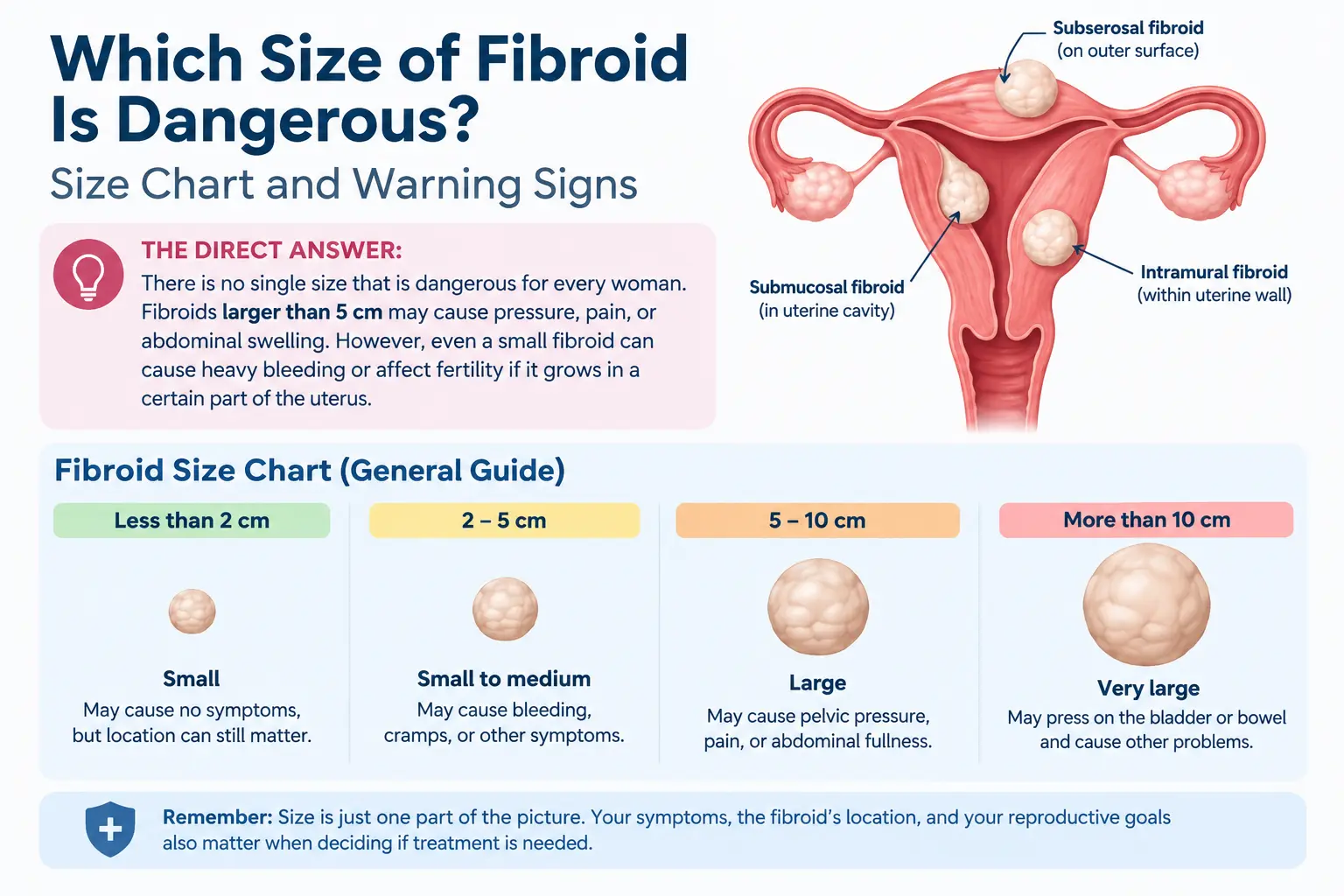
A uterine fibroid does not become dangerous at one exact size. Fibroids larger than 5 cm may cause pressure, pain, or abdominal swelling. However, even a small fibroid can cause heavy menstrual bleeding or affect fertility if it grows in a certain part of the uterus. Doctors consider fibroid size, location, symptoms, growth, and pregnancy plans when deciding whether treatment is needed.
If you have a fibroid, the measurement on your ultrasound report is only one part of the picture. Your symptoms and the position of the fibroid also matter.
Key Takeaways
- No single size is dangerous for every woman. Symptoms and fibroid location matter as much as diameter.
- Fibroids over 5 cm may cause pressure symptoms. However, size alone does not determine whether treatment is needed.
- Small fibroids can still cause problems. Those that affect the uterine cavity may cause heavy bleeding or fertility concerns.
- Treatment depends on your situation. Some fibroids need monitoring, while others may need medication or a procedure.
- Know the warning signs. Sudden severe pelvic pain or very heavy bleeding with fainting or severe dizziness needs urgent medical attention.
What Size of Fibroid Is Considered Large?
A fibroid is a noncancerous growth that develops in or around the uterus. Fibroids can range from tiny growths to masses larger than 10 cm. Some women have one fibroid, while others have several.
Doctors do not use one size chart to decide whether every fibroid is dangerous. Still, the following guide can help you understand common size ranges.
Fibroid Size Chart: Small to Very Large
Fibroid size can help doctors assess possible symptoms, but it cannot determine danger or the need for treatment on its own.
| Diameter | General category | Possible effects |
|---|---|---|
| Under 2 cm | Small | May cause no symptoms, depending on location. |
| 2–5 cm | Small to medium | May cause bleeding, cramps, or other symptoms. |
| Over 5–10 cm | Large | May cause pelvic pressure, pain, or abdominal fullness. |
| Over 10 cm | Very large | May press on nearby organs, such as the bladder or bowel. |
Important: These are general size descriptions, not official medical risk categories. A smaller fibroid can cause significant symptoms, while a larger one may cause few symptoms. Your clinician will also consider location, bleeding, pain, and reproductive goals.
These categories are general descriptions, not medical danger levels. A large fibroid does not always need surgery. A small fibroid may still need treatment if it causes severe bleeding or affects the uterine cavity.
Your gynecologist can assess the size, location, number, and symptoms of your fibroids to recommend the right next step.
Is a 3 cm Fibroid Dangerous?
A 3 cm fibroid is usually considered small. Many fibroids of this size do not cause serious problems.
However, its location can make a difference. A 3 cm fibroid that grows into the uterine cavity may cause heavy periods or affect fertility. A fibroid of the same size on the outer surface of the uterus may cause few or no symptoms.
Contact your healthcare provider if you have heavy bleeding, ongoing pelvic pain, or difficulty becoming pregnant. The size alone cannot tell you whether treatment is necessary.
Is a 5 cm Fibroid Dangerous?
A 5 cm fibroid may cause symptoms, but it is not automatically dangerous. Some women with fibroids this size feel well and need only regular monitoring.
Others may experience heavy menstrual bleeding, painful periods, pelvic pressure, or frequent urination. These symptoms depend on the fibroid’s location and how it affects nearby organs.
Your doctor may recommend treatment if the fibroid causes significant symptoms, contributes to anemia, or affects your reproductive plans. A 5 cm measurement alone does not mean you need surgery.
Is a 7 cm Fibroid Considered Large?
Yes. A 7 cm fibroid is generally considered large. It may cause abdominal fullness, pelvic pressure, back discomfort, or a feeling of heaviness.
A fibroid of this size may also press on the bladder and make you urinate more often. If it presses on the bowel, you may experience constipation or difficulty passing stool.
However, not every 7 cm fibroid causes symptoms. Your doctor will consider its position, your medical history, and any changes seen on previous scans before recommending treatment.
Is a 10 cm Fibroid Dangerous?
A 10 cm fibroid is generally considered very large. It may enlarge the abdomen or place pressure on nearby organs. Some women experience pelvic pain, frequent urination, constipation, or difficulty with daily activities.
However, a 10 cm fibroid is not automatically an emergency. The urgency depends on your symptoms and whether the fibroid is causing complications.
Seek medical advice if you have a fibroid of this size, especially if you notice worsening symptoms. Your gynecologist can discuss monitoring, medication, or procedures based on your individual needs.
Why Does Fibroid Location Matter More Than Size Alone?
How Fibroid Location Affects Symptoms
Two fibroids of the same size can cause different symptoms because they grow in different parts of the uterus.
Submucosal
Grows into the uterine cavity. May cause heavy menstrual bleeding and can affect fertility.
Intramural
Grows within the uterine wall. May cause heavy periods, cramps, or pelvic pressure.
Subserosal
Grows on the outer surface of the uterus. Larger fibroids may press on the bladder or bowel.
Pedunculated
Attaches to the uterus by a stalk. In uncommon cases, twisting can cause sudden, severe pain.
Remember: Location can affect symptoms and treatment decisions, but it does not determine risk on its own.
Fibroids can grow in different parts of the uterus. Their location often helps explain why two women with fibroids of the same size may have very different symptoms.
Submucosal fibroids
Submucosal fibroids grow into the inner lining or cavity of the uterus. Even small ones can cause heavy menstrual bleeding or contribute to fertility problems. Their effect on the uterine cavity may matter more than their diameter.
Intramural fibroids
Intramural fibroids grow within the muscular wall of the uterus. They may cause heavy periods, pelvic pain, or pressure, especially when they become larger.
Subserosal fibroids
Subserosal fibroids grow on the outer surface of the uterus. Larger ones may press on nearby organs, such as the bladder or bowel. They may cause pressure symptoms without causing heavy menstrual bleeding.
Pedunculated fibroids
Pedunculated fibroids grow on a stalk attached to the uterus. Depending on their position, they may cause pain or pressure. In uncommon cases, a stalk can twist and cut off the fibroid’s blood supply, causing sudden pain that needs urgent medical assessment.
What Are the Symptoms of a Dangerous Fibroid?
Fibroid symptoms vary from person to person. Some women have no symptoms, while others need medical treatment.
Watch for these possible signs:
- Heavy or prolonged menstrual bleeding
- Bleeding between periods
- Severe menstrual cramps or pelvic pain
- A feeling of pressure or fullness in the lower abdomen
- Frequent urination or difficulty emptying the bladder
- Constipation or pressure on the bowel
- Pain during sex
- Tiredness, weakness, or dizziness from possible anemia
Heavy menstrual bleeding can lead to iron-deficiency anemia. Anemia may cause fatigue, weakness, headaches, shortness of breath, or dizziness.
These symptoms do not always mean a fibroid is dangerous. However, persistent or worsening symptoms deserve medical assessment.
When should you seek urgent medical care?
Seek emergency care if you have very heavy bleeding with fainting, severe dizziness, chest pain, or shortness of breath. Sudden, severe pelvic or abdominal pain also needs urgent evaluation.
If you are pregnant or might be pregnant, severe pelvic pain or heavy bleeding needs prompt medical assessment. Do not assume a fibroid is the cause.
Contact your healthcare provider promptly if you cannot urinate, have worsening pelvic pressure, or notice a major change in your symptoms.
How Do You Read Fibroid Measurements on an Ultrasound?
An ultrasound is commonly used to identify fibroids and measure them. Your report may list three measurements, such as 4.2 × 3.8 × 3.5 cm.
These numbers describe the fibroid in three dimensions. They do not automatically indicate how dangerous it is.
When reviewing your report, look for the following details:
- Size: The three measurements show the fibroid’s dimensions.
- Location: The report may describe it as submucosal, intramural, or subserosal.
- Number: You may have one fibroid or several.
- Change over time: Comparing scans can help your doctor assess whether the fibroid has grown.
- Effect on nearby structures: The report may describe changes to the uterine cavity or pressure on nearby organs.
If your report says that a fibroid has grown, discuss the change with your doctor. Growth does not automatically mean cancer, but new or changing symptoms should not be ignored. A new or enlarging uterine mass after menopause deserves medical evaluation.
What Size of Fibroid Requires Surgery?
There is no universal fibroid size that requires surgery. Doctors base treatment decisions on symptoms, location, growth, reproductive goals, and the effect on nearby organs.
If you have no symptoms, your doctor may recommend watchful waiting. This means monitoring the fibroid and checking for changes when appropriate.
If treatment is needed, options may include:
- Medication: Certain medicines can help control heavy bleeding or relieve symptoms. Some treatments can also reduce fibroid size temporarily.
- Myomectomy: This procedure removes fibroids while keeping the uterus.
- Uterine fibroid embolization: This procedure reduces blood flow to fibroids so they shrink over time.
- Hysterectomy: This surgery removes the uterus and is a definitive treatment for uterine fibroids.
Each option has benefits and risks. Some treatments may not be suitable if you want to become pregnant in the future. Discuss your goals and medical history with your gynecologist before choosing a treatment.
Can Fibroids Affect Pregnancy or Fertility?
Yes, some fibroids can affect fertility or pregnancy, but many women with fibroids have healthy pregnancies.
The effect depends on the fibroid’s location, size, and whether it changes the shape of the uterine cavity. Fibroids that distort the cavity may affect implantation or increase certain pregnancy risks.
Larger fibroids may also be linked to pregnancy complications, depending on their position and other factors. However, size alone cannot predict the outcome of a pregnancy.
If you are trying to conceive, ask your gynecologist whether the fibroid’s location or effect on the uterine cavity needs further assessment. Not every fibroid needs to be removed before pregnancy.
Can Fibroids Become Cancerous?
Uterine fibroids are almost always benign, meaning they are not cancer. They do not usually turn into cancer.
A rare cancer called uterine leiomyosarcoma can develop in the uterus. It is distinct from an ordinary fibroid, and doctors cannot reliably rule it in or out based on size alone.
Growth by itself does not prove that a fibroid is cancerous. However, a new or enlarging uterine mass after menopause, unusual bleeding, or persistent unexplained pain should be evaluated by a healthcare professional.
Do not rely on a size chart to assess cancer risk. Your doctor can decide whether further testing is needed.
Can Fibroids Shrink After Menopause?
Fibroids often shrink after menopause because estrogen and progesterone levels decline. Symptoms may improve as a result.
However, this does not happen in the same way for everyone. Fibroids may remain present, and some symptoms may have other causes.
Any new vaginal bleeding after menopause needs medical evaluation. A new or enlarging pelvic mass should also be assessed rather than assumed to be a harmless fibroid.
The Bottom Line
No single fibroid size is dangerous for every woman. Fibroids larger than 5 cm may cause more pressure symptoms, and those larger than 10 cm may affect nearby organs. However, smaller fibroids can also cause significant bleeding or fertility problems.
The most important factors are fibroid location, symptoms, growth, and your reproductive plans. If you have a fibroid, discuss your ultrasound results and symptoms with your gynecologist. The right treatment plan depends on your individual situation, not size alone.
Medical disclaimer: This article is for educational purposes only. It does not replace medical advice, diagnosis, or treatment from a qualified healthcare professional.