Miscarriage Golf Ball Sized Blood Clots During Period
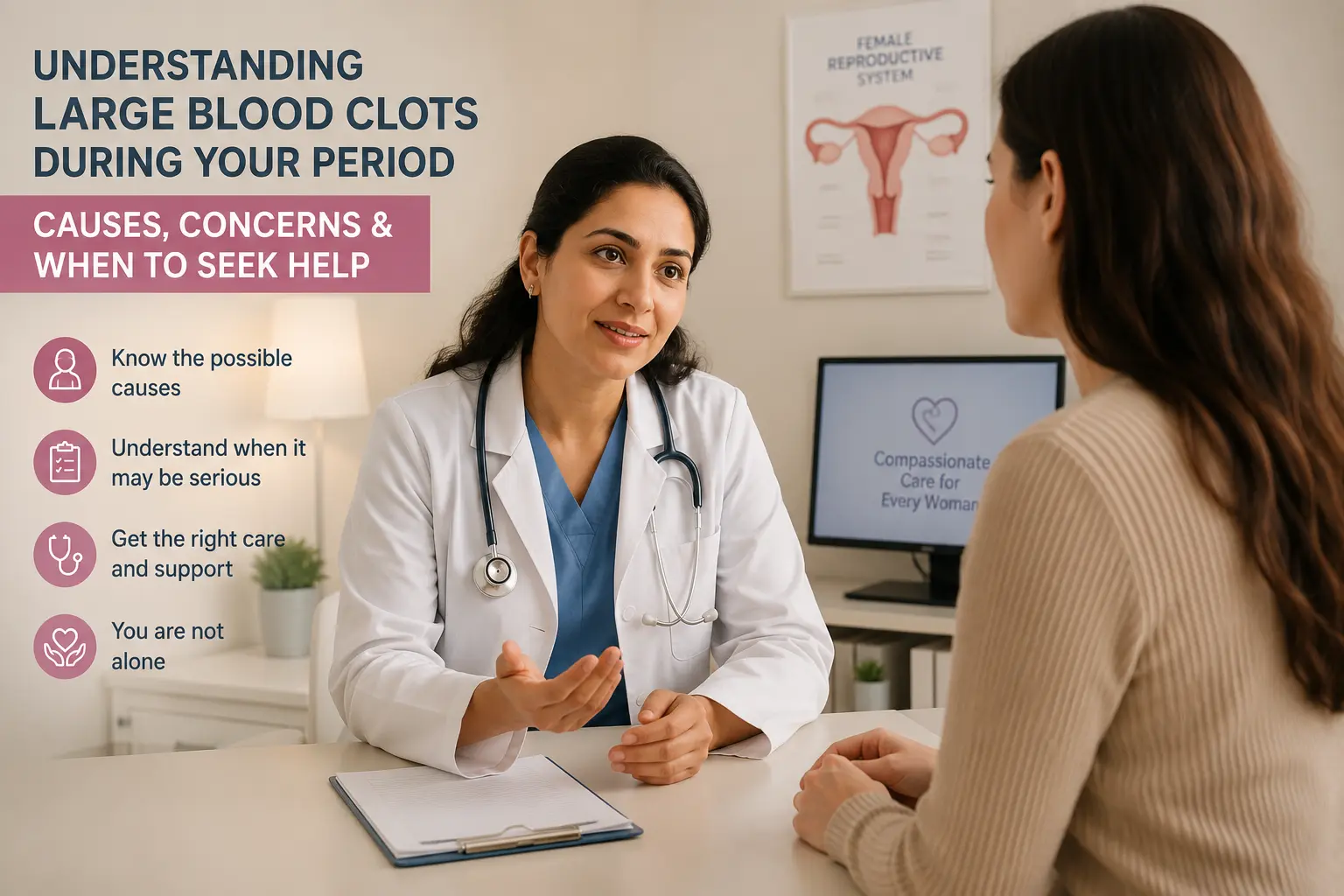
Passing a golf ball sized blood clot during your period can be scary. You may wonder if it is normal bleeding or a sign of miscarriage. This guide explains what causes large clots, how to tell menstrual clots from pregnancy tissue, and when to call a doctor.
A golf ball sized blood clot is large. It is bigger than most normal period clots. Large clots can come from heavy menstrual bleeding, fibroids, hormonal shifts, or early pregnancy loss. Some people pass a large clot without even knowing they were pregnant. This article walks through every possible cause, step by step, so you can understand what your body may be telling you.
Can a golf ball-sized blood clot mean a miscarriage? Yes, it can.
A large blood clot during a missed, late, or unusual period may be a sign of a miscarriage. This is more likely if you also have a positive pregnancy test, severe cramping, heavy bleeding, or gray or fleshy tissue.
However, not every large blood clot means pregnancy loss. Heavy menstrual bleeding, uterine fibroids, adenomyosis, hormonal imbalances, and other gynecological conditions can also cause clots that are as large as a golf ball.
The only reliable way to determine the cause is with a pregnancy test followed by an evaluation from an OB-GYN, who may recommend blood tests or an ultrasound if needed.
Key Takeaways
Important: Contact an OB-GYN or visit the nearest emergency room immediately if you have heavy bleeding, severe abdominal pain, fever, fainting, dizziness, or feel unusually weak. These symptoms may indicate a medical emergency.
Can a Golf Ball Sized Blood Clot Mean a Miscarriage?
Yes. A blood clot this large can be a sign of miscarriage, especially in early pregnancy. This is common during the first trimester, often before 12 weeks.
Miscarriage happens when a pregnancy stops developing. The body then sheds the uterine lining, pregnancy tissue, and blood. This process can create clots that are much bigger than typical period clots.
Not every large clot means miscarriage, though. Many people pass golf ball sized clots during a heavy period with no pregnancy involved at all. The only reliable way to know the difference is a pregnancy test, blood work, or an ultrasound.
Miscarriage vs. Heavy Period: Common Signs
These symptoms can help you understand what may be happening, but only a pregnancy test and medical evaluation can confirm the cause.
- You recently had a positive pregnancy test or missed your expected period.
- The clot contains gray, pink, white, or fleshy tissue instead of only dark red blood.
- Your cramping is much stronger than your usual menstrual cramps.
- The bleeding began suddenly and is much heavier than your normal period.
- Your periods have been heavy or irregular for several months.
- You have a history of fibroids, adenomyosis, endometriosis, or PCOS.
- Your pregnancy test is negative.
- Your bleeding follows your usual menstrual pattern, although the flow is heavier than normal.
Can It Happen During a Normal Period?
Yes, a normal period can include large clots. This is more common with heavy menstrual bleeding, a condition doctors call menorrhagia.
Clots form when blood pools in the uterus and clotting factors kick in before the blood leaves the body. The heavier and slower your flow, the more likely clots will form and grow larger.
Occasional large clots during a heavy day are usually not an emergency. But if this happens every cycle, or the clots keep getting bigger, it is worth telling your gynecologist. This pattern can point to fibroids, hormonal imbalance, or a bleeding disorder.
Can You Miscarry Without Knowing You Were Pregnant?
Yes, this is possible and more common than most people realize. A pregnancy that ends very early, often called a chemical pregnancy, can happen before a missed period.
In this case, the bleeding may look like a slightly heavier or later period. The person may never have taken a pregnancy test. This is one reason some large clots get mistaken for a regular period when they were actually early pregnancy loss.
If you have any suspicion, an early pregnancy test taken on the first day of missed bleeding can help clarify what happened.
🩸 What Does a Golf Ball-Sized Blood Clot Look Like?
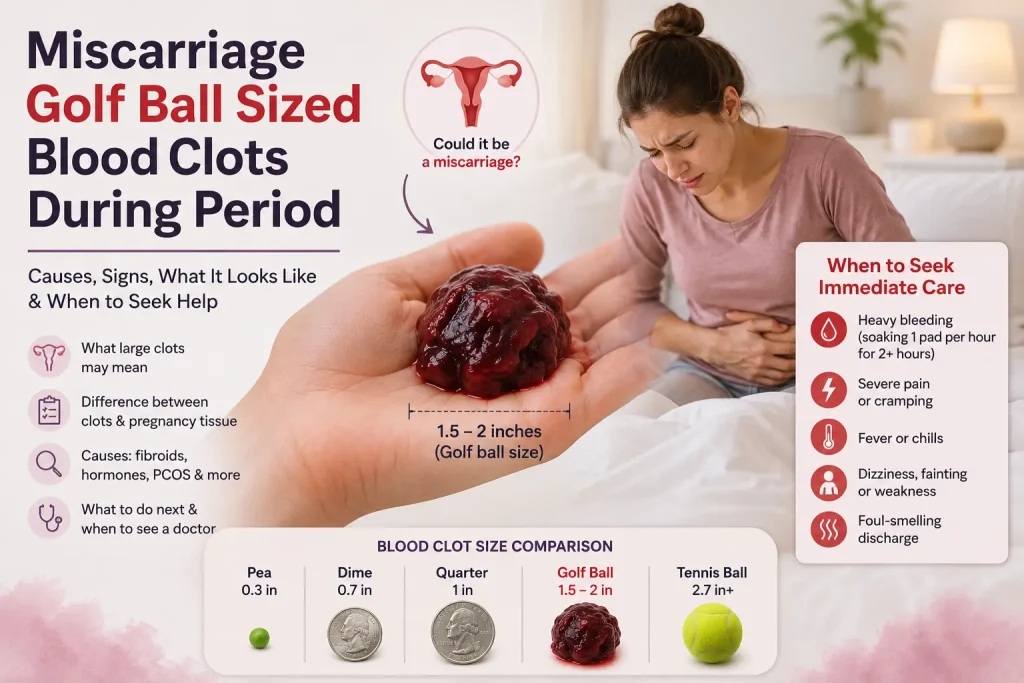
A standard golf ball measures about 1.68 inches (4.3 cm) across. In medical terms, a blood clot this size is considered large. While small clots are common during heavy menstrual flow, clots larger than a quarter (about 1 inch) should be discussed with your healthcare provider, especially if they occur repeatedly or are accompanied by severe pain or heavy bleeding.
📏 Golf Ball Size Comparison
| Object | Approximate Size | What It May Mean |
|---|---|---|
| 🟢 Pea | 0.3 inch (0.8 cm) | Usually Normal |
| 🪙 Dime | 0.7 inch (1.8 cm) | Common During Heavy Flow |
| 🪙 Quarter | 1 inch (2.5 cm) | Monitor Symptoms |
| ⛳ Golf Ball | 1.68 inches (4.3 cm) | Large — Tell Your Doctor |
| 🎾 Tennis Ball | 2.7 inches (6.8 cm) | Seek Prompt Medical Care |
🎨 Color and Texture Matter Too
🔴 Bright Red Clots
Often indicate fresh, active bleeding. They usually form when blood leaves the uterus quickly.
🟤 Dark Red or Brown Clots
Usually contain older blood that stayed in the uterus longer before being expelled.
⚪ Gray or Pale Tissue
May suggest pregnancy tissue or, in some cases, a decidual cast. This should be evaluated promptly, especially if pregnancy is possible.
🧬 Stringy or Membrane-Like Tissue
May represent part of the uterine lining shedding in one piece. Although it can occur during a heavy period, it may also resemble pregnancy tissue.
Blood Clot vs Pregnancy Tissue
Many people cannot tell the difference just by looking. Here is a simple comparison.
| Feature | Menstrual Blood Clot | Pregnancy Tissue |
|---|---|---|
| Color | Dark red to bright red | Gray, pink, or whitish |
| Texture | Jelly-like, smooth | May contain a sac or membrane |
| Shape | Round or irregular blob | Sometimes holds a defined shape |
| Pregnancy test | Usually negative | Usually positive (may turn negative after loss) |
| Pain level | Normal period cramps | Often stronger, wave-like cramps |
| Timing | Matches your usual cycle | May follow a missed or late period |
If you are unsure and want a medical opinion, you can place tissue in a clean container and bring it to your doctor’s office. This can help with diagnosis, especially if there are concerns about retained tissue.
Heavy Period vs Miscarriage
| Symptom | Heavy Period | Miscarriage |
|---|---|---|
| Pregnancy test | Negative | Often positive, may turn negative |
| Cramping | Typical period cramps | Often more intense, comes in waves |
| Clot size | Can be large, especially on heavy days | Can be large, sometimes tissue-like |
| Duration | Matches normal period length | Bleeding may last longer than a usual period |
| Pattern | Regular monthly pattern | Often follows a late or missed period |
| Back pain | Mild to moderate | Can be more pronounced |
This table gives a general pattern only. Symptoms overlap enough that self-diagnosis is not reliable. A pregnancy test and medical evaluation give the clearest answer.
Possible Causes of Large Blood Clots
Heavy Menstrual Bleeding
Heavy menstrual bleeding, or menorrhagia, is one of the most common causes of large clots. It means soaking through a pad or tampon every hour for several hours, or bleeding that lasts more than seven days.
Fibroids
Uterine fibroids are noncancerous growths in the uterus. They can distort the uterine lining and cause heavier flow with larger clots. Fibroids are a well-known cause of abnormal uterine bleeding, according to the American College of Obstetricians and Gynecologists (ACOG).
Adenomyosis
Adenomyosis happens when uterine lining tissue grows into the muscle wall of the uterus. It often causes heavy periods, large clots, and painful cramping.
PCOS
Polycystic ovary syndrome (PCOS) causes hormonal imbalance. This can lead to irregular cycles where the uterine lining builds up for longer than usual. When it finally sheds, bleeding can be heavier with larger clots.
Hormonal Imbalance
Low progesterone or estrogen swings can thicken the uterine lining. A thicker lining means heavier bleeding and bigger clots when your period arrives.
Decidual Cast
A decidual cast is a rare event where the entire uterine lining sheds in one triangular piece, shaped like the inside of the uterus. It can look alarming and is sometimes linked to hormonal birth control, ectopic pregnancy, or hormone shifts. Not every decidual cast means miscarriage, but it should always be checked by a doctor.
Chemical Pregnancy
A chemical pregnancy is a very early pregnancy loss, often happening before five weeks. It may show as a positive pregnancy test followed by bleeding that looks like a slightly late, heavier period.
Miscarriage
Miscarriage refers to pregnancy loss before 20 weeks. Early miscarriage, especially in the first trimester, is the most common type and can involve heavy bleeding with large clots and cramping.
Retained Tissue
After a miscarriage, some pregnancy tissue can stay in the uterus. This is called retained products of conception. It can cause ongoing bleeding, clots, cramping, and sometimes infection if not treated.
Ectopic Pregnancy
An ectopic pregnancy happens when a fertilized egg implants outside the uterus, usually in a fallopian tube. It can cause bleeding and clotting but is a medical emergency because it cannot continue safely. Sharp one-sided pain, dizziness, or shoulder pain alongside bleeding needs immediate emergency care.
Signs It Could Be a Miscarriage Instead of a Period
Watch for this combination of symptoms:
- A positive pregnancy test in the days or weeks before bleeding started
- Cramping that feels stronger or different from usual periods
- Passing tissue that looks different from typical blood clots
- Bleeding heavier than your normal period
- Lower back pain paired with pelvic cramping
- Bleeding that started after a missed or late period
None of these signs alone confirms miscarriage. Together, they raise the likelihood enough to warrant a pregnancy test and a call to your OB-GYN.
Symptoms: What Can Happen Over Several Days
| Day | Possible Symptoms |
|---|---|
| Day 1 | Spotting or light bleeding begins, mild cramping |
| Day 2 | Bleeding becomes heavier, cramping intensifies |
| Day 3 | Passing large clots or tissue, cramping peaks |
| Day 4–5 | Bleeding gradually tapers, cramping eases |
| Day 6–7 | Light spotting continues, symptoms resolve |
This timeline is a general pattern, not a guarantee. Some people pass tissue within hours. Others take one to two weeks. If bleeding does not slow down after a week, contact your doctor.
When Should You Go to the Emergency Room?
When to Call Your Doctor vs Go to the ER
| Situation | Call Your Doctor | Go to the ER |
|---|---|---|
| Large clots but stable, mild pain | Yes | No |
| Soaking a pad every hour for 2+ hours | No | Yes |
| Fever or chills | No | Yes |
| Severe, sudden one-sided pelvic pain | No | Yes |
| Dizziness, fainting, or rapid heartbeat | No | Yes |
| Foul-smelling discharge | Call same day | If severe, yes |
| Mild cramping, spotting only | Yes | No |
| Known pregnancy with any bleeding | Call immediately | If severe symptoms, yes |
Go to the emergency room immediately if you have:
- Bleeding that soaks through one or more pads per hour for two hours
- Severe pelvic or abdominal pain
- Dizziness, fainting, or a racing heart
- Fever above 100.4°F (38°C)
- Foul-smelling vaginal discharge
- Shoulder pain with bleeding, which can signal ectopic pregnancy
- Signs of shock, such as pale skin, confusion, or cold, clammy skin
These symptoms can point to heavy blood loss, infection, or a ruptured ectopic pregnancy. All are medical emergencies.
🩺 Decision Tree: What Should You Do?
Follow these simple steps to decide what to do after passing a large blood clot. This guide cannot diagnose a miscarriage but can help you know when to seek medical care.
Did You Pass a Large Blood Clot?
If you passed a clot that is about the size of a golf ball or larger, continue to the next step.
Could You Be Pregnant?
Take a home pregnancy test as soon as possible, then continue to Step 3.
Monitor your bleeding and continue to Step 4.
Is Your Pregnancy Test Positive?
Contact your OB-GYN immediately, even if the bleeding seems manageable. You may need blood tests or an ultrasound.
Continue to Step 4 and keep monitoring your symptoms.
Is the Bleeding Very Heavy?
Heavy bleeding means soaking through one sanitary pad every hour for two or more consecutive hours.
Go to the nearest emergency room immediately.
Monitor your symptoms and schedule a doctor’s appointment if large clots continue during future menstrual cycles.
Do You Have Any Emergency Warning Signs?
Watch for fever, severe abdominal pain, dizziness, fainting, or foul-smelling vaginal discharge.
These symptoms may indicate an emergency such as infection, severe blood loss, or pregnancy complications. Seek emergency medical care immediately.
Continue monitoring your symptoms and follow up with your OB-GYN if bleeding or large clots continue or new symptoms develop.
Remember: A pregnancy test, physical examination, and transvaginal ultrasound are the most reliable ways to determine whether a large blood clot is caused by a miscarriage, a heavy menstrual period, or another gynecological condition.
How Doctors Diagnose the Cause
An OB-GYN or emergency room doctor uses several tools to find out why you passed a large clot. while OB-GYN medical records help keep the patient’s history, test results, ultrasound findings, and follow-up information organized.
- Pregnancy test (urine or hCG blood test). This confirms or rules out current pregnancy.
- Transvaginal ultrasound. This checks the uterus for pregnancy tissue, retained tissue, fibroids, or an ectopic pregnancy.
- Complete Blood Count (CBC). This checks for anemia from blood loss and signs of infection.
- Progesterone level. Low progesterone can point to early pregnancy loss or hormonal imbalance.
- Rh factor testing. If you are pregnant and Rh-negative, you may need a treatment called Rhogam to protect future pregnancies.
- Pelvic exam. This checks the cervix and helps the doctor see if tissue is still passing.
Doctors at facilities like Mayo Clinic and Cleveland Clinic typically combine these tests with your symptom history to reach a diagnosis.
What Doctors Check in the Emergency Room
If you go to the ER for heavy bleeding or a large clot, staff will usually follow a set process. First, they check your vital signs, including blood pressure and heart rate, to see if you have lost enough blood to affect your circulation. Rapid heart rate or low blood pressure can signal significant blood loss.
Next, they will likely order a urine or blood pregnancy test. If it is positive, a transvaginal ultrasound helps locate the pregnancy and check if it is inside the uterus or in a fallopian tube. This step is important because it rules out ectopic pregnancy, which needs urgent treatment.
The ER team may also draw blood for a CBC to check for anemia and infection markers. If you are actively passing large clots, they may examine any tissue you bring in. This full workup helps them decide whether you need immediate treatment, admission, or can safely go home with follow-up instructions.
When Should a Pregnancy Test Be Taken?
Timing matters when testing for pregnancy after unusual bleeding. Home pregnancy tests detect hCG, a hormone made by the placenta. This hormone is usually detectable about 10 to 14 days after conception, which is often close to the time of a missed period.
If you test too early, before your missed period, you might get a false negative even if you are pregnant. If bleeding has already started and you suspect pregnancy loss, testing right away still gives useful information. A positive test during or after bleeding may point to a chemical pregnancy or early miscarriage. A blood test at your doctor’s office can detect hCG earlier and more precisely than a home urine test.
If your first test is negative but symptoms continue or worsen, retesting in 48 hours or asking your doctor for a blood hCG test can give a clearer answer.
Treatment Options
Treatment depends on the cause.
- Heavy periods from fibroids or hormonal imbalance: hormonal birth control, iron supplements for anemia, or in some cases minor procedures to manage fibroids.
- Confirmed miscarriage with complete tissue passage: often no further treatment needed, just monitoring.
- Incomplete miscarriage or retained tissue: may need medication to help the uterus fully clear, or a minor in-office procedure.
- Infection: antibiotics, sometimes alongside a procedure to remove remaining tissue.
- Ectopic pregnancy: requires urgent medical or surgical treatment, since this cannot be treated by waiting.
Your OB-GYN will explain the best option based on your test results and symptoms.
What to Expect After Passing a Large Blood Clot
After passing a large clot, light bleeding or spotting can continue for several days to two weeks. Cramping usually eases within a day or two.
Follow-up care to expect:
- A repeat pregnancy test or hCG blood test to confirm hormone levels are dropping (if pregnancy was involved)
- A follow-up ultrasound in some cases to confirm the uterus is clear
- Guidance on when it is safe to try to conceive again, if relevant
- A plan for iron supplements if blood loss caused anemia
Watch for these signs after the fact:
- Bleeding that gets heavier again instead of tapering off
- New fever or chills
- Pain that worsens instead of improving
- Foul-smelling discharge
Any of these signs should prompt a call to your doctor, since they can indicate retained tissue or infection.
Emotional Impact
Passing a large clot, especially with the possibility of miscarriage, can bring up grief, fear, or confusion. These feelings are normal and valid, even in very early pregnancy loss.
It is okay to grieve a pregnancy loss no matter how early it happened. Talking with your OB-GYN, a counselor, or a support group can help. You are not alone, and many people go through this experience.
Conclusion
A golf ball sized blood clot during your period can come from many causes, including heavy menstrual bleeding, fibroids, hormonal imbalance, or miscarriage. The only way to know for certain is a pregnancy test, blood work, and an evaluation from your OB-GYN or emergency room if symptoms are severe.
Do not ignore repeated large clots, heavy bleeding, or symptoms that feel different from your usual period. Reach out to a licensed healthcare provider for a full evaluation. Getting checked brings clarity and the right care, whatever the cause turns out to be.
Frequently Asked Questions
Can a golf ball sized blood clot mean a miscarriage? Yes, it can, especially with a positive pregnancy test and strong cramping. It can also happen with a heavy period unrelated to pregnancy. Testing is the only way to know for sure.
Can it happen during a normal period? Yes. Heavy menstrual bleeding, fibroids, and hormonal shifts can all cause large clots without pregnancy involvement.
Can you miscarry without knowing you were pregnant? Yes. A very early loss, sometimes called a chemical pregnancy, can happen before a missed period and may look like a slightly heavier, later period.
What does miscarriage tissue look like? It can look gray, pink, or whitish, and sometimes contains a sac-like structure. This differs from typical menstrual clots, which are usually dark red and jelly-like.
How do miscarriage clots differ from menstrual clots? Miscarriage tissue often looks different in color and texture, comes with stronger cramping, and typically follows a missed or late period. Menstrual clots usually match your regular cycle pattern.
Can fibroids cause golf ball sized blood clots? Yes. Fibroids can distort the uterine lining, leading to heavier bleeding and larger clots.
Can PCOS cause large blood clots? Yes. PCOS can cause the uterine lining to build up over a longer time, leading to a heavier flow and larger clots when the period arrives.
When is a blood clot considered too large? Many doctors consider clots larger than a quarter (about one inch) worth mentioning at your next visit. Golf ball sized or larger clots should be reported promptly, especially with heavy bleeding.
When should someone go to the emergency room? Go to the ER for soaking a pad every hour for two or more hours, severe pain, fever, dizziness, fainting, or foul-smelling discharge.
What happens after passing a large clot? Bleeding usually tapers off over several days to two weeks. Doctors may recheck hCG levels or perform an ultrasound to confirm the uterus is clear.
How do doctors diagnose the cause? Doctors typically use a pregnancy test, transvaginal ultrasound, CBC blood test, and pelvic exam to find the cause of large clots.
You may also like: