Small-Employer Health Plans in 2027: What Women Need to Know About Healthcare Coverage
Small-employer health insurance choices can affect how easily women access pregnancy care, reproductive healthcare, preventive screenings, prescription medications, and mental health services. In 2027, employees should look beyond monthly premiums and compare deductibles, provider networks, maternity benefits, prescription coverage, and out-of-pocket costs. Employers may offer traditional group insurance, HSA-eligible plans, or individual coverage reimbursement arrangements, but the value of each option depends on the healthcare needs of their workforce.
For many women, health insurance is more than protection against unexpected hospital bills. It can determine whether they can afford routine gynecological appointments, receive timely treatment for hormonal conditions, manage pregnancy-related expenses, or continue taking prescribed medication.
This makes employer-sponsored health coverage an important part of women’s healthcare.
For women working in small businesses, however, understanding available benefits is not always straightforward. A company may offer a traditional group health plan, a high-deductible policy, or a reimbursement arrangement that allows employees to select their own insurance. Each option can create different costs and access to care.
As employers prepare for 2027, understanding these differences can help women make more informed decisions about their health coverage.
Why Does Employer-Sponsored Health Insurance Matter for Women’s Health?
Women have healthcare needs that can change throughout different stages of life. Menstruation, reproductive health, pregnancy, childbirth, postpartum recovery, and menopause can all involve different medical services.
Without suitable health insurance, the cost of these services can become difficult to manage.
Consider some common healthcare needs:
- Reproductive healthcare: Routine gynecological appointments, contraceptive services, and evaluation of menstrual changes.
- Pregnancy care: Prenatal appointments, pregnancy screenings, delivery, and postpartum services.
- Hormonal health: Evaluation and treatment of conditions such as polycystic ovary syndrome (PCOS) and other menstrual or hormonal disorders.
- Preventive healthcare: Breast cancer screenings, cervical cancer screenings, and other age-appropriate preventive services.
- Mental health: Counseling and treatment for anxiety, depression, and postpartum mental health concerns.
- Prescription medication: Access to prescribed hormonal treatments, contraceptives, and other necessary medicines.
For example, a woman experiencing irregular periods or persistent pelvic pain may need laboratory tests, imaging, specialist consultations, and follow-up appointments. A plan with a narrow provider network or high out-of-pocket costs may make it harder to complete that care.
This is why women should evaluate health insurance based on the services they may need, rather than choosing a policy based only on its monthly premium.
What Women’s Healthcare Services Should a Health Insurance Plan Cover?
When comparing employer-sponsored health plans, women should pay attention to the actual benefits included in the policy.
ACA-compliant individual and small-group health insurance plans generally cover essential health benefit categories, including maternity and newborn care, prescription drugs, preventive services, and mental health treatment. Specific covered services and state requirements can vary.
Here are some important areas to review.
1. Preventive Women’s Healthcare and Routine Screenings
Preventive care helps identify potential health problems before they become more serious.
Depending on age, medical history, and clinical recommendations, women’s preventive healthcare may include:
- Cervical cancer screening.
- Breast cancer screening.
- Well-woman visits.
- Contraceptive counseling and services.
- Screening for certain sexually transmitted infections.
- Preventive counseling and health assessments.
Many non-grandfathered ACA-compliant plans cover specified preventive services without cost-sharing when applicable coverage conditions are met.
However, not every appointment or diagnostic test is automatically considered preventive. A visit to investigate an existing symptom may be billed differently from a routine preventive screening.
Women should review their plan documents and ask their insurer how specific services are classified.
2. Pregnancy, Maternity, and Postpartum Care
Pregnancy can involve substantial healthcare expenses, particularly when a woman needs additional monitoring or specialist care.
Important benefits to review include:
- Prenatal appointments and routine pregnancy monitoring.
- Ultrasounds and medically recommended screenings.
- Laboratory testing during pregnancy.
- Labor and delivery.
- Hospitalization and medically necessary procedures.
- Postpartum checkups and recovery care.
- Breastfeeding support and related services.
Marketplace and Medicaid plans cover pregnancy and childbirth, and maternity and newborn care are essential health benefits under applicable ACA requirements.
Women should also check whether their preferred obstetrician, midwife, hospital, and delivery facility are included in the insurance network.
A plan may advertise maternity coverage but still leave patients with significant expenses if they use out-of-network providers.
3. Coverage for PCOS, Endometriosis, and Hormonal Conditions
Conditions involving reproductive and hormonal health can require ongoing medical attention.
For example, women with PCOS may need support for irregular menstrual cycles, metabolic concerns, fertility questions, and other symptoms. Endometriosis can involve persistent pelvic pain, specialist appointments, imaging, medication, and sometimes surgery.
When evaluating insurance, women should check:
- Whether relevant gynecologists and endocrinologists are in-network.
- Coverage for diagnostic tests and imaging.
- Prescription medication formularies.
- Specialist referral requirements.
- Deductibles and coinsurance for ongoing treatment.
Women experiencing irregular periods, persistent pelvic pain, or other unusual symptoms should not delay appropriate medical evaluation because they are unsure about insurance coverage.
For more information, read our guide to managing PCOS symptoms and building a long-term care plan.
4. Prescription Medication and Mental Health Coverage
Prescription coverage is particularly important for women managing ongoing health conditions.
Some may need medication for hormonal conditions, menstrual symptoms, contraception, or other medical concerns. Others may need treatment for anxiety, depression, or postpartum mental health conditions.
Before choosing a health plan, review:
- Prescription drug tiers and copayments.
- Whether preferred medications are included in the formulary.
- Coverage for generic and brand-name medicines.
- Access to mental health professionals.
- Telehealth and behavioral health benefits.
A plan with a low monthly premium may become expensive if the medications or specialists an employee needs are not covered affordably.
How Do Small-Employer Health Plans Affect Women’s Access to Care?
Small businesses generally have several ways to provide employee health coverage. The arrangement an employer selects can influence how employees choose insurance and manage healthcare expenses.
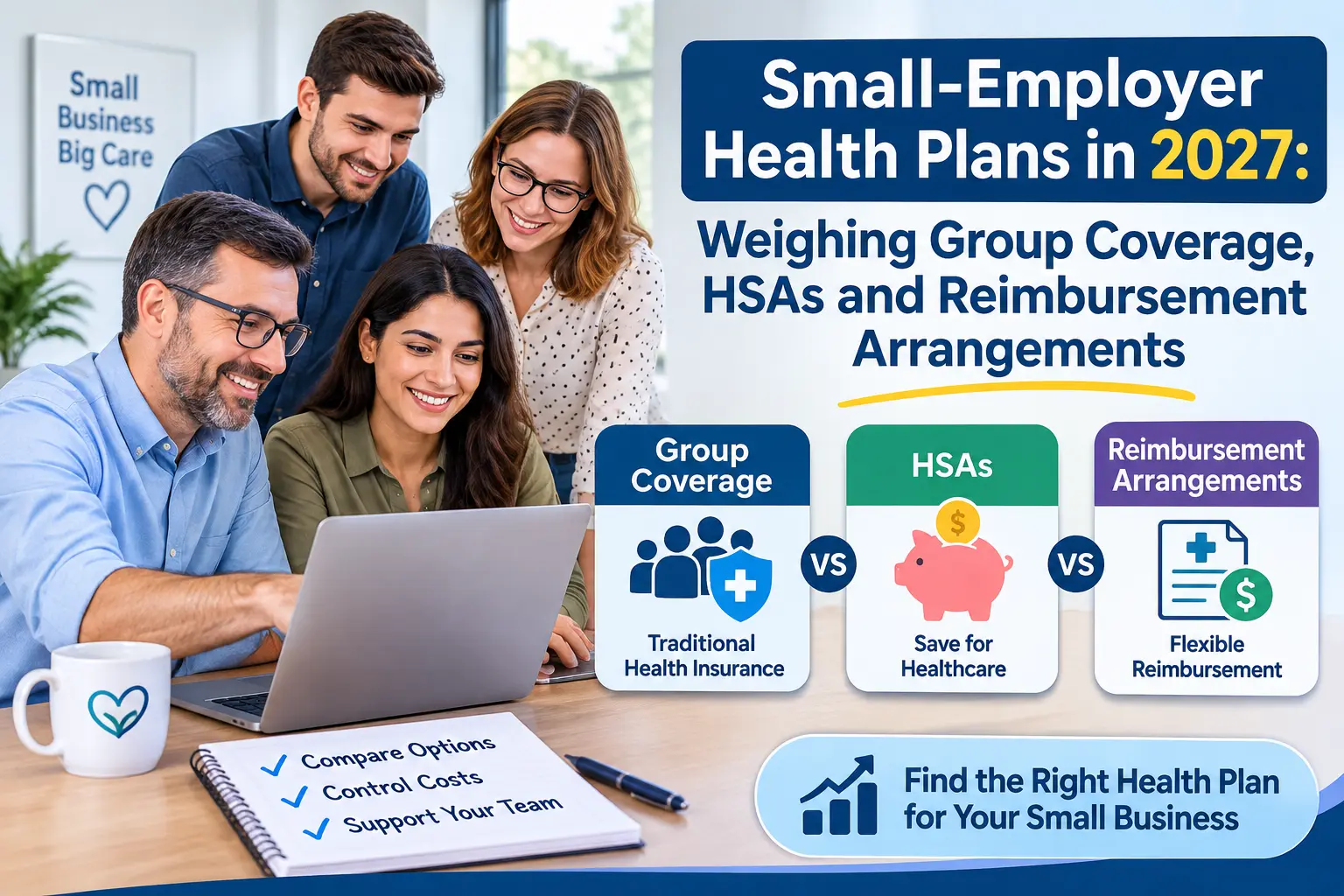
The main options include traditional group health insurance, HSA-eligible high-deductible plans, Individual Coverage Health Reimbursement Arrangements (ICHRAs), and Qualified Small Employer Health Reimbursement Arrangements (QSEHRAs).
Traditional Group Health Insurance
A traditional group health plan allows an employer to purchase coverage for eligible employees.
The employer usually pays part of the premium, while employees contribute the remaining amount through payroll deductions.
For women, the main advantage is access to a shared insurance policy with defined benefits and provider networks.
Depending on the plan, this may provide coverage for:
- Routine gynecological appointments.
- Pregnancy and maternity services.
- Preventive screenings.
- Prescription medications.
- Mental health treatment.
- Specialist consultations.
However, women should not assume every group plan provides identical coverage. Deductibles, networks, copayments, and prescription benefits can differ.
Traditional group coverage is generally subject to applicable ACA requirements, although grandfathered plans and certain other arrangements may have different rules.
High-Deductible Health Plans and Health Savings Accounts
A high-deductible health plan (HDHP) can have lower monthly premiums than some traditional plans, but employees generally face higher upfront costs when receiving non-preventive care.
Eligible individuals can pair qualifying HDHP coverage with a Health Savings Account.
An HSA allows employees to save money for qualified medical expenses using tax-advantaged contributions.
For 2027, the IRS has announced these HSA and HDHP limits:
| Requirement | Self-only coverage | Family coverage |
|---|---|---|
| Annual HSA contribution limit | $4,500 | $9,000 |
| Minimum HDHP deductible | $1,750 | $3,500 |
| Maximum annual out-of-pocket expenses | $8,700 | $17,400 |
These figures are subject to IRS eligibility rules.
An HSA can help women save for eligible medical expenses, including certain prescriptions, appointments, and other qualified healthcare costs.
However, a high deductible can create challenges for someone who regularly needs specialist visits, diagnostic testing, or ongoing medication.
For a woman managing PCOS or endometriosis, the cost of repeated appointments and treatment may outweigh the benefit of a lower monthly premium.
Employers may consider contributing to employees’ HSAs to help reduce this financial pressure.
Individual Coverage Health Reimbursement Arrangements (ICHRAs)
An ICHRA allows an employer to establish a reimbursement allowance for employees who have qualifying individual health insurance coverage.
Rather than purchasing one shared group policy, the employer provides a defined amount that employees can use for eligible healthcare expenses under the arrangement’s rules.
This can provide more flexibility for women who want to choose individual coverage based on their location, preferred providers, and healthcare needs.
For example, a woman who regularly visits a particular gynecologist may prioritize an individual plan that includes that provider in its network.
However, individual plan availability and provider networks differ by location. Employees must also understand how an ICHRA affects eligibility for Marketplace premium tax credits.
Women should compare the actual individual policies available to them rather than assuming that every reimbursement arrangement provides equivalent coverage.
Qualified Small Employer Health Reimbursement Arrangements (QSEHRAs)
A QSEHRA allows eligible small employers that do not offer a group health plan to reimburse employees for qualified medical expenses, including eligible individual health insurance premiums.
Employees generally need qualifying minimum essential coverage to receive tax-free reimbursements.
This arrangement can help smaller businesses contribute toward healthcare without purchasing a traditional group insurance policy.
For women, however, the important question is whether the individual insurance plans available in their area provide suitable reproductive, maternity, preventive, prescription, and mental health coverage.
The reimbursement allowance does not guarantee that every service will be affordable or that a preferred provider will be in-network.
Employers must follow applicable eligibility, reimbursement, notice, and annual contribution requirements.
What Should Women Compare Before Choosing an Employer Health Plan?
A health insurance policy should be evaluated according to the healthcare services a woman may reasonably need.
Comparing only monthly premiums can overlook important differences in medical costs and provider access.
The following comparison can help.
| Healthcare consideration | What women should check |
|---|---|
| Gynecological care | In-network gynecologists and appointment costs |
| Pregnancy care | Prenatal care, delivery, and postpartum benefits |
| Preventive screenings | Cervical and breast cancer screening coverage |
| Hormonal conditions | Diagnostic testing, specialist care, and medication |
| Prescription drugs | Formulary coverage and copayments |
| Mental healthcare | Counseling, therapy, and behavioral health benefits |
| Emergency care | Hospital coverage and out-of-pocket limits |
| Family planning | Applicable contraceptive and reproductive healthcare benefits |
Women who already receive ongoing treatment should pay particular attention to whether their current doctors, hospitals, and medications remain covered after a plan change.
A plan that looks affordable at enrollment may create problems later if it requires switching specialists or paying more for necessary treatment.
How Can Women Prepare for a Change in Employer Health Coverage?
A change in employment or insurance benefits can interrupt ongoing healthcare if employees do not prepare in advance.
Women planning pregnancy, managing hormonal conditions, or receiving regular treatment should review their coverage before a new plan takes effect.
Here are some practical steps:
- Review the Summary of Benefits and Coverage: Check deductibles, copayments, coinsurance, and out-of-pocket maximums.
- Confirm your healthcare providers: Make sure your gynecologist, obstetrician, primary care doctor, and specialists participate in the new network.
- Check prescription coverage: Confirm that your medications remain covered and review any prior authorization requirements.
- Review pregnancy benefits: If you are pregnant or planning pregnancy, check prenatal, delivery, and postpartum coverage.
- Understand coverage dates: Confirm when the old policy ends and the new coverage begins.
- Ask about ongoing treatment: Find out how the new insurer handles existing prescriptions, referrals, and planned procedures.
Women who lose employer-sponsored insurance may also have other coverage options, depending on their circumstances.
Losing qualifying health coverage generally creates a Marketplace Special Enrollment Period. Medicaid eligibility may also be available depending on income, household circumstances, and state rules.
Pregnant women should not assume that pregnancy alone creates a Marketplace Special Enrollment Period. Rules differ for Medicaid and CHIP, and having a baby generally creates a qualifying enrollment opportunity.
What Should Small Employers Do to Support Women’s Healthcare in 2027?
Employers can make better healthcare decisions by considering the needs of their entire workforce.
A plan that appears inexpensive on paper may not provide the level of access employees need.
Business owners should consider the following:
- Review maternity and newborn care benefits.
- Check coverage for preventive women’s health services.
- Compare prescription formularies and specialist networks.
- Evaluate deductibles and out-of-pocket maximums.
- Ask employees which healthcare benefits matter most to them.
- Consider whether HSA contributions could help employees manage medical expenses.
- Review whether an ICHRA or QSEHRA provides suitable individual coverage options.
- Communicate clearly about changes before the new policy begins.
Employers should also avoid making assumptions about employees’ medical histories or reproductive plans. Healthcare benefits should be evaluated fairly, with attention to applicable employment and insurance requirements.
A confidential employee benefits survey can help identify coverage priorities without asking workers to disclose private diagnoses or personal medical information.
Where Can Women Find Help Understanding Health Insurance Options?
Understanding health insurance can be challenging, especially when comparing group coverage, individual policies, and reimbursement arrangements.
Women should review the plan’s official documents and contact the insurer when they need clarification about a particular treatment, prescription, or provider.
A licensed insurance professional can also help explain available coverage options and how different policies work.
For example, self-employed health insurance options for individuals, families, self-employed people, and small businesses under 65.
Women and small employers can use professional guidance to compare available policies, provider networks, and coverage costs.
However, insurance eligibility and benefits depend on the specific policy, state, and applicable regulations. ACA-compliant individual and small-group major medical plans generally cannot deny coverage or increase premiums because of pre-existing medical conditions, including pregnancy.
For additional information about women’s healthcare and reproductive health, explore the DecidualCast health resources.
Final Thoughts:
Choosing a health insurance plan is not simply a financial decision. It can influence whether women receive preventive screenings, manage hormonal conditions, access pregnancy care, and obtain treatment when health concerns arise.
For 2027, small employers can consider traditional group coverage, HSA-eligible plans, ICHRAs, and QSEHRAs. Each option has different financial and administrative requirements, but the most important consideration is whether employees can access appropriate healthcare.
Women should look beyond the monthly premium and review provider networks, deductibles, maternity services, prescription benefits, and preventive care.
Good health coverage should make necessary healthcare easier to access, not create additional barriers when employees need medical attention.
This article is for general educational purposes and does not replace individualized medical, insurance, tax, or legal advice.