How to Relieve Period Cramps: 10 Ways to Find Relief
You can relieve period cramps by applying a heating pad to your lower abdomen, taking an appropriate over-the-counter pain reliever, trying gentle exercise, and getting enough rest. Ibuprofen and naproxen may help reduce menstrual pain by lowering prostaglandins, which cause uterine contractions. If your cramps are severe, keep getting worse, or interfere with daily activities, speak with a healthcare professional.
How to Relieve Period Cramps Quickly at Home
If you are experiencing cramps right now, start with simple methods that can help ease the discomfort.
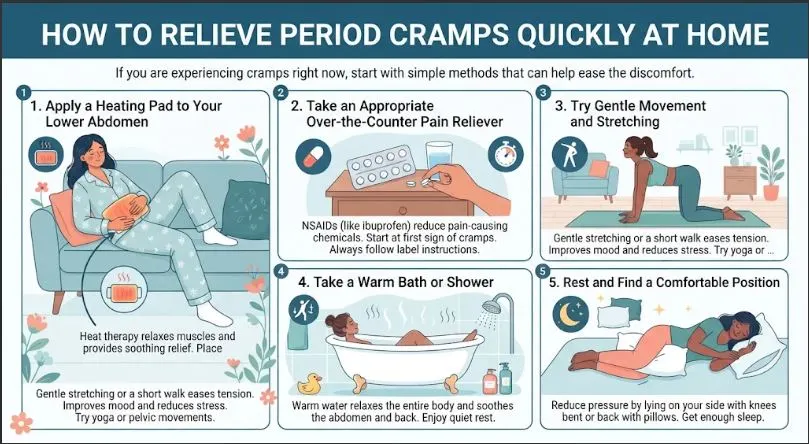
1. Apply a Heating Pad to Your Lower Abdomen
Heat therapy is one of the most practical ways to manage period cramps. A heating pad or warm water bottle can help relax the muscles in your lower abdomen and provide soothing relief.
Place a warm heating pad over your lower belly or lower back. Keep a layer of cloth between the heat source and your skin. Avoid using excessive heat or falling asleep with an electric heating pad switched on.
You can also take a warm bath or shower to relax your body.
Tip: Keep a heating pad available when your period is expected to start. Applying warmth when cramps begin may help you feel more comfortable.
2. Take an Appropriate Over-the-Counter Pain Reliever
Over-the-counter (OTC) pain relievers can help when menstrual cramps become uncomfortable.
Nonsteroidal anti-inflammatory drugs (NSAIDs), such as ibuprofen and naproxen, reduce the production of prostaglandins. These chemicals play an important role in uterine contractions and menstrual pain.
For some people, NSAIDs work best when started at the first sign of cramps or shortly before an expected period.
Always follow the product label or your healthcare professional’s instructions. Do not combine ibuprofen and naproxen unless a healthcare professional specifically tells you to.
People with stomach ulcers, kidney problems, bleeding disorders, certain medication interactions, or a history of reactions to NSAIDs may need to avoid these medicines. If you may be pregnant, ask a healthcare professional before taking an NSAID.
3. Try Gentle Movement and Stretching
Exercise may be the last thing you want to do when your stomach hurts. However, gentle movement can help some people manage menstrual discomfort.
You do not need an intense workout. Try a short walk around your home or a few minutes of gentle stretching.
Movement may also improve your mood and help reduce stress.
Consider these activities:
- Walking at a comfortable pace.
- Gentle yoga.
- Light stretching.
- Slow breathing exercises.
- Easy pelvic movements.
Stop if movement makes your pain worse. Rest when your body needs it.
4. Take a Warm Bath or Shower
A warm bath can help you relax when cramps make your body feel tense.
Warm water provides soothing heat to your lower abdomen and back. It may also help relax tight muscles and reduce stress.
You can add a few minutes of quiet rest to your bathing routine. Avoid water that is too hot, especially if you feel dizzy or weak.
If you do not have a bathtub, a warm shower can offer similar comfort.
5. Rest and Find a Comfortable Position
Period pain can make it difficult to sleep or relax. Finding a comfortable position may help reduce pressure and make cramps easier to manage.
Try lying on your side with your knees slightly bent. You can also place a pillow between your knees for extra support.
Some people prefer lying on their back with a pillow under their knees.
Getting enough sleep may also help you cope with pain. Try to maintain a regular sleep schedule, especially during the days before your period.
10 Ways to Relieve Period Cramps Naturally
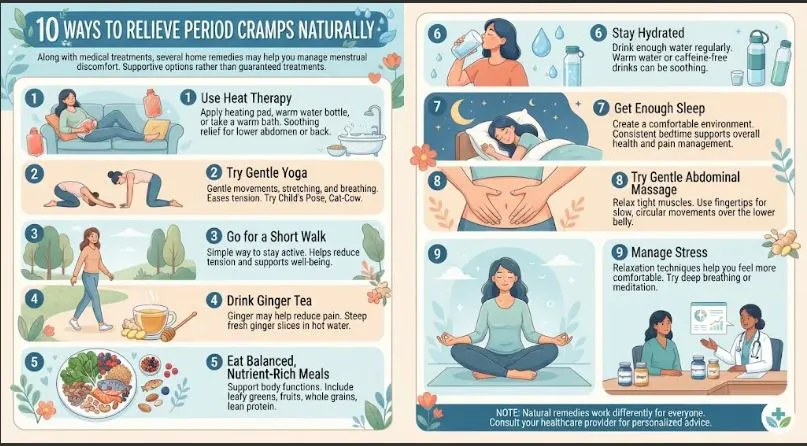
Along with medical treatments, several home remedies may help you manage menstrual discomfort.
Natural remedies do not work the same way for everyone. Some have better research support than others, so treat them as supportive options rather than guaranteed treatments.
1. Use Heat Therapy
Heat therapy deserves a place in your regular menstrual care routine.
A heating pad, warm water bottle, or warm bath can provide soothing relief when cramps begin.
You can apply gentle warmth to your lower abdomen or lower back. Follow the safety instructions for your heating device to prevent burns.
2. Try Gentle Yoga
Yoga combines movement, stretching, and breathing. It may help some people feel more relaxed during their periods.
You do not need to perform difficult poses. Start with gentle movements that do not increase your pain.
Try:
- Child’s pose.
- Cat-cow stretch.
- Knees-to-chest stretch.
- Gentle seated forward bend.
Move slowly and avoid forcing your body into uncomfortable positions.
3. Go for a Short Walk
Walking is a simple way to stay active during your period.
A short walk may help you feel less tense and support your general well-being. Regular physical activity throughout the month may also help some people manage menstrual pain.
Start with five to ten minutes if you feel comfortable. You can increase the time as your energy allows.
4. Drink Ginger Tea
Ginger is commonly used as a home remedy for different types of discomfort.
Some studies suggest that ginger may help reduce menstrual pain. However, research is still limited, and it should not replace medical treatment when cramps are severe.
You can prepare a simple ginger drink by adding fresh ginger slices to hot water. Let it steep before drinking.
If you take blood-thinning medicine or have a health condition that could be affected by ginger, ask a healthcare professional before using concentrated ginger supplements.
5. Eat Balanced, Nutrient-Rich Meals
Your body needs enough nutrients to support normal functions throughout the menstrual cycle.
Try to include a variety of foods in your daily meals, such as:
- Leafy green vegetables.
- Fruits and berries.
- Whole grains.
- Eggs and fish.
- Beans and lentils.
- Nuts and seeds.
Magnesium and vitamin B1 have been studied for menstrual pain. However, the evidence is not strong enough to recommend supplements as a proven treatment for everyone.
A balanced diet supports general health, but no particular food can guarantee immediate relief from cramps.
6. Stay Hydrated
Drinking enough water supports normal body functions.
Some people prefer warm water or caffeine-free drinks during their periods because they feel soothing.
Try to drink water regularly throughout the day, especially if you have diarrhea or vomiting.
Staying hydrated is a healthy habit, but it should not be presented as a proven way to stop uterine contractions.
7. Get Enough Sleep
Poor sleep can make it harder to cope with pain and discomfort.
Try to maintain a consistent bedtime and create a comfortable sleeping environment.
You may find it helpful to:
- Reduce screen time before bed.
- Keep your bedroom cool and quiet.
- Avoid heavy meals right before sleeping.
- Use a comfortable pillow.
- Practice slow breathing before bedtime.
Good sleep supports your overall health and may make menstrual discomfort easier to manage.
8. Try Gentle Abdominal Massage
A gentle massage may help relax tight muscles around your lower abdomen.
Use your fingertips to make slow, circular movements over your lower belly. Apply only light pressure and stop if the massage causes discomfort.
You can also gently massage your lower back if that is where you feel the most pain.
Avoid deep abdominal massage if you have severe or unexplained pelvic pain.
9. Manage Stress
Stress can make it harder to cope with physical discomfort.
Although stress does not explain every case of menstrual pain, relaxation techniques may help you feel more comfortable.
Try:
- Deep breathing.
- Meditation.
- Listening to calming music.
- Gentle yoga.
- Spending time in a quiet place.
Choose an activity that helps you relax without putting extra pressure on your body.
10. Discuss Supplements With a Healthcare Professional
Some supplements have been studied for menstrual discomfort, including magnesium, vitamin B1, and ginger.
However, research results are mixed, and supplements are not a proven replacement for standard treatment.
Supplements can also interact with medicines or cause unwanted effects. Speak with a healthcare professional before starting a new supplement, especially if you take prescription medication or have an existing health condition.
What Is the Best Medicine for Period Cramps?
Period Cramp Relief Options Compared
| Treatment | How It Helps | Important Note |
|---|---|---|
| Ibuprofen | Reduces prostaglandins and inflammation | Follow label directions and check precautions |
| Naproxen | Reduces prostaglandin production | Check suitability and dosing instructions |
| Acetaminophen | Helps relieve pain | Does not reduce prostaglandins like NSAIDs |
| Heating pad | Provides soothing heat | Avoid direct skin burns |
| Gentle exercise | May help reduce discomfort | Choose movement you can tolerate |
The best medicine depends on your symptoms, medical history, and whether you can safely take certain pain relievers.
NSAIDs are commonly used for menstrual cramps because they reduce prostaglandin production. Acetaminophen is another option for pain relief, although it does not work in the same way as NSAIDs.
Ibuprofen for Period Cramps
Ibuprofen is an NSAID that can help reduce menstrual pain and inflammation.
It works by reducing the production of prostaglandins. These chemicals cause the uterus to contract during menstruation.
For some people, ibuprofen works best when taken at the first sign of menstrual pain.
Follow the package instructions and avoid taking more than the recommended amount.
Naproxen for Period Cramps
Naproxen is another NSAID used to manage menstrual pain.
It works in a similar way to ibuprofen by reducing prostaglandin production.
Naproxen generally has a longer duration of action than ibuprofen. However, the right option depends on your medical history and individual needs.
Do not take naproxen and ibuprofen together unless instructed by a healthcare professional.
Acetaminophen for Period Cramps
Acetaminophen can help relieve mild to moderate pain.
It may be an alternative for people who cannot take NSAIDs, although it does not reduce prostaglandins in the same way.
Follow the package instructions carefully. Taking too much acetaminophen can cause serious liver damage. Check other medicines you use to avoid accidentally taking multiple products containing acetaminophen.
Period Cramp Relief Options Compared
| Treatment | How It Helps | Important Note |
|---|---|---|
| Ibuprofen | Reduces prostaglandins and inflammation | Follow label directions and check precautions |
| Naproxen | Reduces prostaglandin production | Check suitability and dosing instructions |
| Acetaminophen | Helps relieve pain | Does not reduce prostaglandins like NSAIDs |
| Heating pad | Provides soothing heat to the lower abdomen | Avoid direct skin burns |
| Gentle exercise | May help reduce discomfort | Choose movement you can tolerate |
Important: Never combine different NSAIDs, such as ibuprofen and naproxen, without medical advice. People with certain medical conditions or possible pregnancy may need different pain-relief options.
If OTC medicine does not help, speak with a healthcare professional. You may need an evaluation or a different treatment plan.
Best Positions and Stretches for Period Cramps
Finding a comfortable position may help you relax when menstrual pain becomes uncomfortable.
Here are a few gentle options to try.
Child’s Pose
Child’s pose is a gentle yoga position that stretches your back and hips.
To try it:
- Kneel on a comfortable surface.
- Bring your big toes together.
- Slowly sit back toward your heels.
- Stretch your arms forward.
- Rest your forehead on the floor or a pillow.
- Breathe slowly and stay in the position only while comfortable.
Knees-to-Chest Stretch
This stretch may help relax your lower back.
To try it:
- Lie on your back.
- Bend both knees.
- Gently bring your knees toward your chest.
- Hold your legs without pulling too hard.
- Breathe slowly and release when comfortable.
Gentle Pelvic Tilts
Pelvic tilts are simple movements that can help you gently move your lower back and abdominal muscles.
To try them:
- Lie on your back with your knees bent.
- Keep your feet flat on the floor.
- Gently tighten your abdominal muscles.
- Flatten your lower back against the surface.
- Relax and repeat slowly.
Side-Lying Position
If you want to rest, try lying on your side with your knees slightly bent.
Place a pillow between your knees if it makes you more comfortable. You can also use a small pillow to support your head and neck.
There is no single best position for everyone. Choose the one that feels most comfortable and stop any stretch that increases your pain.
What Causes Period Cramps?
Period cramps, also called dysmenorrhea, happen when the uterus contracts during menstruation.
The uterus is a muscular organ that sheds its lining during a period. Prostaglandins help trigger the contractions needed for this process.
Higher levels of prostaglandins can lead to stronger contractions and more painful cramps.
There are two main types of menstrual cramps.
Primary Dysmenorrhea
Primary dysmenorrhea refers to menstrual pain that is not caused by another medical condition.
It often begins during the teenage years, around the time periods first start.
Common symptoms include:
- Cramping in the lower abdomen.
- Lower back pain.
- Pain that spreads to the thighs.
- Nausea or diarrhea.
- Headaches.
The pain often starts shortly before or at the beginning of a period and improves within a few days.
Secondary Dysmenorrhea
Secondary dysmenorrhea refers to menstrual pain caused by an underlying condition affecting the reproductive organs.
It may begin later in life and can become worse over time.
The pain may start before your period, continue during bleeding, or remain after your period ends.
Some conditions associated with secondary dysmenorrhea include endometriosis, adenomyosis, and uterine fibroids.
Why Are My Period Cramps So Painful?
Occasional mild cramps are common. However, severe or worsening menstrual pain may have an underlying cause.
Here are some conditions that can contribute to painful periods.
Endometriosis
Endometriosis is a condition in which tissue similar to the lining of the uterus grows outside the uterus.
This tissue can cause inflammation, irritation, and scar tissue in the pelvic area.
Possible symptoms include:
- Severe menstrual cramps.
- Pelvic pain outside your period.
- Pain during sex.
- Pain during bowel movements or urination.
- Difficulty becoming pregnant.
Endometriosis can affect daily life. If your cramps are severe or keep getting worse, discuss your symptoms with an OB/GYN.
Adenomyosis
Adenomyosis happens when tissue similar to the uterine lining grows into the muscular wall of the uterus.
This condition can cause painful periods, heavy bleeding, and pelvic discomfort.
Some people also experience an enlarged or tender uterus.
A healthcare professional may recommend an examination or imaging tests to investigate these symptoms.
Uterine Fibroids
Uterine fibroids are growths that develop in or around the uterus. Most are noncancerous.
Some fibroids cause no symptoms. Others may lead to:
- Heavy menstrual bleeding.
- Painful periods.
- Pelvic pressure.
- Lower back discomfort.
- Frequent urination.
Treatment depends on the size, location, symptoms, and individual health needs.
Pelvic Inflammatory Disease
Pelvic inflammatory disease (PID) is an infection of the female reproductive organs.
It can affect the uterus, fallopian tubes, and nearby pelvic tissues.
Symptoms may include lower abdominal pain, unusual vaginal discharge, fever, and pain during sex.
PID needs medical treatment. If you have pelvic pain with fever or unusual discharge, seek medical care promptly.
When Should You See a Doctor for Period Cramps?
Not all menstrual pain should be treated as normal.
Mild cramps that improve with home care are common. However, severe, unusual, or worsening pain may need medical attention.
Warning Signs You Should Not Ignore
Speak with a healthcare professional if you experience:
- Period pain that prevents you from attending school, work, or normal activities.
- Cramps that become worse with each menstrual cycle.
- Pain that starts several days before bleeding and continues afterward.
- Pain during sex, urination, or bowel movements.
- Heavy or irregular menstrual bleeding.
- Bleeding between periods.
- Pelvic pain that does not improve with usual treatments.
Seek urgent medical assessment if you experience sudden, severe pelvic pain, fainting, or severe dizziness. If pregnancy is possible and you have pelvic pain or vaginal bleeding, seek urgent assessment because an ectopic pregnancy must be ruled out.
When Should Period Cramps Be Checked?
Do not assume every type of pelvic pain is a normal period cramp.
- Severe pain that interferes with daily activities.
- New or worsening menstrual pain.
- Pain between periods or after bleeding ends.
- Pain during sex, urination, or bowel movements.
- Heavy or unusual menstrual bleeding.
- Cramps accompanied by fever.
Seek urgent medical assessment for sudden severe pelvic pain, fainting, or possible pregnancy accompanied by pelvic pain or bleeding.
Persistent symptoms deserve an evaluation by an OB/GYN.
What Can a Doctor Do for Severe Period Cramps?
When Should Period Cramps Be Checked?
Do not assume every type of pelvic pain is a normal period cramp.
- Severe pain that interferes with daily activities.
- New or worsening menstrual pain.
- Pain between periods or after bleeding ends.
- Pain during sex, urination, or bowel movements.
- Heavy or unusual menstrual bleeding.
- Cramps accompanied by fever.
Seek urgent medical assessment for sudden severe pelvic pain, fainting, or possible pregnancy accompanied by pelvic pain or bleeding.
Persistent symptoms deserve an evaluation by an OB/GYN.
Your healthcare professional may ask about your menstrual cycle, pain level, bleeding pattern, and other symptoms.
Hormonal treatments, including certain birth control methods, can help reduce menstrual pain for some people. These options should be discussed with a healthcare professional to determine whether they are suitable.
Conclusion
Period cramps can be uncomfortable, but several treatments may help you manage the pain. Heat therapy, appropriate pain relievers, gentle exercise, and enough rest are practical starting points.
Natural remedies such as ginger tea, stretching, and relaxation may provide additional comfort, although their effects vary.
Most importantly, do not ignore severe or worsening menstrual pain. Conditions such as endometriosis, adenomyosis, and uterine fibroids can cause painful periods and may require medical treatment.
If cramps regularly interfere with your daily life, speak with an OB/GYN. You deserve to have your symptoms taken seriously and to find a treatment plan that works for you.
Medical disclaimer: This article is for educational purposes only. It does not replace professional medical advice, diagnosis, or treatment. Consult a qualified healthcare professional about persistent, severe, or unusual menstrual pain.