Rapid Fentanyl Detox vs Standard Medical Fentanyl Detox
Choosing a fentanyl detox program can feel overwhelming. People may want relief from withdrawal symptoms as quickly as possible, but speed is not the only factor that matters. Medical safety, ongoing treatment, and overdose prevention are also important.
Standard medical detox generally uses medical supervision and evidence-based medications to manage opioid withdrawal. Ultra-rapid fentanyl detox under general anesthesia or heavy sedation is not recommended by major medical guidance because it carries serious risks. Neither approach should be treated as a complete cure for opioid use disorder. Long-term treatment and follow-up care are essential.
Understanding the differences between these approaches can help individuals and families discuss safer options with a qualified healthcare professional.
What Is the Difference Between Rapid and Standard Medical Fentanyl Detox?
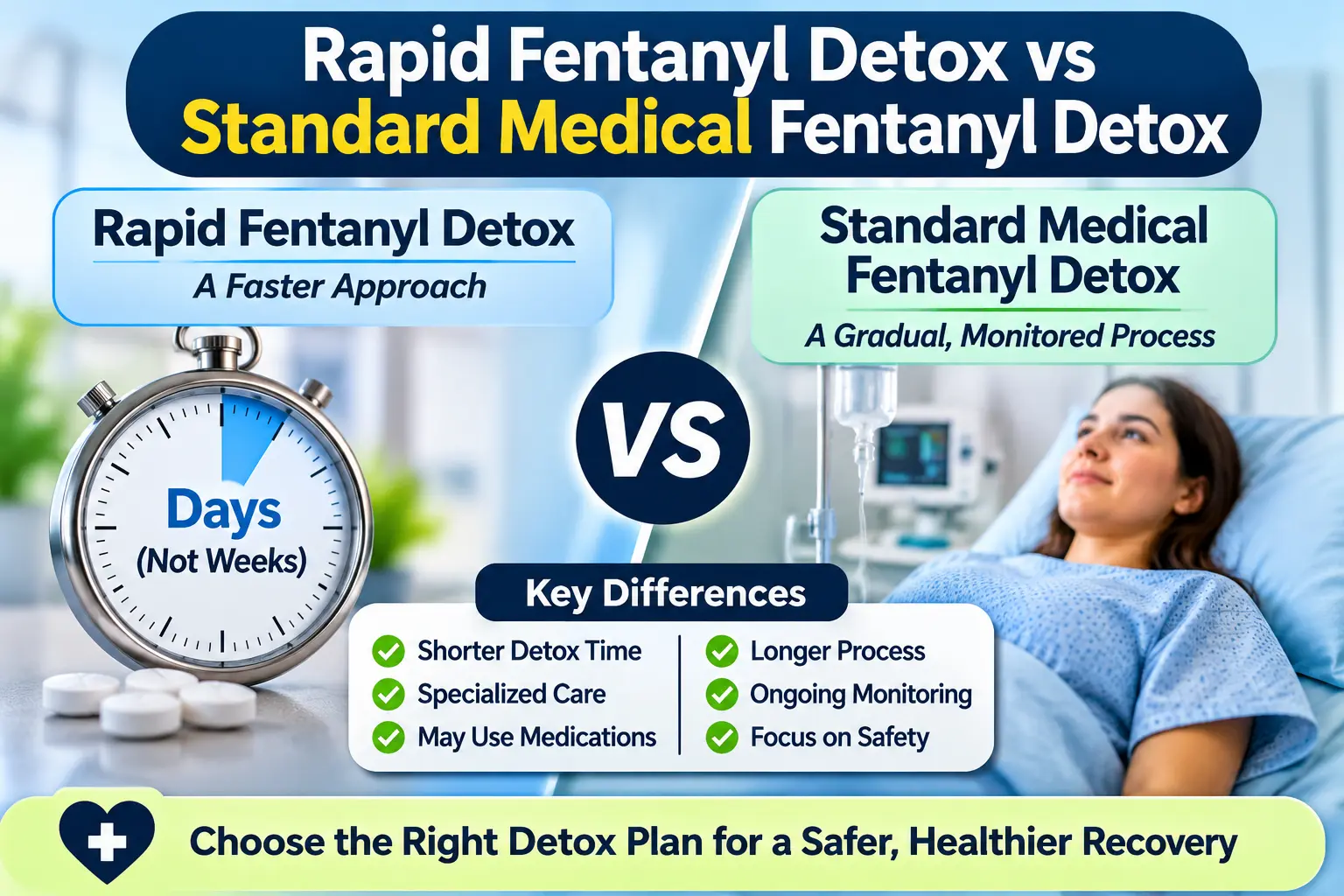
The main differences involve the treatment approach, medical risks, and the care provided during withdrawal.
Standard medical detox focuses on managing withdrawal symptoms under clinical supervision. Depending on the person’s needs, clinicians may use medications such as buprenorphine or methadone, along with supportive care.
The term rapid detox can describe different procedures. Some programs use opioid-blocking medication to trigger withdrawal more quickly. Ultra-rapid detox may involve general anesthesia or heavy sedation while medications accelerate withdrawal. These procedures are not the same as evidence-based medication treatment for opioid use disorder.
It is important to ask a treatment provider exactly what a program involves. The word “rapid” alone does not explain its safety or effectiveness.
How Standard Medical Fentanyl Detox Works
Standard medical detox is a supervised process that helps a person manage opioid withdrawal. A healthcare professional first reviews the person’s medical history, substance use, current symptoms, and other health needs.
Treatment may take place in an inpatient or outpatient setting, depending on the person’s condition and clinical assessment. The care team monitors symptoms and may use medications to reduce withdrawal discomfort and cravings.
Common withdrawal symptoms can include:
- Muscle and body aches
- Sweating and chills
- Nausea, vomiting, or diarrhea
- Anxiety and restlessness
- Trouble sleeping
- Strong opioid cravings
Clinicians may recommend medications for opioid use disorder, including buprenorphine or methadone. These medications can reduce withdrawal symptoms and cravings. They are also used as ongoing treatment, not simply as short-term detox medications.
The treatment plan should be individualized. There is no single timeline or medication schedule that is appropriate for everyone.
What Happens During Rapid or Ultra-Rapid Fentanyl Detox?
Rapid detox is a broad term. It may refer to an accelerated withdrawal process or to a procedure that uses opioid antagonists to trigger withdrawal.
Ultra-rapid opioid detoxification may involve placing a patient under general anesthesia or heavy sedation while medications such as opioid antagonists cause sudden withdrawal. The goal is to shorten the period during which the person consciously experiences withdrawal.
However, this does not mean the process is safer or that recovery happens faster. Anesthesia and sudden withdrawal can create serious medical complications. The American Society of Addiction Medicine advises against ultra-rapid opioid detoxification because of the risk of adverse events and death.
A person considering a rapid detox program should ask the provider:
- Does the procedure involve general anesthesia or heavy sedation?
- Which medications are used, and why?
- Who will monitor breathing, heart rate, and other vital signs?
- What emergency support is available?
- What treatment will begin after detox?
- How will the program reduce overdose risk?
Do not choose a procedure based only on a promise of completing detox in a few hours.
Rapid Fentanyl Detox vs Standard Medical Detox: Key Differences
| Comparison | Rapid or ultra-rapid detox | Standard medical detox |
|---|---|---|
| Main approach | May use accelerated withdrawal procedures or opioid-blocking medication | Uses clinical assessment, symptom management, and evidence-based treatment |
| Treatment timeline | Some procedures aim to shorten the withdrawal process | Varies according to symptoms, treatment, and individual needs |
| Sedation | Ultra-rapid procedures may involve general anesthesia or heavy sedation | Usually does not require general anesthesia |
| Medical concerns | Ultra-rapid detox under anesthesia carries serious risks | Also requires medical assessment and monitoring, but follows established withdrawal-management approaches |
| Medication options | Depends on the specific procedure | May include buprenorphine, methadone, and symptom-relief medications |
| Long-term recovery | Does not guarantee lasting recovery | Can provide a transition into ongoing treatment |
| Main consideration | Serious risks must be understood before considering an accelerated procedure | Treatment should include a plan for ongoing care and overdose prevention |
The comparison does not mean that every standard detox program is automatically appropriate or that every service using the word “rapid” describes the same procedure. Ask for a clear explanation of the treatment plan and its evidence.
Does Rapid Fentanyl Detox Reduce Relapse Risk?
A shorter detox process does not automatically reduce the risk of relapse. Detoxification addresses withdrawal, but opioid use disorder is a longer-term medical condition that may require ongoing treatment.
After withdrawal, a person may still experience cravings, anxiety, sleep problems, and other challenges. Returning to opioid use after a period of abstinence can also be especially dangerous because tolerance may have decreased. A previously tolerated amount may cause an overdose.
The Centers for Disease Control and Prevention states that detoxification without medication treatment for opioid use disorder is not recommended because it can increase the risk of returning to drug use, overdose, and overdose death.
For this reason, a recovery plan should address more than the number of hours or days spent in detox. It should include appropriate medication treatment, counseling or behavioral support when helpful, follow-up appointments, and overdose prevention.
A structured Fentanyl Detox program should be evaluated by the quality of its medical supervision and its plan for continuing care, not simply by how quickly it promises to complete withdrawal.
Medications and Ongoing Treatment After Fentanyl Detox
Medication treatment is an important part of evidence-based care for opioid use disorder. A qualified clinician can discuss which options are appropriate based on the person’s health, treatment history, and preferences.
Common FDA-approved medications include:
Buprenorphine: This medication can reduce opioid cravings and withdrawal symptoms. It is available in different formulations and can be used as ongoing treatment.
Methadone: This medication helps reduce cravings and withdrawal symptoms. For opioid use disorder, it is provided through federally regulated opioid treatment programs.
Naltrexone: This medication blocks opioid effects. It may be an option for some people after they have completed the required opioid-free period. Starting it too soon can trigger withdrawal.
These medications are not interchangeable, and each has specific clinical considerations. A healthcare professional should explain the benefits, risks, and timing of each option.
Treatment may also include counseling, peer support, mental health care, and help with housing or other practical needs. The right combination depends on the individual.
Who Should Discuss Detox Options With a Medical Professional?
Anyone who is physically dependent on fentanyl should speak with a qualified healthcare professional before stopping or changing opioid use. A clinical assessment is particularly important for people who:
- Have a history of overdose or serious withdrawal complications
- Have heart, lung, liver, or other significant health conditions
- Use alcohol, sedatives, or other substances
- Have depression, anxiety, or another mental health concern
- Are pregnant, planning a pregnancy, or may be pregnant
- Have tried to stop using opioids before and returned to use
Pregnancy requires special attention. People who are pregnant and have opioid use disorder should not attempt detoxification without specialist medical care. SAMHSA guidance notes that withdrawal management during pregnancy is generally not recommended because of potential risks to the pregnant person and fetus. Medication treatment and coordinated prenatal care should be discussed with an obstetric and addiction-medicine team.
Why Aftercare Matters After Fentanyl Detox
Completing withdrawal management is only one step in recovery. People need a plan for what happens next.
A continuing-care plan may include:
- Medication treatment for opioid use disorder
- Regular appointments with a healthcare professional
- Counseling or behavioral therapy
- Peer recovery support
- A plan for managing cravings and high-risk situations
- Access to naloxone and overdose-response education
Naloxone can temporarily reverse an opioid overdose and may save a life. People at risk of overdose, as well as family members and others close to them, should ask a healthcare professional or pharmacist how to obtain and use it.
If someone is unresponsive, has slow or stopped breathing, or cannot be awakened, treat it as a possible overdose. Give naloxone if available and call 911 immediately. Follow the emergency operator’s instructions.
Questions to Ask Before Choosing a Fentanyl Detox Program
Before enrolling in a program, ask the treatment team direct questions about its clinical practices and follow-up care.
- Is the program licensed and appropriately staffed?
- Will an addiction-medicine clinician assess the patient?
- Does the program use anesthesia or heavy sedation?
- What medications are available to manage withdrawal and cravings?
- What medical monitoring and emergency services are provided?
- Can the patient continue buprenorphine or methadone if clinically appropriate?
- What happens after the detox process ends?
- Does the program provide naloxone and overdose-prevention education?
A trustworthy provider should explain the treatment plan, risks, alternatives, and expected follow-up without promising a guaranteed recovery.
Conclusion
When comparing rapid fentanyl detox with standard medical fentanyl detox, safety and long-term treatment matter more than speed. Ultra-rapid detox under general anesthesia or heavy sedation is not recommended by major addiction-medicine guidance because of serious risks. Standard medical withdrawal management can help people receive supervised care, but detox alone is not a complete treatment for opioid use disorder.
The next step is to speak with a qualified addiction-medicine professional about evidence-based treatment options. A plan that includes appropriate medication, ongoing support, and overdose prevention offers a stronger foundation for recovery than a short detox procedure alone.
Medical Disclaimer: This article is for educational purposes only. It does not replace medical advice, diagnosis, or treatment. Fentanyl withdrawal and opioid use disorder require individualized care from qualified healthcare professionals. Do not stop or change opioid use or prescribed medication without medical guidance.