How to Avoid Pregnancy Naturally: Methods, Effectiveness, and Safety
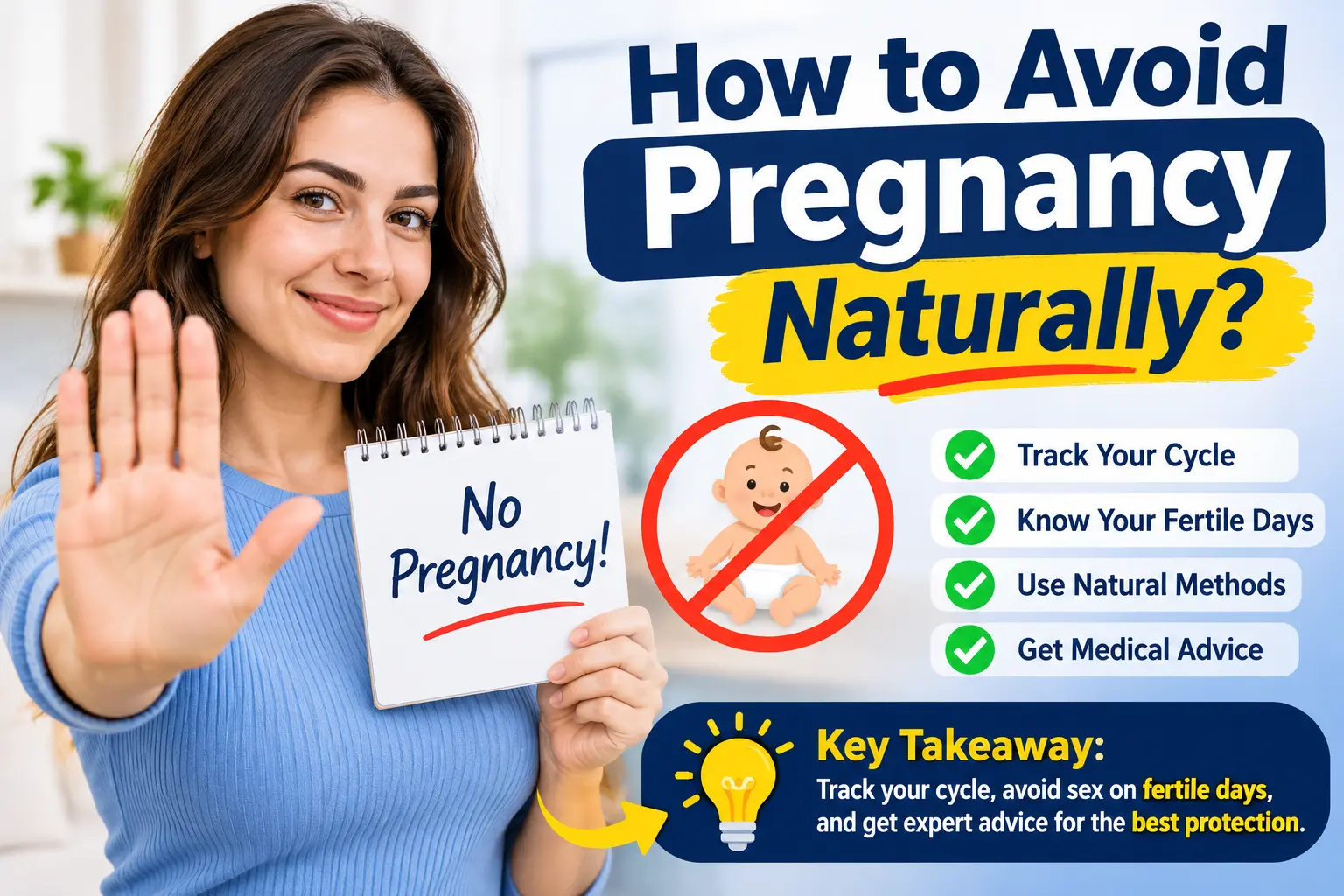
Avoiding pregnancy naturally is possible through fertility awareness, menstrual cycle tracking, and other hormone-free methods. These methods help you understand when pregnancy is most likely to happen. However, they require careful tracking and consistent use. There is no guaranteed way to prevent pregnancy by simply calculating safe days or using home remedies.
If you want to avoid hormonal birth control, you can learn about natural family planning methods. These include tracking cervical mucus, checking basal body temperature, and monitoring your menstrual cycle. Abstaining from vaginal sex is another way to prevent pregnancy.
This guide explains how natural pregnancy prevention works, which methods are available, and how effective they are. It also covers common myths and what to do if you have already had unprotected sex.
Can You Avoid Pregnancy Naturally?
Yes, you can reduce the risk of pregnancy naturally by understanding your fertile window and avoiding unprotected vaginal sex during fertile days. This approach is known as fertility awareness-based family planning.
Your fertile window is the time when pregnancy is most likely to happen. It includes the five days before ovulation and the day of ovulation. Some experts also include the day after ovulation because an egg may survive for about 12 to 24 hours.
Natural pregnancy prevention does not involve hormonal pills, injections, or implants. Instead, it relies on understanding your body’s fertility signs.
However, natural methods are not equally effective. Some require daily tracking, while others need you to avoid vaginal sex during certain days. If you use these methods incorrectly, pregnancy can still happen.
How Does Natural Pregnancy Prevention Work?
To understand natural birth control, you first need to understand your menstrual cycle.
Your menstrual cycle begins on the first day of your period. During this cycle, your body prepares for a possible pregnancy.
One ovary usually releases an egg during ovulation. If sperm meets the egg, fertilization may happen. This can lead to pregnancy.
Sperm can survive inside the reproductive tract for up to five days. An egg usually survives for about 12 to 24 hours after ovulation.
This means pregnancy can happen even if you have sex several days before ovulation.
For example, if you ovulate on day 14, unprotected sex on day 10 may still lead to pregnancy. This is why tracking only the day of ovulation is not enough.
Natural family planning methods help you recognize your fertile days. You can then avoid unprotected vaginal sex during that time.
8 Natural Ways to Avoid Pregnancy
There are several natural ways to reduce the risk of pregnancy. Each method works differently. Some focus on tracking your menstrual cycle, while others use physical signs of fertility.
Here are eight approaches to understand.
1. Use the Fertility Awareness Method
Fertility awareness is one of the main approaches to natural pregnancy prevention.
It involves observing your body’s fertility signs to estimate when you are most likely to get pregnant.
You can monitor three main signs:
- Your menstrual cycle dates.
- Changes in cervical mucus.
- Basal body temperature.
Some people track all three signs together. This is called the symptothermal method.
When you identify your fertile days, avoid unprotected vaginal sex during that time. You can also use a barrier method, such as condoms.
Fertility awareness requires daily attention. You must learn how to recognize your body’s patterns and record changes correctly.
According to Planned Parenthood, fertility awareness methods have different effectiveness rates. Depending on the method and how consistently it is used, around 2 to 23 out of 100 users may become pregnant in one year.
2. Track Your Menstrual Cycle With the Calendar Method
The calendar method helps you estimate your fertile days by recording your menstrual cycle.
Start by writing down the first day of each period. Continue tracking your cycle for at least six months to understand your usual pattern.
Your cycle length is the number of days between the first day of one period and the first day of your next period.
For example, your cycle may last 27 days one month and 30 days the next month.
However, the calendar method cannot confirm exactly when you ovulate. Stress, illness, and hormonal changes can affect your cycle.
How to use the calendar method:
- Record the first day of each menstrual period.
- Track your cycle length for several months.
- Look for patterns in your cycle.
- Estimate your possible fertile days.
- Avoid unprotected vaginal sex during potentially fertile days.
Do not assume that the days immediately after your period are always safe. Ovulation can happen earlier than expected, especially with shorter cycles.
3. Monitor Your Cervical Mucus
Cervical mucus is a natural fluid produced by your cervix. Its appearance and texture change throughout your menstrual cycle.
These changes can help you recognize your fertile days.
Before ovulation, cervical mucus often becomes clear, slippery, and stretchy. It may look similar to raw egg whites.
This type of mucus helps sperm move through the reproductive tract.
After ovulation, cervical mucus often becomes thicker, cloudy, or less noticeable.
How to monitor cervical mucus:
- Check your vaginal discharge each day.
- Notice its color, texture, and amount.
- Look for clear and slippery mucus.
- Record your observations in a fertility journal.
- Treat changes in mucus as possible signs of fertility.
If you notice thin, stretchy, and slippery mucus, you may be approaching ovulation.
Avoid unprotected vaginal sex when fertile mucus appears if you are trying to prevent pregnancy.
Keep in mind that infections, medications, sexual activity, and vaginal products can affect cervical mucus. These changes may make this method harder to use.
4. Check Your Basal Body Temperature
Basal body temperature (BBT) is your body’s temperature when you are fully at rest.
Your temperature usually rises slightly after ovulation because of hormonal changes. Tracking this change can help you understand your menstrual cycle.
However, there is an important limitation.
Basal body temperature usually rises after ovulation has happened. It does not reliably predict when ovulation is about to happen.
This means BBT alone is not a reliable way to identify all your fertile days in advance.
How to track basal body temperature:
- Use a basal body thermometer.
- Check your temperature immediately after waking up.
- Take your temperature before getting out of bed.
- Measure it at around the same time each morning.
- Record the results in a chart or fertility app.
Illness, fever, poor sleep, and changes in your daily routine can affect your readings.
For better results, combine temperature tracking with cervical mucus monitoring.
5. Try the Symptothermal Method
The symptothermal method combines different fertility awareness techniques.
It usually involves tracking cervical mucus and basal body temperature. Some people also record their menstrual cycle dates.
Using more than one fertility sign can provide a clearer picture of your fertility pattern.
For example, you may notice slippery cervical mucus before ovulation. Later, your basal body temperature may rise and remain higher.
These changes help you understand when your fertile window may begin and end.
Steps to follow:
- Record your menstrual cycle every month.
- Check cervical mucus daily.
- Measure your basal body temperature each morning.
- Write down all fertility signs.
- Follow the rules of a recognized symptothermal method.
- Avoid unprotected vaginal sex whenever the method identifies a potentially fertile day.
This method requires learning and practice. Consider speaking with a trained fertility awareness instructor or healthcare professional before relying on it for pregnancy prevention.
6. Follow the Standard Days Method
The Standard Days Method is a specific type of fertility awareness.
It works best for people whose menstrual cycles are consistently between 26 and 32 days.
Under this method, days 8 through 19 are considered potentially fertile days.
To prevent pregnancy, you must avoid unprotected vaginal sex during these days.
The method is simple, but it does not work equally well for everyone.
According to the CDC, around 13 out of 100 people using the Standard Days Method become pregnant during the first year of typical use.
If your cycles are often shorter than 26 days or longer than 32 days, this method may not be suitable.
You should not use the Standard Days Method as proof that pregnancy cannot happen outside days 8 through 19.
7. Use the Lactational Amenorrhea Method While Breastfeeding
The Lactational Amenorrhea Method (LAM) is a temporary pregnancy prevention method based on frequent breastfeeding.
Breastfeeding can delay the return of ovulation and menstrual periods after childbirth.
However, breastfeeding alone does not guarantee protection against pregnancy.
LAM works only when all three conditions are met:
- Your menstrual periods have not returned after childbirth.
- You are fully or nearly fully breastfeeding, with feeding intervals no longer than four hours during the day and six hours at night.
- Your baby is younger than six months.
If even one condition is no longer met, you should not rely on LAM alone.
Talk with a healthcare professional about another birth control method when your baby reaches six months or your periods return.
8. Practice Abstinence or Outercourse
Abstinence from vaginal intercourse is the most reliable natural way to prevent pregnancy.
Pregnancy requires sperm to reach the reproductive tract and fertilize an egg.
If you avoid vaginal intercourse and keep semen away from the vaginal opening, pregnancy cannot occur through that activity.
Outercourse refers to sexual activities that do not involve vaginal intercourse. These may include kissing, touching, and other forms of intimacy.
However, some activities can still carry a pregnancy risk. For example, pregnancy may happen if semen gets on or near the vaginal opening.
It is important to understand that abstinence and outercourse do not automatically protect against sexually transmitted infections. Some infections can spread through skin-to-skin contact or other sexual activities.
Which Natural Birth Control Method Is Most Effective?
Natural birth control methods do not have the same effectiveness rates.
Some methods require more daily effort than others. Your results also depend on how correctly and consistently you follow the method.
Here is a comparison of common approaches.
| Method | Important information |
|---|---|
| Abstinence from vaginal intercourse | Prevents pregnancy when semen does not reach the vulva or vagina |
| Fertility awareness | Effectiveness varies by method and correct use |
| Calendar method | Can be less reliable with irregular cycles |
| Standard Days Method | About 13 pregnancies per 100 users in one year with typical use |
| Cervical mucus method | Requires daily observation and correct interpretation |
| Basal body temperature | Shows a temperature shift after ovulation |
| Symptothermal method | Combines multiple fertility signs |
| Lactational Amenorrhea Method | Can be highly effective when all three conditions are met |
The American College of Obstetricians and Gynecologists reports that fertility awareness methods have different pregnancy rates depending on correct and consistent use.
With perfect use, fewer than 1 to 5 out of 100 users may become pregnant during the first year. With typical use, the number increases to around 12 to 24 out of 100.
These figures vary between individual methods and should not be treated as one universal failure rate.
If avoiding pregnancy is very important to you, discuss more reliable contraceptive options with a healthcare professional.
How to Track Your Fertile Days Step by Step
Tracking your fertile days can help you understand your menstrual cycle.
However, a calendar or mobile app cannot guarantee that you will avoid pregnancy.
Follow these steps to develop a better understanding of your fertility signs.
Step 1: Record your menstrual periods
Write down the first day of each period. Continue tracking for several months.
This helps you understand whether your cycle is regular or changes from month to month.
Step 2: Monitor cervical mucus
Check your cervical mucus daily. Notice when it becomes clear, slippery, and stretchy.
These changes can indicate that ovulation is approaching.
Step 3: Measure your morning temperature
Use a basal body thermometer every morning before getting out of bed.
Record your readings and look for a sustained temperature rise.
Step 4: Compare your fertility signs
Look at your cycle dates, mucus changes, and temperature readings together.
Using more than one sign can help you understand your fertility pattern.
Step 5: Avoid unprotected sex on potentially fertile days
If you want to prevent pregnancy, avoid unprotected vaginal intercourse during the fertile window identified by your chosen method.
If you are unsure whether a day is fertile, do not assume it is safe.
Can You Prevent Pregnancy Naturally After Sex?
No proven natural home remedy can reliably prevent pregnancy after unprotected vaginal sex.
If sperm has entered the vagina, washing, urinating, or taking a shower will not remove the pregnancy risk.
Some people believe that certain foods, drinks, or home remedies can stop pregnancy after intercourse. However, there is no reliable scientific evidence that these approaches work.
If you have had unprotected sex and do not want to become pregnant, consider emergency contraception as soon as possible.
In the United States, the available options include:
- Levonorgestrel emergency contraception: Commonly known by the brand name Plan B. It works best when taken as soon as possible.
- Ulipristal acetate: An emergency contraceptive pill that can be used within five days after unprotected sex.
- Copper IUD: A healthcare professional can place a copper IUD within five days of unprotected intercourse. It can also provide ongoing pregnancy prevention.
The CDC recommends taking emergency contraceptive pills as soon as possible within five days after unprotected sex. A copper IUD can also be placed within this period.
Emergency contraception is not the same as an abortion. It works to prevent pregnancy and does not end an established pregnancy.
If you are unsure which option is suitable, contact a healthcare professional or reproductive health clinic promptly.
You should also take a pregnancy test if your period is late. If you are unsure when your period is due, testing about three weeks after unprotected sex can help provide a reliable result.
Common Myths About Natural Pregnancy Prevention
Many people believe that certain activities can prevent pregnancy after sex. Unfortunately, some of these beliefs are incorrect.
Here are common pregnancy prevention myths and the facts behind them.
| Common myth | The actual fact |
|---|---|
| Urinating after sex prevents pregnancy | Urine leaves through the urethra, not the vagina. It does not remove sperm from the reproductive tract. |
| Washing the vagina after sex prevents pregnancy | Washing cannot prevent sperm from reaching an egg. |
| Douching kills sperm | Douching does not prevent pregnancy and may increase the risk of vaginal infections. |
| You cannot get pregnant during your period | Pregnancy is possible if ovulation occurs early enough for sperm to survive until an egg is released. |
| You cannot get pregnant the first time you have sex | Pregnancy can happen during any unprotected vaginal intercourse if sperm reaches an egg. |
| Standing during sex prevents pregnancy | Body position does not prevent sperm from entering the reproductive tract. |
| Pulling out always prevents pregnancy | Withdrawal can fail, especially when it is not used correctly every time. |
| You cannot get pregnant right after your period | Early ovulation and sperm survival can make pregnancy possible. |
Do not depend on these myths to avoid pregnancy. Use a recognized contraceptive method instead.
Who Should Not Rely on Natural Birth Control Alone?
Natural family planning may not be suitable for everyone.
Some situations can make fertility tracking more difficult or less reliable.
You should be especially careful if:
- You have irregular menstrual cycles.
- You recently stopped using hormonal birth control.
- You have recently given birth.
- You are breastfeeding but do not meet all LAM requirements.
- You have difficulty tracking fertility signs every day.
- You cannot avoid unprotected sex during potentially fertile days.
- An unexpected pregnancy would create serious health or personal concerns.
In these situations, speak with a healthcare professional about more reliable pregnancy prevention options.
A professional can help you choose a method that fits your health, lifestyle, and reproductive goals.
Natural Birth Control vs. Non-Hormonal Birth Control
Natural birth control and non-hormonal birth control are not exactly the same.
Natural methods mainly involve tracking fertility or avoiding vaginal intercourse. Non-hormonal methods may use physical barriers or medical devices to prevent pregnancy.
If you want to avoid hormonal contraceptives, you can discuss these options with a healthcare professional.
Condoms
Condoms create a barrier that helps stop sperm from entering the vagina. They also reduce the risk of many sexually transmitted infections when used correctly.
Copper IUD
A copper IUD is a small device placed inside the uterus by a healthcare professional. It does not contain hormones and provides highly effective, long-term pregnancy prevention.
Diaphragm
A diaphragm is a reusable barrier device placed inside the vagina before sex. It covers the cervix and is used with spermicide.
Fertility awareness
This approach uses menstrual cycle tracking and fertility signs to identify potentially fertile days. It does not require hormonal medication or an inserted device.
If you want to avoid hormones but also want strong pregnancy protection, ask your healthcare professional about the advantages and limitations of these options.
Conclusion:
Learning how to avoid pregnancy naturally starts with understanding your menstrual cycle and fertility signs.
Methods such as cervical mucus tracking, basal body temperature monitoring, and the symptothermal method can help you recognize potentially fertile days. Breastfeeding may also provide temporary pregnancy protection when all requirements of the Lactational Amenorrhea Method are met.
However, natural birth control requires consistency and careful use. There are no guaranteed safe days based only on a menstrual calendar.
If you want to avoid pregnancy with greater confidence, speak with a qualified healthcare professional about reliable contraceptive options. Choose a method that fits your health needs and reproductive goals.
Medical disclaimer: This article is for educational purposes only. It does not replace professional medical advice, diagnosis, or treatment. Consult a qualified healthcare professional for personalized contraception guidance.