How to Stop Period Pain Immediately at Home
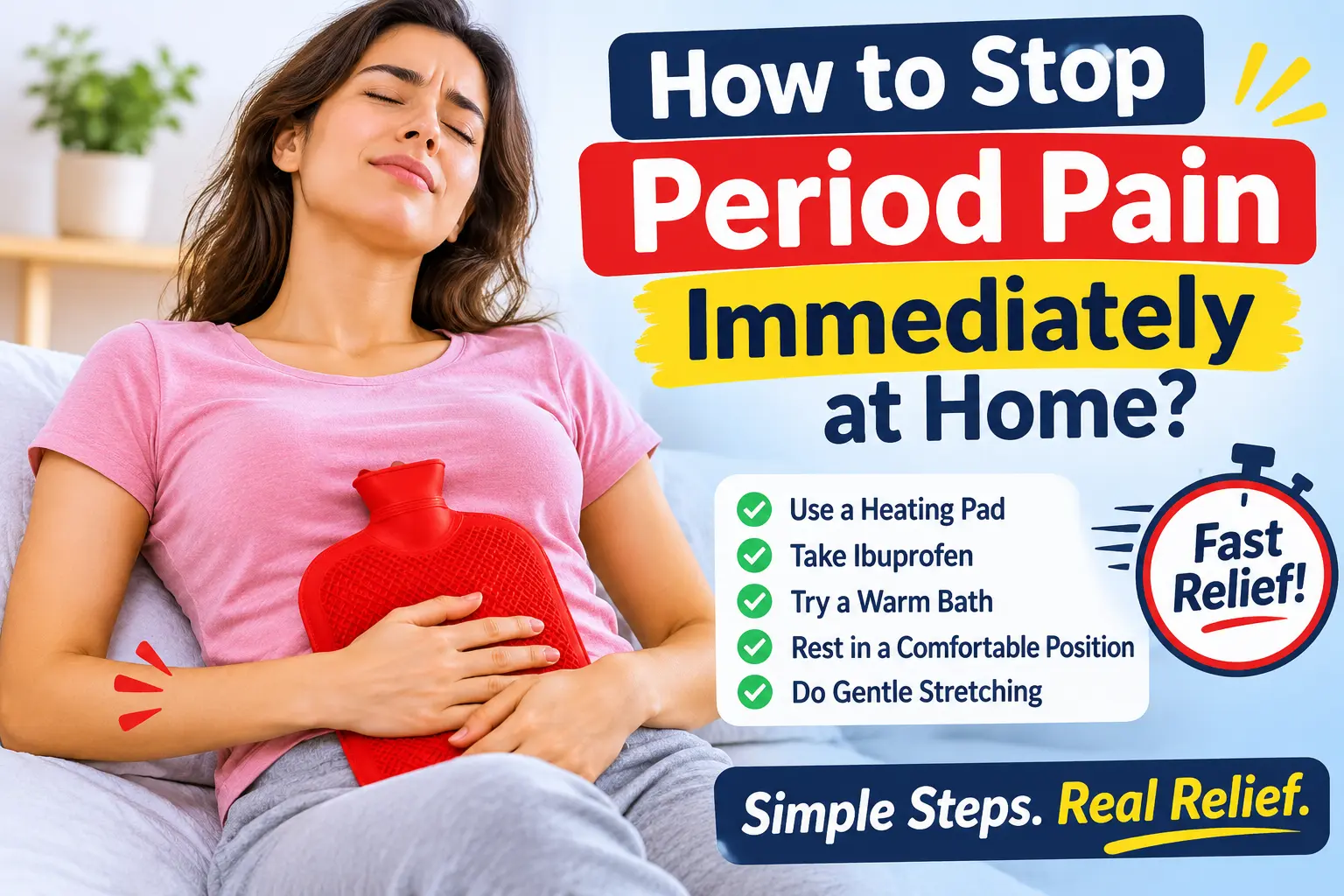
Period pain can make it hard to work, sleep, walk, or enjoy your day. If you are dealing with painful menstrual cramps right now, you may want relief as quickly as possible. The good news is that several home remedies can help ease period pain.
The most helpful options include using a heating pad, taking an appropriate over-the-counter (OTC) pain reliever, taking a warm bath, and trying gentle movement. Medicines such as ibuprofen and naproxen can also reduce the chemicals that cause menstrual cramps.
However, no home remedy can guarantee instant relief. The right approach depends on the cause and severity of your pain. Here are 10 practical ways to relieve period cramps at home, along with tips on when to seek medical help.
Quick Ways to Relieve Period Pain at Home
If you are experiencing menstrual cramps right now, these practical steps may help reduce discomfort:
- Apply gentle heat: Place a comfortably warm heating pad on your lower abdomen.
- Consider pain relief: Ibuprofen or naproxen may help if NSAIDs are safe for you.
- Try a warm bath: Warm water may help relax tight muscles.
- Rest comfortably: Lie on your side with your knees slightly bent.
- Move gently: Try light stretching or a short walk if comfortable.
What Is the Fastest Way to Relieve Period Pain at Home?
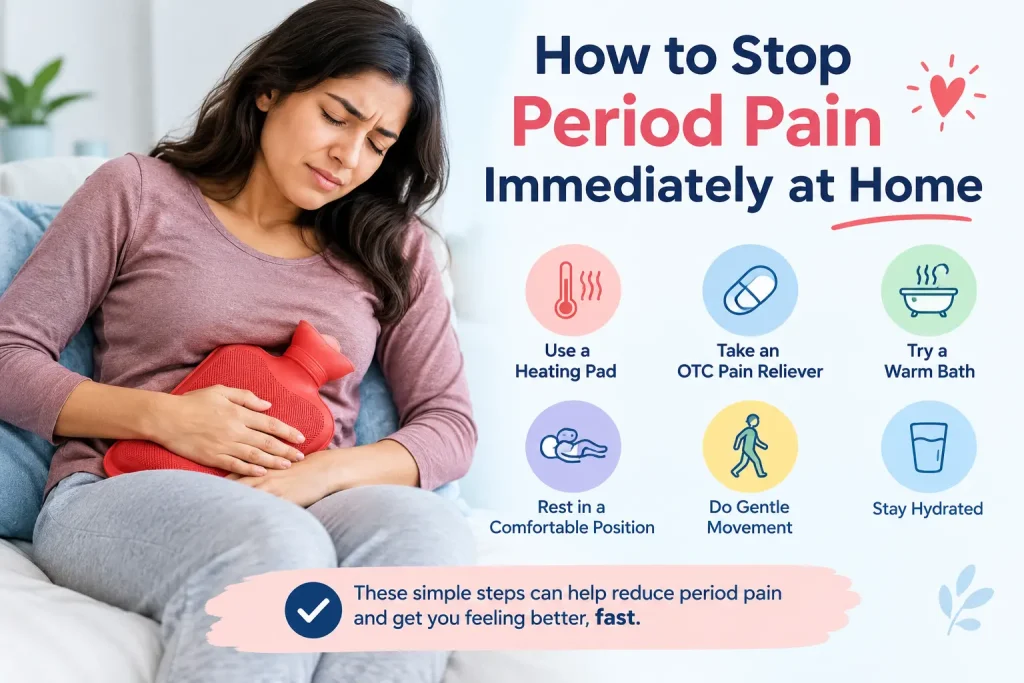
Using a heating pad on your lower abdomen and taking an appropriate OTC anti-inflammatory medicine, such as ibuprofen, are two well-supported ways to relieve menstrual cramps. A warm bath, gentle massage, and comfortable resting positions may also help.
If you need relief right now, try these steps:
- Place a comfortably warm heating pad on your lower abdomen.
- Consider an OTC pain reliever if it is safe for you.
- Lie on your side with your knees slightly bent.
- Try gentle abdominal or lower-back massage.
- Take a short walk or try light stretching if you feel comfortable.
You do not need to try every remedy at once. Start with the methods that feel comfortable and safe for you.
10 Ways to Stop Period Pain Immediately at Home
Period cramps happen when the muscles of your uterus contract. These contractions help the uterus shed its lining during menstruation. Some home treatments can help relax your body and reduce the pain.
Here are 10 ways to relieve period cramps at home.
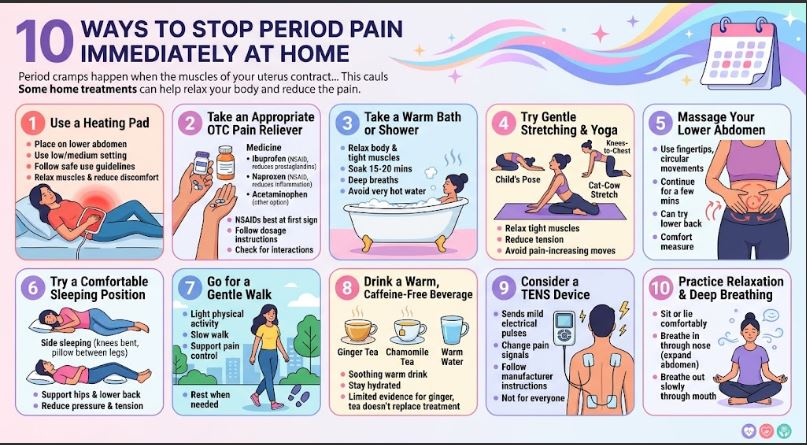
1. Use a Heating Pad on Your Lower Abdomen
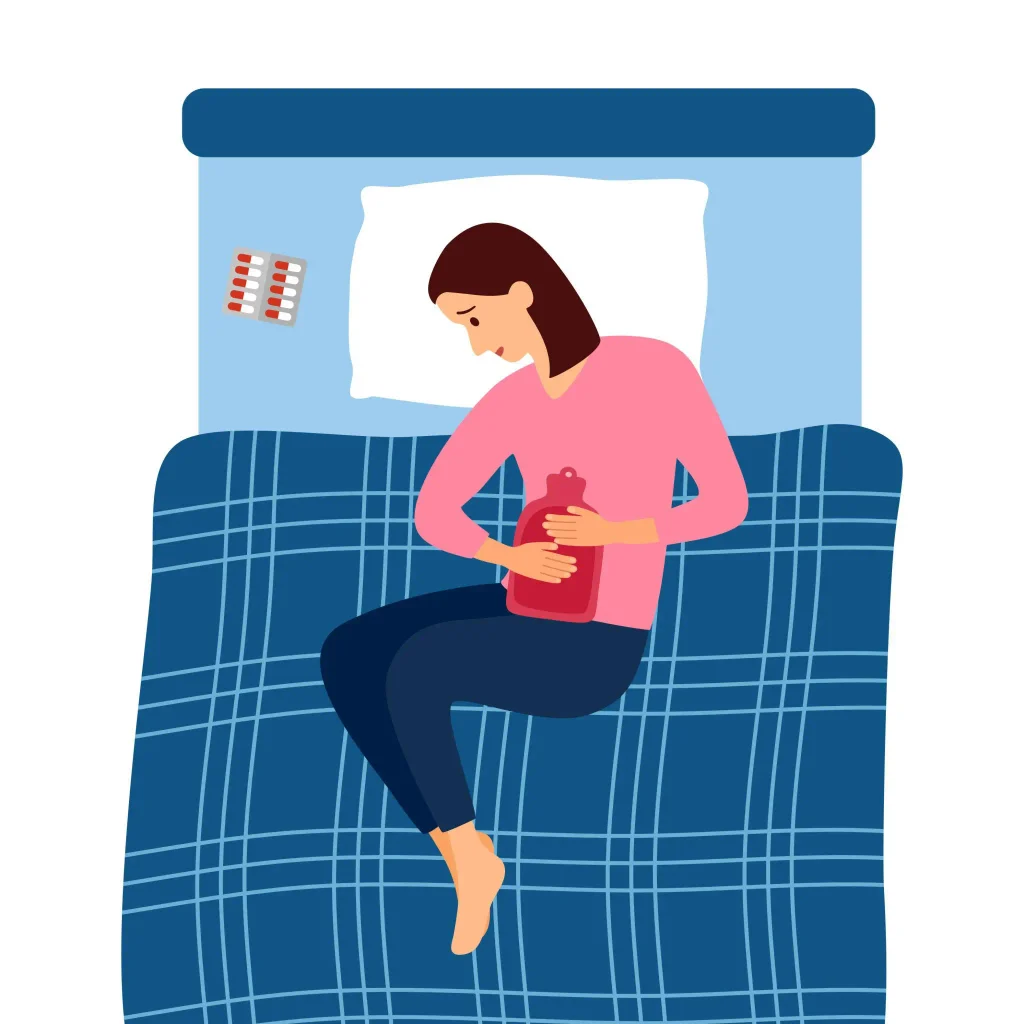
Heat is one of the simplest ways to ease period cramps. A heating pad can relax the muscles around your lower abdomen and help reduce discomfort.
You can also use a hot-water bottle or a reusable heat wrap.
How to use heat for period cramps:
- Place a heating pad over your lower abdomen.
- Keep a thin layer of clothing or fabric between your skin and the heat source.
- Use a comfortable, low or medium heat setting.
- Follow the product instructions for safe use.
- Remove the heating pad if your skin becomes red or uncomfortable.
Avoid falling asleep with an electric heating pad switched on unless the product is specifically designed for safe overnight use.
If you do not have a heating pad, a warm towel may provide some comfort.
2. Take an Appropriate OTC Pain Reliever
Over-the-counter pain medicine can help when period cramps become difficult to manage.
Two common options are ibuprofen and naproxen. Both belong to a group of medicines called nonsteroidal anti-inflammatory drugs (NSAIDs).
NSAIDs reduce the production of prostaglandins. These are natural chemicals that make the uterus contract. Lower prostaglandin levels can mean less painful menstrual cramps.
Common OTC options include:
| Medicine | How it helps |
|---|---|
| Ibuprofen | Reduces prostaglandins and menstrual pain |
| Naproxen | Reduces inflammation and period cramps |
| Acetaminophen | Helps relieve pain but does not reduce prostaglandins in the same way |
NSAIDs may work best when taken at the first sign of menstrual pain. Some people with predictable cycles may benefit from starting them shortly before their period begins.
Important medication safety tips:
- Follow the dosage instructions on the package.
- Do not take ibuprofen and naproxen together unless a healthcare professional tells you to.
- Ask a healthcare professional before using NSAIDs if you have kidney disease, stomach ulcers, a history of stomach bleeding, certain types of asthma, or a bleeding disorder.
- Check for medicine interactions, especially if you take blood thinners.
- Ask a healthcare professional about pain medicine if you are pregnant, might be pregnant, or are trying to become pregnant.
Acetaminophen may be an option for people who cannot take NSAIDs. However, it can harm the liver when taken in excessive amounts. Check the label and avoid taking multiple products that contain acetaminophen.
If you are unsure which medicine is safe for you, ask a pharmacist or healthcare professional.
3. Take a Warm Bath or Shower
A warm bath can help your body relax when menstrual cramps become uncomfortable.
Warm water may relax tight muscles and provide soothing comfort. It can also help ease lower-back tension that sometimes comes with period pain.
Try these simple steps:
- Fill your bathtub with comfortably warm water.
- Soak for about 15–20 minutes if it feels comfortable.
- Relax your abdominal muscles.
- Take slow, steady breaths.
- Avoid water that feels too hot.
If you do not have a bathtub, a warm shower can also help.
A warm bath may not stop uterine contractions, but it can make cramps easier to manage.
4. Try Gentle Stretching and Yoga
Gentle movement may help some people feel better during menstruation.
You do not need to perform a difficult workout. Simple stretches can help relax tight muscles and reduce tension around your lower abdomen and back.
Some comfortable positions include:
- Child’s pose: Kneel on the floor, sit back toward your heels, and gently stretch your arms forward.
- Cat-cow stretch: Move slowly between arching and rounding your back.
- Knees-to-chest stretch: Lie on your back and gently bring your knees toward your chest.
- Gentle pelvic tilts: Lie on your back with your knees bent and gently tilt your pelvis.
Move slowly and avoid any position that increases your pain.
If you feel dizzy, weak, or more uncomfortable, stop exercising and rest.
5. Massage Your Lower Abdomen
A gentle abdominal massage may help ease muscle tension and make period cramps more manageable.
You can massage your lower abdomen or lower back with your fingertips.
How to massage your abdomen:
- Lie down in a comfortable position.
- Place your fingertips on your lower abdomen.
- Use gentle circular movements.
- Continue for a few minutes.
- Stop if you notice increased pain.
You can also try a gentle back massage if your cramps spread toward your lower back.
Some people use a small amount of unscented massage oil or lotion to reduce friction. Avoid products that irritate your skin.
Massage is a comfort measure. It does not treat underlying conditions such as endometriosis or fibroids.
6. Try a Comfortable Sleeping Position
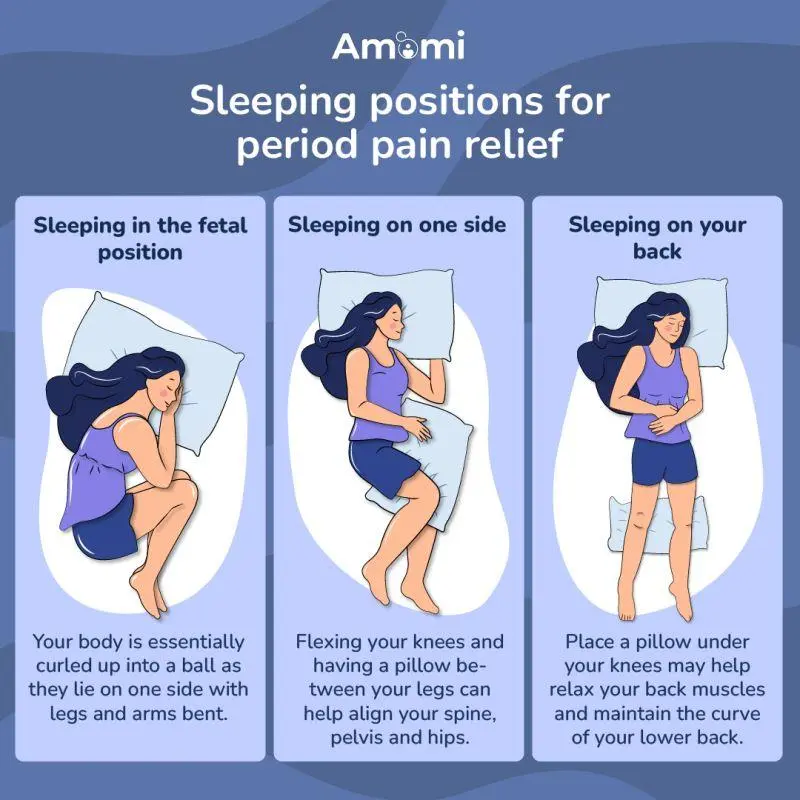
Period cramps can make it difficult to fall asleep. Finding a comfortable sleeping position may help reduce pressure and muscle tension.
There is no single sleeping position that works for everyone. However, two positions may feel more comfortable.
Side sleeping with your knees bent
Lie on your side and gently bend your knees toward your chest. Place a pillow between your knees if it helps support your hips.
Sleeping on your back
Lie on your back and place a pillow under your knees. This can help support your lower back and reduce tension.
Choose the position that feels best for your body. You can change positions whenever you need to.
Getting enough sleep may also help you cope with period discomfort.
7. Go for a Gentle Walk
Walking may be the last thing you want to do when your cramps are painful. However, light movement can help some people feel better.
Regular physical activity may support pain control and improve overall well-being.
You can try:
- A slow walk around your home.
- A short walk outside.
- Gentle stretching.
- Light yoga.
Start with a few minutes and see how your body responds.
You do not need to force yourself to exercise during severe cramps. Rest when you need it.
8. Drink a Warm, Caffeine-Free Beverage
A warm drink can be soothing when you have menstrual cramps.
Some people prefer ginger tea, chamomile tea, or plain warm water.
Ginger has been studied for its possible effects on menstrual pain. However, evidence is still limited, and tea should not replace proven pain treatments.
You can try:
- Ginger tea.
- Chamomile tea.
- Warm water.
- Other caffeine-free herbal drinks.
Stay hydrated throughout your period. Drinking enough water supports normal body functions, although extra water is not a proven cure for menstrual cramps.
Also, remember that herbal products and supplements can interact with medicines. Ask a healthcare professional before using concentrated herbal supplements, especially if you take other medicines or may be pregnant.
9. Consider a TENS Device
A transcutaneous electrical nerve stimulation (TENS) device sends mild electrical pulses through small pads placed on the skin.
Some people use TENS devices to manage menstrual pain.
The device may change how pain signals travel through the nervous system. It does not directly stop the uterus from contracting.
Before using a TENS device:
- Read the manufacturer’s instructions.
- Place the pads only on the recommended areas.
- Use the settings suggested by the manufacturer.
- Stop if you feel discomfort or skin irritation.
- Ask a healthcare professional if you are pregnant or have an implanted electrical medical device.
TENS may help some people, but it does not work for everyone.
10. Practice Relaxation and Deep Breathing
Pain can make your body tense. Stress and discomfort can also make it harder to relax.
Deep breathing and relaxation techniques may help you cope with period cramps.
Try this simple breathing exercise:
- Sit or lie down comfortably.
- Slowly breathe in through your nose.
- Let your abdomen expand gently.
- Breathe out slowly through your mouth.
- Repeat for a few minutes.
You can also try meditation, calming music, or gentle yoga.
These methods are not a replacement for pain medicine or medical care. However, they may help you feel more relaxed while other treatments take effect.
Which Period Pain Relief Method Works the Fastest?
Different treatments work in different ways. Some help relax your muscles, while others reduce the chemicals that cause menstrual cramps.
Here is a comparison of common period pain relief methods.
| Relief method | How it may help | Important consideration |
|---|---|---|
| Heating pad | Provides soothing warmth and may ease cramps. | Protect your skin from burns. |
| Ibuprofen | Reduces prostaglandins that contribute to cramps. | Not suitable for everyone. |
| Naproxen | Reduces prostaglandins and menstrual pain. | Follow the package directions. |
| Warm bath | May relax muscles and improve comfort. | Avoid excessively hot water. |
| Gentle massage | May reduce muscle tension. | Use light pressure. |
| Gentle walking | May help some people manage discomfort. | Stop if pain increases. |
| TENS device | May help reduce pain signals. | Follow device instructions. |
The effectiveness of each method varies. Heat and NSAIDs are commonly recommended options for primary menstrual cramps.
There is no guaranteed fastest method for everyone. Heat and NSAIDs are two particularly useful options for ordinary menstrual cramps.
Some people find that combining safe heat therapy with an appropriate pain reliever provides better comfort than using only one method.
Your Practical Period Cramp Relief Routine
Apply a comfortably warm heating pad to your lower abdomen. Protect your skin from direct heat.
If safe for you, consider an OTC pain reliever such as ibuprofen. Follow the package directions.
Lie on your side with your knees slightly bent or rest on your back with a pillow under your knees.
If you feel comfortable, try light stretching or a short walk. Stop if your pain increases.
Notice whether your pain is improving. Seek medical advice if it remains severe or unusual.
How to Relieve Period Cramps Without Medicine
Not everyone wants to take pain medicine. Some people cannot use NSAIDs because of health conditions or medicine interactions.
If you want to relieve period cramps without medicine, try these options:
Use a heating pad: Place a warm heating pad over your lower abdomen or lower back.
Take a warm shower: Warm water may help relax tight muscles.
Try gentle movement: Walking and light stretching may improve comfort.
Massage your abdomen: Use gentle circular movements around your lower belly.
Get enough rest: Choose a comfortable position and allow your body to relax.
Practice deep breathing: Slow breathing may help reduce tension.
These methods may reduce discomfort, but they may not be enough for severe menstrual pain. Talk with a healthcare professional if your cramps keep affecting your daily life.
What Foods and Drinks May Help With Period Cramps?
Your diet can support your overall health during menstruation. Some foods also provide nutrients that are important for normal muscle and nerve function.
Consider including:
- Leafy green vegetables: Spinach and kale provide magnesium and other nutrients.
- Nuts and seeds: Almonds and pumpkin seeds contain magnesium.
- Fatty fish: Salmon provides omega-3 fatty acids.
- Whole grains: Oats and brown rice provide fiber and other nutrients.
- Fruits: Bananas, berries, and oranges provide vitamins and minerals.
- Water: Staying hydrated supports normal body functions.
Some people also enjoy ginger or chamomile tea during their periods.
However, no specific food or drink has been proven to stop period pain immediately. A balanced diet is better than relying on one food or supplement as a quick cure.
Why Are My Period Cramps So Painful?
Period cramps are often caused by chemicals called prostaglandins.
Your uterus produces these chemicals to help its muscles contract and shed the uterine lining during menstruation.
When prostaglandin levels are high, the uterus may contract more strongly. These contractions can reduce blood flow to the uterine muscle for short periods, causing pain.
This is known as primary dysmenorrhea.
However, painful periods can sometimes be linked to an underlying health condition. This is called secondary dysmenorrhea.
Some possible causes include:
Endometriosis
Endometriosis happens when tissue similar to the uterine lining grows outside the uterus.
It can cause severe menstrual cramps, pelvic pain, pain during sex, and pain during bowel movements or urination.
Uterine Fibroids
Fibroids are growths that develop in or around the uterus. They are usually noncancerous.
Depending on their size and location, they may cause heavy periods, pelvic pressure, and painful menstrual cramps.
Adenomyosis
Adenomyosis occurs when tissue similar to the uterine lining grows into the muscle wall of the uterus.
It may cause painful periods, heavy bleeding, and an enlarged or tender uterus.
Pelvic Inflammatory Disease
Pelvic inflammatory disease (PID) is an infection of the female reproductive organs.
It can cause lower abdominal pain, fever, unusual vaginal discharge, and pain during sex.
If your period pain is getting worse over time, do not assume it is normal. A healthcare professional can help identify the cause.
When Should You See a Doctor for Period Pain?
Mild menstrual cramps are common. However, severe or unusual period pain should not be ignored.
You should arrange a medical appointment if:
- Your cramps are becoming more painful over time.
- Period pain stops you from working, studying, or doing daily activities.
- Pain medicine and home remedies do not help.
- You experience pelvic pain outside your period.
- Your periods become much heavier or irregular.
- You have pain during sex or when using the bathroom.
- You notice unusual vaginal discharge.
Seek urgent medical care if you experience:
- Sudden or severe pelvic pain.
- Severe pain with fainting or feeling like you may pass out.
- Fever with pelvic pain.
- Severe abdominal pain when pregnancy is possible.
- Heavy bleeding with dizziness, weakness, or fainting.
These symptoms may have causes other than ordinary menstrual cramps. Do not delay medical care while trying home remedies.
Final Thoughts
Period pain can be uncomfortable, but several home treatments may help you feel better. Heat therapy, appropriate OTC pain medicine, warm baths, gentle massage, and light movement are useful options to consider.
Start with the methods that feel safe and comfortable for you. You do not need to force exercise or try every remedy.
Most importantly, do not ignore severe or worsening menstrual cramps. If period pain regularly affects your daily life or does not improve with treatment, talk with an OB-GYN. Finding the cause can help you get the right treatment and better long-term relief.
Medical disclaimer: This article is for educational purposes only. It does not replace medical advice, diagnosis, or treatment. Always consult a qualified healthcare professional about severe period pain, medication safety, or unusual menstrual symptoms.