Blood Clot Symptoms: How to Recognize the Warning Signs
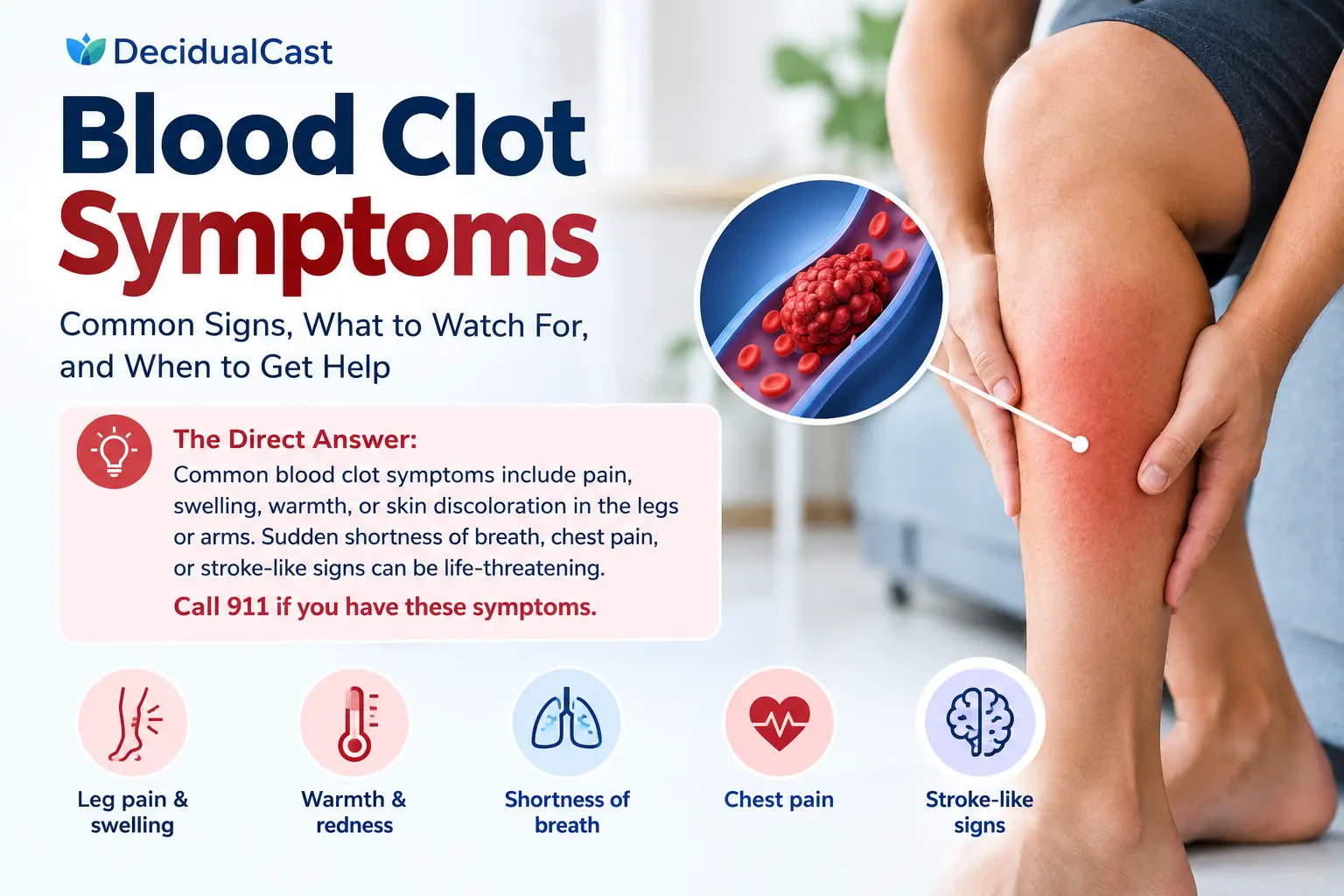
Blood clot symptoms can include pain, swelling, warmth, and skin discoloration in an arm or leg. Some people have no noticeable symptoms. A blood clot that travels to the lungs can cause sudden shortness of breath, chest pain, or fainting. These symptoms may signal a medical emergency.
Call 911 immediately if you have sudden breathing difficulty, chest pain with suspected pulmonary embolism, fainting, or signs of a stroke. Do not wait for all symptoms to appear.
Recognizing the warning signs can help you seek medical care sooner. However, symptoms alone cannot confirm or rule out a blood clot.
When Are Blood Clot Symptoms an Emergency?
A blood clot can become life-threatening if it travels to the lungs or blocks blood flow to the brain.
- Sudden shortness of breath or difficulty breathing.
- Chest pain, especially with breathing difficulty.
- Fainting or collapse with suspected blood clot symptoms.
- Sudden facial drooping, arm weakness, or trouble speaking.
Call 911 immediately for these emergency warning signs. Do not wait for symptoms to become worse.
New, unexplained swelling or pain in one leg or arm also needs prompt medical evaluation, even without chest pain or breathing problems.
What Are the Common Symptoms of a Blood Clot?
Blood Clot Symptoms by Location
Symptoms depend on where a clot forms. Some blood clots cause no noticeable symptoms.
| Location | Possible symptoms | Recommended action |
|---|---|---|
| Leg or arm | Pain, swelling, tenderness, warmth, or skin discoloration. | Seek prompt medical evaluation. |
| Lungs | Sudden shortness of breath, chest pain, a fast heartbeat, or fainting. | Call 911 for suspected pulmonary embolism. |
| Brain | Sudden facial drooping, one-sided weakness, or trouble speaking. | Call 911 immediately. |
| Abdomen | Unexplained abdominal pain, sometimes with nausea or vomiting. | Seek urgent medical assessment for severe or concerning symptoms. |
These symptoms can have other causes. This table cannot diagnose or rule out a blood clot.
The symptoms of a blood clot depend on its location. A clot in a deep vein often affects an arm or leg. A clot that travels to the lungs can affect breathing and circulation.
Common blood clot symptoms include:
- Swelling in one arm or leg.
- Pain or tenderness in the affected area.
- Skin that feels warmer than the surrounding area.
- Redness or other skin color changes.
- Sudden shortness of breath if a clot reaches the lungs.
- Chest pain that may worsen with deep breathing.
- A fast heartbeat, dizziness, or fainting in some cases.
Not everyone experiences these symptoms. In fact, about half of people with deep vein thrombosis (DVT) have no noticeable symptoms.
A blood clot can also cause serious complications without obvious warning signs in the affected limb. This is why risk factors and sudden changes in your health matter.
Blood Clot Symptoms in the Leg
A blood clot in a deep leg vein is called deep vein thrombosis (DVT). It most often develops in the lower leg, thigh, or pelvis.
DVT can block normal blood flow. This may cause symptoms in the affected leg.
1. Swelling in One Leg
Swelling is one of the common signs of a blood clot in the leg. You may notice that one calf, ankle, or entire leg looks larger than the other.
The swelling may develop over hours or days. It can occur with pain, tenderness, or warmth.
Swelling does not always mean you have a blood clot. Muscle injuries, infections, and other conditions can also cause it. However, new and unexplained swelling in one leg needs prompt medical evaluation.
2. Leg Pain or Tenderness
A blood clot may cause aching, cramping, or tenderness in the calf or thigh. The discomfort can occur while walking or standing, but it may also continue while resting.
Some people describe the pain as similar to a pulled muscle. Others notice tenderness when touching the affected area.
You cannot reliably distinguish a blood clot from a muscle injury by pain alone. Seek medical care if you have new, unexplained leg pain, especially with swelling or other clot symptoms.
3. Warm Skin or Skin Discoloration
The skin around a clot may feel warmer than the surrounding skin. You may also notice redness or another change in skin color.
These changes can be harder to see on darker skin tones. Pay attention to differences in warmth, swelling, tenderness, and the usual appearance of your skin.
Not everyone with DVT develops visible redness or warmth. The absence of these signs does not rule out a blood clot.
4. Can a Blood Clot Occur in the Calf or Thigh?
Yes. A blood clot can develop in the deep veins of the calf or thigh. It can also occur in veins higher in the pelvis.
Symptoms may include swelling, aching, tenderness, and warmth. Some people have mild symptoms, while others have none.
Do not wait for severe pain before seeking medical advice. A suspected DVT needs prompt assessment because the clot may travel to the lungs.
Blood Clot Symptoms in the Arm
Blood clots can also develop in the deep veins of the arm. They are less common than clots in the legs, but they can still be serious.
Possible blood clot symptoms in the arm include:
- Swelling in one arm or hand.
- Pain or tenderness.
- Warm skin around the affected area.
- Redness or skin discoloration.
- A feeling of heaviness in the arm.
The symptoms may affect the upper arm, shoulder, or area around the collarbone. Some arm clots occur after medical procedures or when a catheter is placed in a vein.
Other conditions can cause similar symptoms. Seek prompt medical care if you develop unexplained swelling or pain in one arm.
Blood Clot in the Lung: Symptoms of Pulmonary Embolism
A pulmonary embolism (PE) occurs when a blood clot blocks an artery in the lungs. The clot often travels from a deep vein in the leg or pelvis.
A pulmonary embolism can be life-threatening. It requires immediate medical attention.
Common pulmonary embolism symptoms include:
- Sudden or unexplained shortness of breath.
- Chest pain that may worsen when breathing deeply or coughing.
- A fast or irregular heartbeat.
- Lightheadedness or fainting.
- Coughing, sometimes with blood.
- Sudden weakness or a feeling that something is seriously wrong.
Symptoms may begin suddenly or develop over time. Some people have no obvious symptoms of DVT before a pulmonary embolism occurs.
Call 911 if you suspect a pulmonary embolism. Do not drive yourself to the hospital if you have severe breathing difficulty, chest pain, or fainting.
A pulmonary embolism is not something you can safely diagnose or rule out at home.
Blood Clot Symptoms in the Brain
A clot that blocks blood flow to the brain can cause an ischemic stroke. Stroke symptoms often appear suddenly.
Warning signs include:
- Sudden weakness or numbness on one side of the body.
- Facial drooping.
- Trouble speaking or understanding speech.
- Sudden vision changes.
- Difficulty walking, dizziness, or loss of balance.
- A sudden, severe headache, particularly with other neurological symptoms.
These symptoms can have several causes, but a stroke is a medical emergency.
Call 911 immediately if you notice possible stroke symptoms. Do not wait to see whether they improve.
Remember the FAST warning signs:
- F — Face: One side of the face droops.
- A — Arms: One arm becomes weak or drifts downward.
- S — Speech: Speech becomes slurred or difficult.
- T — Time: Call 911 immediately.
Blood Clot Symptoms in the Abdomen
Blood clots can develop in veins that carry blood from abdominal organs. Symptoms vary depending on which blood vessel is affected.
Possible symptoms include:
- Unexplained abdominal pain.
- Nausea or vomiting.
- Abdominal swelling in some cases.
- Pain that persists or becomes worse.
These symptoms are not specific to blood clots. Digestive problems, infections, and other conditions can cause similar discomfort.
Seek urgent medical assessment for severe, sudden, or unexplained abdominal pain, especially if you also have vomiting, fainting, or other concerning symptoms.
What Does a Blood Clot Feel Like?
A blood clot can feel different from one person to another. The sensation depends on where the clot forms and whether it affects blood flow.
A clot in the leg may cause aching, tenderness, swelling, or a cramp-like feeling. An affected arm may feel heavy or swollen. A clot in the lungs may cause sudden breathing difficulty or chest pain.
Some people experience only mild symptoms. Others notice a rapid change in their health.
There is no single feeling that proves you have a blood clot. You should not rely on pain intensity, skin color, or a symptom checklist to decide that a clot is absent.
If you have unexplained symptoms that suggest DVT, seek prompt medical evaluation. If you have possible pulmonary embolism or stroke symptoms, call 911.
Blood Clot vs. Muscle Strain or Leg Cramp
A blood clot can cause symptoms that resemble a muscle strain or leg cramp. This can make it difficult to identify the cause without medical testing.
The following table explains some common differences.
Blood Clot vs. Muscle Strain: Key Differences
Possible Blood Clot
- New, unexplained pain or tenderness.
- Swelling in one leg or arm.
- Warmth or skin discoloration.
- Symptoms without a clear muscle injury.
Possible Muscle Strain
- Pain after exercise or sudden movement.
- Tenderness around an injured muscle.
- Pain when using or stretching the muscle.
- A clear link to physical activity or injury.
Important: These symptoms overlap. A muscle strain can cause swelling, and a blood clot may cause mild pain or no obvious symptoms. You cannot safely rule out a blood clot using this comparison. Seek prompt medical evaluation for unexplained symptoms.
These patterns overlap. A muscle injury can cause swelling and warmth, while a blood clot may cause only mild pain.
The absence of swelling does not rule out DVT. If you have new, unexplained leg pain or swelling, seek medical care rather than relying on this comparison.
What Should You Do About Possible Blood Clot Symptoms?
Call 911 now
Sudden shortness of breath, chest pain with suspected pulmonary embolism, fainting, or sudden stroke warning signs.
Get medical evaluation promptly
New, unexplained swelling, pain, tenderness, or warmth in one arm or leg, even without breathing problems.
Discuss your personal risk
Talk with a healthcare professional about previous clots, family history, recent surgery, pregnancy, or medicines that may affect clot risk.
This guide is educational, not a diagnostic tool. Do not delay emergency care while trying to assess your symptoms.
Who Is at Higher Risk of Blood Clots?
Blood clots can affect people of different ages. However, some medical conditions and life events increase the risk.
Common risk factors include:
- Previous blood clots: A history of DVT or pulmonary embolism increases the chance of another clot.
- Surgery or hospitalization: Recovery may involve reduced movement, which can slow blood flow.
- Long periods of sitting: Long car rides, flights, or bed rest can increase risk.
- Pregnancy and postpartum recovery: The risk of blood clots rises during pregnancy and after childbirth.
- Hormonal medicines: Some estrogen-containing birth control methods and hormone therapies increase clot risk.
- Cancer: Certain cancers and their treatments can increase the risk.
- Serious injury: Trauma can damage blood vessels and affect movement.
- Family history: Some inherited conditions increase the tendency for blood to clot.
- Other health factors: Older age and certain chronic illnesses can also contribute to risk.
Having a risk factor does not mean you will develop a blood clot. However, you should tell your healthcare professional about your risk factors if you develop possible symptoms.
Can Birth Control Increase the Risk of Blood Clots?
Yes. Some hormonal contraceptives that contain estrogen can increase the risk of blood clots. The level of risk depends on the method and your personal health factors.
The risk is not the same for every birth control method. Progestin-only methods generally have a different clot-risk profile from estrogen-containing methods.
Seek medical advice if you use hormonal birth control and develop unexplained swelling or pain in one leg. Sudden breathing difficulty or chest pain requires emergency care.
Do not stop or change a prescribed contraceptive solely because you read about blood clots. Discuss your personal risk and contraceptive options with your healthcare professional.
Can Pregnancy or Childbirth Increase the Risk of Blood Clots?
Yes. Pregnancy increases the body’s tendency to form clots. The risk remains elevated after childbirth, especially during the early postpartum period.
Possible warning signs include new swelling or pain in one leg, unexplained warmth, or skin discoloration. A pulmonary embolism may cause shortness of breath, chest pain, a fast heartbeat, or fainting.
Some swelling can occur during a normal pregnancy. However, new or one-sided swelling with pain should not be assumed to be normal.
Contact a healthcare professional promptly if you suspect a clot. Call 911 for symptoms of a possible pulmonary embolism or stroke.
How Do Doctors Diagnose a Blood Clot?
Doctors use your symptoms, medical history, physical examination, and diagnostic tests to check for a blood clot.
Symptoms alone are not enough to confirm the diagnosis. Other conditions, including muscle injuries and infections, can cause similar signs.
Ultrasound for DVT
A duplex ultrasound is commonly used to check for a blood clot in a deep vein. It uses sound waves to show blood flow and help identify a blockage.
The clinician may examine the affected leg or arm based on your symptoms and medical history.
D-Dimer Blood Test
A D-dimer test measures a substance released when a blood clot breaks down. A negative result can help rule out a clot in certain patients when combined with a suitable clinical assessment.
A positive result does not prove that you have a blood clot. Other conditions can also raise D-dimer levels.
Imaging for Pulmonary Embolism
If a pulmonary embolism is suspected, a doctor may order a CT pulmonary angiogram. This scan uses contrast material and X-rays to examine the blood vessels in the lungs.
A ventilation-perfusion scan may be used in selected situations.
The tests you need depend on your symptoms, risk factors, and clinical assessment.
How Can You Reduce Your Risk of Blood Clots?
You cannot prevent every blood clot. However, certain habits and medical measures can help lower your risk.
- Move regularly: Avoid sitting still for long periods. Stand up and walk when it is safe to do so.
- Move during long trips: Flex your ankles and move your legs while seated. Walk around when possible.
- Follow recovery advice: After surgery or hospitalization, follow your healthcare team’s movement instructions.
- Discuss your personal risk: Tell your clinician about previous clots, family history, pregnancy, and medicines that may affect clot risk.
- Use prescribed prevention measures: Your clinician may recommend compression devices or blood-thinning medicine when appropriate.
Do not start aspirin or anticoagulant medicine to prevent a clot without medical advice. These medicines can cause bleeding and are not suitable for everyone.
If you develop possible blood clot symptoms, prevention measures are not a substitute for medical evaluation.
Key Takeaways About Blood Clot Symptoms
- Common signs: A deep vein blood clot may cause pain, swelling, tenderness, warmth, or skin discoloration in one limb.
- Symptoms may be absent: Some people have a blood clot without noticeable warning signs.
- Lung clots are emergencies: Sudden breathing difficulty, chest pain, or fainting can signal a pulmonary embolism.
- Stroke signs need immediate help: Sudden facial drooping, one-sided weakness, or speech problems require a 911 call.
- Symptoms cannot confirm a clot: Medical evaluation and appropriate tests are needed for diagnosis.
- Do not ignore new symptoms: Seek prompt medical evaluation for unexplained swelling or pain in one arm or leg.
Final Thoughts
Blood clot symptoms can range from mild leg discomfort to sudden, life-threatening breathing problems. Common signs of DVT include swelling, pain, tenderness, warmth, and skin discoloration in one arm or leg. Some people have no obvious symptoms.
The most important step is knowing when to seek care. Get prompt medical evaluation for possible DVT, and call 911 for symptoms of a possible pulmonary embolism, heart attack, or stroke.
Do not rely on a home symptom check to rule out a blood clot. Timely medical assessment can help prevent serious complications.
Editorial note: This article is for general educational purposes and is not a substitute for medical advice. Have a qualified healthcare professional review the content before publication.