Signs You Need to Rest During Pregnancy: 9 Signs to Watch
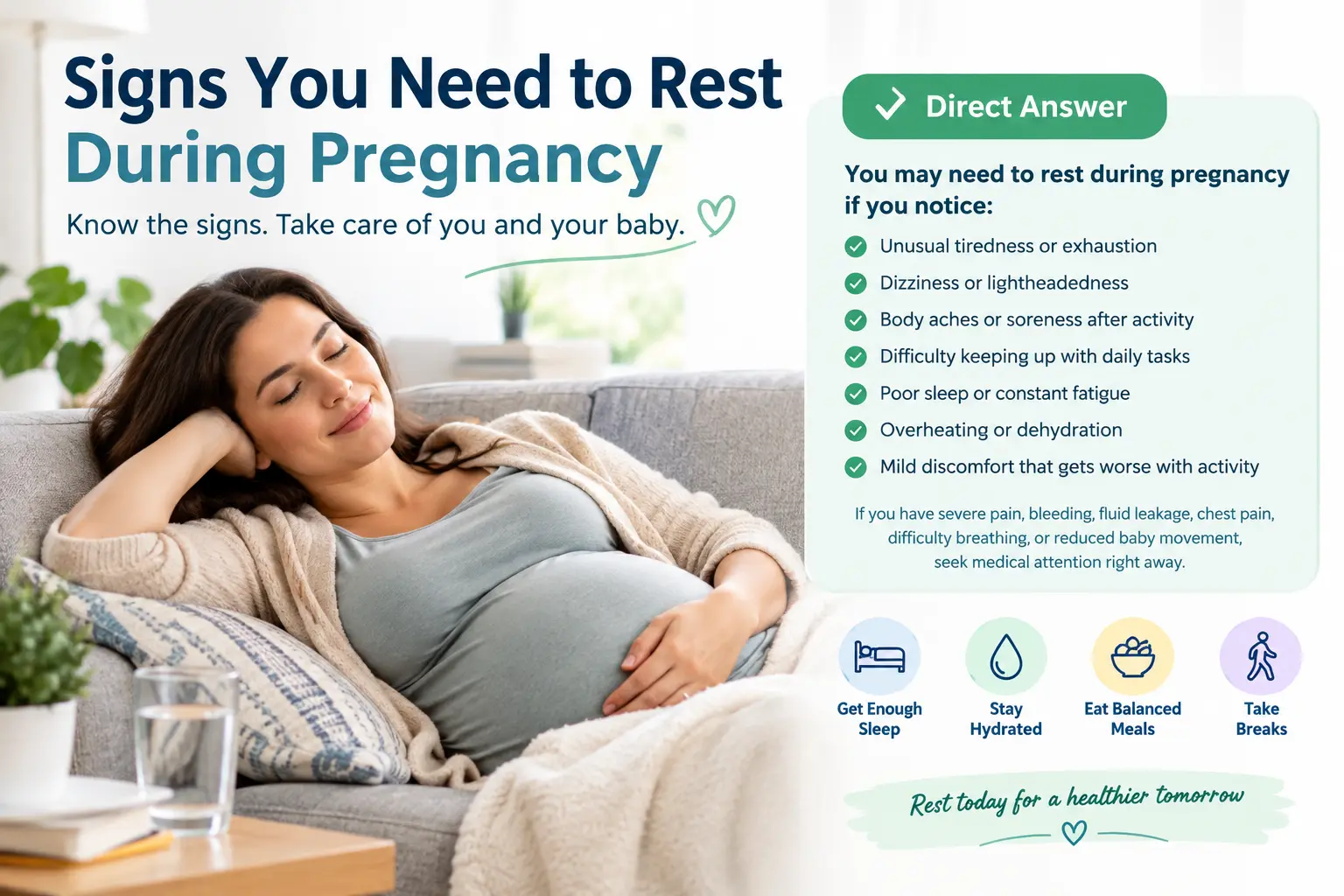
Pregnancy can make you feel more tired than usual. You may also notice muscle aches, weakness, or discomfort after daily activities. These can be signs you need to rest during pregnancy.
Taking a break, drinking water, and getting enough sleep may help with normal pregnancy fatigue. However, some symptoms need medical attention. Severe dizziness, vaginal bleeding, fluid leakage, chest pain, and difficulty breathing should never be ignored.
Learn how to recognize when your body needs a break, how rest needs can change by trimester, and when to contact your healthcare provider.
Key Takeaways
- Unusual tiredness, weakness, and discomfort may mean you need to slow down.
- Pregnancy fatigue is common, especially during the first and third trimesters.
- Rest, hydration, balanced meals, and enough sleep can help manage ordinary fatigue.
- Persistent or severe exhaustion should be discussed with your healthcare provider.
- Bleeding, fluid leakage, severe pain, chest pain, or difficulty breathing require prompt medical attention.
- Reduced fetal movement needs immediate contact with your maternity care team.
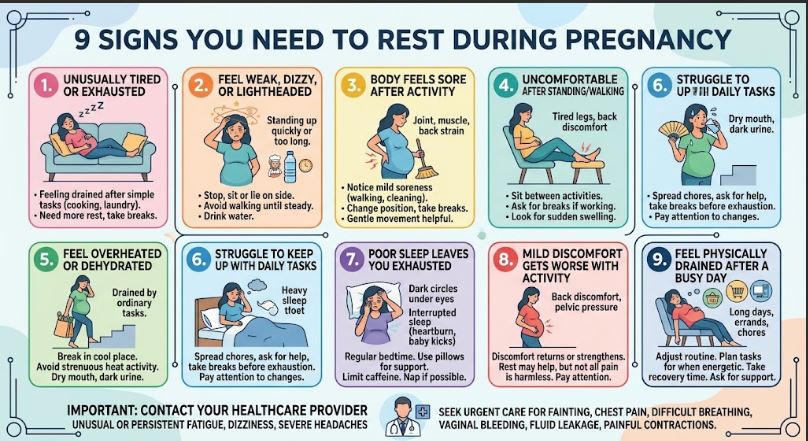
9 Signs You Need to Rest During Pregnancy
Your body goes through many changes during pregnancy. These changes can affect your energy, sleep, balance, and comfort. The following signs may mean you need to slow down and take a break.
1. You Feel Unusually Tired or Exhausted
Feeling tired is common during pregnancy. Your body works hard to support your growing baby. Hormonal changes and poor sleep can also affect your energy.
You may need more rest if you feel exhausted after simple tasks. For example, you might feel tired after cooking, walking, or doing laundry.
Try taking short breaks throughout the day. Drink enough water and eat regular, balanced meals. Aim for a consistent sleep schedule.
However, do not assume that severe or ongoing fatigue is always normal. Contact your healthcare provider if the tiredness is unusual, persistent, or affects your daily life. Your provider may check for problems such as anemia or thyroid disease.
2. You Feel Weak, Dizzy, or Lightheaded
Pregnancy can sometimes cause dizziness. Changes in blood pressure, dehydration, and going too long without eating may contribute to it.
You may notice lightheadedness after standing up quickly or remaining on your feet for a long time.
If you feel dizzy, stop what you are doing. Sit down somewhere safe or lie on your side if needed. Avoid walking around until you feel steady.
Drink water if you can do so safely. Contact your healthcare provider if dizziness continues or happens often.
Seek urgent medical care if you faint or experience dizziness with chest pain, difficulty breathing, severe headache, or other serious symptoms.
3. Your Body Feels Sore After Physical Activity
Pregnancy changes how your body carries weight. Your joints, muscles, and back may feel more strained as your baby grows.
You may notice mild soreness after walking, standing, cleaning, or exercising. This discomfort may improve when you change positions or take a break.
Try breaking larger tasks into smaller steps. Use supportive shoes and avoid lifting heavy objects when they cause discomfort.
Gentle movement is usually helpful during an uncomplicated pregnancy. You do not need to stop all physical activity simply because you are pregnant.
However, stop exercising and contact your healthcare provider if you develop vaginal bleeding, painful contractions, fluid leakage, or other warning signs.
4. You Become Uncomfortable After Standing or Walking
Long periods of standing or walking may become harder as pregnancy progresses. You may experience tired legs, back discomfort, or swelling in your feet.
These changes can make everyday tasks feel more demanding.
Try sitting down between activities. Alternate standing with sitting when possible. If you work on your feet, ask whether you can take regular breaks.
Mild swelling in both feet can occur during pregnancy. However, sudden or severe swelling, especially with a headache or vision changes, needs urgent medical assessment.
Painful swelling in one leg also requires prompt medical attention because it can be a sign of a blood clot.
5. You Feel Overheated or Dehydrated
Pregnancy can make it harder to cope with heat and strenuous activity. Sweating heavily, feeling thirsty, and becoming unusually tired may suggest that you need fluids and a cooler environment.
Take a break in a cool place if you feel overheated. Drink water and avoid strenuous activity in hot weather.
Other possible signs of dehydration include a dry mouth, dark urine, and passing urine less often than usual.
Seek medical advice if you cannot keep fluids down, feel persistently unwell, or have signs of significant dehydration. Confusion, collapse, or severe heat-related symptoms require emergency care.
6. You Struggle to Keep Up With Daily Tasks
You may find that ordinary tasks take more effort during pregnancy. Carrying groceries, climbing stairs, preparing meals, or completing a work shift may leave you feeling drained.
This does not automatically mean something is wrong. Your energy levels can change throughout pregnancy.
Try spreading chores across the day. Ask for help with heavy tasks and take breaks before you become exhausted.
Pay attention to changes in your usual energy level. If simple activities suddenly become very difficult, or you feel breathless with little effort, contact your healthcare provider.
Severe or sudden difficulty breathing requires emergency medical attention.
7. Poor Sleep Leaves You Exhausted
Getting comfortable at night can become harder during pregnancy. Frequent trips to the bathroom, heartburn, back pain, and your growing belly may interrupt sleep.
Poor sleep can leave you tired, irritable, and less able to focus during the day.
Try keeping a regular bedtime. Use pillows to support your body and make your sleeping position more comfortable. Limit caffeine and discuss ongoing sleep problems with your healthcare provider.
If you feel sleepy during the day, take a short rest when possible. Avoid driving or operating machinery when you feel too tired to do so safely.
8. Mild Discomfort Gets Worse When You Stay Active
Some pregnant women notice mild back discomfort, pelvic pressure, or brief tightening of the abdomen during daily activities.
Changing position or resting may help with certain types of discomfort. However, not all pain during pregnancy is harmless.
Stop the activity and pay attention to how you feel. If the discomfort keeps returning, becomes stronger, or does not improve, contact your healthcare provider.
Seek immediate medical assessment for severe abdominal pain, vaginal bleeding, fluid leakage, or regular painful contractions, especially before 37 weeks.
Do not rely on rest alone to determine whether these symptoms are safe.
9. You Feel Physically Drained After a Busy Day
A busy schedule can leave anyone tired. Pregnancy may make the effects of long workdays, errands, household chores, and exercise more noticeable.
You may need to adjust your routine if you regularly feel completely drained at the end of the day.
Plan demanding tasks for the times when you have more energy. Take short breaks, drink water, and leave time to recover between activities.
You do not need to finish every task in one day. Ask for support when you need it.
If exhaustion becomes severe or continues despite adequate sleep and regular meals, arrange a medical assessment.
Pregnancy Symptoms: When Should You Rest or Seek Help?
Use this guide to understand the difference between common discomfort and symptoms that need medical attention.
| Symptom | Recommended action |
|---|---|
| Mild tiredness after daily activities | Take a break, drink water, and get enough sleep. |
| Recurring or unusual exhaustion | Contact your healthcare provider for assessment. |
| Persistent dizziness or weakness | Stop the activity and seek prompt medical advice. |
| Vaginal bleeding, fluid leakage, or severe abdominal pain | Contact your maternity care team immediately. |
| Chest pain, severe difficulty breathing, or fainting | Seek emergency medical care. |
| Baby moving less than usual | Contact your maternity care team immediately. Do not wait until the next day. |
This guide is for general education and does not diagnose a condition. Do not delay care for concerning symptoms while trying to rest.
When Do You Need More Rest During Each Trimester?
Your energy levels and comfort may change as your pregnancy progresses. However, every pregnancy is different. You may need extra rest at any stage.
First Trimester: Weeks 1–12
Fatigue is common during the first trimester. Hormonal changes can make you feel sleepy even when you have not done much physical activity.
Nausea, vomiting, and changes in appetite may also affect your energy.
Try to get enough sleep and eat small, balanced meals if large meals make you feel sick. Drink fluids regularly, especially if you have nausea.
Contact your healthcare provider if you cannot keep fluids down, feel faint, or experience severe weakness.
Second Trimester: Weeks 13–27
Some women feel more energetic during the second trimester. Others continue to experience fatigue.
Your changing body may also cause back discomfort, leg cramps, or difficulty staying comfortable during long activities.
Continue gentle physical activity if your provider says it is safe. Take breaks when needed and avoid pushing through pain or unusual exhaustion.
Contact your provider if fatigue returns suddenly or becomes difficult to manage.
Third Trimester: Week 28 Until Birth
Fatigue may increase again during the third trimester. Your growing belly can make walking, sleeping, and changing positions more difficult.
You may need more frequent breaks throughout the day. Use pillows for support and plan enough time for rest between activities.
Do not assume that every new symptom is a normal part of late pregnancy. Severe headaches, vision changes, chest pain, difficulty breathing, bleeding, or reduced fetal movement need prompt medical attention.
First Trimester
Hormonal changes, nausea, and fatigue may make you need more sleep and breaks. Eat regularly and drink fluids as tolerated.
Second Trimester
Energy may improve, but discomfort and fatigue can continue. Balance suitable activity with breaks when needed.
Third Trimester
Sleep difficulties and physical discomfort may increase. Allow time to rest and discuss persistent fatigue with your provider.
Every pregnancy is different. New, severe, or concerning symptoms need medical assessment at any stage.
How to Rest Safely During Pregnancy
Rest does not always mean spending the entire day in bed. For most pregnant women, balancing sleep, gentle movement, hydration, and regular meals is a better approach.
Here are practical ways to manage your energy.
- Take regular breaks. Sit down when you feel tired, and avoid pushing through significant discomfort.
- Drink enough water. Keep water nearby, especially during warm weather or physical activity.
- Eat balanced meals. Include protein, fruits, vegetables, whole grains, and other nutritious foods.
- Protect your sleep. Follow a regular bedtime and make your sleeping area comfortable.
- Adjust demanding tasks. Break chores into smaller steps and ask for help with heavy work.
- Stay gently active when appropriate. Walking and other suitable activities can support health during an uncomplicated pregnancy.
- Listen to changes in your body. Stop an activity if you feel unwell, dizzy, overheated, or unusually weak.
Ask your healthcare provider what level of activity is appropriate for your pregnancy, especially if you have a medical condition or pregnancy complication.
When Is Pregnancy Fatigue a Warning Sign?
Pregnancy fatigue is common, but severe or persistent tiredness deserves attention.
Contact your healthcare provider if you experience:
- Exhaustion that interferes with everyday activities.
- Persistent weakness or repeated dizziness.
- Ongoing vomiting or difficulty drinking enough fluids.
- Unusual shortness of breath during light activity.
- Fatigue that does not improve with adequate sleep.
- New symptoms that concern you or feel different from your usual pregnancy symptoms.
Your provider may ask about your sleep, diet, medications, and other symptoms. They may recommend tests to check for anemia, thyroid problems, or other possible causes.
Do not start iron supplements or other treatments for fatigue without discussing your needs with a qualified healthcare professional.
Warning Signs That Need Medical Attention
Some pregnancy symptoms require more than rest. Knowing when to seek care can help you respond quickly.
Contact your maternity care team immediately if you experience vaginal bleeding, leaking fluid, severe abdominal pain, regular painful contractions, or a noticeable decrease in your baby’s usual movements.
Seek emergency medical care for chest pain, severe difficulty breathing, fainting, or a severe headache accompanied by vision changes or other serious symptoms.
A severe headache, sudden swelling of the face or hands, or changes in vision can be signs of preeclampsia, a serious pregnancy complication.
If you are unsure whether a symptom is urgent, contact your healthcare provider or maternity triage service for advice. Do not wait for rest to make a potentially serious symptom disappear.
Does Needing Rest Mean You Need Bed Rest?
No. Needing a break does not automatically mean you need medical bed rest.
Taking a nap, sitting down after a busy activity, or going to bed earlier can help you manage normal pregnancy fatigue.
Medical bed rest or strict activity restriction is different. It involves limiting activity because of a medical concern. Routine bed rest is not recommended for most pregnant women because evidence has not shown that it prevents common pregnancy complications. Prolonged inactivity can also increase the risk of blood clots and other health problems.
Your healthcare provider may recommend changes to specific activities based on your condition. Follow your individual care plan rather than starting strict bed rest on your own.
Conclusion
Recognizing the signs you need to rest during pregnancy can help you manage your energy and comfort. Unusual tiredness, weakness, and discomfort may be reminders to slow down and adjust your routine.
Get enough sleep, drink water, eat balanced meals, and take breaks when needed. Stay active within the limits recommended by your healthcare provider.
Most importantly, do not treat every symptom as ordinary pregnancy fatigue. If you experience severe pain, bleeding, fluid leakage, difficulty breathing, fainting, or reduced fetal movement, seek medical care promptly.
Medical note: This article is for general educational purposes and does not replace advice from your OB-GYN or other qualified healthcare professional.