Can You Get a Pap Smear on Your Period? What to Know
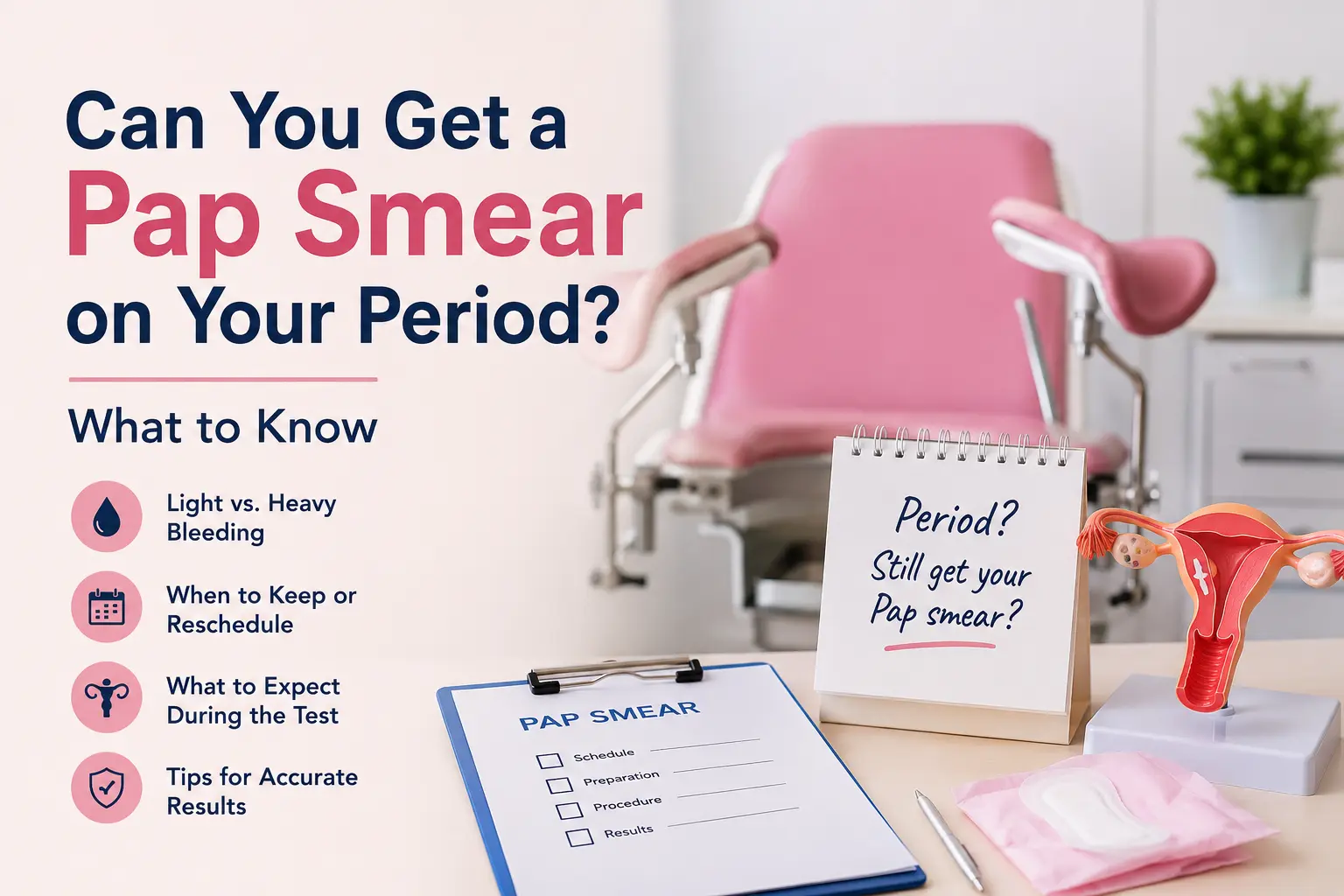
Yes, you can sometimes get a Pap smear while you’re on your period, but whether you should keep the appointment depends on the amount of bleeding and the reason for the visit.
Menstrual blood can make it harder for a laboratory to evaluate cervical cells, so many healthcare providers prefer to perform a Pap test when you are not having your period. However, being on your period does not automatically mean you need to cancel. Some providers may still perform the test, including when menstrual flow is light or even heavy.
If your period unexpectedly starts before your appointment, the safest practical step is to call the office and tell them how heavy the bleeding is. Your provider can decide whether to proceed or reschedule.
Can You Get a Pap Smear on Your Period?
Yes, a Pap smear can be performed during menstruation. However, it may not always be the ideal time.
A Pap smear, also called a Pap test or cervical cytology, collects cells from the cervix. Those cells are examined in a laboratory for abnormal changes that could become cervical cancer.
Menstrual blood can interfere with the sample and may make some cervical cells harder to evaluate. This is why sources such as Mayo Clinic and MedlinePlus recommend trying not to schedule routine Pap testing during your period when possible.
At the same time, Planned Parenthood notes that a Pap test can still be performed during a period and that being on your period does not automatically prevent testing.
The simple answer
If your period starts unexpectedly:
- Do not automatically cancel.
- Call your healthcare provider if you can.
- Tell them whether you are spotting, having light flow, or experiencing heavy bleeding.
- Follow the instructions from the clinic performing your test.
That approach is better than assuming every period requires a cancellation.
Does Your Period Affect Pap Smear Results?
It can.
A Pap test needs an adequate sample of cervical cells for the laboratory to evaluate. Blood can obscure some cells, which may make the sample more difficult to interpret. Mayo Clinic notes that blood can hide concerning cervical cells and potentially contribute to a false-negative result.
An inadequate sample may also be reported as unsatisfactory. This does not mean that you have cervical cancer. It means the laboratory could not properly evaluate the specimen, and your healthcare provider may recommend repeating the test.
So the issue is not that having your period automatically makes a Pap smear “wrong.” Rather, the amount of blood can affect how useful the sample is.
Pap Smear With Light Spotting vs. Heavy Bleeding
The amount of bleeding matters.
| Your situation | What to do |
|---|---|
| No bleeding | Attend your appointment as scheduled. |
| Light spotting | Contact the provider; they may still perform the test. |
| Very light menstrual flow | Ask the provider whether they recommend keeping the appointment. |
| Moderate or heavy period | Ask whether rescheduling would give a better sample. |
| Period starts unexpectedly | Don’t automatically cancel; contact the office. |
| Bleeding is unusual for you | Tell your healthcare provider rather than assuming it is your period. |
There is no universal rule that every person must reschedule a Pap test because of menstruation. Different clinics and providers may have different protocols.
If your provider specifically tells you to keep the appointment, follow their instructions.
Should You Cancel Your Pap Smear If Your Period Starts?
Not necessarily.
If your period begins shortly before your Pap appointment, don’t assume you have to cancel it.
MedlinePlus advises trying not to schedule a Pap test during your period, but it also says that if you have unexpected bleeding, you should not simply cancel the examination. Your provider can determine whether the test can still be performed.
Mayo Clinic similarly says that a Pap test can be done during menstruation, although it is preferable to avoid scheduling it during a regular period when possible. If bleeding is not part of your regular period, the test should not simply be delayed.
A good rule of thumb
If your period starts before the appointment, call the clinic and ask rather than guessing.
This is particularly important if the appointment is for more than routine screening—for example, if you are being evaluated for abnormal bleeding or you have been asked to return after a previous abnormal result.
When Is the Best Time to Get a Pap Smear?
For a routine Pap test, many healthcare providers prefer a time when you are not actively menstruating.
MedlinePlus suggests that a good time for the test is about five days after the last day of your period. It also recommends avoiding certain vaginal products and sexual activity before testing.
However, there is no need to obsess over finding a single “perfect” day of your menstrual cycle.
Your healthcare provider may use a different schedule depending on the type of cervical screening being performed, your medical history, and the reason for the test.
If the clinic gives you specific preparation or scheduling instructions, those should take priority.
How to Prepare for a Pap Smear
Good preparation can help your healthcare provider obtain a useful cervical sample.
Depending on your provider’s instructions, you may be asked to avoid the following before the test:
- Vaginal sex
- Douching
- Tampons
- Vaginal creams
- Vaginal medicines
- Spermicidal foams, creams, or jellies
Mayo Clinic recommends avoiding intercourse, douching, and certain vaginal products or medicines for two days before a Pap test. MedlinePlus provides similar preparation advice.
You should also tell your provider if you:
- Are having your period
- Have unexpected vaginal bleeding
- Could be pregnant
- Have previously had an abnormal Pap or HPV test
- Have questions about when to schedule your next screening
You can also ask whether you should empty your bladder before the examination for comfort.
What Happens During a Pap Smear?
A Pap test usually takes only a few minutes.
You will lie on an examination table with your knees bent. The healthcare provider gently inserts a speculum into the vagina so they can see the cervix.
A small brush or swab is then used to collect cells from the cervix. The sample is sent to a laboratory for evaluation.
You may feel pressure or mild cramping during the procedure. Some people also experience a small amount of bleeding afterward.
A Pap test is often performed during a pelvic examination, but a pelvic exam and a Pap test are not the same thing. A pelvic exam evaluates the reproductive organs, while a Pap test specifically collects cervical cells for laboratory testing.
What If You Are Bleeding but It Is Not Your Period?
This is an important distinction.
If you are bleeding between periods, after sex, during pregnancy, or after menopause, don’t automatically assume the bleeding is simply a menstrual period.
Unexpected vaginal bleeding can have many possible causes and should be discussed with a healthcare professional. MedlinePlus lists bleeding between periods, bleeding after sex, bleeding during pregnancy, and bleeding after menopause among examples of abnormal vaginal bleeding.
In these situations, don’t delay an appointment just because you are bleeding unless your healthcare provider tells you to.
Your provider may want to evaluate the bleeding itself.
Can You Get an HPV Test While on Your Period?
HPV testing and Pap testing are related, but they are not exactly the same test.
A Pap test looks for abnormal changes in cervical cells, while an HPV test looks for high-risk types of human papillomavirus that can cause those cell changes. Both are used in cervical cancer screening.
Whether menstrual bleeding affects your particular screening test can depend on the type of test and how the sample is collected.
If your appointment includes HPV testing, ask your provider whether they want you to keep or reschedule the appointment.
What If My Pap Smear Is Unsatisfactory?
An unsatisfactory Pap result does not mean you have cancer.
It usually means the laboratory could not adequately evaluate the sample. There may not have been enough cervical cells, or the cells may have been difficult to interpret because of factors affecting the specimen.
Your healthcare provider may recommend repeating the test.
If your sample was collected while you were bleeding, your provider can explain whether the bleeding may have contributed to the result.
The important thing is to follow up rather than assuming an unsatisfactory result means something dangerous.
Does Having Your Period Mean You Should Skip Cervical Cancer Screening?
No.
If you are due for cervical cancer screening, don’t let one inconvenient period cause you to forget about the appointment altogether.
The CDC explains that both Pap testing and HPV testing can help prevent cervical cancer or detect it early. Screening recommendations depend on factors such as age, medical history, and the screening method being used.
If your provider recommends rescheduling because of your period, simply ask when they would like you to return.
The goal is not to find a “perfect” day and then forget about screening. The goal is to complete appropriate cervical cancer screening on the schedule recommended for you.
What About Pregnancy?
If you are pregnant or think you could be pregnant, tell your healthcare provider.
A Pap test or HPV testing may be part of prenatal care when cervical screening is due. Planned Parenthood notes that an HPV and/or Pap test may be performed during an initial prenatal appointment when appropriate.
If you are pregnant and experiencing vaginal bleeding, however, don’t assume that the bleeding is a normal period. Contact your prenatal care provider for guidance.
Conclusion:
Yes, you can get a Pap smear on your period, but it may not always be the best time.
Menstrual blood can interfere with the cervical sample, particularly when bleeding is heavier. For routine screening, many providers prefer to perform the test when you are not menstruating. However, a period does not automatically mean you need to cancel.
If your period unexpectedly starts before your appointment, call the clinic and ask what they recommend. If you have unusual bleeding rather than your normal period, don’t simply assume you should wait for it to stop.
Most importantly, don’t let an inconvenient appointment turn into a missed cervical cancer screening. If your provider wants you to reschedule, ask when you should return and put the new date on your calendar.
Frequently Asked Questions
Can you get a Pap smear on the first day of your period?
It is possible, but the first day of a period may involve more bleeding. Contact your provider and ask whether they want you to keep the appointment or reschedule.
Can you get a Pap smear with a light period?
Possibly. Some providers will perform a Pap test during light menstrual bleeding, while others prefer to wait until the period has ended.
Can you get a Pap smear with heavy bleeding?
A Pap test can technically be performed during menstruation, but heavy bleeding may interfere with the cervical sample. Your provider may recommend rescheduling when practical.
Can you get a Pap smear while spotting?
Light spotting does not necessarily mean the test has to be canceled. Tell your healthcare provider about the spotting before the examination so they can decide whether to proceed.
Does menstrual blood make a Pap smear inaccurate?
Menstrual blood can interfere with the sample and may hide cervical cells. However, being on your period does not automatically make the result inaccurate or invalid.
Can I use a tampon before a Pap smear?
Your provider may ask you to avoid tampons before the test. Follow the preparation instructions provided by your clinic. MedlinePlus recommends avoiding tampons before a Pap test.
Can I have sex before a Pap smear?
Your provider may recommend avoiding vaginal sex before the test. Mayo Clinic recommends avoiding intercourse for two days before a Pap test.
Is a Pap smear the same as a pelvic exam?
No. A Pap test collects cervical cells for laboratory testing. A pelvic exam is a physical examination of the reproductive organs and does not necessarily include a Pap test.
What if my period starts after I arrive at the clinic?
Tell the nurse or healthcare provider. They can decide whether to perform the test or reschedule it based on your bleeding and the purpose of the appointment.
What if I have unusual bleeding instead of my normal period?
Tell your healthcare provider. Unexpected bleeding can have causes other than menstruation and may need evaluation.