Decidual Cast Treatment: What to Do After Passing One
Medically reviewed by Muhammad Ali, MD, OB-GYN — Reviewed 08/08/2026
This article is for educational purposes and isn’t a substitute for a personal medical evaluation. If you’re currently experiencing heavy bleeding, severe pain, or think you may be pregnant, contact your healthcare provider right away.
Quick answer: In most cases, a decidual cast doesn’t require active medical treatment. Once the tissue passes, pain and other symptoms typically resolve on their own within hours. Still, you should see a doctor afterward — not to “treat” the cast itself, but to confirm what happened, rule out pregnancy-related causes like miscarriage or ectopic pregnancy, and make sure nothing was left behind.
Is Treatment Necessary for a Decidual Cast?
It’s a reasonable question to ask, especially right after something that painful and unexpected. The short answer: usually not.
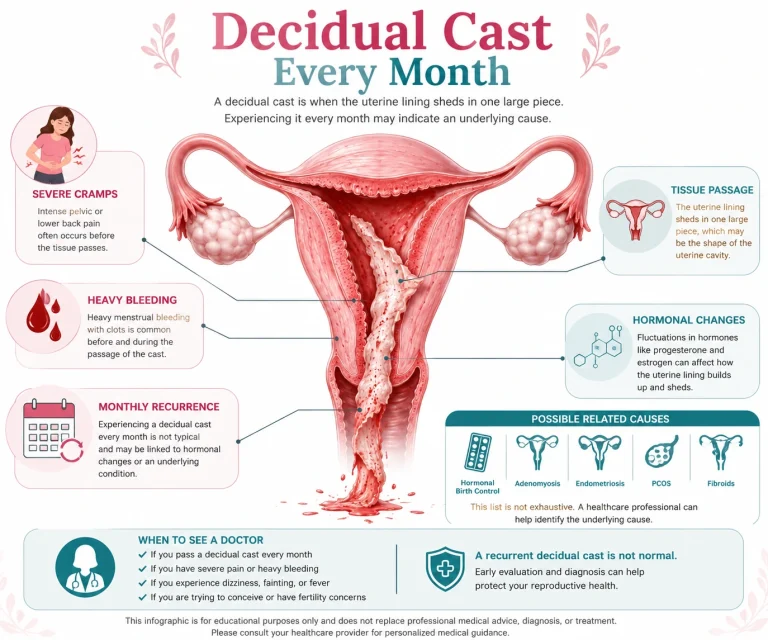
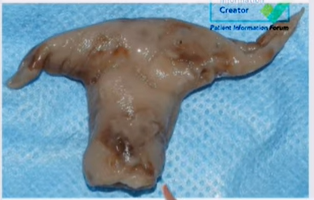
A decidual cast happens when the uterine lining sheds in one intact piece instead of breaking down gradually the way it normally does during a period. Once that tissue is out, there’s typically nothing left for a doctor to “fix.” The event is self-limiting, meaning it resolves on its own once the tissue has fully passed.
That said, “no treatment needed” doesn’t mean “no doctor visit needed.” Because a decidual cast can look and feel similar to a miscarriage or, in rarer cases, signal an ectopic pregnancy, the real value of seeing a provider afterward is confirmation, not intervention. Medical literature on decidual casts is genuinely thin — it’s considered rare and likely underdiagnosed — so providers rely on ruling out other explanations rather than following a fixed treatment protocol.
How Pain Is Managed
The pain that comes with passing a decidual cast is often described as more intense than a typical period cramp, sometimes accompanied by chills or nausea. It’s caused by the cervix dilating slightly to let the tissue pass — similar in mechanism, if not in scale, to labor contractions.
Over-the-counter relief. For most people, standard period-pain approaches work here too: NSAIDs like ibuprofen, taken as directed, and a heating pad on the lower abdomen.
Timing matters. The most intense pain usually clusters in the hours before the tissue passes and eases dramatically — often almost immediately — once it’s out. If your pain isn’t following that pattern, or over-the-counter medication isn’t touching it, that’s worth mentioning to a provider rather than pushing through.
When it’s more than “bad cramps.” Pain severe enough to cause fainting, that doesn’t ease after the tissue passes, or that’s paired with fever should be treated as a signal to seek care promptly rather than wait it out.
Do You Need a D&C or Surgery?
For most people, no. A dilation and curettage (D&C) — a procedure to remove remaining tissue from the uterus — is generally only considered when:
- The cast didn’t pass completely and tissue remains in the uterine cavity
- Bleeding continues heavily beyond what’s expected
- An ultrasound shows the uterus isn’t empty after the fact
If the full cast passes intact and a follow-up scan confirms the uterine cavity is clear, there’s typically no procedural intervention needed. Surgery is the exception here, not the default — most sources on this condition describe it resolving without any procedure at all.
Confirming the Diagnosis After It Happens
Since there’s no lab test that says “this was a decidual cast” in the moment, confirmation happens in a couple of ways:
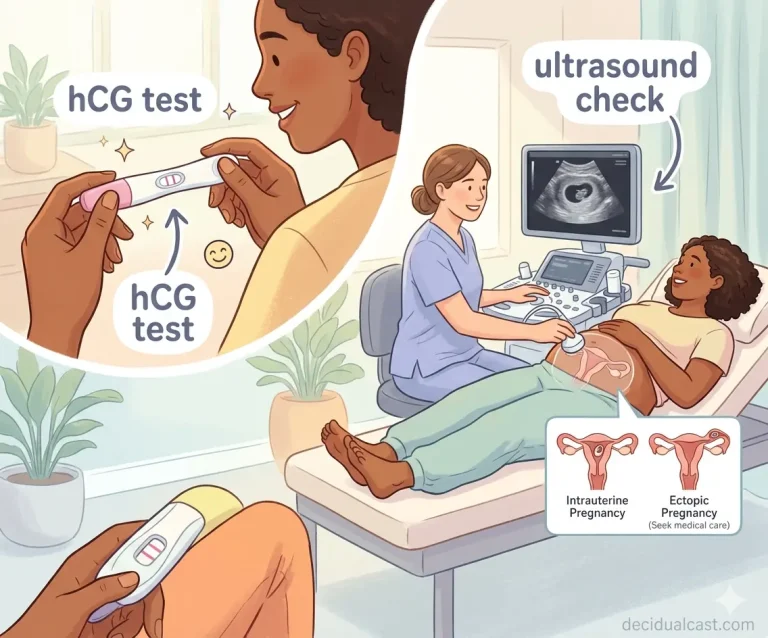
Transvaginal ultrasound. This checks that the uterine cavity is empty and nothing was left behind — the most common follow-up step.
Pathology review. If you bring the tissue in (yes, this is a normal thing to do — photographing it or bringing it in a clean container can genuinely help), a lab can examine it under a microscope. One key thing they’re checking for is the presence of chorionic villi — a marker of pregnancy tissue. Their absence helps confirm the cast wasn’t related to a pregnancy loss.
If you think you might have been pregnant, it’s worth saying so explicitly at your appointment, since it changes what your provider will want to rule out. For a full breakdown of how a decidual cast differs from a miscarriage, see our Decidual Cast vs. Miscarriage guide.

Should You Change or Stop Your Birth Control?
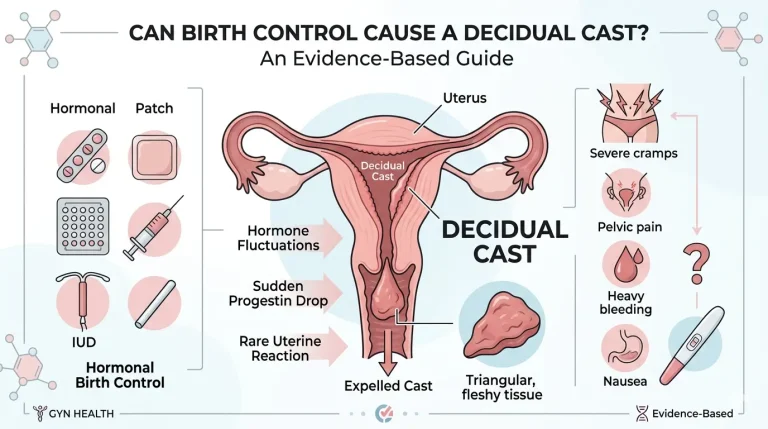
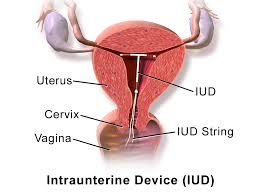
Hormonal contraception — progestin-only pills, hormonal IUDs like Mirena, and implants — is one of the more commonly discussed factors associated with decidual casts. But association isn’t the same as cause, and current evidence doesn’t support stopping birth control because of a single episode.
A decidual cast, on its own, isn’t considered a medical reason to discontinue hormonal contraception. If you’re concerned about a connection to your specific method — for example, if this happened shortly after starting or switching a method — that’s a good conversation to have with your provider, who can weigh your specific history rather than a general rule. Repeated episodes might prompt a closer look at your method, but a one-time occurrence usually doesn’t.
Managing Bleeding During Recovery
Some bleeding and spotting before and after passing a decidual cast is expected. What you’re watching for is volume and duration outside that expected range.
Generally normal: bleeding comparable to a heavy period, tapering off within a few days.
Worth calling about: soaking through a pad in an hour or less for two or more hours in a row, passing large clots repeatedly after the cast itself, or bleeding that isn’t easing up after several days.
Is Infection a Risk? Do You Need Antibiotics?
This is a common unspoken worry, so it’s worth addressing directly: infection is not a typical complication of passing a decidual cast, and antibiotics aren’t part of standard care for it. The tissue is your own uterine lining, not foreign material, and the cervix returns to its normal state once the tissue has passed.
Signs that would point toward infection — and warrant a call to your provider — include fever, chills that don’t match the earlier cramping episode, foul-smelling discharge, or pain that worsens instead of improving in the days afterward.
Recovery Timeline: What to Expect
Every case is a little different, but a general pattern reported across cases looks like this:
- Before passing: hours of escalating cramping, sometimes with nausea or chills
- During: the tissue passes, often described as feeling similar to passing a small amount of placental-like tissue
- Immediately after: pain relief is often rapid — sometimes near-immediate
- Following days: lighter bleeding or spotting that tapers off, similar to the tail end of a period
- Return to normal activity: most people feel back to baseline within a few days; check with your provider about resuming exercise or sex based on how you’re feeling and what they find on follow-up exam
If your experience doesn’t match this pattern — pain that lingers, bleeding that doesn’t taper, or you simply don’t feel like yourself again after a week or so — that’s worth a follow-up call even without a specific red-flag symptom.
Follow-Up Care and When to See Your Doctor
Even if you feel completely fine once the tissue has passed, a follow-up visit is still worthwhile. It gives your provider a chance to:
- Confirm the uterine cavity is clear via ultrasound
- Review your medical and contraceptive history for possible contributing factors
- Document the episode, which matters if it’s ever relevant again later
You should seek care sooner rather than later — same-day if symptoms are severe — if you experience any of the following:
- Heavy bleeding (soaking a pad an hour or more for several hours)
- Pain that doesn’t ease after the tissue passes
- Fever or chills
- Fainting or feeling faint
- Any chance you could be pregnant
For the full list of warning signs and how to tell a decidual cast apart from a potential emergency like ectopic pregnancy, see our guide on When to Seek Emergency Care.
Can It Happen Again — Is There a Way to Prevent It?
Current understanding is that passing a decidual cast is usually a one-time event. There’s no established way to prevent it, largely because the underlying cause isn’t fully understood — it’s thought to relate to hormonal fluctuation, but a decidual cast isn’t considered a “side effect” in the way something predictable and dose-related would be.
If it does happen more than once, that’s a reasonable trigger for your provider to look more closely at hormonal factors or contraceptive method, rather than treating each episode as unrelated. But for the large majority of people, one episode is the whole story.
Frequently Asked Questions
Do I need to see a doctor if I already passed the tissue and feel fine? It’s still worth a follow-up visit, even without symptoms, to confirm the uterine cavity is clear and rule out an underlying cause — but it’s not usually an emergency at that point.
Will I need a D&C after a decidual cast? Not in most cases. A D&C is typically only needed if tissue remains in the uterus or bleeding continues heavily, which a follow-up ultrasound can check for.
Can I take ibuprofen for decidual cast pain? Yes, standard over-the-counter pain relief and heat therapy are the typical approach, the same as you’d use for severe menstrual cramps.
Does passing a decidual cast mean something is wrong with my IUD? Not necessarily. Hormonal IUDs are one of several factors associated with decidual casts, but a single episode isn’t generally a sign your IUD needs to come out.
How long does recovery take after a decidual cast? Pain relief is often rapid once the tissue passes, with lighter bleeding tapering off over the following days. Most people return to their normal routine within a few days.
Is a decidual cast a medical emergency? Usually not — but because its symptoms can overlap with more serious causes, any severe pain, heavy bleeding, or possibility of pregnancy should be evaluated promptly rather than assumed to be a decidual cast.