Can You Pass a Decidual Cast and Still Be Pregnant Signs, Risks, and Next Steps
Passing tissue unexpectedly can be frightening, especially if you suspect pregnancy. One rare but important scenario is the decidual cast—a shedding of the uterine lining in one piece. You may be wondering: Can you pass a decidual cast and still be pregnant?
If you’re new to this topic, it’s important to first understand the basics of a decidual cast, including how it forms, what it looks like, and why it happens.
In this article, we’ll explain what a decidual cast is, how it differs from miscarriage, the chances of pregnancy afterward, and what steps to take to protect your reproductive health.
Can You Pass a Decidual Cast and Still Be Pregnant?
It’s natural to worry about pregnancy after passing a decidual cast. Here’s what the medical evidence shows:
A viable intrauterine pregnancy is generally not possible after the uterine lining has been expelled as a decidual cast. The decidua is essential for supporting implantation, so once it is shed, a normal intrauterine pregnancy cannot continue.
However, in rare cases, a decidual cast may occur in the context of an ectopic pregnancy, a non-viable pregnancy outside the uterus. In such situations:
- The pregnancy cannot continue and requires urgent medical attention
- Symptoms may include abdominal cramps, bleeding, and tissue passage
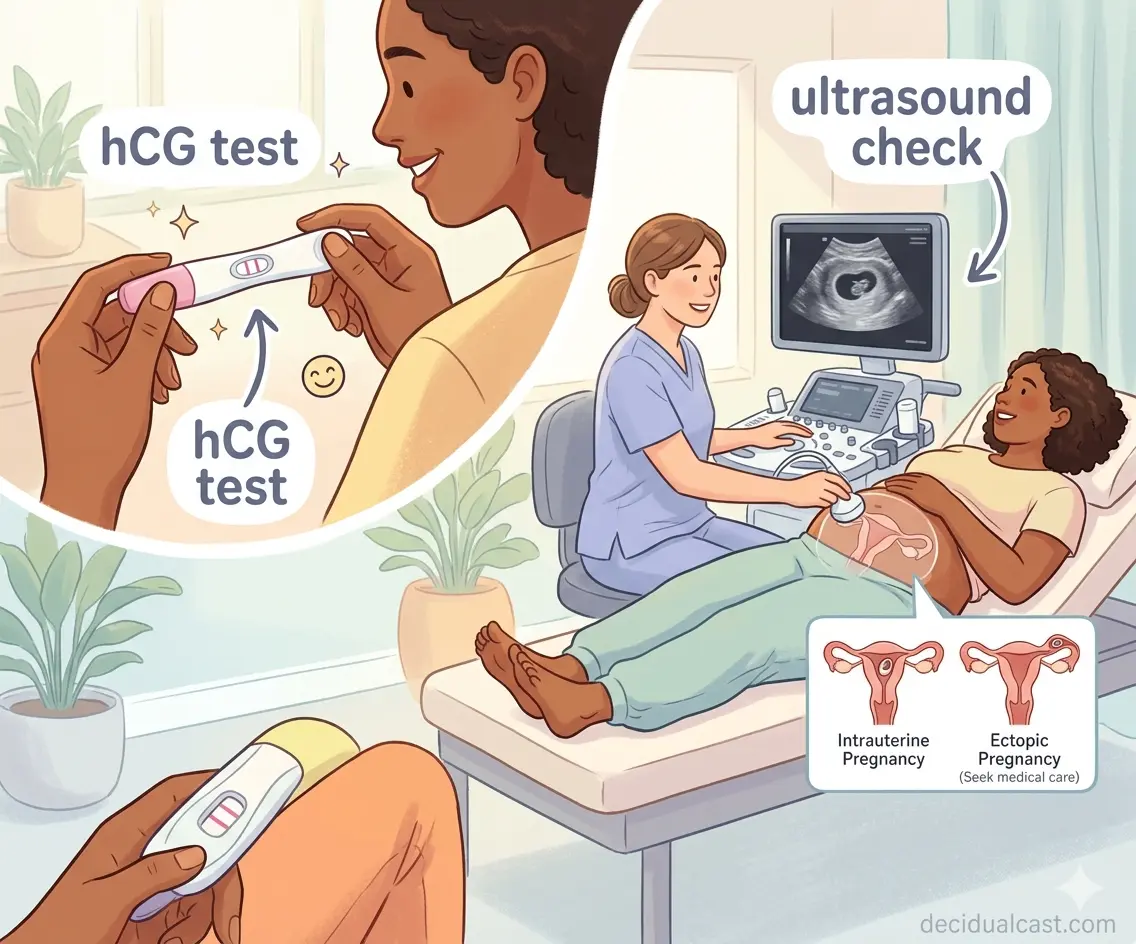
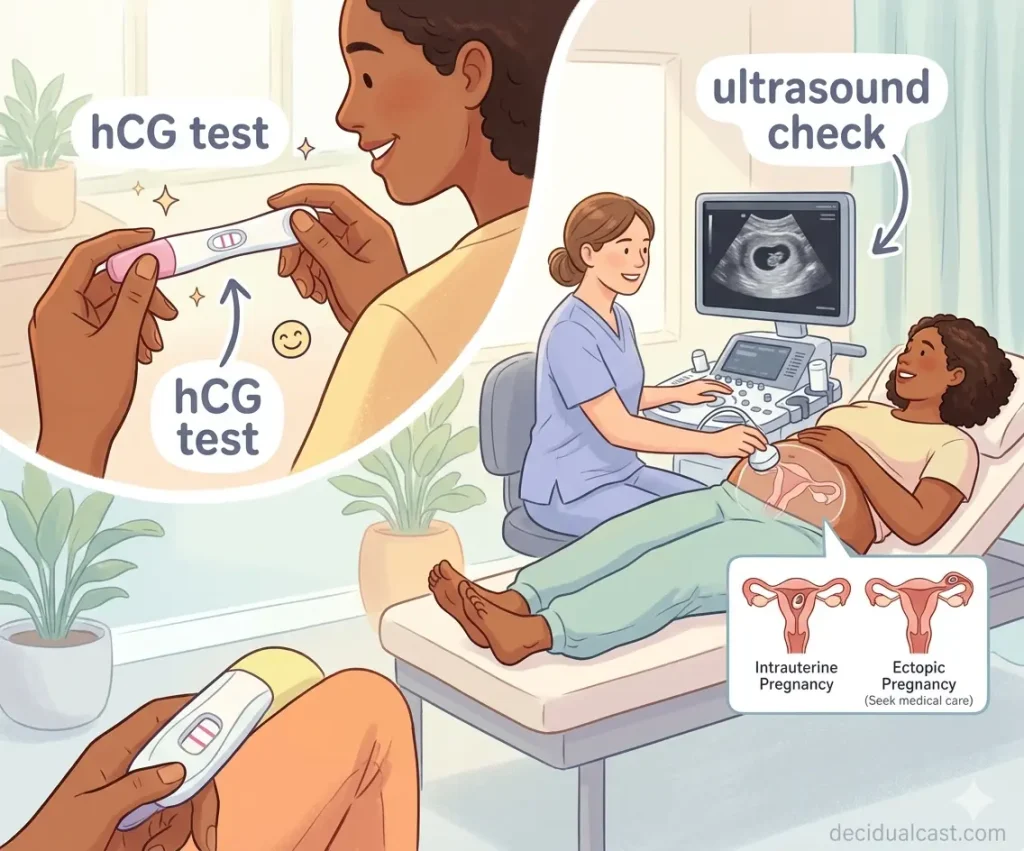
- Diagnosis relies on blood hCG tests and ultrasound imaging
Key Takeaways:
- Passing a decidual cast does not automatically indicate miscarriage, but it usually rules out a viable intrauterine pregnancy.
- If you suspect pregnancy or have a positive test, seek medical evaluation promptly to rule out ectopic pregnancy or other complications.
If you experience severe pain, dizziness, or heavy bleeding after passing a decidual cast, go to the emergency room immediately — these could be signs of an ectopic pregnancy or other serious conditions.
What Exactly Is a Decidual Cast?
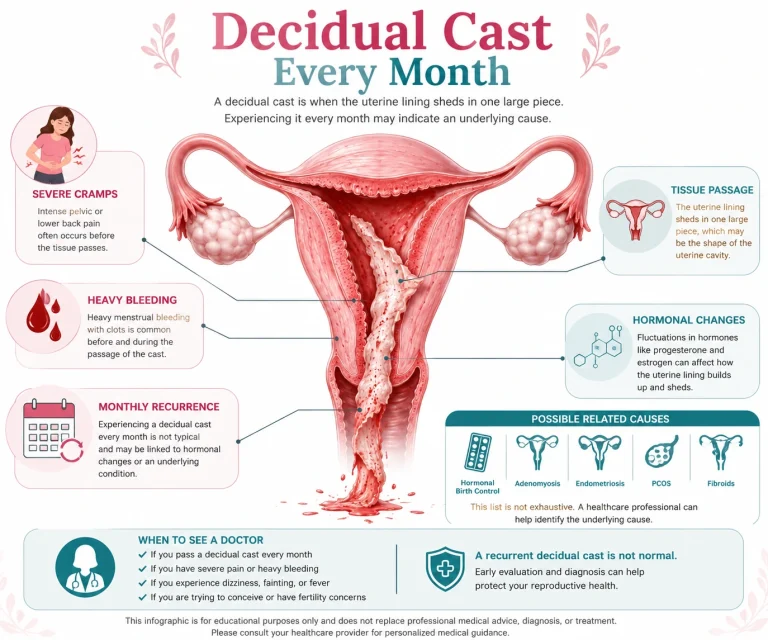
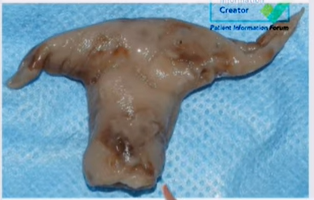
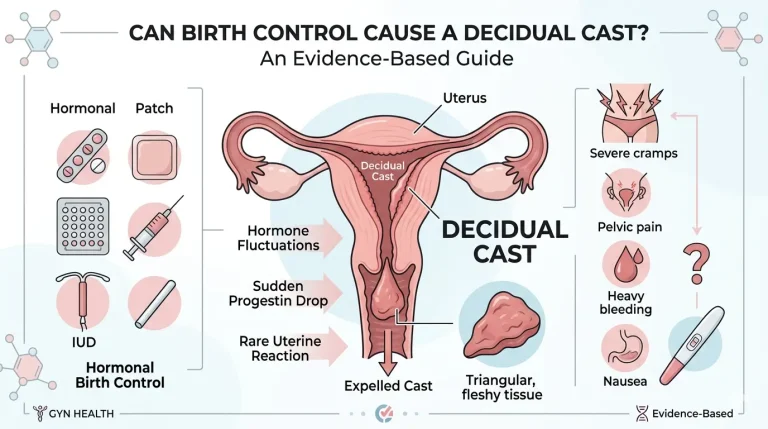
A decidual cast occurs when the entire uterine lining (endometrium) sheds in one intact piece, forming a tube-shaped tissue. Unlike normal menstrual bleeding, which comes in fragments, a decidual cast is usually:
- Thick and large
- Uterus-shaped or cylindrical
- Accompanied by moderate to severe cramping
Symptoms of a Decidual Cast
Recognizing a decidual cast can help differentiate it from other conditions like miscarriage or heavy periods. Common symptoms include:
- Strong abdominal cramps
- Passage of tissue shaped like the uterus
- Moderate to heavy bleeding, often heavier than a period
- Duration usually 1–3 days
Causes of Decidual Casts
Decidual casts are rare, and their common causes include:
- Hormonal imbalance: Progesterone and estrogen shifts can trigger lining shedding
- Early pregnancy: Rarely, shedding occurs alongside early implantation
- Birth control: Sudden hormonal changes can induce decidual cast formation
- Uterine conditions: Polyps, fibroids, or structural anomalies may contribute
Note: Decidual casts are considered uncommon, and some experts suggest they may be underreported because they are often mistaken for large clots or heavy periods.
How to Know If Your Pregnancy Is Still Viable
Because a decidual cast can sometimes be confused with pregnancy-related tissue, it’s important to understand the key differences between a decidual cast and a miscarriage.
After passing a decidual cast, it’s important to confirm your pregnancy status:
Diagnostic Steps:
- Pregnancy tests: Blood hCG tests are more accurate early on than urine tests
- Ultrasound: Confirms intrauterine pregnancy or rules out ectopic pregnancy
- Timing: Retest 48–72 hours after cast passage for reliable results
Warning Signs to Seek Immediate Care:
- Heavy bleeding
- Severe pain or dizziness
- Persistent abdominal cramping
Emotional Impact and Support
Passing tissue unexpectedly can be distressing. You may feel:
- Anxiety over pregnancy viability
- Confusion between miscarriage and decidual cast
- Fear of fertility problems
Support Tips:
- Contact your OB/GYN for guidance
- Seek emotional support if needed
- Track your symptoms and test results to provide accurate information to your healthcare provider
Treatment and Follow-Up
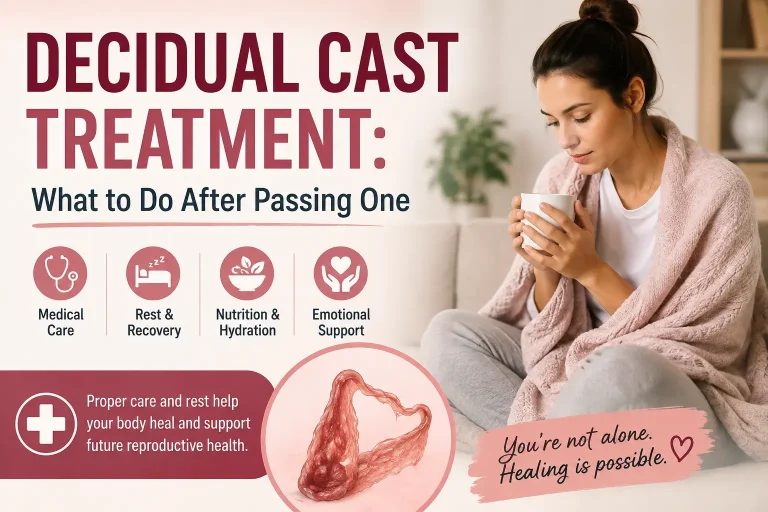
After a decidual cast:
- Monitor bleeding and symptoms
- Schedule follow-up with your healthcare provider
- Intervention may be needed for complications (rare)
- Normal fertility is generally unaffected, though underlying causes should be evaluated
Frequently Asked Questions
Q1: Can I be pregnant if I passed a decidual cast?
A1: A viable intrauterine pregnancy is unlikely after a decidual cast. If you have a positive pregnancy test, consult your healthcare provider to rule out ectopic pregnancy.
Q2: How can I tell the difference between a decidual cast and miscarriage?
A2: Decidual casts have no fetal tissue and are usually tubular; miscarriage tissue contains embryonic material and is irregular in shape.
Q3: Should I take a pregnancy test after passing a decidual cast?
A3: Yes, ideally 48–72 hours after passage. Blood hCG tests are more reliable than urine tests early on.
Q4: Do decidual casts happen during normal pregnancy?
A4: Rarely. They usually indicate hormonal or uterine changes and are not part of a healthy pregnancy.
Q5: What should I do if I pass a decidual cast and still have pregnancy symptoms?
A5: Contact your healthcare provider immediately for evaluation.
Q6: Can passing a decidual cast affect future fertility?
A6: Generally, no. Normal reproductive health continues, though underlying hormonal or uterine conditions should be assessed.
For a complete understanding of symptoms, causes, and risks, read our full decidual cast guide.