Decidual Cast Every Month: Is It Normal to Pass a Decidual Cast Repeatedly?
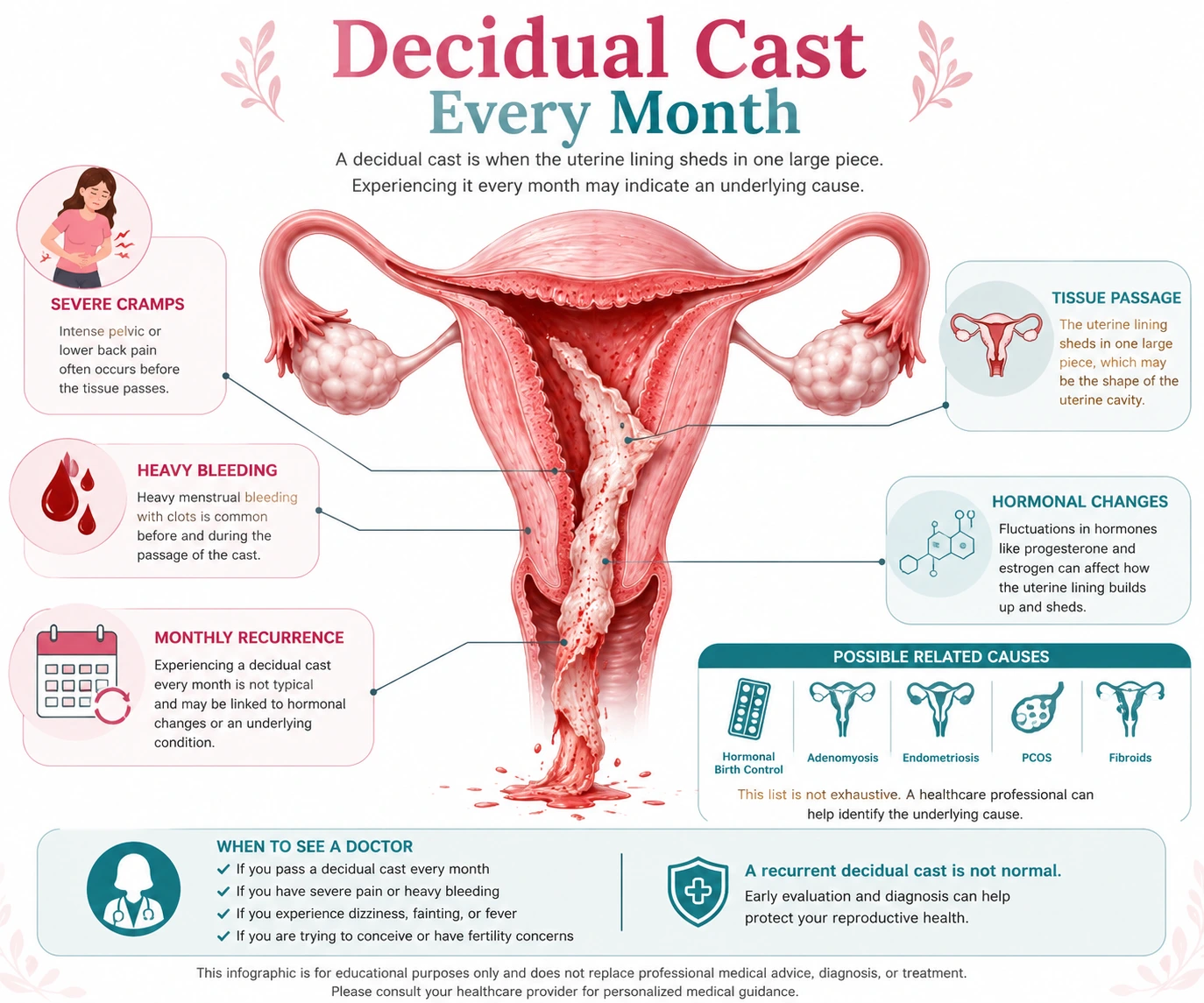
Passing a decidual cast can be frightening. Many people experience severe cramping, heavy bleeding, and the sudden passage of tissue that looks different from a normal period. For most individuals, it happens only once. However, some people report passing a decidual cast every month or during multiple menstrual cycles.
If you are experiencing a decidual cast every month, you may wonder whether it is normal or whether an underlying condition is responsible. You may also worry about fertility, pregnancy, or long-term reproductive health.
In this guide, we explain why recurrent decidual casts may occur, what conditions may be associated with them, and when it is important to speak with a healthcare professional.
Key Takeaway
Passing a decidual cast every month is not considered typical. While a one-time decidual cast can occur after hormonal changes, repeated episodes may suggest an underlying condition such as adenomyosis, endometriosis, PCOS, fibroids, or a reaction to hormonal birth control.
Recurring decidual casts do not automatically mean infertility, but they should be discussed with a healthcare professional, especially if they are accompanied by severe pain, heavy bleeding, or fertility concerns.
What Is a Decidual Cast?
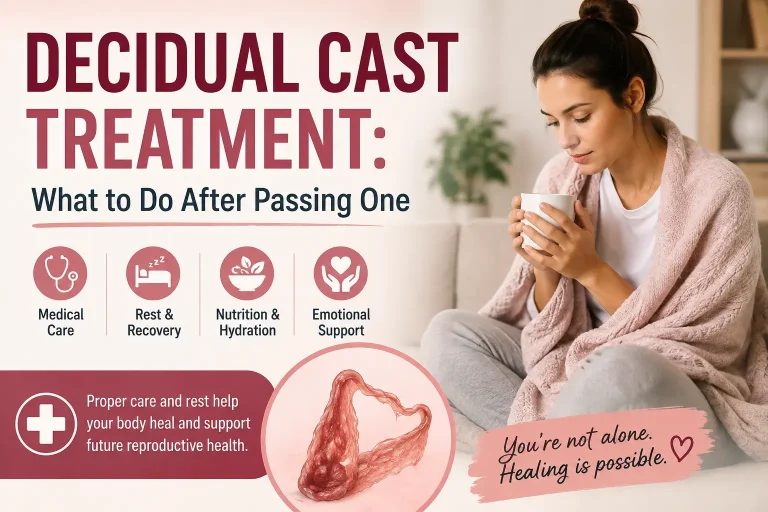
A decidual cast occurs when the lining of the uterus sheds in one large piece instead of breaking apart during a normal menstrual period.
The tissue often takes on the shape of the uterine cavity. This can make it appear unusual or alarming. Many people describe severe cramping before the tissue passes.
If you are unfamiliar with this condition, read our guide on What Is a Decidual Cast? for a complete overview.
Can a Decidual Cast Happen More Than Once?
Yes, a decidual cast can happen more than once.
Although many medical sources describe decidual casts as uncommon and often isolated events, some people report experiencing them repeatedly. In certain cases, individuals notice a pattern where a cast appears during several consecutive menstrual cycles.
This repeated occurrence is often called:
- Recurrent decidual cast
- Monthly decidual cast
- Frequent decidual cast
- Passing a decidual cast every period
The important point is that recurrence is less common than a single event. When it happens repeatedly, healthcare providers usually look for potential contributing factors.
Is It Normal to Pass a Decidual Cast Every Month?
Decidual Cast Every Month: Quick Facts
| Question | Short Answer |
|---|---|
| Is a decidual cast every month normal? | No. Recurring decidual casts are generally not considered typical. |
| Can it happen more than once? | Yes. Some people experience recurrent decidual casts. |
| Can birth control cause recurring casts? | Yes. Hormonal contraceptives are a commonly reported trigger. |
| Does it mean infertility? | No. A decidual cast alone does not mean infertility. |
| Should I see a doctor? | Yes if episodes recur, become severe, or involve pregnancy concerns. |
No, passing a decidual cast every month is generally not considered normal.
A normal menstrual period involves the gradual shedding of the uterine lining. The tissue breaks apart and leaves the body mixed with menstrual blood.
A decidual cast is different because the lining remains largely intact. When this occurs repeatedly, it may suggest that hormonal changes or other factors are affecting the way the uterine lining develops and sheds.
This does not automatically mean something serious is wrong. However, recurring episodes deserve attention because they may be linked to underlying reproductive health conditions.
Why Do Some People Pass a Decidual Cast Every Month?
There is no single explanation that applies to every person.
Instead, several factors may contribute to recurrent decidual casts.
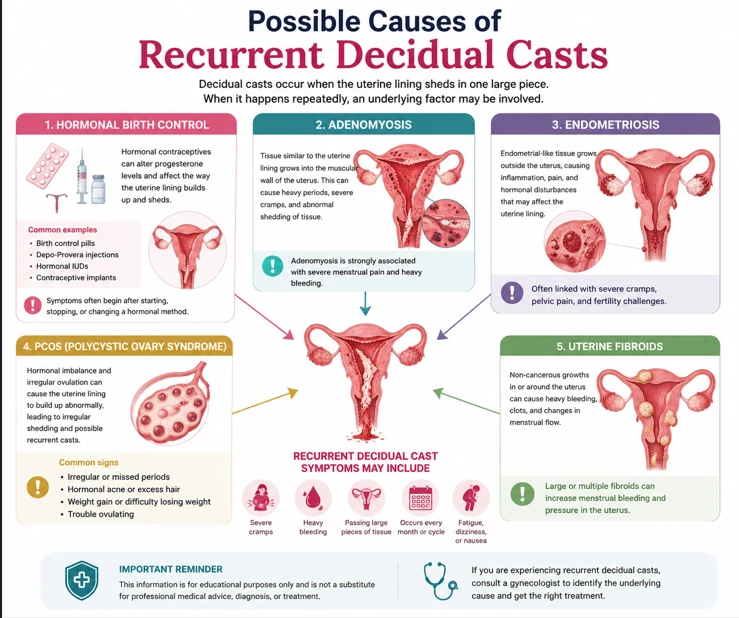
Possible Causes of Recurrent Decidual Casts
| Potential Cause | How It May Contribute |
|---|---|
| Hormonal birth control | Changes in progesterone levels may affect how the uterine lining sheds. |
| Adenomyosis | May contribute to abnormal uterine tissue shedding and severe menstrual pain. |
| Endometriosis | Can be associated with severe menstrual symptoms and hormonal disturbances. |
| PCOS | Hormonal imbalances may affect endometrial growth and shedding. |
| Fibroids | May alter bleeding patterns and increase menstrual tissue passage. |
| Unknown causes | In some cases, no clear explanation is identified. |
Hormonal Fluctuations
Hormones control the growth and shedding of the uterine lining.
Progesterone plays an especially important role. Large changes in progesterone levels may affect how the lining develops and how it separates from the uterus.
When hormone levels change rapidly, the lining may shed as a larger piece rather than breaking apart gradually.
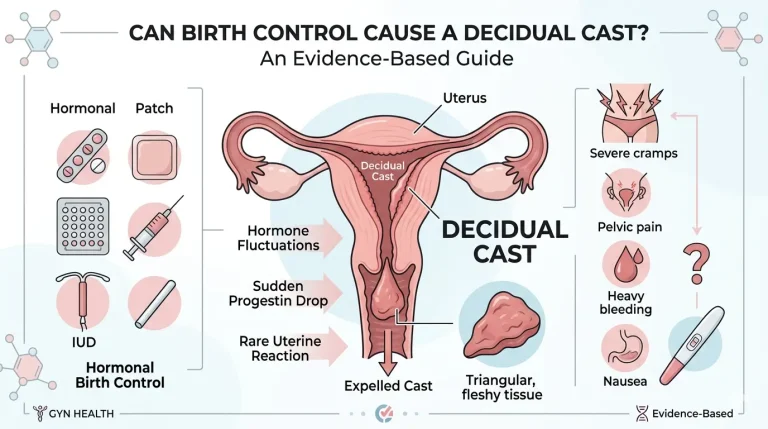
Hormonal Birth Control
Hormonal contraception is one of the most commonly discussed triggers for decidual casts.
Examples include:
- Depo-Provera injections
- Birth control pills
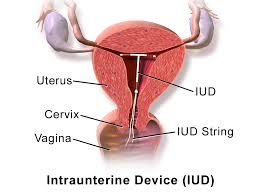
- Hormonal IUDs
- Contraceptive implants
- Emergency contraception
These medications can alter progesterone levels and affect the uterine lining.
Some individuals notice decidual casts shortly after starting, stopping, or changing hormonal birth control methods.
For more information, see our article on Can Birth Control Cause a Decidual Cast?
Changes in the Endometrial Lining
The endometrium is the tissue that lines the uterus.
In some individuals, the lining may become unusually thick or respond differently to hormonal signals. This may contribute to abnormal shedding patterns and recurrent tissue passage.
Underlying Gynecological Conditions
Certain reproductive health conditions may also play a role.
These conditions do not necessarily cause decidual casts directly. However, they can influence bleeding patterns, pain levels, and uterine tissue changes.
Common examples include:
- Adenomyosis
- Endometriosis
- Polycystic ovary syndrome (PCOS)
- Uterine fibroids
We will discuss each of these conditions later in this guide.
Decidual Cast Every Month vs a Normal Period
Normal Period vs Decidual Cast Every Month
| Feature | Normal Period | Recurrent Decidual Cast |
|---|---|---|
| Tissue appearance | Small fragments | Large tissue piece |
| Shape | Irregular | May resemble the shape of the uterus |
| Cramping | Mild to moderate | Often severe |
| Tissue passage | Gradual | Sudden |
| Pain relief after passage | Usually minimal | Often noticeable |
Many people struggle to determine whether they are experiencing a decidual cast or an unusually heavy period.
The following comparison can help.
| Feature | Normal Period | Recurrent Decidual Cast |
|---|---|---|
| Tissue appearance | Small fragments | Large tissue piece |
| Shape | Irregular | May resemble uterine shape |
| Cramping | Mild to moderate | Often severe |
| Tissue passage | Gradual | Sudden |
| Relief after passage | Usually minimal | Often significant |
| Frequency | Monthly | Usually uncommon |
Many individuals report intense cramping before passing the tissue and sudden relief afterward.
This pattern is one reason a recurrent decidual cast can feel very different from an ordinary menstrual cycle.
What Symptoms Can Occur With a Monthly Decidual Cast?
Symptoms vary from person to person.
Common symptoms include:
- Severe menstrual cramps
- Pelvic pain
- Lower back pain
- Heavy bleeding
- Passage of large tissue
- Nausea
- Dizziness
- Pressure in the pelvis
Some people describe pain that feels similar to labor contractions. Others report feeling normal shortly after the tissue passes.
If symptoms become severe or worsen over time, medical evaluation is important.
Can Adenomyosis Cause a Decidual Cast Every Month?
Adenomyosis is a condition in which tissue similar to the uterine lining grows into the muscular wall of the uterus.
This condition often causes:
- Heavy periods
- Severe cramping
- Pelvic pain
- Blood clots during menstruation
Because adenomyosis affects the structure of the uterus and menstrual bleeding patterns, some individuals report recurrent decidual casts.
Researchers have not proven that adenomyosis directly causes monthly decidual casts. However, the hormonal changes and abnormal uterine activity associated with adenomyosis may increase the likelihood of unusual tissue shedding.
Signs That Adenomyosis May Be Present
You may want to discuss adenomyosis with your doctor if you experience:
- Very painful periods
- Heavy bleeding every month
- Enlarged uterus
- Pain during intercourse
- Recurrent decidual casts
If you suspect adenomyosis, our guide on Adenomyosis and Decidual Cast may help you understand the connection.
Can Endometriosis Cause a Decidual Cast Every Month?
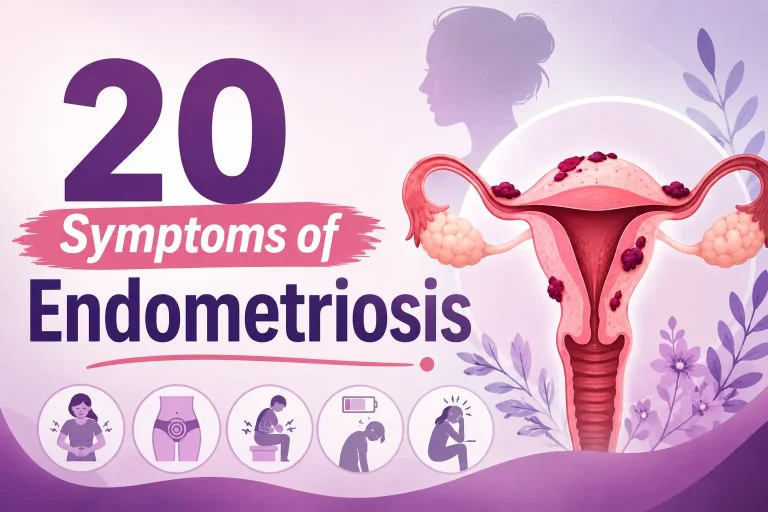
Endometriosis occurs when tissue similar to the uterine lining grows outside the uterus.
It commonly affects:
- Ovaries
- Fallopian tubes
- Pelvic tissues
People with endometriosis often experience:
- Severe menstrual pain
- Chronic pelvic pain
- Pain during intercourse
- Infertility challenges
Although endometriosis does not directly cause a decidual cast, both conditions are influenced by hormones and uterine tissue changes.
Some individuals with endometriosis report recurrent decidual casts, especially when hormonal medications are involved.
Signs That Endometriosis Could Be Contributing
Possible warning signs include:
- Debilitating period pain
- Pelvic pain between periods
- Pain during bowel movements
- Difficulty becoming pregnant
- Family history of endometriosis
A healthcare provider can help determine whether endometriosis may be affecting your symptoms.
Can PCOS Cause a Decidual Cast Every Month?
Polycystic Ovary Syndrome (PCOS) affects hormone production and ovulation.
Many people with PCOS experience:
- Irregular periods
- Missed periods
- Hormonal imbalance
- Changes in uterine lining thickness
PCOS itself is not considered a direct cause of decidual casts.
However, irregular hormone levels may affect how the uterine lining develops. When hormone levels fluctuate significantly, abnormal shedding patterns may occur.
Signs of PCOS
Symptoms may include:
- Irregular menstrual cycles
- Acne
- Excess facial hair
- Weight gain
- Difficulty ovulating
If PCOS is present alongside recurrent decidual casts, treating the hormonal imbalance may improve symptoms.
Can Fibroids Cause Recurrent Decidual Casts?
Fibroids are noncancerous growths that develop within or around the uterus.
Fibroids can cause:
- Heavy bleeding
- Pelvic pressure
- Long periods
- Severe cramping
Fibroids do not directly create decidual casts. However, they can change how menstrual tissue is shed.
Some people mistake large blood clots caused by fibroids for decidual casts. Others may experience both conditions at different times.
Signs Fibroids May Be Involved
Talk with your healthcare provider if you have:
- Heavy bleeding lasting longer than seven days
- Pelvic pressure
- Frequent urination
- Enlarged abdomen
- Recurrent clotting during periods
Ultrasound imaging can often identify fibroids quickly.
Does Passing a Decidual Cast Every Month Mean Infertility?
No, passing a decidual cast every month does not automatically mean infertility.
This is one of the most common fears people have after experiencing recurrent tissue passage.
A decidual cast itself does not permanently damage the uterus. Many individuals who have experienced decidual casts have gone on to conceive successfully.
However, the underlying condition causing recurrent casts may affect fertility.
For example:
- Endometriosis can impact fertility.
- Adenomyosis may affect implantation.
- PCOS can interfere with ovulation.
- Fibroids may sometimes reduce fertility.
This is why identifying the root cause is more important than focusing solely on the decidual cast itself.
Can You Still Get Pregnant?
Yes.
Many people who have experienced a decidual cast become pregnant later.
The ability to conceive depends on factors such as:
- Ovulation
- Egg quality
- Sperm quality
- Uterine health
- Presence of underlying conditions
A recurrent decidual cast does not automatically prevent pregnancy.
When Should Fertility Be Evaluated?
Consider speaking with a fertility specialist if:
- You are under 35 and have been trying for 12 months.
- You are over 35 and have been trying for 6 months.
- You have severe endometriosis symptoms.
- You have known adenomyosis.
- You have irregular ovulation.
- You experience recurrent decidual casts with fertility concerns.
Early evaluation can identify treatable issues before they become larger problems.
Could Pregnancy Cause Recurrent Decidual Casts?
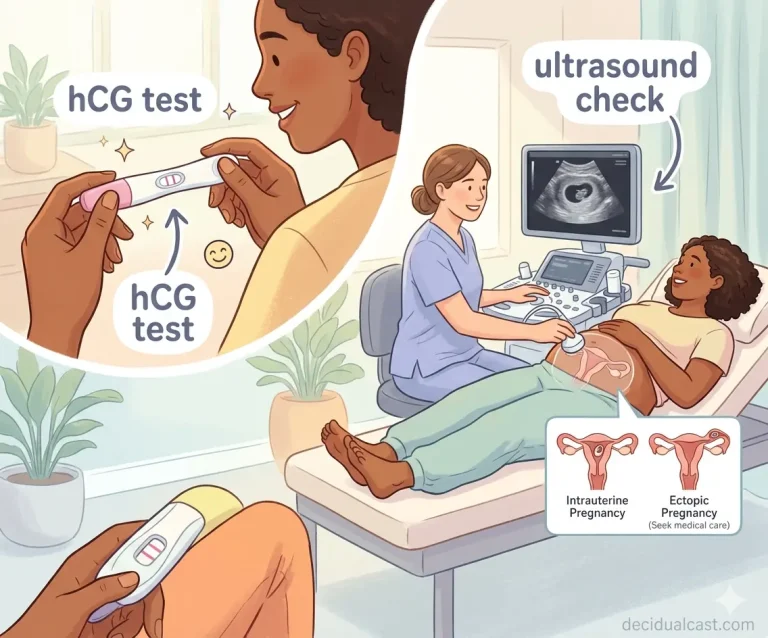
Pregnancy-related tissue should never be assumed to be a decidual cast.
If you experience:
- A positive pregnancy test
- Severe abdominal pain
- Heavy bleeding
- Tissue passage
You should contact a healthcare provider immediately.
In some cases, symptoms that appear similar to a decidual cast may be associated with:
- Miscarriage
- Ectopic pregnancy
- Pregnancy complications
This is why pregnancy testing is often recommended when unusual tissue passage occurs.
For additional information, see our article on decidual cast vs miscarriage.
How Doctors Diagnose Recurrent Decidual Casts
If you experience a decidual cast every month, your doctor may recommend further testing.
The goal is to identify any underlying cause.
Common evaluations include:
Medical History
Your provider may ask about:
- Menstrual cycle patterns
- Hormonal medications
- Previous pregnancies
- Fertility concerns
- Pelvic pain history
Pelvic Examination
A physical examination may help identify abnormalities.
Ultrasound
Ultrasound imaging can detect:
- Fibroids
- Adenomyosis
- Ovarian cysts
- Structural uterine issues
Hormone Testing
Blood tests may evaluate:
- Progesterone
- Estrogen
- Thyroid hormones
- Testosterone
- Other reproductive hormones
Additional Imaging
In some cases, MRI scans or specialized imaging studies may be recommended.
When to Contact a Doctor
Seek medical attention if you experience any of the following:
- Passing a decidual cast every month
- Severe pelvic pain
- Heavy bleeding
- Fever
- Dizziness or fainting
- A positive pregnancy test
- Symptoms that worsen over time
- Difficulty becoming pregnant
A healthcare professional can help determine whether an underlying condition is contributing to recurrent decidual casts.
Key Takeaways
Passing a decidual cast every month is not considered typical.
While some individuals experience a decidual cast only once, recurring episodes may suggest hormonal changes or an underlying gynecological condition.
Conditions such as adenomyosis, endometriosis, PCOS, fibroids, and hormonal contraceptive use may contribute to recurrent tissue passage.
A recurrent decidual cast does not automatically mean infertility. However, identifying the underlying cause is important for protecting reproductive health and improving quality of life.
If you experience repeated decidual casts, discussing your symptoms with a healthcare professional is the safest next step.