How Long Does an IUD Last? Lifespan by Type, Expiration Signs, and Replacement Guide
An intrauterine device (IUD) is one of the most effective forms of birth control. Many people choose an IUD because it provides long-term pregnancy protection without daily maintenance.
But how long does an IUD last?
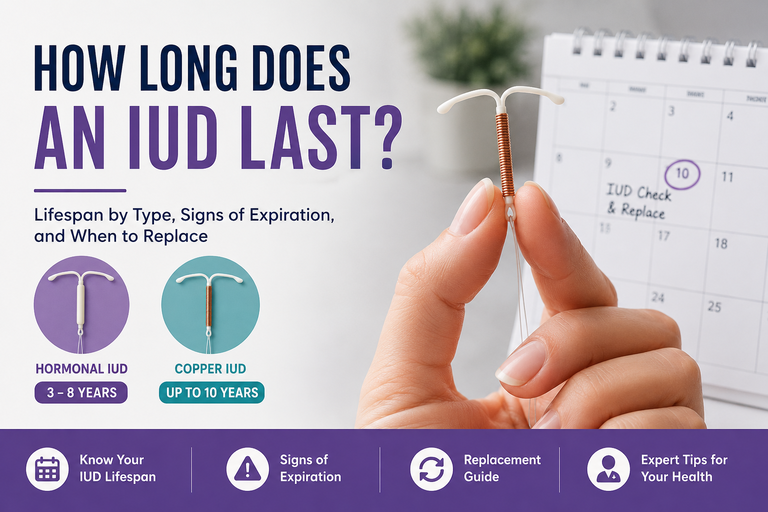
The answer depends on the type of IUD you have. Some hormonal IUDs last as little as 3 years, while a copper IUD can last up to 10 years.
This guide explains how long each IUD lasts, what happens when an IUD expires, and when you should replace it.
How Long Does an IUD Last?
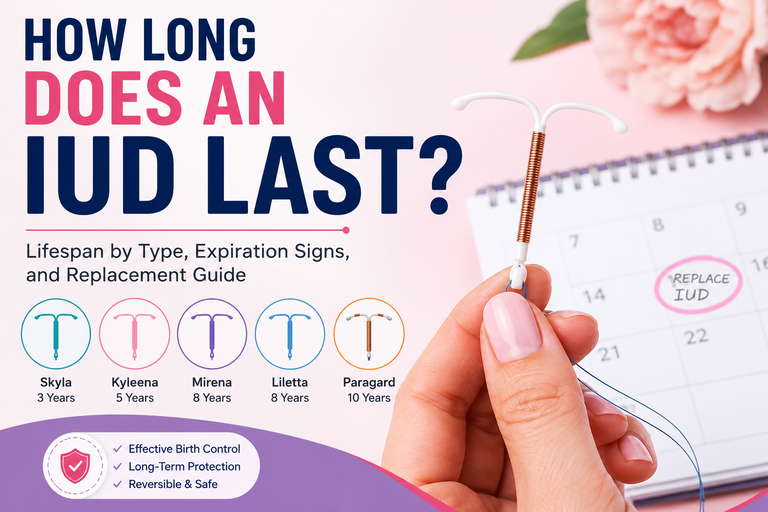
An IUD lasts between 3 and 10 years depending on the brand and type. Hormonal IUDs usually last between 3 and 8 years. The copper IUD lasts up to 10 years.
Here is a quick overview:
| IUD Brand | Type | How Long It Lasts |
|---|---|---|
| Skyla | Hormonal | 3 years |
| Kyleena | Hormonal | 5 years |
| Mirena | Hormonal | 8 years |
| Liletta | Hormonal | 8 years |
| Paragard | Copper | 10 years |
If your IUD is close to its expiration date, talk to your healthcare provider about replacement options.
What Is an IUD?
An IUD is a small T-shaped device placed inside the uterus. It prevents pregnancy for several years.
There are two main types of IUDs:
- Hormonal IUDs
- Copper IUDs
Both types are highly effective. However, they work in different ways and have different lifespans.
Related Read: Decidual cast guide
How Long Does a Hormonal IUD Last?
Hormonal IUDs release a small amount of progestin. This hormone helps prevent pregnancy by thickening cervical mucus and thinning the uterine lining.
The lifespan depends on the brand.
Mirena
Mirena lasts up to 8 years.
It is one of the most popular hormonal IUDs. Many people choose Mirena because it can also help reduce heavy menstrual bleeding.
Liletta
Liletta also lasts up to 8 years.
Like Mirena, it releases levonorgestrel and provides long-term birth control with high effectiveness.
Kyleena
Kyleena lasts up to 5 years.
It contains a lower hormone dose than Mirena and Liletta.
Skyla
Skyla lasts up to 3 years.
It is smaller than some other IUDs and is often chosen by people who have never been pregnant.
How Long Does a Copper IUD Last?
The copper IUD, sold under the brand name Paragard, lasts up to 10 years.
Unlike hormonal IUDs, Paragard does not contain hormones.
Instead, the copper creates an environment that prevents sperm from fertilizing an egg.
Paragard currently offers the longest approved lifespan among IUD options available in the United States.
Which IUD Lasts the Longest?
If your main goal is long-term birth control, the copper IUD lasts the longest.
Here is the ranking:
- Paragard – 10 years
- Mirena – 8 years
- Liletta – 8 years
- Kyleena – 5 years
- Skyla – 3 years
The best IUD for you depends on your health history, preferences, and future pregnancy plans.
Does an IUD Become Less Effective Over Time?
An IUD remains highly effective throughout its approved lifespan.
The effectiveness does not suddenly drop after a few years.
However, once the approved duration ends, pregnancy protection may decrease.
This is why it is important to know your insertion date and replacement timeline.
Signs Your IUD May Be Near Expiration
Many people wonder if they will notice signs when their IUD is about to expire.
In most cases, there are no clear symptoms.
However, some people may notice:
- Changes in menstrual bleeding
- Increased cramping
- Return of symptoms previously controlled by the IUD
- Hormonal changes after a hormonal IUD loses effectiveness
These signs do not always mean your IUD has expired.
The safest approach is to keep track of your insertion date and follow your provider’s recommendations.
What Happens If an IUD Expires?
An expired IUD does not usually cause an emergency.
However, it may no longer provide reliable pregnancy protection.
Possible risks include:
- Reduced contraceptive effectiveness
- Increased risk of pregnancy
- Need for removal and replacement
If you think your IUD has expired, contact your healthcare provider as soon as possible.
Can You Get Pregnant With an Expired IUD?
Yes.
The risk of pregnancy increases once an IUD has passed its approved lifespan.
An expired IUD may not prevent pregnancy as effectively as it did before.
If your IUD has expired and you do not want to become pregnant, use a backup birth control method and schedule an appointment with your provider.
Can You Keep an IUD Longer Than Its Approved Lifespan?
Some studies have explored extended use for certain IUDs.
However, approved timelines are based on the strongest available evidence.
You should not rely on an expired IUD for birth control without medical advice.
A healthcare provider can help you understand the latest recommendations for your specific device.
How to Check When Your IUD Expires
The easiest way to know when your IUD expires is to check the insertion date.
You can find this information in:
- Your medical records
- Your patient portal
- The card provided after insertion
- Your healthcare provider’s office
Many people set a phone reminder several months before the expiration date.
This gives enough time to schedule a replacement appointment.
IUD Removal and Replacement
IUD removal is usually a quick office procedure.
In many cases, a new IUD can be inserted during the same visit.
The process often takes only a few minutes.
If you want continuous pregnancy protection, discuss replacement timing with your provider before your current IUD expires.
How Quickly Can You Get Pregnant After IUD Removal?
Fertility usually returns very quickly after IUD removal.
Many people can become pregnant soon after the device is removed.
This applies to both hormonal and copper IUDs.
If you are planning a pregnancy, you may not need to wait long after removal.
Benefits of Using an IUD
An IUD offers several advantages:
- Long-term pregnancy protection
- High effectiveness
- Low maintenance
- Reversible birth control
- Fast return to fertility after removal
These benefits make IUDs one of the most popular forms of long-acting reversible contraception.
Final Thoughts
How long an IUD lasts depends on the type you choose. Hormonal IUDs last between 3 and 8 years, while the copper IUD can last up to 10 years.
Knowing your IUD’s expiration date is important for maintaining pregnancy protection. If your device is approaching the end of its lifespan, talk to your healthcare provider about replacement options.
With proper timing and follow-up care, an IUD remains one of the safest and most effective long-term birth control methods available.
Frequently Asked Questions
Does an IUD stop working suddenly?
No. An IUD generally remains effective throughout its approved lifespan. However, protection may decrease after the expiration date.
Can an expired IUD stay in place?
An expired IUD can remain in the uterus, but it should be removed or replaced according to your provider’s recommendations.
Do I need backup birth control after my IUD expires?
Yes. If your IUD has expired, use another form of contraception until you receive medical guidance.
Can I replace my IUD during the same appointment?
In many cases, yes. Healthcare providers can often remove the old IUD and insert a new one during the same visit.
Can I remove my IUD before it expires?
Yes. You can request removal at any time if you wish to become pregnant or choose another birth control method.
Is a copper IUD better than a hormonal IUD?
Neither option is universally better. The right choice depends on your health needs, preferences, and treatment goals.