
How Sildenafil Works in Erectile Dysfunction: A Clear Guide to the Science
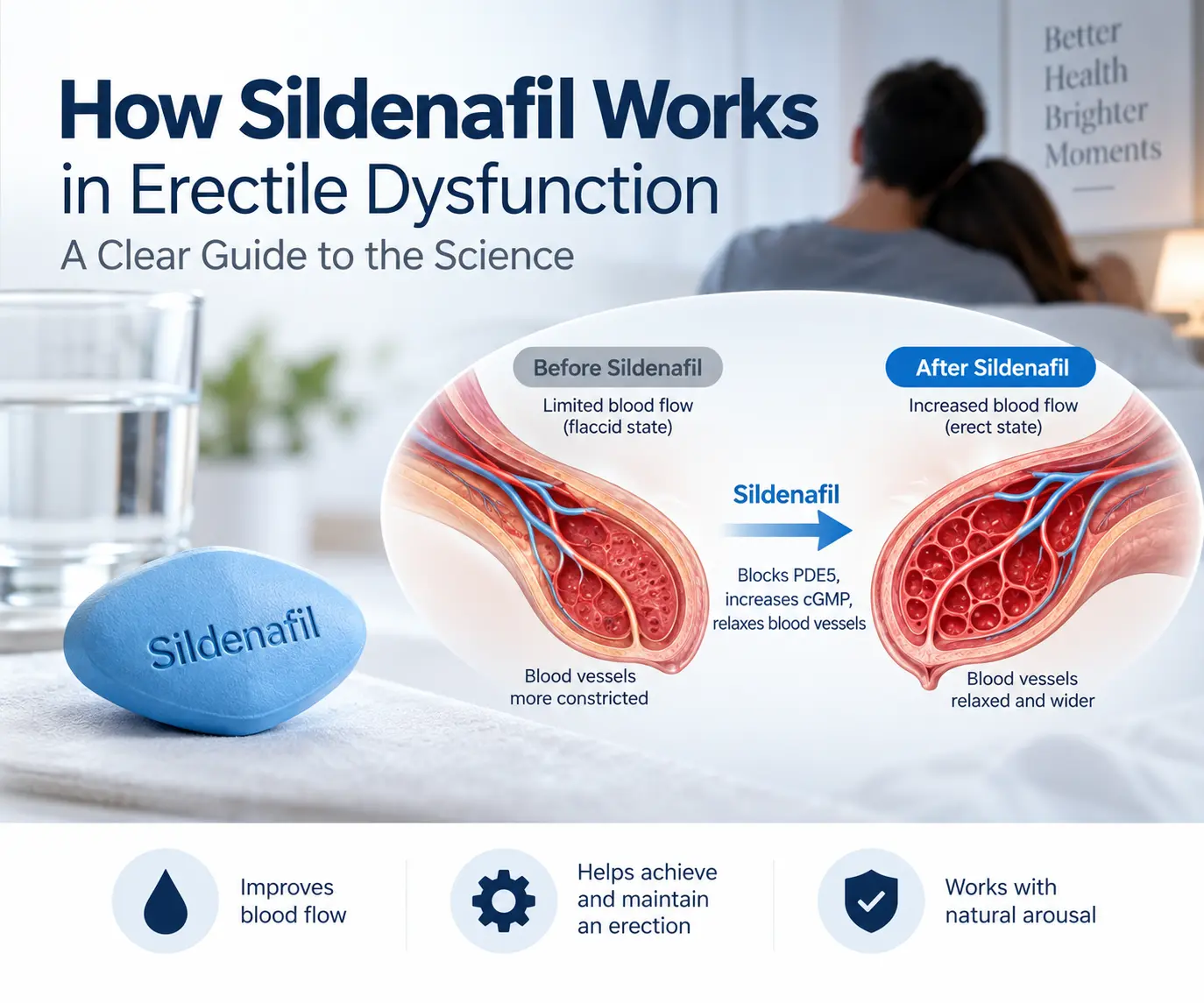
Erectile dysfunction is common, but the biology behind it is often described in a way that sounds more complicated than it needs to be. In simple terms, an erection depends on healthy blood flow, functioning nerves and sexual stimulation working together. Sildenafil can support that process, but it does not create sexual desire and it does not trigger an erection on its own.
Understanding that distinction is useful for anyone comparing erectile-dysfunction treatments. It also helps explain why dose, timing, general health and the source of a medicine all matter.
What happens in the body during an erection?
Sexual stimulation causes nerves and blood vessels in the penis to release nitric oxide. That signal increases levels of a chemical messenger called cyclic guanosine monophosphate, usually shortened to cGMP. The rise in cGMP allows smooth muscle in penile blood vessels to relax, which increases blood flow into erectile tissue.
An enzyme called phosphodiesterase type 5, or PDE5, gradually breaks cGMP down. This is part of the body’s normal way of ending the signal.
Sildenafil works by inhibiting PDE5. As a result, cGMP can remain active for longer and the normal blood-flow response to sexual stimulation can be strengthened. This is why sildenafil is classified as a PDE5 inhibitor.
Why sexual stimulation still matters
One of the most important things to understand about sildenafil is that it is not an aphrodisiac. It does not directly increase libido. The nitric-oxide signal still has to be produced first, which usually happens in response to sexual stimulation.
That is also why the medicine may seem to work differently from one occasion to another. Stress, anxiety, relationship factors, alcohol, fatigue and the underlying cause of erectile dysfunction can all influence the response.
The European Medicines Agency’s information on sildenafil also notes that sexual stimulation is required for the medicine to work as intended.
Does sildenafil work for every type of erectile dysfunction?
Sildenafil has been studied in men with erectile dysfunction caused by a range of factors, including vascular disease, diabetes and psychological causes. Clinical trials have shown that many men experience improved erectile function compared with placebo, but response varies.
Erectile dysfunction is not one single condition. It may be linked to reduced blood flow, nerve damage, hormonal issues, medication side effects, anxiety or a combination of several factors. Men with severe vascular disease or after certain types of pelvic surgery, for example, may respond differently from men whose symptoms are mainly related to performance anxiety.
This is one reason a proper medical assessment can be useful when erectile difficulties are persistent.
What does the dose actually mean?
Licensed sildenafil is available in different strengths. For Viagra, European product information describes 50 mg as the usual recommended dose for many adults, with adjustment to 25 mg or 100 mg depending on effectiveness, side effects and individual circumstances.
A higher number on the tablet does not automatically mean a better result. Increasing the dose also increases drug exposure and can increase the likelihood of side effects such as headache, flushing, indigestion, nasal congestion, dizziness and visual changes.
People searching for information about Kamagra 100 mg may be comparing sildenafil products by strength, but the milligram figure alone does not tell you whether a product is appropriate for a particular person or whether it has the same regulatory status as licensed sildenafil.
It is also important to consider the product’s source, quality, legal status, and whether it has been authorized by the relevant medicines regulator. If you are considering sildenafil for erectile dysfunction, speak with a qualified healthcare professional before using it.
Why the source of a medicine matters
The active ingredient is only one part of the picture. A medicine also depends on accurate manufacturing, correct dose content, storage conditions and quality control.
This is especially relevant with medicines purchased through unregulated online channels. The UK Medicines and Healthcare products Regulatory Agency has warned that unauthorised erectile-dysfunction medicines may contain too much, too little or none of the stated active ingredient, or may include undeclared substances.
That does not change how sildenafil itself works, but it can make the real dose and safety of an individual product uncertain.
Important safety considerations
Sildenafil should never be taken together with nitrate medicines used for chest pain or angina because the combination can cause a dangerous fall in blood pressure. People with certain heart conditions, very low blood pressure or significant liver or kidney problems may also need additional medical guidance.
Urgent medical attention is appropriate for serious symptoms such as a prolonged or painful erection, sudden vision loss, severe chest pain or a serious allergic reaction.
The bigger picture
Sildenafil works through a well-understood pathway involving nitric oxide, cGMP and PDE5. For many men with erectile dysfunction, supporting that pathway can improve the body’s normal response to sexual stimulation.
The useful takeaway is that treatment is not simply about choosing the highest-strength tablet. The cause of erectile dysfunction, the correct dose, other medicines, side effects and product quality all deserve attention.
References
- 1. European Medicines Agency. Viagra (sildenafil): EPAR overview and product information. https://www.ema.europa.eu/en/medicines/human/EPAR/viagra
- 2. Goldstein I, et al. Efficacy and safety of oral sildenafil in the treatment of erectile dysfunction. Int J Impot Res. PMID: 9894373. https://pubmed.ncbi.nlm.nih.gov/9894373/
- 3. Montorsi F, et al. Efficacy and safety of fixed-dose oral sildenafil in erectile dysfunction. Urology. 1999;53(5):1011–1018. PMID: 10223498. https://pubmed.ncbi.nlm.nih.gov/10223498/
- 4. Medicines and Healthcare products Regulatory Agency. Guidance and enforcement information on unauthorised erectile-dysfunction medicines. GOV.UK.
Medical note: This article is for general information and does not replace individual medical advice.