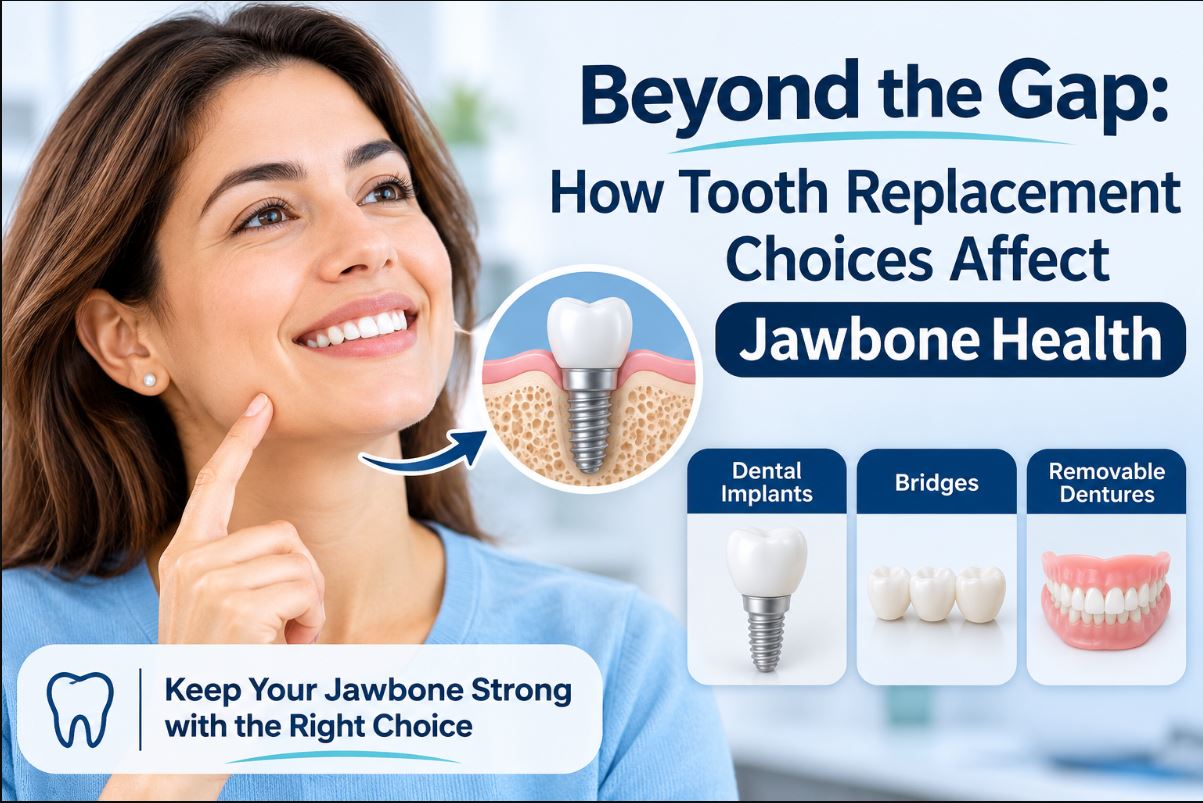
Beyond the Gap: How Tooth Replacement Choices Affect Jawbone Health
Losing a tooth can change more than the appearance of your smile. The gap may affect chewing, neighboring teeth, and the bone that once supported the missing root. Because jawbone health influences which restorative treatments remain practical, it deserves attention early in the decision-making process. Understanding how bridges, dentures, and implants differ can help you discuss options with your dentist and plan for both immediate comfort and long-term function.
Why the Jawbone Changes After Tooth Loss
Your jawbone responds to the forces created when you bite and chew. Natural tooth roots transmit pressure into the surrounding bone, helping maintain the tissue that supports them. When a tooth is removed or lost, that stimulation disappears at the site. The body gradually remodels the area, and the ridge can lose width and height over time.
The pace and extent of this change vary. The original reason for tooth loss, gum health, infection, anatomy, and individual healing all play a part. You may not notice the process at first. However, nearby teeth can shift into the space, the opposing tooth may move farther out of its socket, and your bite can become less balanced. These changes may complicate future treatment, especially after years without replacement.
Why Implants Are Often Discussed for Bone Support
A dental implant is placed in the jawbone and acts as an artificial root for a crown, bridge, or denture. Because it transfers some chewing forces to the surrounding bone, it can help maintain bone in the area compared with leaving the space unsupported. This is one reason implants are often considered when long-term ridge support is a priority.
For a practical comparison of tooth replacement options compared by bone health, consider how each approach addresses the missing root, not just the visible gap. Implants are not suitable for everyone, and they do not stop all bone remodeling. Gum health, bone volume, medical history, smoking, and oral hygiene all influence candidacy and long-term outcomes.
If too little bone remains, a dentist may discuss grafting or other preparatory procedures. These can add appointments, healing time, and cost. An assessment helps determine whether an implant is realistic and whether another option better matches your needs.
What a Traditional Bridge Can—and Cannot—Do
A dental bridge replaces the visible tooth by attaching an artificial one to neighboring teeth. It can restore appearance and chewing function without requiring a removable appliance. For patients whose adjacent teeth already need crowns, this approach may be practical.
However, a conventional bridge does not replace the missing root. The bone beneath the gap therefore does not receive the same stimulation it once received from a natural tooth root. The ridge may continue to remodel after tooth loss, even when the visible space has been filled. Traditional bridges may also require reshaping the supporting teeth, which is an important consideration when those teeth are healthy.
A bridge is not automatically the wrong choice. Its suitability depends on the condition of the supporting teeth, the location of the gap, bite forces, hygiene needs, and your treatment priorities. Ask your dentist how the area beneath the replacement tooth will be monitored over time.
Where Removable Dentures Fit
Dentures can replace several missing teeth or a complete arch. They are removable, can restore speech and appearance, and may be a suitable option when fixed treatment is not appropriate or affordable. Their design and fit can be adjusted as your mouth changes.
Conventional dentures rest on the gums and underlying ridge rather than replacing individual tooth roots. Because the jaw continues to remodel after tooth loss, the shape of the supporting ridge can change, and the denture may gradually become loose. Relining or replacement may improve fit, but these steps do not recreate the stimulation provided by natural roots.
That does not make dentures a poor solution. They may suit your health, anatomy, budget, and preferences. If you are considering them, ask about expected adjustments, cleaning, follow-up appointments, and whether implant-supported dentures could be an option later.
Timing Can Affect the Treatment Plan
It is tempting to postpone a replacement decision when the gap does not hurt. Yet the ridge can change after tooth loss, and waiting may reduce the bone available for some future treatments. In selected cases, a dentist may recommend socket or ridge preservation around the time of extraction to help limit changes in the area. These procedures cannot guarantee that bone loss will be prevented.
If a tooth has recently been removed, ask about the healing process and when the site should be reassessed. If the loss happened years ago, imaging and a clinical examination can help establish the current condition rather than relying on assumptions. A three-dimensional scan may be useful for implant planning when clinically indicated, but it is not necessary for every patient.
Compare the Available Replacement Approaches
The NHS overview of dental treatments explains how bridges, dentures, and implants differ, including how implants are placed and what dentures can restore.
Questions to Ask Before Choosing
The right option depends on more than price or appearance. Ask your dentist how much bone is present, whether neighboring teeth are healthy, how many teeth need replacement, and what maintenance each option requires. Discuss the expected lifespan of the restoration, possible repairs, cleaning techniques, and what happens if the treatment fails.
For an overview of implant suitability, benefits, and potential complications, read this guide to dental implants. Use it to prepare questions for your dental team.
A good treatment plan considers both the tooth you are replacing and the structures around it. Bridges and dentures can restore important functions, while implants may offer an advantage when supporting the jawbone is a priority. The best choice is the one that fits your clinical needs, long-term goals, and ability to maintain it—not simply the option that sounds most permanent.