
How Big Is a Decidual Cast? Size, Appearance, and What It Means
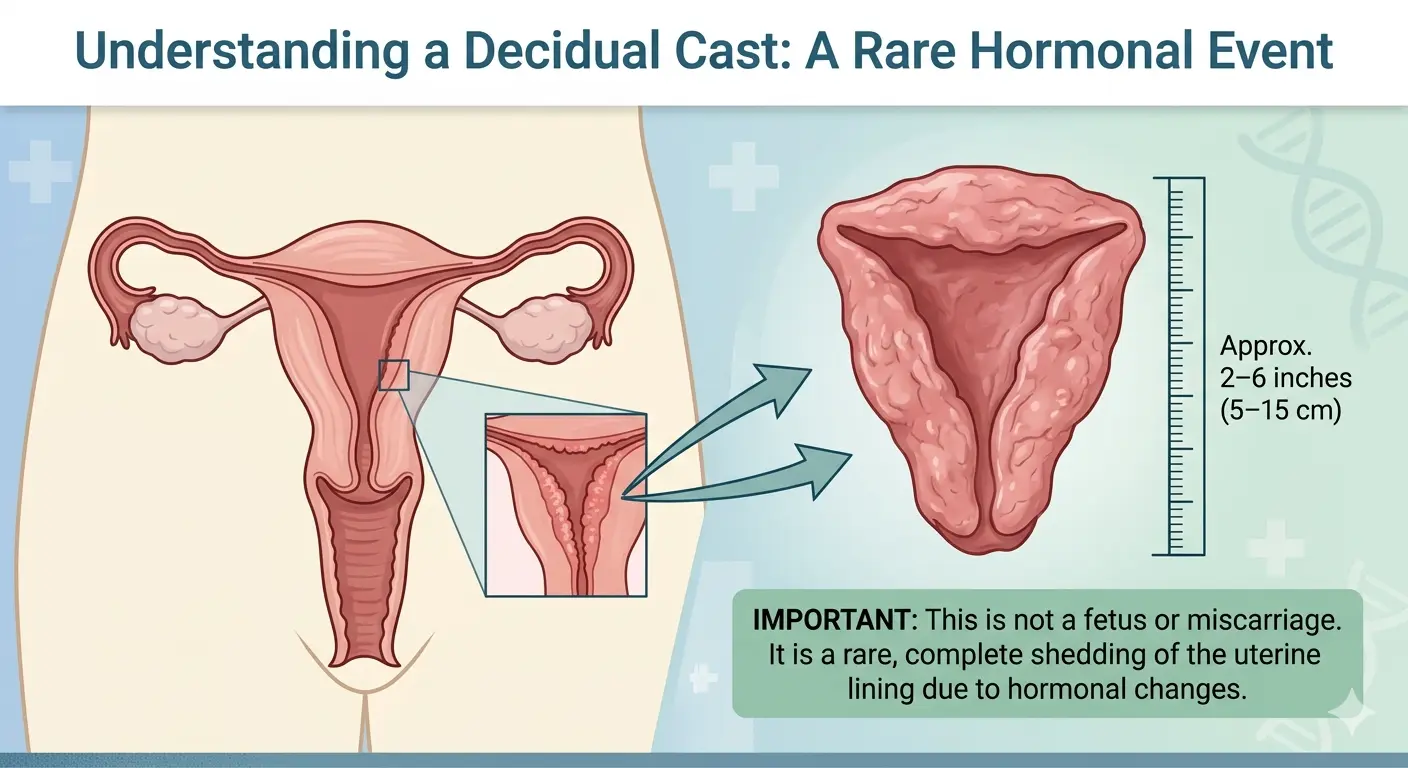
Overview: This article explains the size, shape, and clinical meaning of a decidual cast in simple, evidence-based language.
A decidual cast is usually about 2–6 inches (5–15 cm) in size, though it can sometimes be larger and come out as a single, uterus-shaped piece of thick uterine lining. It can look alarming, but it is not a fetus or miscarriage—just a rare hormonal shedding of the uterine lining.
Why This Looks So Scary at First

Many people experience a shocking moment when they suddenly pass a large piece of tissue during their period and fear it might be a miscarriage. In reality, one possible explanation is a decidual cast—a rare but harmless shedding of the uterine lining in one complete piece.
One of the most common questions patients ask is: “How big is a decidual cast?” The answer varies, but in most cases, it can be surprisingly large and shaped like the uterus itself. This article breaks down everything you need to know in a clear, medically accurate way.
How Big Is a Decidual Cast?
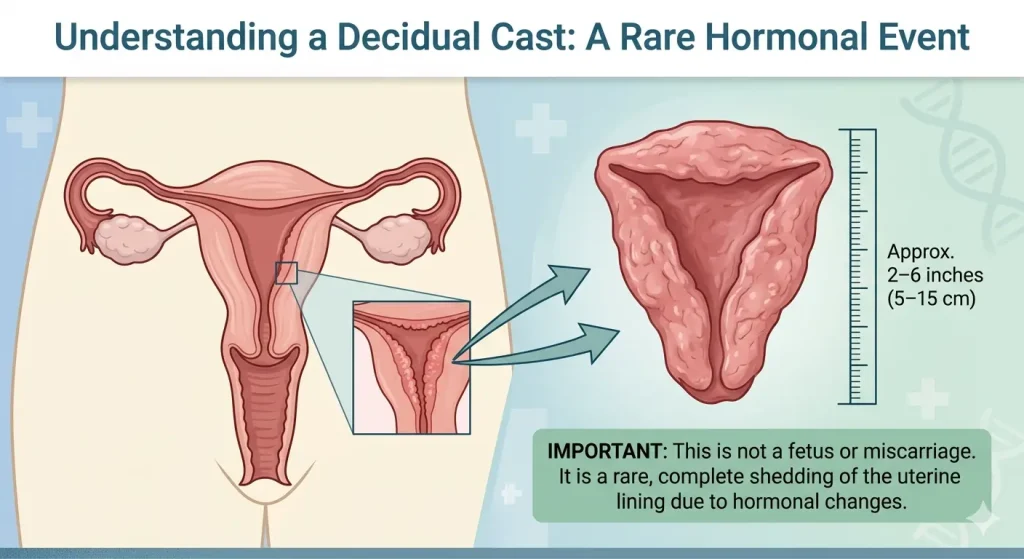
A decidual cast is typically between 2 to 6 inches (5 to 15 cm), but in some cases, it can be larger and shaped like the uterus itself.
Typical Size Range
- Small: 1–2 inches (fragmented pieces)
- Moderate: 3–5 inches (most common)
- Large: 5–6+ inches (full cast form)
What It Can Look Like in Size
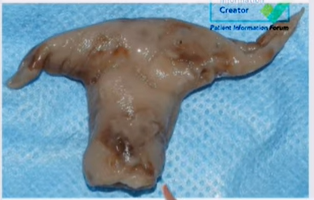
- Coin-sized tissue clusters (early shedding)
- Palm-sized fleshy mass (moderate cases)
- Hand-sized or banana-shaped structure (complete cast)
Rare Extreme Cases
In rare cases, the cast can form a nearly complete mold of the uterine cavity, appearing as a triangular or sac-like structure that retains anatomical shape.
What Is a Decidual Cast?
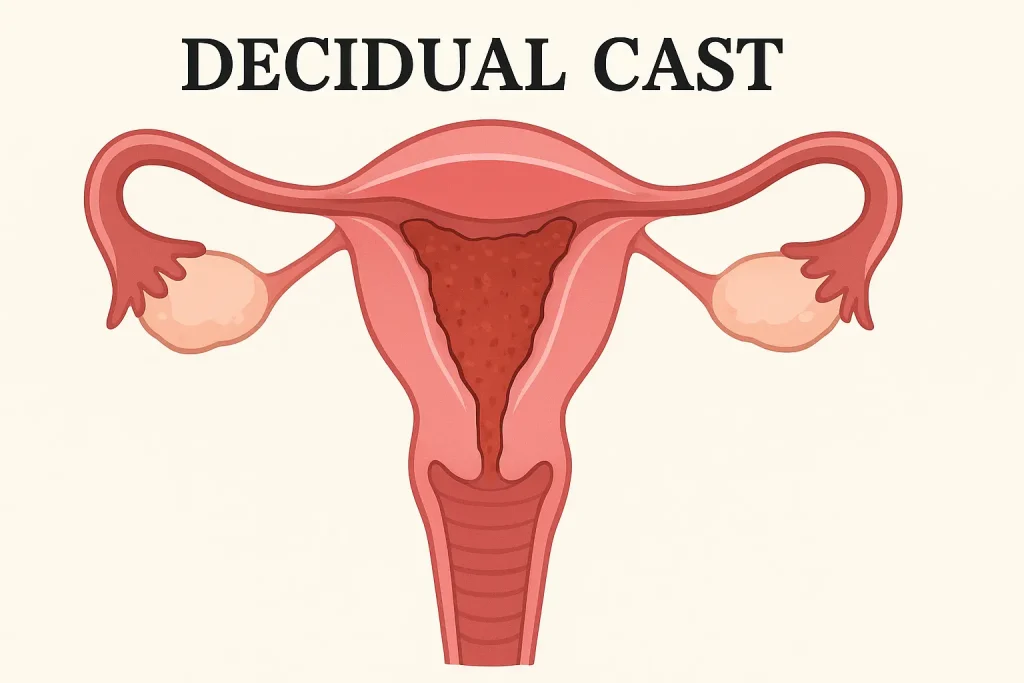
A decidual cast is the complete shedding of the endometrial lining (decidua) in one single piece instead of breaking apart during menstruation.
- It is not a pregnancy tissue
- It is not a miscarriage
- It is uterine lining shed in one solid form
It often happens due to hormonal changes, especially involving progesterone levels, and is sometimes associated with hormonal contraception.
What Does a Decidual Cast Look Like?

A decidual cast usually appears as:
- Thick, fleshy tissue
- Pink, red, or gray color
- Membrane-like structure
- Uterus-shaped outline in full cases
Because of its shape and size, it is often mistaken for a miscarriage or blood clot.
Why Does It Come Out in One Piece?
Normally, the uterine lining sheds gradually during menstruation. However, in a decidual cast, the lining separates all at once due to:
- Hormonal imbalance (especially progesterone changes)
- Birth control effects in some individuals
- Sudden changes in uterine lining stability
Decidual Cast vs Miscarriage
| Feature | Decidual Cast | Miscarriage |
|---|---|---|
| Pregnancy | No pregnancy | Requires pregnancy |
| Tissue type | Uterine lining | Embryo + placenta |
| hCG test | Negative | Positive |
| Shape | Often uterine-shaped | Irregular tissue |
Read more at this link
Symptoms Before Passing a Decidual Cast
- Severe cramping
- Sudden heavy bleeding
- Sharp pelvic pain
- Expulsion of large tissue
Is a Decidual Cast Dangerous?
In most cases, a decidual cast is not dangerous and does not indicate a serious disease. However, it can be extremely painful and emotionally distressing due to its appearance.
When Should You See a Doctor?
- If you are unsure whether you were pregnant
- If bleeding is extremely heavy
- If pain is severe or ongoing
- If dizziness or weakness occurs
Read this post for details on when to see a your OBGYN.
Diagnosis by Doctors
- Pregnancy test (hCG)
- Ultrasound imaging
- Medical history review
Treatment and Management
- Pain relief (NSAIDs)
- Hormonal evaluation if recurrent
- Birth control adjustment if needed
No surgical treatment is typically required.
Frequently Asked Questions
Can a decidual cast be the size of a hand?
Yes, in many cases it can be palm-sized or larger.
Is it normal to pass a whole uterine lining?
It is rare but medically documented and usually benign.
How painful is a decidual cast?
It can cause intense menstrual-like or labor-like cramps.
Can it happen on birth control?
Yes, hormonal contraception is a known associated factor.
How long does it take to pass?
Usually it is expelled suddenly rather than gradually.
Conclusion: How Big Is a Decidual Cast Really?
A decidual cast can range from small tissue fragments to a full uterus-shaped structure measuring up to 5–6 inches or more. While its appearance can be alarming, it is usually not dangerous and represents a rare hormonal shedding event.
Understanding its size and appearance helps reduce fear and confusion, especially when it is mistaken for miscarriage. If you ever experience this and are uncertain, a simple medical check can provide full reassurance.
Medical Disclaimer: This article is for educational purposes only and is not a substitute for professional medical advice.