Heavy Drinking and Hormonal Imbalance: Effects on Estrogen and Progesterone
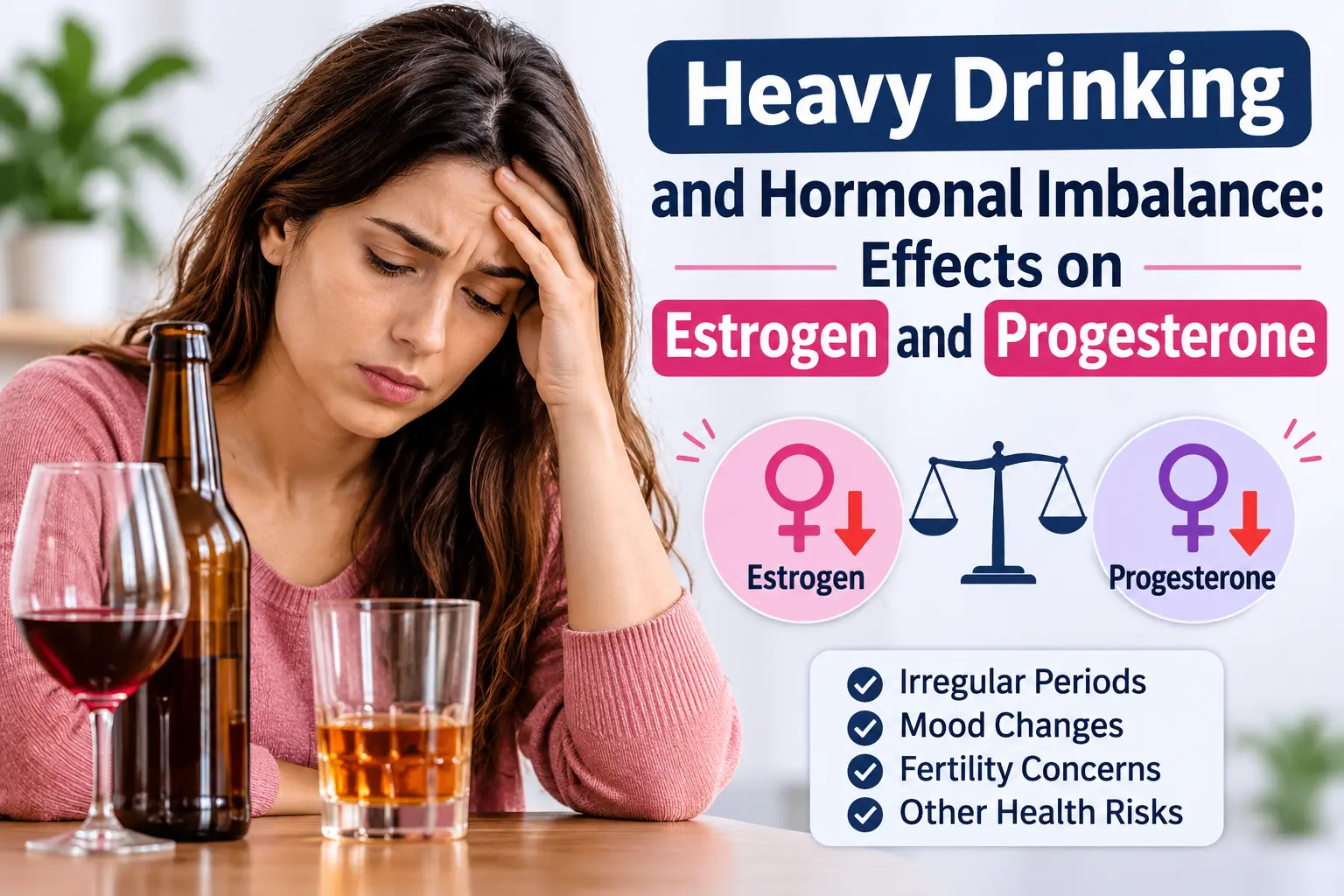
Periods changing can be concerning when you’re drinking frequently. Your brain and ovaries exchange signals that help regulate ovulation, estrogen and progesterone. Heavy drinking can alter these signals.
However, not everyone who drinks will experience all of these things. It’s best to know what alcohol can do to your hormones and when you should see a doctor.
What are Estrogen and Progesterone?
They play different roles during your menstrual cycle.
Your estrogen, or more specifically your estradiol, helps thicken the uterine lining as an egg matures. Your estradiol will begin to increase as you get closer to releasing that egg. Once the egg is released your body will begin to make more progesterone.
If you are not pregnant your progesterone will drop and you will start your period.
One value does not dictate the whole picture.
It also depends on the age of the person being tested and when they are in their cycle. People who are going through perimenopause, have gone through menopause, are pregnant, or taking birth control can all have varying hormone levels. That’s why it’s important to know when your bloodwork was done.
How Heavy Drinking Can Affect Your Hormones
Your brain sends messages to your ovaries to produce certain hormones. These signals can help you release an egg and regulate estrogen and progesterone production. This communication system is called the hypothalamic-pituitary-ovarian axis.
If you drink heavily, your body may not send these signals correctly. There are other ways alcohol can harm your hormones as well. Alcohol affects your liver and poor diet can lead to other medical issues if you are a heavy drinker.
You also want to consider how much you are drinking. Drinking one drink here and there, drinking heavily and becoming dependent on alcohol are all different.
If you are struggling with controlling your drinking, there are resources available to help you protect your body. Changing Tides offers partial hospitalization and IOP that can support recovery from alcohol use disorder. You can also see a doctor now about your periods or fertility.
Does Alcohol Increase Your Estrogen?
Yes, but not for everyone who consumes alcohol.
Some studies have shown that drinking can cause an increase in your estradiol levels. If you consume alcohol regularly, your body may also have increased estrogen levels.
A recent meta-analysis that was published in Cancer looked at hormone levels and reported alcohol use among 218,907 women. After menopause, there was a slight positive association between drinking and estradiol levels. Women who had not gone through menopause did not show an overall increase in estradiol, but the associations differed by menstrual cycle phase.
Not all estrogen is estradiol. This meta-analysis also found correlations with alcohol use and estrone levels in pre and post menopause.
Many of these women were not heavy drinkers either.
Studies have also shown that women who have alcohol use disorder may have low levels of estradiol, despite drinking causing an increase in other populations.
You should look at how much you drink and if you have gone through menopause when trying to interpret this information.
Does Alcohol Decrease Your Progesterone?
There is less information about how alcohol affects your progesterone levels, because your progesterone is linked to you releasing an egg.
If you do not release an egg, you may not have those higher levels of progesterone. There has been a correlation between heavy drinking and irregular periods and disrupted ovulation, so it could impact your progesterone levels.
Evidence that alcohol directly lowers progesterone remains limited. The meta-analysis mentioned earlier found that there was no correlation between alcohol usage and progesterone levels for women who have not gone through menopause. They did not assess progesterone after menopause.
Timing can play a role in your progesterone levels as well. Your progesterone levels can fluctuate throughout your cycle, so if you were to take a bloodwork test during your period, the result may differ from one taken later.
If your doctor is trying to see if you are ovulating, they may test your progesterone during the latter half of your cycle. Make sure to let your doctor know if you are on birth control, as it can affect your cycle and ovulation. But even if your doctor does test your progesterone, that does not prove alcohol affected your cycle.
Hormone Issues You Should See a Doctor About
Here are some things that you should look out for:
- Irregular or no periods
- Excessive bleeding
- Difficulty becoming pregnant
- Hot flashes
You could have any of these symptoms and not have high or low levels of estrogen/progesterone. As always, if you think you could be pregnant, take a pregnancy test rather than assuming alcohol caused a missed period. If your symptoms continue, you should see a doctor.
Keeping track of your period, when you may bleed and your alcohol consumption can be helpful to show your doctor what has changed and when it happened.
If you experience any of these symptoms, go to the ER if you are bleeding excessively, passing out, having severe pelvic pain or if you are pregnant and bleeding/experiencing pain.
What To Do If You Have Alcohol Related Symptoms
How much are you drinking? And how has your cycle changed?
Here are some steps that you can take:
- Keep track of your drinking. How often you drink, how much you drink and if you are drinking more than you want to.
- When you see your doctor, let them know how your period has changed. Whether you are missing your period, bleeding more, trying to get pregnant etc.
- Ask your doctor what tests they think you should take. Maybe you need to be tested for pregnancy or your thyroid, not all hormone panels will help you figure out what is going on. If they decide to test your progesterone, make sure they know when to do it.
- Get help with your alcohol usage. There are many ways to treat alcohol use disorder, talk to your doctor about what may be best for you and your situation.
One thing to keep in mind is that if you have been drinking heavily for an extended amount of time and may be physically dependent, please speak with your doctor before you quit drinking. Withdrawal can be dangerous and cause you to have seizures.
While reducing your harmful drinking can help you feel better, there is no set amount of time for your period to return to “normal.”
Final Thoughts
Drinking heavily can disrupt your body’s signals that help regulate estrogen, progesterone and ovulation. There have been studies that link drinking to increased estrogen, but it depends on how much you drink and if you are pre or post menopause. When looking at your progesterone, you need to know where you are in your cycle to understand your levels.
If you are experiencing period changes and drinking, seek help for both issues.