What are the Causes of Abnormal Uterine Bleeding?
Abnormal uterine bleeding (AUB) is one of the most common reasons women seek gynecological care. It refers to bleeding from the uterus that differs from a person’s normal menstrual pattern in terms of timing, frequency, duration, or volume. While occasional changes in a menstrual cycle can occur due to stress, hormonal fluctuations, or life stages such as adolescence and perimenopause, persistent abnormal bleeding should never be ignored.
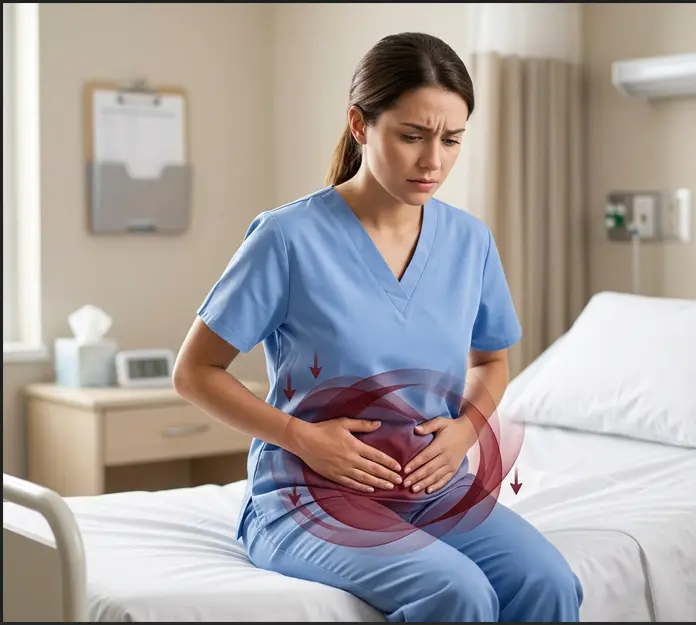
AUB can significantly affect quality of life. Heavy or prolonged bleeding may lead to fatigue, anemia, reduced productivity, emotional distress, and disruptions to daily activities. Women who experience heavy menstrual bleeding with clots may notice symptoms becoming progressively worse over time.
In some cases, abnormal bleeding may signal an underlying medical condition that requires prompt diagnosis and treatment.
Understanding the causes, symptoms, diagnosis, and treatment options for abnormal uterine bleeding can help patients seek appropriate medical care and improve health outcomes.
Definitions
Abnormal uterine bleeding describes any bleeding from the uterus that falls outside the normal menstrual pattern. According to gynecologic guidelines, bleeding may be considered abnormal when it involves:
- Bleeding between menstrual periods
- Excessively heavy menstrual bleeding
- Menstrual periods lasting longer than seven days
- Cycles occurring less than 21 days apart or more than 35 days apart
- Irregular menstrual cycles
- Bleeding after menopause
- Unexpected spotting after sexual intercourse
Healthcare professionals often use the FIGO PALM-COEIN classification system to identify the underlying cause of abnormal uterine bleeding. This system divides causes into structural and non-structural categories.
Etiology
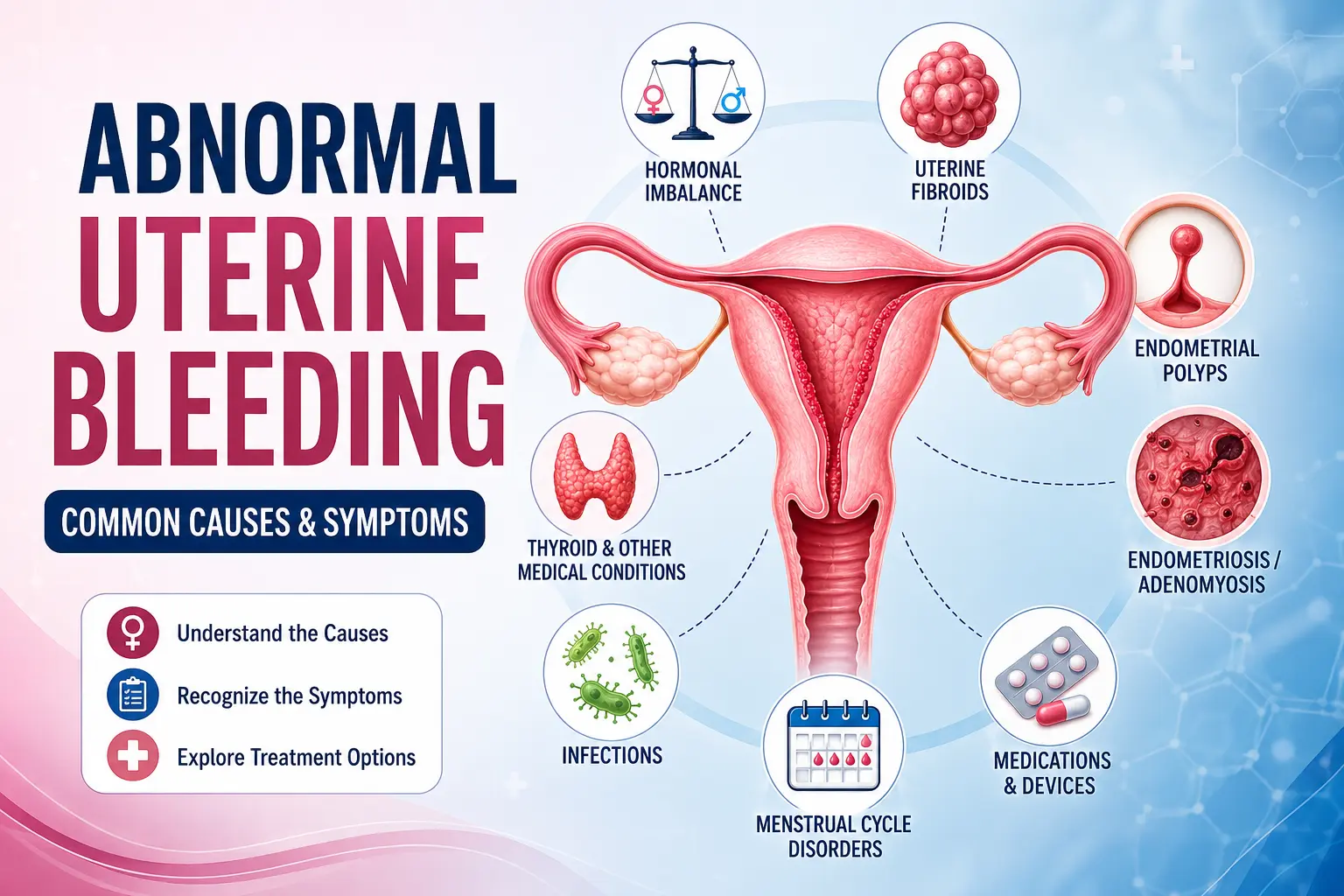
The causes of abnormal uterine bleeding are diverse and range from hormonal imbalances to structural abnormalities of the uterus. The internationally recognized PALM-COEIN classification organizes these causes into:
Structural causes (PALM):
- Polyp
- Adenomyosis
- Leiomyoma (fibroids)
- Malignancy and hyperplasia
Non-structural causes (COEIN):
- Coagulopathy
- Ovulatory dysfunction
- Endometrial disorders
- Iatrogenic causes
- Not otherwise classified
This classification improves diagnostic accuracy and helps guide treatment decisions.
Epidemiology
Abnormal uterine bleeding affects women of all ages but occurs most frequently during adolescence and the years leading up to menopause. Research suggests that up to one-third of women experience abnormal uterine bleeding at some point during their lives. The condition represents a major cause of gynecologic consultations worldwide.
Heavy menstrual bleeding alone affects millions of women annually and contributes substantially to iron deficiency anemia and reduced quality of life.
Pathophysiology
The mechanisms behind abnormal uterine bleeding vary according to the underlying cause.
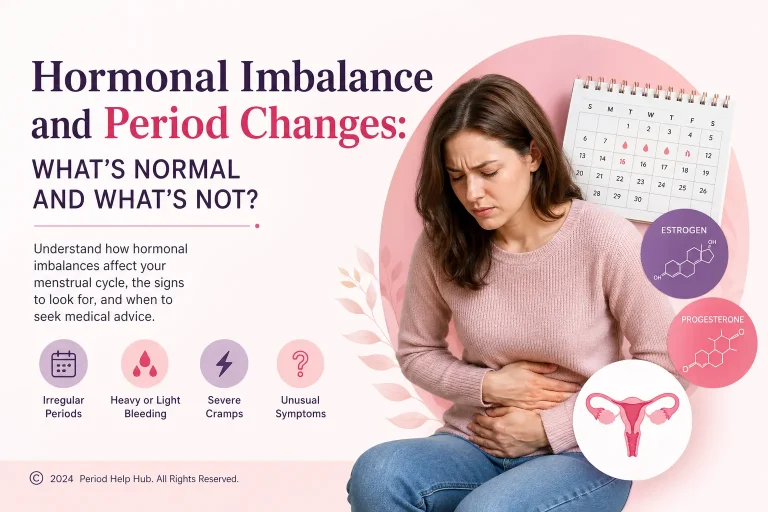
In ovulatory disorders, hormonal imbalances disrupt the normal menstrual cycle. Without regular ovulation, estrogen may continuously stimulate the uterine lining, causing excessive growth. Eventually, the thickened lining sheds unpredictably, resulting in irregular or heavy bleeding. Understanding how the uterine lining changes throughout the menstrual cycle can help explain why abnormal bleeding develops in some women.
Structural abnormalities such as fibroids or polyps can increase the surface area of the uterine lining and alter blood vessel formation, leading to excessive bleeding. Disorders involving blood clotting can also impair the body’s ability to stop menstrual bleeding effectively.
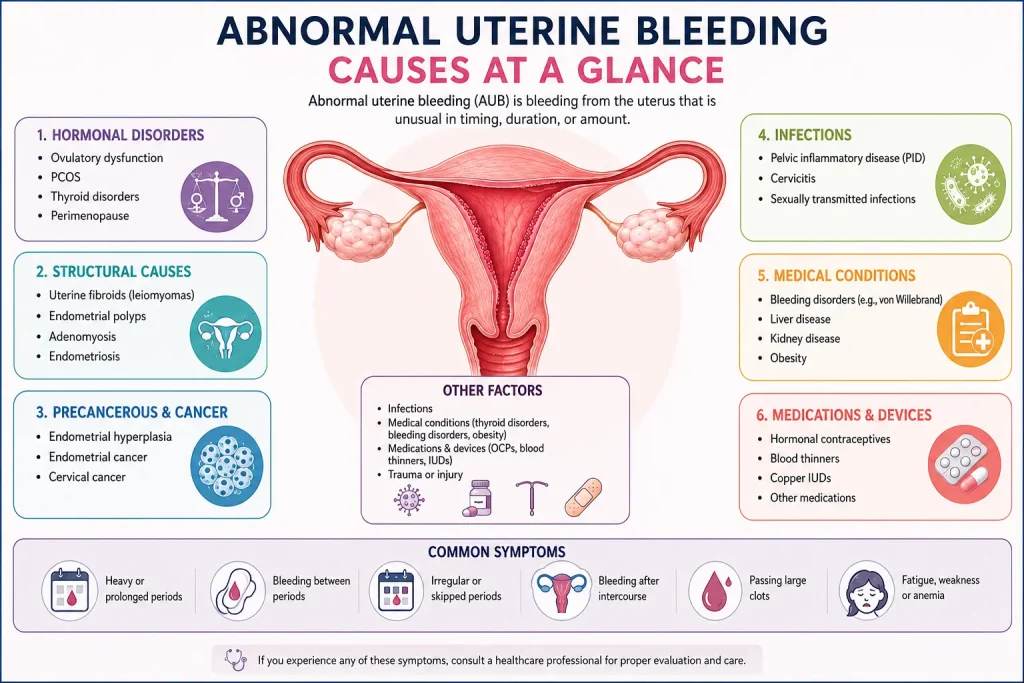
Causes
Hormonal Disorders
Hormonal imbalance remains one of the leading contributors to irregular periods and abnormal bleeding patterns.
Other common examples include:
- Polycystic ovary syndrome (PCOS)
- Thyroid disorders
- Hyperprolactinemia
- Perimenopause
- Chronic anovulation
When ovulation does not occur regularly, menstrual cycles become unpredictable and bleeding may become heavy or prolonged.
Noncancerous Growths and Other Uterine Conditions
Several benign uterine conditions can cause abnormal bleeding:
- Uterine fibroids
- Endometrial polyps
- Adenomyosis
- Endometriosis: Endometriosis may also contribute to irregular bleeding, pelvic pain, and menstrual changes in some women.
Fibroids and polyps are particularly common and frequently cause heavy menstrual bleeding. Adenomyosis often causes painful, prolonged periods.
Precancer and Cancer
Although less common, abnormal bleeding may be an early sign of:
- Endometrial hyperplasia
- Endometrial intraepithelial neoplasia (EIN)
- Endometrial cancer
- Cervical cancer
Postmenopausal bleeding requires prompt medical evaluation because it can indicate malignancy.
Infections
Certain infections can irritate reproductive tissues and trigger bleeding.
Examples include:
- Pelvic inflammatory disease (PID)
- Cervicitis
- Sexually transmitted infections
These conditions may also cause pelvic pain, abnormal discharge, or fever.
Medical Conditions
Several systemic illnesses can contribute to abnormal uterine bleeding, including:
- Bleeding disorders
- Liver disease
- Kidney disease
- Thyroid dysfunction
- Obesity
Inherited bleeding disorders such as von Willebrand disease are important considerations, especially in women who have experienced heavy periods since adolescence.
Medications and Devices
Some medications and medical devices can alter bleeding patterns.
Examples include:
- Hormonal contraceptives: Some women experience unusual uterine tissue shedding after starting, stopping, or changing hormonal birth control methods.
- Blood thinners
- Aspirin
- Copper intrauterine devices (IUDs)
Breakthrough bleeding is relatively common when starting hormonal birth control.
Trauma
Trauma involving the reproductive tract may cause abnormal bleeding.
Potential causes include:
- Sexual injury
- Surgical complications
- Foreign bodies
- Accidental pelvic trauma
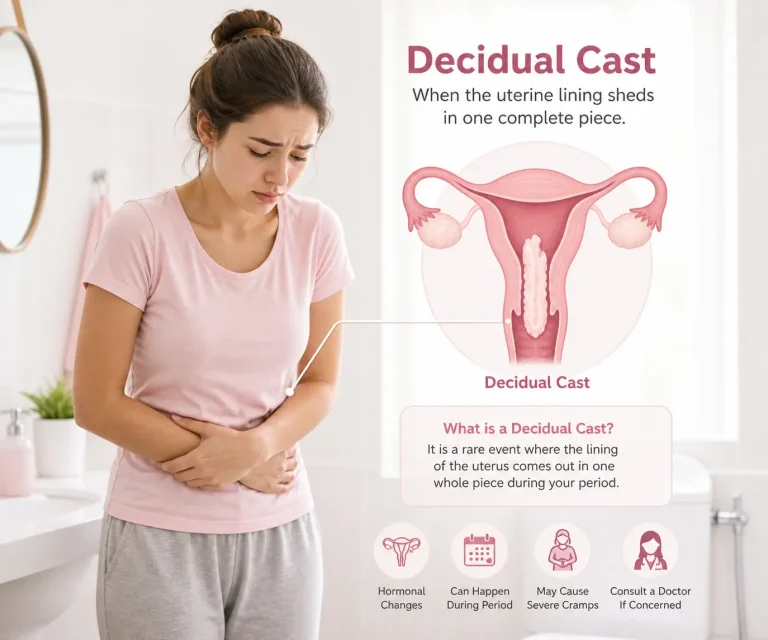
In rare situations, abnormal uterine bleeding may occur alongside the passage of a decidual cast, which happens when the uterine lining sheds in one large piece rather than gradually during menstruation.
Symptoms
Symptoms vary depending on the cause but commonly include:
- Heavy menstrual bleeding
- Prolonged menstrual periods
- Spotting between periods: In some cases, women may also notice large blood clots during menstruation, which can be alarming but are not always a sign of a serious condition.
- Bleeding after intercourse
- Irregular cycles
- Postmenopausal bleeding
- Pelvic pain
- Fatigue due to anemia
- Dizziness or weakness
Severe blood loss may result in shortness of breath and lightheadedness.
History and Physical
A thorough medical evaluation helps determine the cause of abnormal uterine bleeding.
Healthcare providers assess:
- Menstrual history
- Pregnancy history
- Medication use
- Family history
- Bleeding severity
- Associated symptoms
The evaluation begins by determining whether the patient is hemodynamically stable, especially during episodes of acute heavy bleeding.
Diagnostic Evaluation
Bleeding History
A detailed bleeding history often provides valuable diagnostic clues.
Important information includes:
- Cycle length
- Bleeding duration
- Number of pads or tampons used
- Presence of clots
- Intermenstrual bleeding
- Postcoital bleeding
Patients may benefit from tracking their cycles using a menstrual calendar or smartphone application.
Physical Examination
The physical examination may include:
- General assessment
- Vital signs
- Abdominal examination
- Pelvic examination
Clinicians look for signs of anemia, hormonal disorders, infection, or pelvic masses.
Laboratory Testing
Common laboratory investigations include:
- Pregnancy testing
- Complete blood count (CBC)
- Iron studies
- Thyroid function tests
- Coagulation studies
- Hormonal testing when indicated
These tests help identify anemia, endocrine disorders, and bleeding abnormalities.
Imaging
Imaging studies may include:
- Transvaginal ultrasound
- Sonohysterography
- MRI in selected cases
Ultrasound remains the first-line imaging tool for evaluating structural causes such as fibroids and polyps.
Differential Diagnosis
POLYP
Endometrial or cervical polyps may cause irregular bleeding, spotting between periods, and postcoital bleeding. Most are benign.
ADENOMYOSIS
Adenomyosis occurs when endometrial tissue grows into the muscular wall of the uterus. It commonly causes heavy, painful periods.
LEIOMYOMA
Leiomyomas, commonly known as fibroids, are benign uterine tumors that often cause heavy menstrual bleeding and pelvic pressure.
MALIGNANCY AND HYPERPLASIA
Endometrial hyperplasia and cancer can present with unpredictable bleeding, especially in postmenopausal women.
COAGULOPATHY
Bleeding disorders impair normal clot formation and may lead to excessive menstrual blood loss.
OVULATORY DYSFUNCTION
Irregular ovulation remains one of the leading causes of abnormal uterine bleeding and is frequently associated with PCOS and endocrine disorders. This is especially common during the transition into perimenopause, when hormone levels naturally fluctuate.
ENDOMETRIAL
Abnormal local endometrial function may result in heavy bleeding despite normal hormone levels and uterine anatomy.
The endometrium is the tissue lining the uterus and plays a central role in menstrual bleeding patterns.
IATROGENIC
Medical treatments, hormonal therapies, and certain medications can trigger abnormal bleeding patterns.
NOT OTHERWISE CLASSIFIED
Rare causes that do not fit established categories are placed in this group.
Treatment / Management
Treatment depends on the severity of bleeding, underlying cause, patient age, reproductive goals, and overall health status.
Emergent Treatment
Patients with severe acute bleeding may require:
- Intravenous fluids
- Blood transfusion
- High-dose hormonal therapy
- Tranexamic acid
- Uterine tamponade
Immediate stabilization remains the primary priority.
Nonemergent Treatment
For stable patients, treatment focuses on correcting the underlying cause while controlling bleeding and preventing recurrence.
Medications
Common medical treatments include:
- Combined oral contraceptives
- Progestins
- Levonorgestrel-releasing IUDs
- Tranexamic acid
- Nonsteroidal anti-inflammatory drugs (NSAIDs)
The most suitable option depends on the patient’s diagnosis and fertility goals.
Surgery
Surgical management may include:
- Polypectomy
- Myomectomy
- Endometrial ablation
- Uterine artery embolization
- Hysterectomy
Healthcare providers generally reserve surgery for patients who fail medical treatment or have significant structural abnormalities.
Prognosis
The prognosis is generally favorable when clinicians identify and treat the underlying cause. Many women achieve substantial symptom improvement through medication, minimally invasive procedures, or surgical intervention. Early diagnosis also improves outcomes for patients with precancerous changes or cancer.
Complications
Potential complications include:
- Iron deficiency anemia
- Chronic fatigue
- Reduced quality of life
- Infertility
- Endometrial hyperplasia
- Endometrial cancer in high-risk cases
Long-standing untreated bleeding may significantly affect physical and emotional well-being.
Prevention
Not all causes of abnormal uterine bleeding can be prevented. However, women may reduce risk by:
- Maintaining a healthy weight
- Managing endocrine disorders
- Attending regular gynecologic examinations
- Reporting unusual bleeding promptly
- Following prescribed treatment plans
Consultations
Depending on the suspected cause, consultation may involve:
- Gynecologists
- Reproductive endocrinologists
- Hematologists
- Oncologists
- Radiologists
A multidisciplinary approach often improves diagnostic accuracy and treatment outcomes.
Deterrence and Patient Education
Patient education plays a vital role in early detection and management.
Women should understand:
- What constitutes normal menstruation
- Warning signs that require evaluation
- The importance of menstrual tracking
- Available treatment options
A practical tip: if you know your streaming subscriptions better than your menstrual cycle, it may be time to start tracking both.
Enhancing Healthcare Team Outcomes
Successful management of abnormal uterine bleeding requires collaboration among healthcare professionals. Physicians, nurses, laboratory specialists, radiologists, and pharmacists each contribute to accurate diagnosis, effective treatment, and patient education. Coordinated care improves outcomes and helps reduce complications.
When to Contact a Medical Professional
Seek medical attention if any of the following occur:
- Bleeding between periods
- Bleeding after menopause
- Bleeding after sexual intercourse: Women should also seek medical evaluation if they pass unusually large pieces of tissue or are unsure whether the material resembles a blood clot, uterine tissue, or pregnancy-related tissue.
- Periods lasting longer than seven days
- Heavy bleeding that soaks through a pad or tampon every hour
- Severe pelvic pain
- Symptoms of anemia such as fatigue, dizziness, or shortness of breath
Emergency care is necessary when heavy bleeding causes weakness, fainting, chest pain, or difficulty breathing.
References
- American College of Obstetricians and Gynecologists (ACOG). Abnormal Uterine Bleeding. Available at: https://www.acog.org/womens-health/faqs/abnormal-uterine-bleeding. Accessed June 2026.
- Mikes BA, Vadakekut ES, Sparzak PB. Abnormal Uterine Bleeding. StatPearls Publishing. Updated February 2025. Available through the National Center for Biotechnology Information (NCBI).
- International Federation of Gynecology and Obstetrics (FIGO). PALM-COEIN Classification System for Abnormal Uterine Bleeding. Referenced in StatPearls and current gynecologic practice guidelines.