Blood Clots During Period: What’s Normal, What’s Not, and When to Worry
Blood clots during your period are usually normal, especially on heavy flow days. These clots form when blood pools in the uterus and thickens before leaving the body. However, clots larger than a golf ball, frequent heavy bleeding, or severe pain may signal an underlying condition and should be evaluated by a doctor.
Introduction
Seeing thick, jelly-like blood clots during your period can feel alarming. Many people immediately think something is wrong — but in most cases, it’s a natural part of how your body sheds the uterine lining.
Still, not all clots are the same. Some are completely normal, while others may point to hormonal imbalances or medical conditions.
This guide will help you understand:
- What period blood clots really are
- Which ones are normal
- Warning signs you shouldn’t ignore
- What you can do to reduce them
What Are Blood Clots During Your Period?
Menstrual blood clots are gel-like clumps of blood and tissue that form when your flow is heavy. During menstruation, your uterus sheds its lining, and sometimes blood collects faster than it can exit the body.
When this happens, it thickens and forms clots.
These clots may appear:
- Bright red (fresh blood)
- Dark red or brown (older blood)
- Jelly-like or thick in texture
Are Blood Clots During Period Normal?
Yes — in many cases, blood clots are completely normal.
They are most common:
- During the first 1–2 days of your period
- When your flow is heaviest
- After lying down or sleeping
Your body produces natural anticoagulants to keep blood flowing smoothly. But during heavy bleeding, these may not work fast enough — leading to clots.
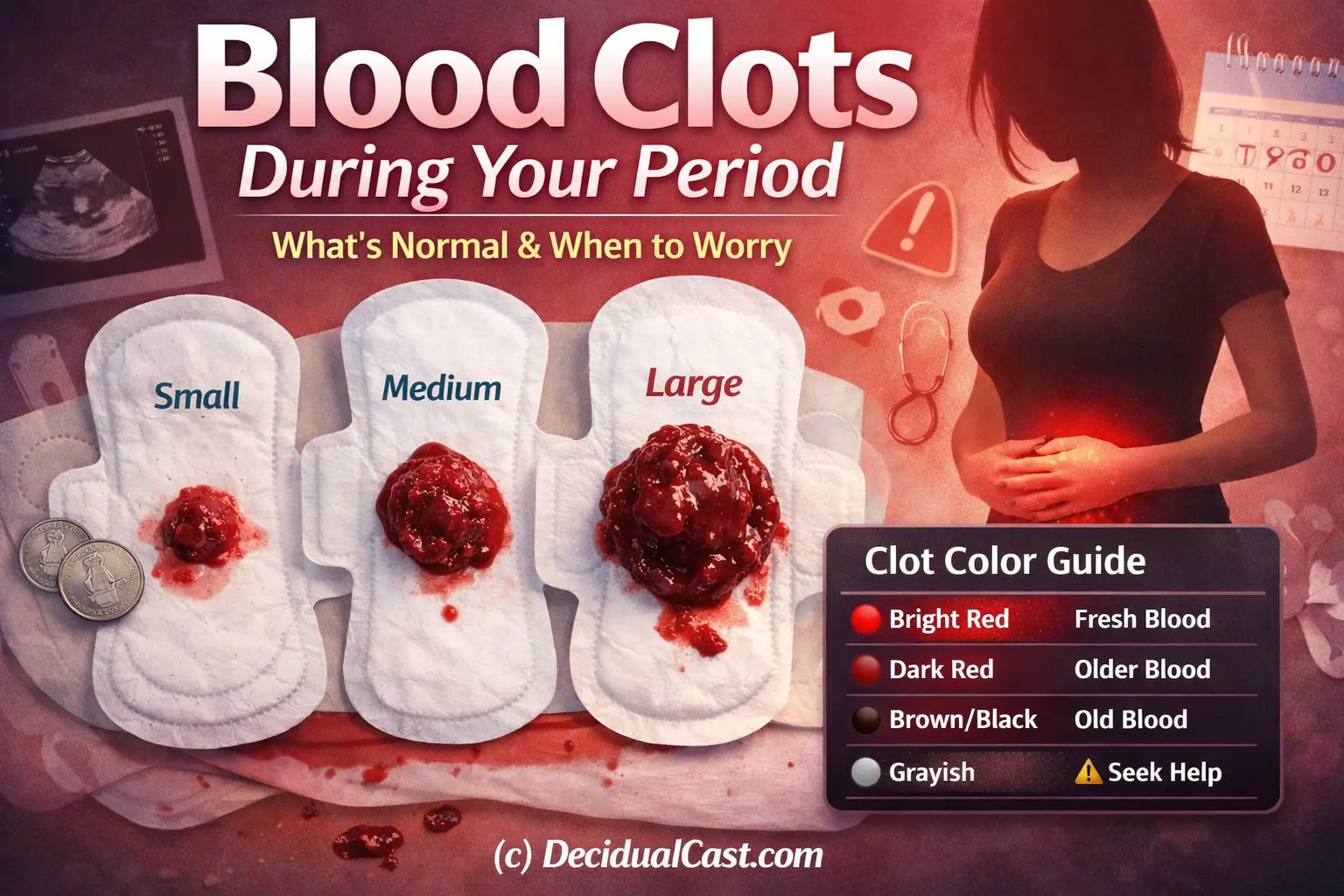
Blood Clot Size
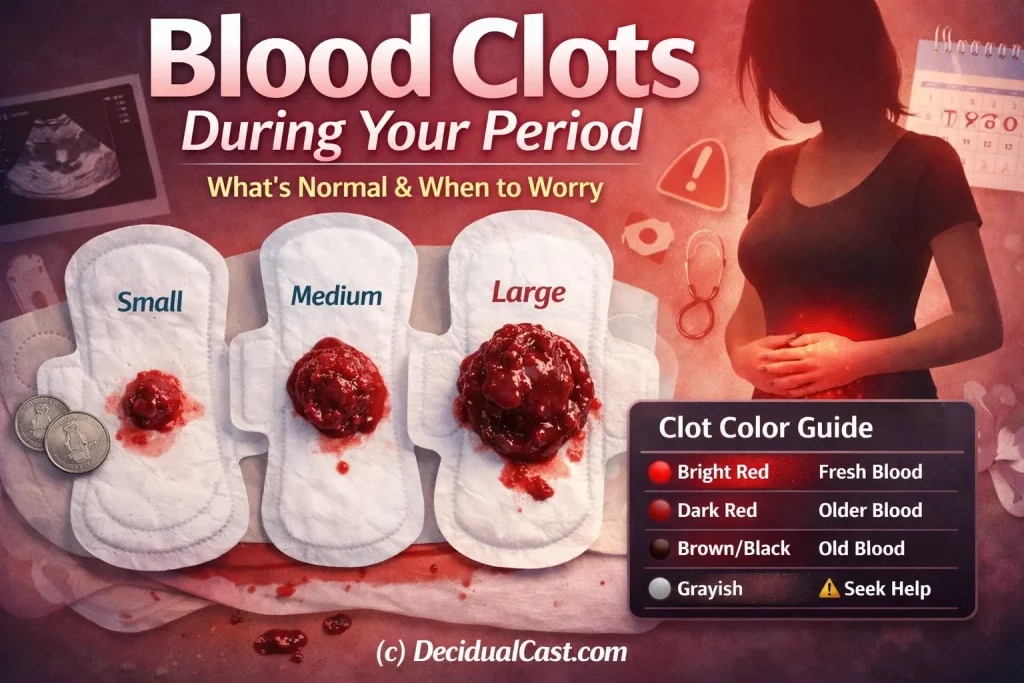
| Clot Size | Example | Normal or Not | What to Do |
|---|---|---|---|
| Small | Coin-sized (dime/pea) | ✅ Normal | No action needed |
| Medium | Grape-sized | ⚠️ Usually normal | Monitor symptoms |
| Large | Golf ball or bigger | ❗ Concerning | Consult a doctor |
What Do Different Blood Clot Colors Mean?
| Color | Meaning |
|---|---|
| Bright Red | Fresh blood, active flow |
| Dark Red | Normal older blood |
| Brown/Black | Oxidized blood, usually harmless |
| Grayish | ⚠️ Possible infection — seek medical advice |
Why Am I Passing Large Blood Clots During My Period?
Large clots can happen when your flow is unusually heavy or prolonged.
10 Causes of Large Blood Clots During Your Period
Passing large blood clots during your period can be normal in some cases, but it may also signal an underlying issue. Here are 10 medically recognized causes you should know about:
1. Hormonal Imbalance (Estrogen Dominance)
When estrogen levels are higher than progesterone, the uterine lining becomes thicker than normal. This leads to heavier shedding and larger blood clots.
Common signs:
- Heavy flow
- Irregular cycles
- Severe PMS
2. Uterine Fibroids
These are non-cancerous growths in the uterus that can increase menstrual bleeding and clot size.
Especially:
- Submucosal fibroids → biggest clot risk
3. Uterine Polyps
Small growths in the uterine lining can disrupt normal shedding and lead to heavy bleeding with clots.
4. Endometriosis
This condition occurs when uterine-like tissue grows outside the uterus, causing:
- Severe cramps
- Heavy bleeding
- Thick clots
5. Polycystic Ovary Syndrome (PCOS)
Hormonal imbalance in PCOS can cause:
- Irregular periods
- Delayed shedding → thicker lining → larger clots
6. Adenomyosis
A lesser-discussed but important condition where the uterine lining grows into the muscle wall.
This often causes:
- Very heavy periods
- Large, painful clots
7. Thyroid Disorders
Both hypothyroidism and hyperthyroidism can disrupt menstrual cycles and lead to abnormal bleeding patterns.
8. Miscarriage or Early Pregnancy Loss
In early pregnancy, a miscarriage may appear as:
- Very heavy bleeding
- Large tissue-like clots
This is often mistaken for a heavy period.
9. Blood Clotting Disorders (e.g., Von Willebrand Disease)
Some people have underlying bleeding disorders that prevent proper clot regulation.
Signs include:
- Excessive bleeding
- Frequent large clots
- Easy bruising
10. Pelvic Inflammatory Disease (PID) or Infection
Infections of the reproductive organs can cause:
- Irregular bleeding
- Abnormal clotting
- Unusual discharge
Decidual Cast (Very Rare but Important)
Sometimes what looks like a large blood clot may actually be a decidual cast, where the uterine lining sheds in one piece.
Key differences:
- Tissue-like structure (not jelly-like)
- Maintains shape of uterus
- Often more painful
This is commonly misunderstood and misidentified as a blood clot.
| Cause | Common Symptom | Clot Size Risk |
|---|---|---|
| Hormonal Imbalance | Heavy flow | Medium–Large |
| Fibroids | Prolonged bleeding | Large |
| Endometriosis | Severe pain | Medium–Large |
| PCOS | Irregular cycles | Medium |
| Adenomyosis | Heavy painful periods | Large |
| Miscarriage | Sudden heavy bleeding | Very Large |
When to Worry About Period Blood Clots
Use this quick self-check:
Warning Signs Checklist
- Clots larger than 2.5 cm (golf ball size)
- Soaking a pad/tampon every hour
- Severe pelvic pain
- Period lasting longer than 7 days
- Feeling dizzy or weak
If you experience these, it’s best to consult a healthcare provider.
Medical Conditions Linked to Large Clots
1. Uterine Fibroids
Non-cancerous growths that can cause heavy bleeding and large clots.
2. Endometriosis
Tissue grows outside the uterus, leading to painful and heavy periods.
3. Polycystic Ovary Syndrome (PCOS)
Hormonal imbalance that may disrupt menstrual flow.
4. Adenomyosis
Uterine lining grows into the muscle wall, causing heavy bleeding.
Blood Clots vs Decidual Cast
Sometimes people confuse blood clots with something more serious.
A decidual cast is when the entire uterine lining sheds in one piece, maintaining the shape of the uterus.
Unlike normal clots:
- It appears tissue-like
- Has a defined structure
- Can be more painful
What Do Jelly-Like Blood Clots Mean?
Jelly-like clots are usually just thickened menstrual blood mixed with tissue.
They are common during:
- Heavy flow days
- Hormonal fluctuations
- Early stages of menstruation
👉 If they are small and occasional → normal
👉 If large and frequent → investigate further
How to Reduce Blood Clots During Period
Diet & Nutrition
- Increase iron-rich foods (spinach, red meat)
- Stay hydrated
- Reduce processed foods
Medical Options
- Hormonal birth control (regulates flow)
- Anti-inflammatory medications
- Iron supplements
Lifestyle Changes
- Regular exercise
- Stress management
- Maintain healthy weight
Real-Life Scenarios
“I see clots after waking up”
Normal — blood pools overnight
“Clots only on first 2 days”
Normal heavy-flow pattern
“Clots with severe cramps”
Could indicate underlying condition
FAQs
Is it normal to have blood clots every period?
Yes, small clots during heavy flow days are normal.
How big is too big for a period clot?
Clots larger than a golf ball may be a concern.
Can stress cause blood clots during period?
Yes, stress can affect hormones and menstrual flow.
Are dark blood clots dangerous?
Usually not — they often represent older blood.
Disclaimer
This article is for informational purposes only and does not replace professional medical advice. Always consult a qualified healthcare provider for diagnosis or treatment.