Why Are My Period Cramps Unbearable?
Period Cramps Shouldn’t Take Over Your Life
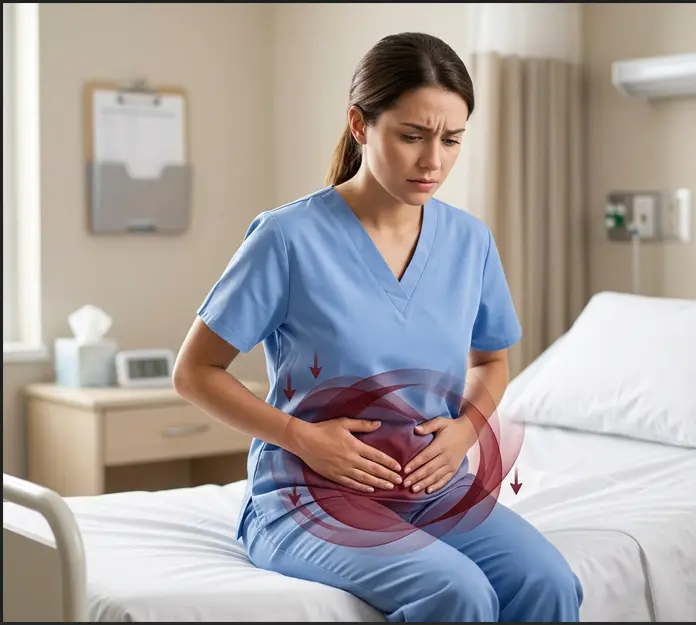
If your period cramps leave you unable to work, sleep, eat, focus, or get out of bed, you’re probably wondering whether what you’re experiencing is normal.
The short answer: severe period pain is not something you should simply accept.
Many people experience mild to moderate cramping during menstruation. However, pain that causes vomiting, fainting, missed workdays, or prevents normal daily activities may signal an underlying issue that deserves medical attention.
While social media often jokes about periods feeling like a monthly battle, unbearable menstrual cramps are not a joke. In some cases, they may point to conditions that require diagnosis and treatment.
Understanding what causes severe cramps can help you find relief and determine when it’s time to seek medical advice.
Quick Answer
Unbearable period cramps may be caused by high prostaglandin levels, but they can also be linked to conditions such as endometriosis, adenomyosis, uterine fibroids, pelvic inflammatory disease (PID), or cervical stenosis. If menstrual pain regularly disrupts your daily life, worsens over time, or does not improve with pain relief methods, medical evaluation is recommended.
What Causes Period Cramps?
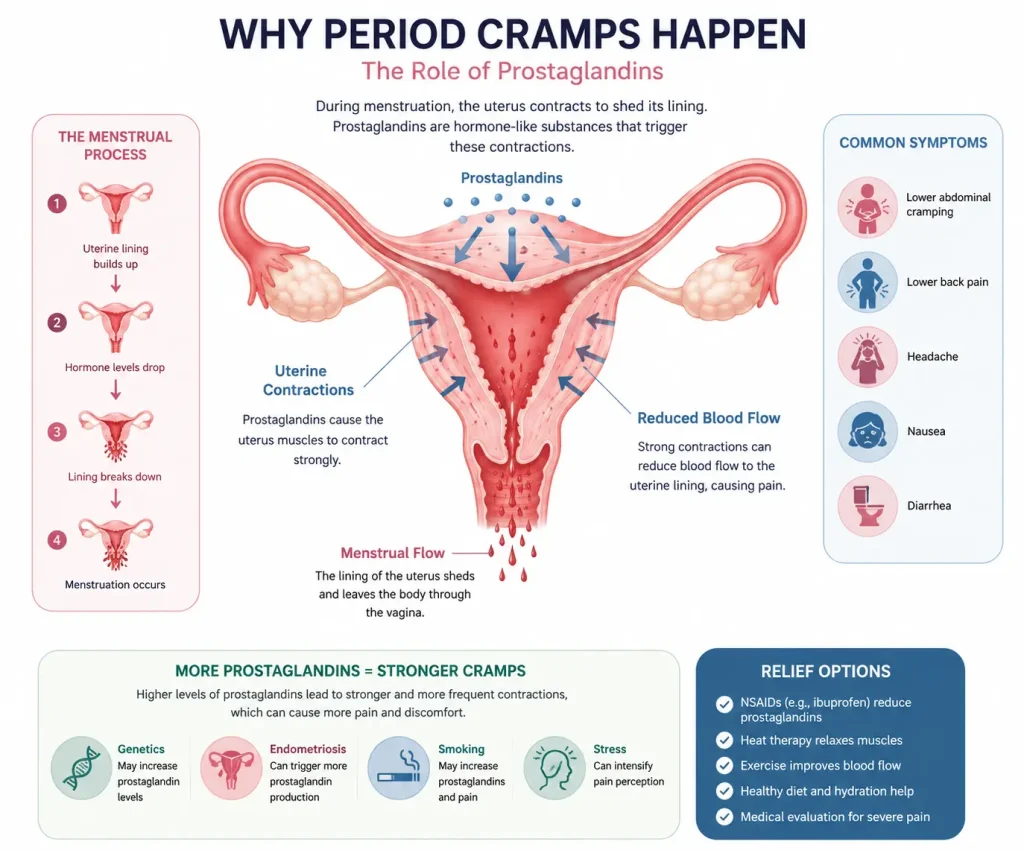
Doctors call painful menstrual cramps dysmenorrhea.
During menstruation, the uterus contracts to shed its lining. These contractions are triggered by hormone-like chemicals called prostaglandins.
Higher levels of prostaglandins can cause stronger uterine contractions, reduced blood flow to uterine tissue, and increased pain.
For many people, cramps may also come with:
- Lower back pain
- Thigh pain
- Nausea
- Vomiting
- Diarrhea
- Headaches
- Fatigue
- Dizziness
Mild discomfort can be normal. Pain that consistently disrupts your life is not.
Primary vs. Secondary Dysmenorrhea
Understanding the type of menstrual pain you have can help identify the cause.
Primary Dysmenorrhea
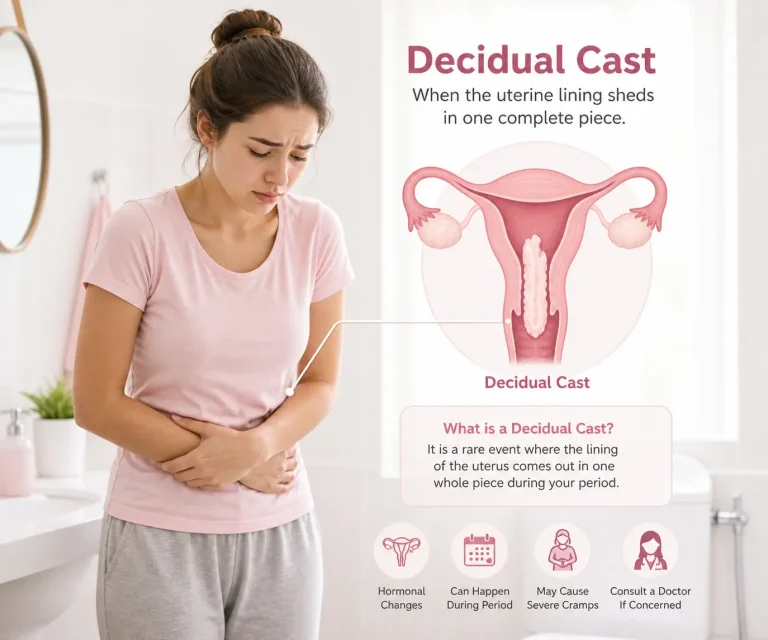
Primary dysmenorrhea refers to menstrual pain that is not caused by an underlying medical condition.
It often begins during the teenage years and is mainly linked to elevated prostaglandin levels.
Symptoms usually appear shortly before or at the start of menstruation and improve within a few days.
Secondary Dysmenorrhea
Secondary dysmenorrhea occurs when another health condition causes menstrual pain.
This type of pain often develops later in life and may become progressively worse over time.
The cramps may begin several days before bleeding starts and continue after the period ends.
Why Are My Period Cramps So Painful?
High Prostaglandin Levels
Some individuals naturally produce higher levels of prostaglandins during menstruation.
More prostaglandins usually mean stronger contractions and more pain.
This is one of the most common reasons why one person experiences mild cramps while another feels completely incapacitated.
Heavy Menstrual Flow
Heavy periods often require the uterus to contract more forcefully to expel blood and tissue.
These stronger contractions may contribute to increased pain and discomfort.
Genetics
If your mother, sisters, or close relatives experienced severe menstrual pain, you may have a higher likelihood of experiencing it as well.
Smoking
Research has identified smoking as a risk factor for painful periods.
Smoking may affect circulation and increase inflammation, potentially worsening symptoms.
Medical Conditions That Can Cause Unbearable Period Cramps
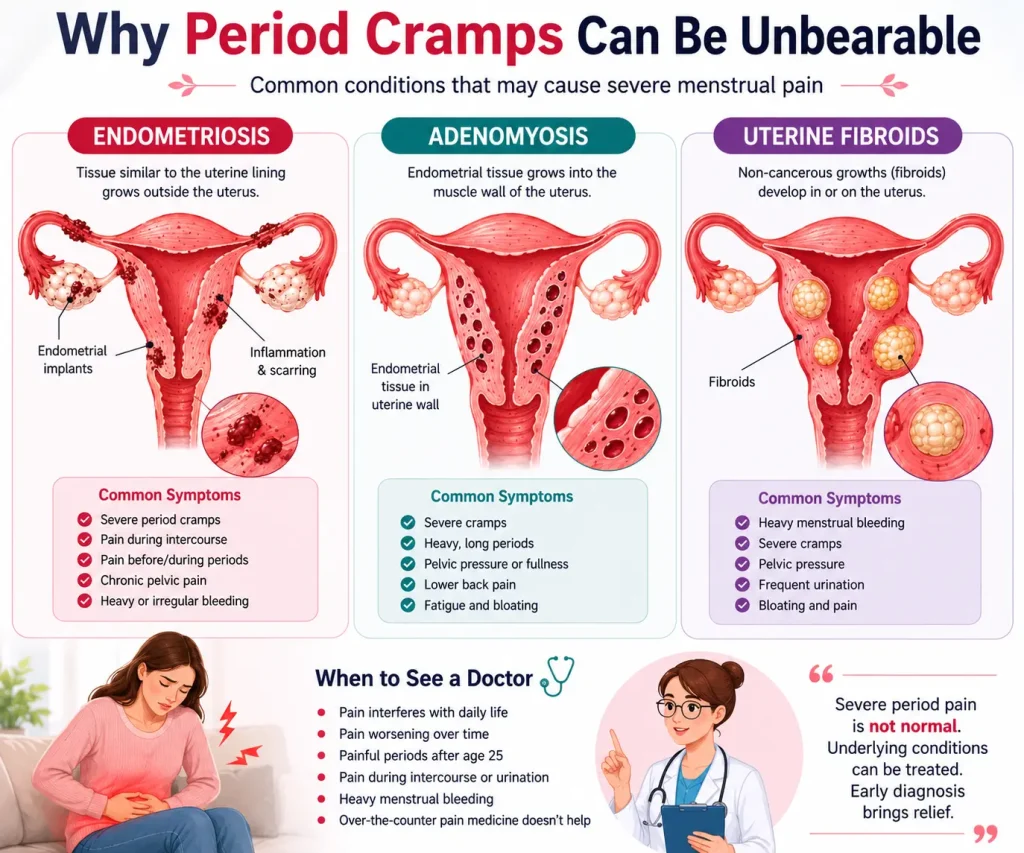
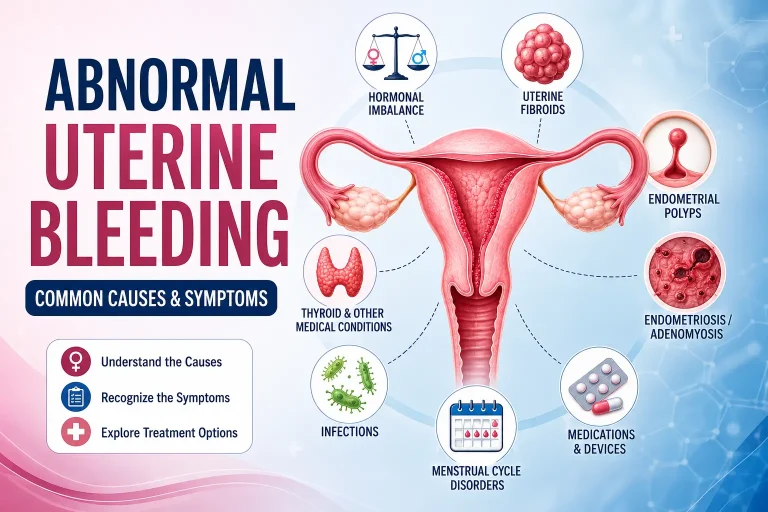
Endometriosis
Endometriosis occurs when tissue similar to the uterine lining grows outside the uterus.
This tissue can cause inflammation, scarring, and severe pelvic pain.
Many women with endometriosis describe their cramps as significantly worse than typical period pain.
Adenomyosis
Adenomyosis develops when tissue that normally lines the uterus grows into the muscular wall of the uterus.
This condition often causes:
- Severe cramps
- Heavy bleeding
- Pelvic pressure
- Longer menstrual periods
Uterine Fibroids
Fibroids are noncancerous growths that develop in or around the uterus.
Some cause no symptoms, while others may trigger:
- Heavy bleeding
- Pelvic pressure
- Severe cramping
- Frequent urination
Pelvic Inflammatory Disease (PID)
PID is an infection affecting the female reproductive organs.
In some cases, it can lead to chronic pelvic pain and painful menstruation.
Cervical Stenosis
A narrow cervical opening can restrict menstrual flow.
This restriction may increase pressure inside the uterus and contribute to more painful cramps.
Why Are My Period Cramps Getting Worse With Age?
Many people notice their periods becoming more painful over time.
While primary dysmenorrhea often improves with age, worsening cramps deserve attention.
Possible reasons include:
- Endometriosis
- Adenomyosis
- Fibroids
- Pelvic infections
- Structural changes within the reproductive system
If your periods were manageable in the past but have become significantly more painful, schedule an appointment with a healthcare provider.
A noticeable increase in pain can sometimes signal an underlying condition that was not present earlier in life.
Can You Have Severe Cramps With a Light Period?
Yes.
Many people assume severe cramps must always come with heavy bleeding, but that isn’t necessarily true.
You may experience intense menstrual pain even if your flow is relatively light.
Possible explanations include:
- Endometriosis
- Cervical stenosis
- Increased sensitivity to prostaglandins
- Individual differences in pain perception
If severe pain occurs month after month regardless of flow volume, it is worth discussing with a healthcare professional.
Why Do Period Cramps Cause Nausea, Diarrhea, and Back Pain?
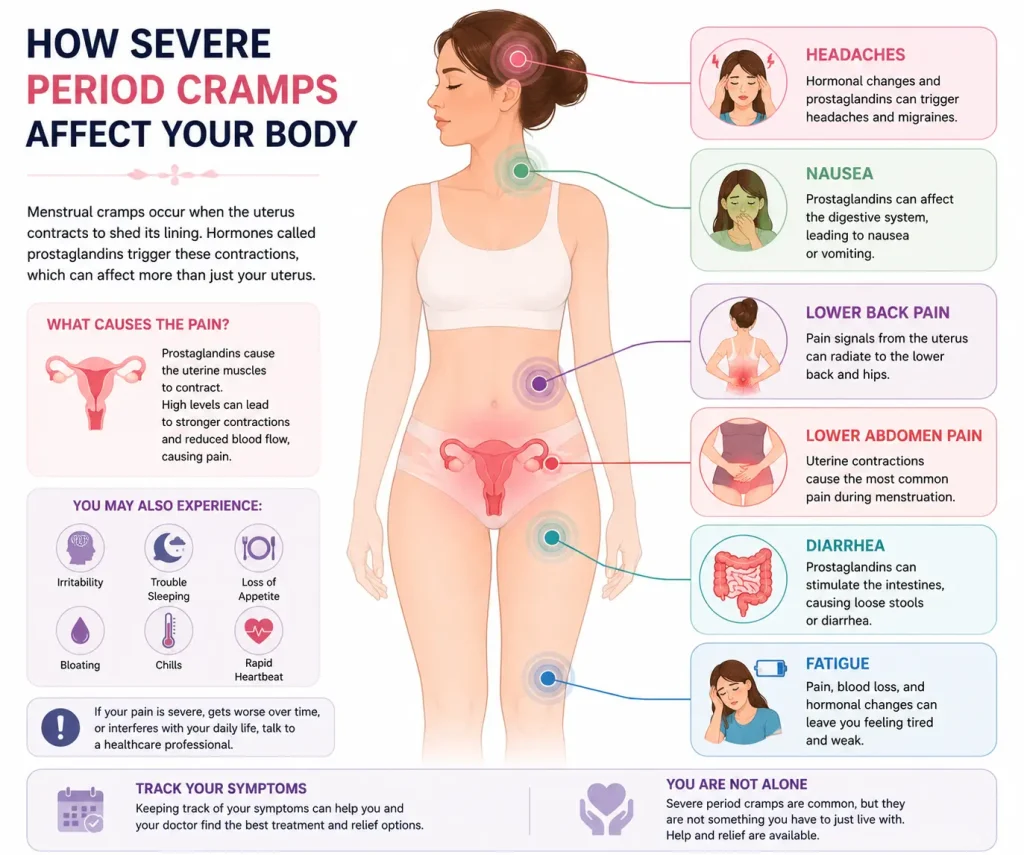
Period Cramps and Related Symptoms:
| Symptom | Explanation |
|---|---|
| Nausea | High prostaglandin levels may affect the digestive system. |
| Vomiting | Severe pain and hormonal activity can trigger vomiting. |
| Diarrhea | Prostaglandins can stimulate bowel contractions. |
| Lower Back Pain | Pain signals from the uterus may radiate to the lower back. |
| Headaches | Hormonal fluctuations during menstruation may contribute. |
| Dizziness | Pain, heavy bleeding, or hormonal changes may play a role. |
This surprises many people.
Period cramps don’t only affect the uterus.
Prostaglandins can influence other parts of the body as well.
Nausea and Vomiting
High prostaglandin levels may affect the digestive system and contribute to nausea or vomiting.
Diarrhea
Prostaglandins can stimulate the intestines, which helps explain why some people spend more time in the bathroom during their period than they planned.
Lower Back Pain
Nerves connected to the uterus can cause pain to radiate into the lower back and legs.
This referred pain is common during menstruation.
Can Period Cramps Feel Like Contractions?
In some cases, yes.
Both labor contractions and menstrual cramps involve uterine muscle contractions.
The intensity differs significantly, but the biological mechanism is similar.
This is why some people describe severe menstrual cramps as feeling like mini contractions.
That comparison may sound dramatic, but for individuals with conditions such as endometriosis or adenomyosis, the pain can be genuinely intense.
Signs Your Period Pain May Not Be Normal
Normal vs Concerning Period Cramps
| Typical Period Cramps | Concerning Symptoms |
|---|---|
| Mild to moderate pain | Severe pain that prevents daily activities |
| Improves with rest or medication | Does not improve with pain relief |
| Lasts 1–3 days | Persists throughout the cycle |
| Occurs mainly during menstruation | Pain between periods |
| Does not affect work or school | Causes missed work, school, or social events |
| Stable over time | Becomes worse each year |
Consider speaking with a healthcare professional if:
- Pain causes you to miss work or school
- You cannot complete normal daily activities
- Over-the-counter medications provide little relief
- Your cramps worsen each year
- You experience extremely heavy bleeding
- Severe pain begins after age 25
- You experience pain between periods
- You regularly vomit because of menstrual pain
Pain should not control your schedule every month.
How to Relieve Severe Period Cramps
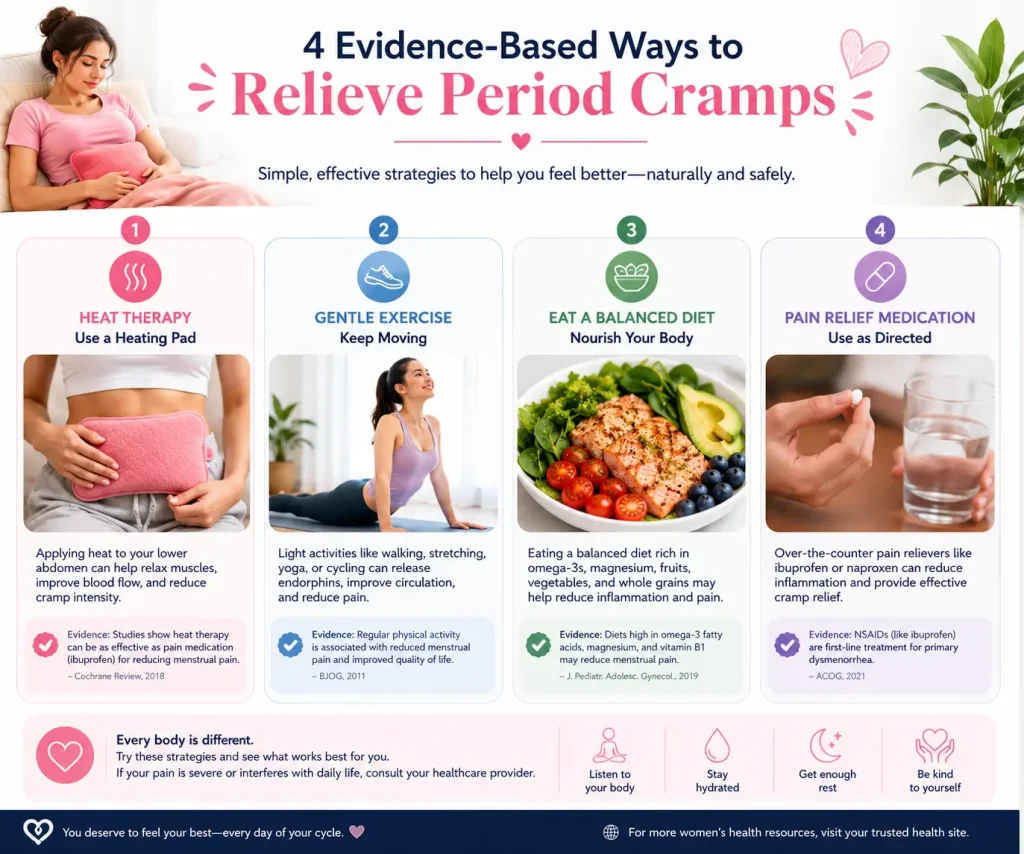
NSAIDs
Medications such as ibuprofen and naproxen help reduce prostaglandin production.
For many individuals, they provide significant symptom relief.
These medications often work best when taken early, before pain becomes severe.
Heat Therapy
Heating pads, hot water bottles, and warm baths may help relax muscles and reduce cramping.
Many studies have found heat therapy to be an effective non-drug option for menstrual pain relief.
Regular Physical Activity
Exercise may not feel appealing during painful periods, but regular physical activity may help reduce menstrual pain severity in some individuals.
Even light movement, stretching, or walking can be beneficial.
Stress Management
Stress does not directly cause menstrual cramps.
However, stress can influence how pain is perceived and experienced.
Activities such as walking, meditation, deep breathing, or adequate sleep may help improve overall comfort.
Healthy Eating Habits
A nutrient-rich diet that includes fruits, vegetables, whole grains, and lean protein supports overall health.
While no specific diet eliminates period cramps, healthy eating patterns may help reduce inflammation and support general well-being.
Medical Treatment
When an underlying condition such as endometriosis, fibroids, or adenomyosis causes pain, treatment should focus on the root cause rather than symptom management alone.
When Are Period Cramps an Emergency?
Most menstrual cramps are not emergencies.
However, seek urgent medical care if you experience:
- Sudden severe pelvic pain
- Fainting or loss of consciousness
- Extremely heavy bleeding
- Fever alongside pelvic pain
- Severe pain during pregnancy
- Symptoms that feel dramatically different from your usual cycle
These symptoms may indicate a condition requiring immediate medical attention.
When to Call a Doctor About Period Cramps
- ✓ Your cramps prevent you from working or attending school
- ✓ Pain medications no longer provide relief
- ✓ Your symptoms become worse each month
- ✓ You experience severe nausea or vomiting
- ✓ You have unusually heavy bleeding
- ✓ Severe pain starts suddenly or feels different from your usual cycle
- ✓ You experience pain between periods
Many people live with severe menstrual pain for years before receiving a diagnosis.
Getting evaluated earlier may help you identify the cause and find effective treatment options.
Key Takeaways
- Severe period cramps are not always normal and may signal an underlying condition.
- High prostaglandin levels are a common cause of painful menstrual cramps.
- Endometriosis, adenomyosis, fibroids, and PID can contribute to severe menstrual pain.
- Nausea, diarrhea, and lower back pain can occur because prostaglandins affect other parts of the body.
- Medical evaluation is recommended if period pain interferes with work, school, sleep, or daily activities.
- Sudden severe pain, fainting, fever, or unusually heavy bleeding may require urgent medical attention.
Final Thoughts
Mild period cramps are common. Unbearable period cramps are not something you should ignore.
While prostaglandins often explain ordinary menstrual pain, severe cramps can sometimes signal conditions such as endometriosis, adenomyosis, fibroids, pelvic inflammatory disease, or other reproductive health concerns.
If your periods regularly prevent you from living your normal life, listening to your body is important.
You don’t have to accept severe pain as a normal part of menstruation. Understanding the cause is the first step toward finding relief and improving your quality of life.
Frequently Asked Questions
Why are my period cramps suddenly unbearable?
Sudden changes in menstrual pain can sometimes result from conditions such as endometriosis, fibroids, adenomyosis, infections, or other reproductive health issues. New or worsening symptoms should be evaluated by a healthcare professional.
Is it normal to throw up from period cramps?
Severe cramps can sometimes cause nausea and vomiting because of elevated prostaglandin levels. However, frequent vomiting during menstruation should be discussed with a healthcare provider.
Why do my cramps hurt more than my friends’?
Everyone produces different levels of prostaglandins and experiences pain differently. Underlying conditions may also contribute to unusually severe menstrual pain.
Can severe cramps happen every month?
Yes. Conditions such as endometriosis and adenomyosis often cause recurring severe pain during multiple menstrual cycles.
Medical Disclaimer: This article is for educational purposes only and does not replace professional medical advice, diagnosis, or treatment.
Medical Review Note: This content is based on guidance and information from Mayo Clinic, Johns Hopkins Medicine, and the American College of Obstetricians and Gynecologists (ACOG).