Decidual Cast Period: Is It Normal or Something Serious?
Is a Decidual Cast During a Period Normal?
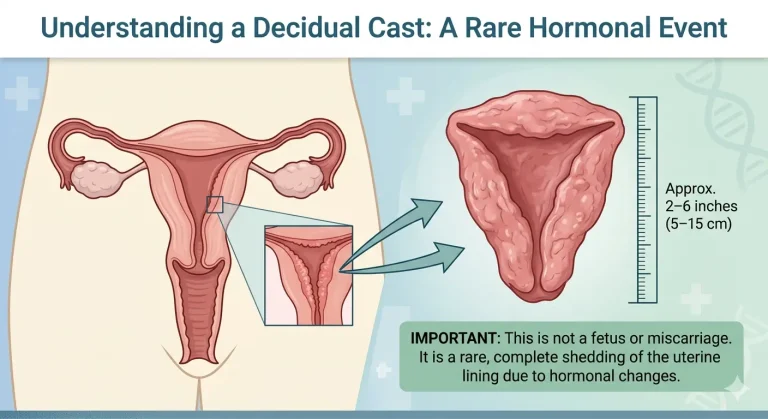
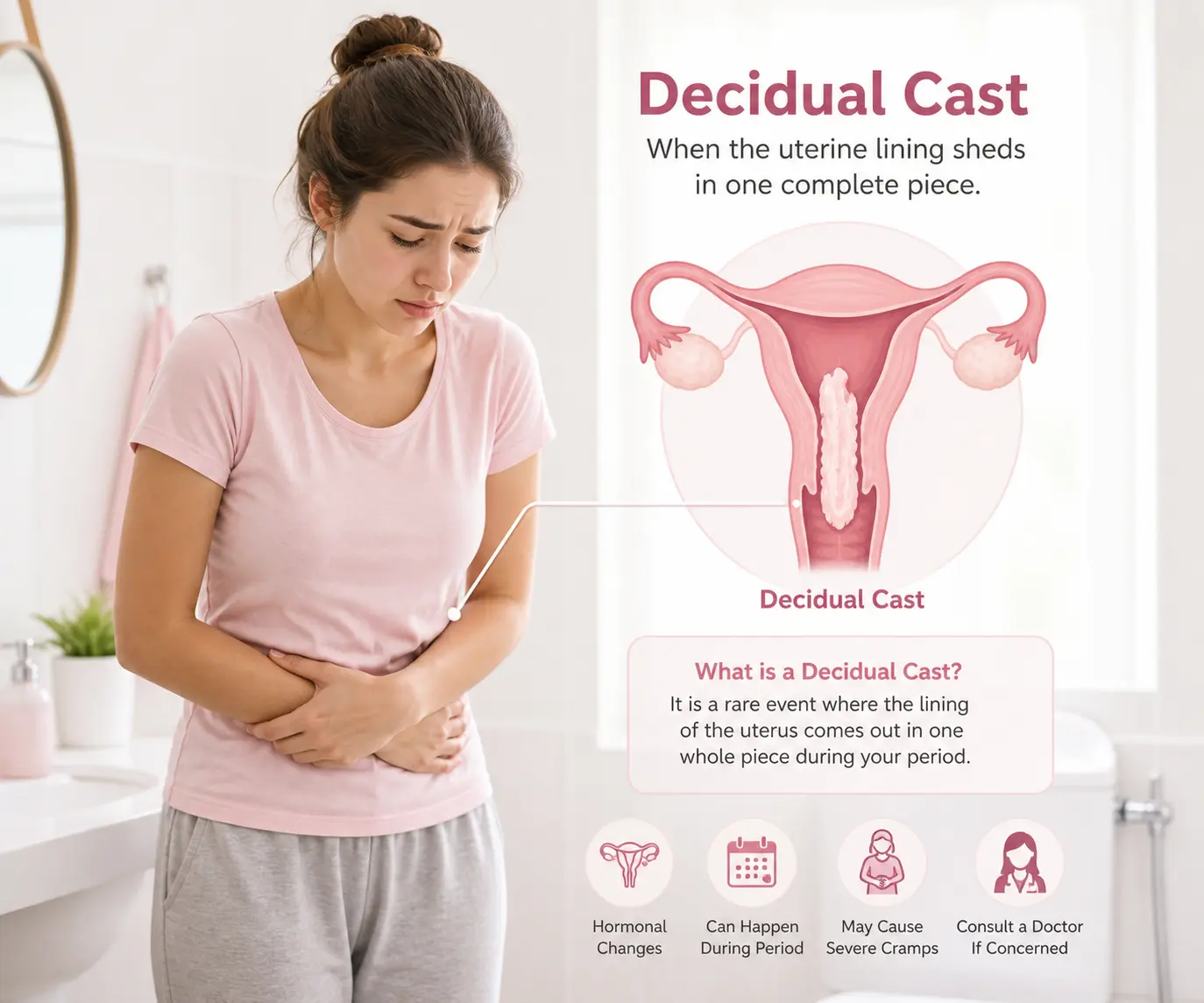
A decidual cast during your period is not considered normal. It is a rare event where the uterine lining sheds in one complete piece instead of gradually. It is usually linked to hormonal changes and may cause severe cramping.
You’re in the middle of your period, expecting the usual flow. But then something unexpected happens. You pass a large piece of tissue, not just blood. It looks different. It feels different. And honestly, it can be scary. Many people panic in that moment. Thoughts like “Is this normal?”, “Is this a miscarriage?”, or “Should I be worried?” start rushing through your mind.
I’ve seen this confusion again and again while researching and writing about menstrual health. Many women describe it as one of the most shocking experiences during their period. This is often called a decidual cast period, even though it is not a medical term. In this guide, I’ll walk you through what it really means, why it happens, and how you can understand your body without fear.
Quick Takeaways
- A decidual cast is when the uterine lining sheds in one whole piece.
- It can happen during your period, but it is not a normal menstrual event.
- It is often linked to hormonal changes, especially progesterone.
- It may cause severe cramps and sudden pain.
- It is usually not dangerous, but medical advice is important if symptoms are severe.
What Is a Decidual Cast Period?
Decidual cast period refers to passing a decidual cast around the time of your period.
It happens when the uterine lining comes out in one whole piece.
This lining is the inner layer of the uterus.
In a normal period:
- The lining breaks slowly
- Blood flows over a few days
In a decidual cast:
- The lining comes out all at once
- It may look like a solid shape
If you want full detail, read this guide about unusual tissue shedding on your main decidual cast page.
Can a Decidual Cast Happen During Your Period?
A decidual cast can happen around the time of your period, but it is not considered a normal menstrual event. It occurs when the uterine lining sheds in one complete piece instead of gradually. This is usually linked to hormonal changes, especially progesterone levels, and it can cause severe cramping and discomfort.
Is a Decidual Cast a Period or Something Else?
This is very important to understand.
A decidual cast is not the same as a normal period.
- A period = slow shedding
- A decidual cast = sudden shedding
So even if it happens during your period time, it is a different event.
Decidual Cast vs Normal Period
Let’s make it very clear:
| Feature | Decidual Cast | Normal Period |
|---|---|---|
| Shedding | All at once | Gradual |
| Appearance | Solid tissue piece | Blood and small clots |
| Pain | Severe cramps | Mild to moderate |
| Frequency | Rare | Monthly |
So if you’re thinking, “Is this just a heavy period?” — the answer is no. It’s different.
When Can a Decidual Cast Happen in Your Cycle?
This is something many websites do not explain clearly, but it is very important.
A decidual cast can happen at different times in your menstrual cycle. It does not follow one fixed pattern.
Before your period, you may start to feel cramps, just like normal period pain. But instead of bleeding first, the cast may pass before your period fully begins. This can feel sudden and confusing.
During your period, it often happens on the first or second day. The pain is usually much stronger than normal period cramps. Many people feel intense pressure, and then the tissue passes all at once.
After your period, it is less common, but it can still happen. This usually occurs when your hormones change suddenly, even after your regular bleeding has ended.
Why Does a Decidual Cast Happen During a Period?
Now you might be thinking,
“Why did this happen to me?”
That’s a very normal question.
There are a few common reasons behind a decidual cast period, and most of them are linked to how your body handles hormones.
First, hormonal imbalance plays a big role. When hormones like progesterone suddenly rise or drop, your body may react in an unusual way. Instead of shedding the uterine lining slowly, it may release it all at once.
Second, birth control can affect your cycle. Some contraceptives change how the uterine lining grows and sheds. This can sometimes lead to a decidual cast.
Another reason is a sudden drop in hormones. When hormone levels fall quickly, it can trigger abnormal menstrual shedding instead of a normal period flow.
Lastly, underlying health conditions may also be involved. In some cases, reproductive health issues can affect how your uterus behaves.
In simple words, your body receives a signal to shed everything at once instead of slowly, which leads to a decidual cast.
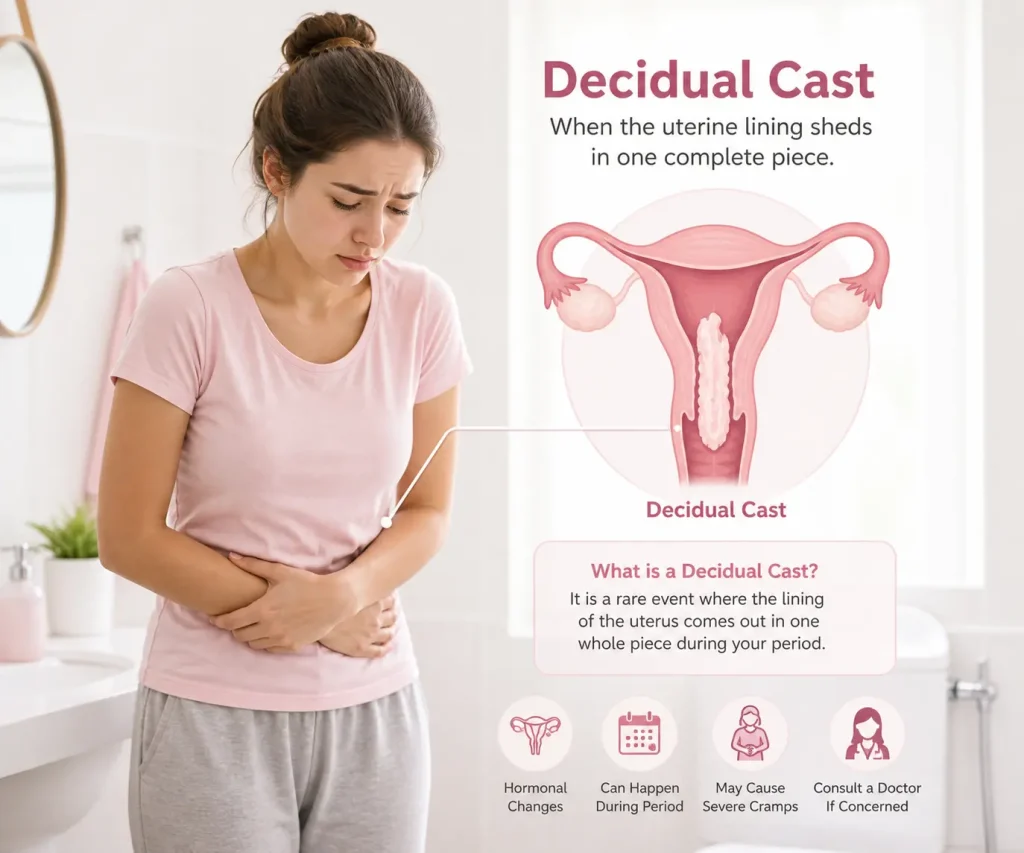
Symptoms of a Decidual Cast During Menstruation
Let’s talk about what you might feel.
- Severe cramping (stronger than normal period pain)
- Passing a large tissue-like piece
- Heavy bleeding for a short time
- Sudden pressure or discomfort
Many people say:
“The pain was intense, then suddenly it was gone after passing it.”
What Happens After a Decidual Cast?
- Pain usually stops after the tissue passes
- Light bleeding may continue for a short time
- Your next period is often normal
- Most people recover without complications
Is It a Decidual Cast or Something Else?
This is where most confusion happens.
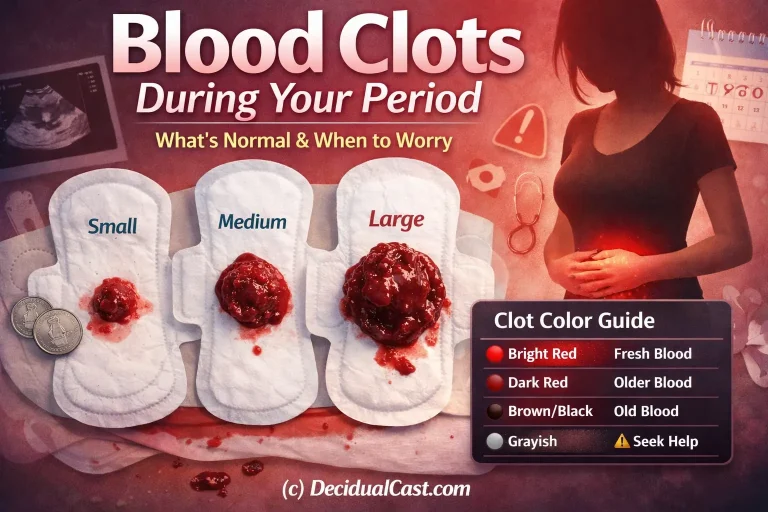
Decidual Cast vs Blood Clot
Blood clots:
- Soft and shapeless
- Break apart easily
Decidual cast:
- Firm and structured
- May look like a shape
If you’re confused between heavy bleeding or clots, your detailed comparison post will help you understand clearly.
Decidual Cast vs Miscarriage
This is a sensitive topic.
- Miscarriage involves pregnancy tissue
- Decidual cast is just the uterine lining
When Should You Be Concerned?
Let’s be practical.
You don’t need to panic immediately, but you should be careful if:
- Pain is extremely severe
- It happens again and again
- You feel dizzy or weak
- You suspect pregnancy
In these cases, it’s better to consult a doctor
When to Seek Medical Help
- Severe or unbearable pain
- Heavy bleeding that does not stop
- Dizziness or weakness
- Repeated episodes of decidual cast
- Possible pregnancy or miscarriage concerns
What Should You Do If This Happens?
If you pass a decidual cast:
- Stay calm (I know it’s scary, but it’s usually not dangerous)
- Track your symptoms
- Take rest if cramps are strong
- Seek medical advice if unsure
Related Topics You Should Read
Final Thoughts
If you’ve gone through a decidual cast during your period, I understand how intense and confusing it can feel. It’s not just physical pain, but also emotional stress. Seeing something unusual from your body can make you question everything. But in most cases, a decidual cast is linked to hormonal changes and is not dangerous.
From what I’ve studied and explained in this guide, the most important thing is awareness. When you understand what your body is doing, the fear becomes easier to manage. Still, every body is different. If something feels off or happens more than once, it’s always a smart choice to talk to a healthcare professional. Your health matters, and paying attention to these signs is a step toward taking better care of yourself.
FAQs
Is a decidual cast just a heavy period?
No. A heavy period still involves gradual shedding, while a decidual cast is when everything comes out at once.
Can a decidual cast happen during menstruation?
Yes, it can happen around your period, but it is rare and not considered normal.
Why did I pass a large piece of tissue during my period?
It could be a decidual cast or a clot. A decidual cast is usually more structured and solid.
Is a decidual cast dangerous?
Usually not dangerous, but it can be painful. If symptoms are severe, check with a doctor.
How do I know if it’s a miscarriage or decidual cast?
It’s hard to tell without medical help. If there is any doubt, always consult a doctor.