PMS Cycle Calculator
Estimate your PMS window, ovulation, fertile days, and next period with a medically mindful menstrual cycle calculator designed for fast mobile use and accessible tracking.
Calculate PMS Now
Enter your cycle data and get estimated PMS dates, ovulation timing, and period prediction.
What is PMS?
Premenstrual Syndrome (PMS) is a cluster of symptoms that can occur during the luteal phase of the menstrual cycle, after ovulation and before menstruation. Hormonal changes in progesterone and estrogen influence the uterus and endometrium, which can affect mood, digestion, energy, and physical comfort.
- PMS is linked to cyclical hormone shifts after ovulation and before the next period.
- Symptoms often peak in the late luteal phase and improve once menstruation begins.
- PMS is different from menstruation itself; menstruation is the shedding of the uterine lining, while PMS describes the pre-period symptom window.
How does this PMS calculator work?
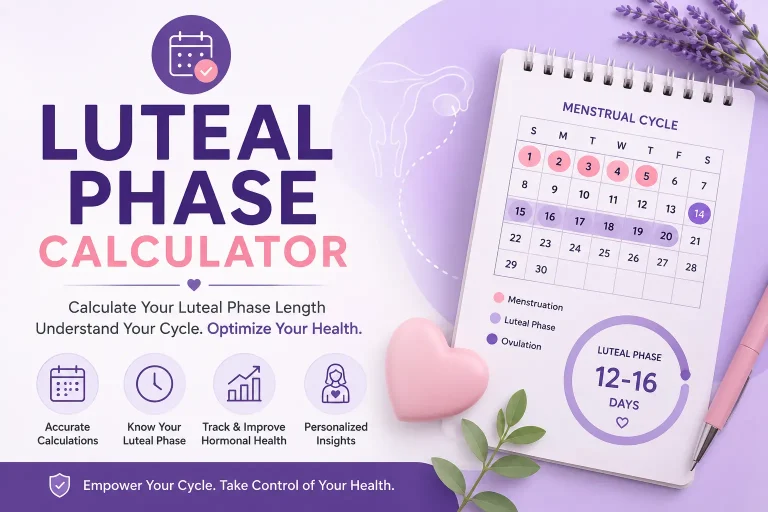
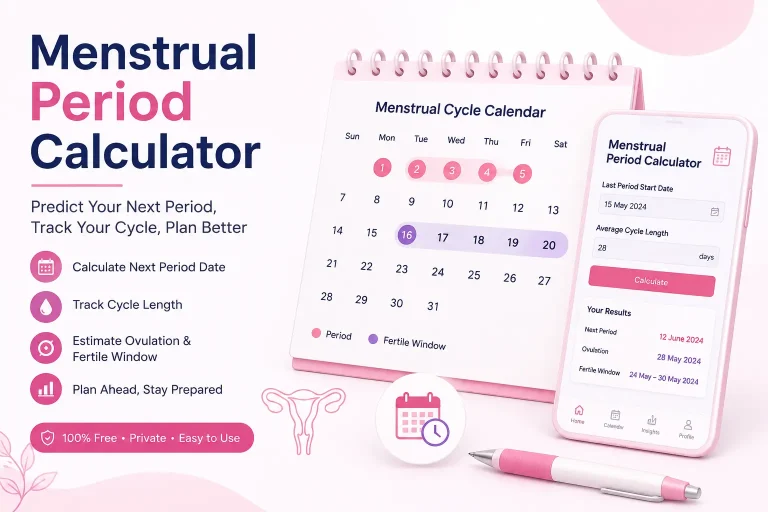
This tool estimates your cycle timing by using your last period start date, average cycle length, and luteal phase length. The calculator predicts ovulation, the fertile window, the next period, and the likely PMS window based on common menstrual cycle patterns.
- Cycle length determines the total number of days between periods.
- Ovulation is estimated by subtracting the luteal phase from the cycle length.
- The fertile window is the five days leading up to ovulation plus the day of ovulation.
- The PMS window is typically estimated as the days before the next period that match the average PMS duration.
These are predictions. If you have irregular cycles, the estimates are less accurate and tracking symptoms or ovulation signs may improve timing.
Common PMS symptoms
Emotional symptoms
- Mood swings
- Anxiety
- Irritability
- Depressed mood
- Food cravings
Physical symptoms
- Breast tenderness
- Bloating
- Acne
- Fatigue
- Sleep changes
- Headaches
- Cramps
When does PMS usually start?
PMS symptoms most commonly begin 5 to 7 days before menstruation. Some people may notice symptoms as early as 10 to 14 days before their period, especially during the luteal phase when progesterone and estrogen fluctuate.
Symptoms often ease shortly after the period begins, though some discomfort may persist into the first days of menstruation.
PMS vs PMDD
PMS
- Mild to moderate symptoms
- Usually manageable with lifestyle changes
- Occurs during the late luteal phase
- Symptoms often improve after menstruation starts
PMDD
- Severe mood and physical symptoms
- May interfere with daily life
- Often requires medical evaluation
- Symptoms are more intense and persistent
What can affect PMS timing?
Several factors can influence when PMS symptoms appear and how severe they feel:
- Stress and emotional health
- Sleep quality and sleep changes
- Diet and hydration
- Exercise habits
- Birth control and hormonal contraception
- Pregnancy and perimenopause
- Polycystic Ovary Syndrome (PCOS)
- Thyroid disorders and certain medications
Tips to reduce PMS symptoms
- Maintain regular exercise and gentle movement.
- Prioritize adequate sleep and stress management.
- Choose balanced nutrition with whole foods and hydration.
- Track symptoms with a menstrual calendar or PMS tracker.
- Talk to a healthcare professional if symptoms are severe.