Decidual Cast and Endometriosis: Is There a Connection?
Decidual Cast and Endometriosis: Is There a Connection?
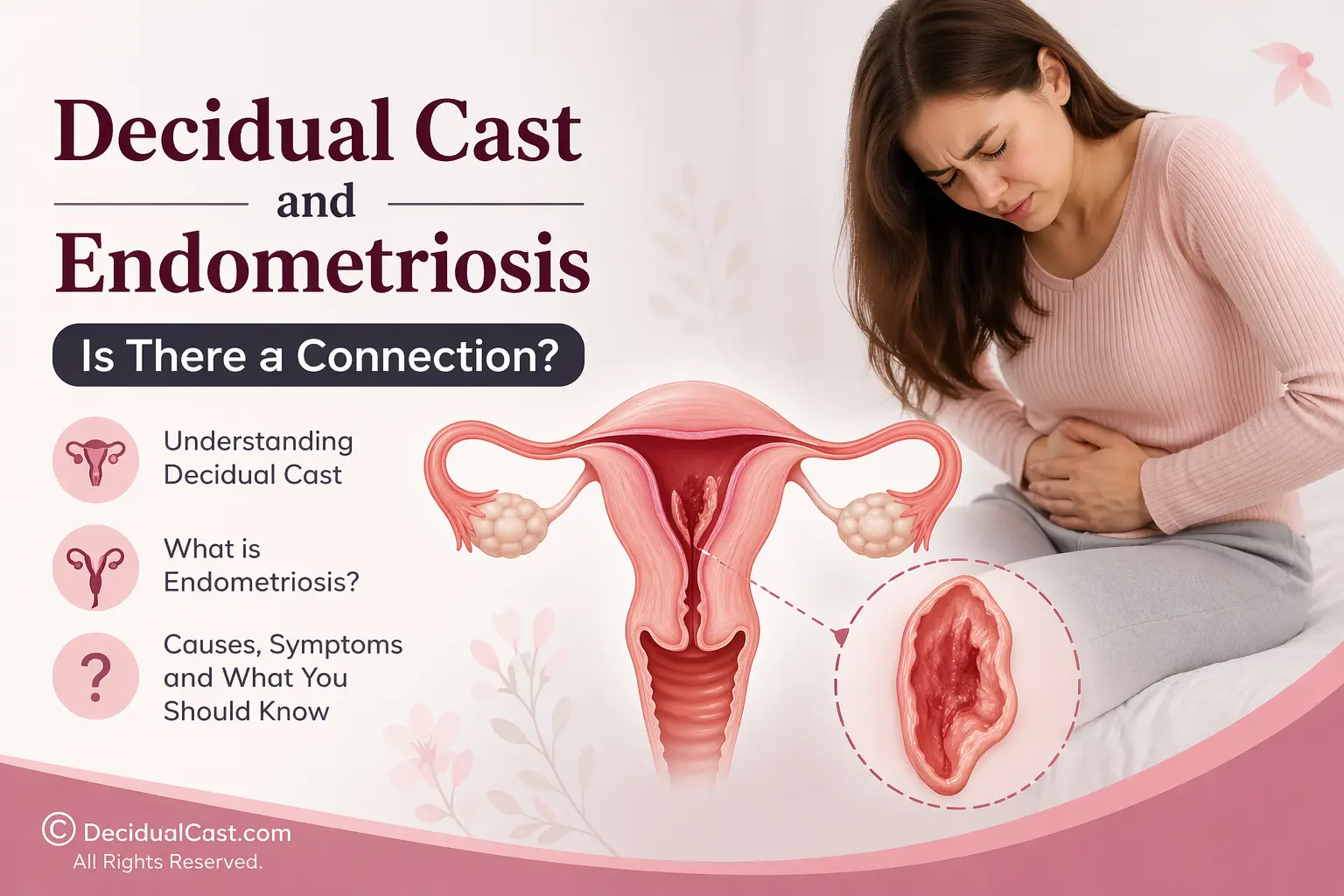
A decidual cast is a rare condition where the uterine lining sheds in one complete piece, often due to hormonal changes. Endometriosis is a separate chronic condition where tissue similar to the uterine lining grows outside the uterus.
There is currently no proven direct medical evidence that endometriosis causes a decidual cast. However, both conditions are influenced by hormonal activity, especially progesterone and estrogen balance, which may create overlapping symptoms in some cases.
In most cases, a decidual cast is linked to hormonal contraceptives or sudden hormonal shifts, while endometriosis is a long-term inflammatory condition requiring medical evaluation.
Key takeaway: The connection is indirect, not causal. Both conditions are hormone-related but clinically different.
A patient comes in and says, “I passed something during my period that didn’t look normal. It wasn’t just blood—it looked like tissue.”, It often starts with confusion and fear.
This is not an uncommon concern in gynaecological practice, yet it is rarely discussed openly. For many women, experiencing something like a Decidual cast can be alarming, especially when it is accompanied by severe cramping and the sudden passage of a solid mass. The first thought is often: “Is something wrong with my body?”
Women who are already aware of Endometriosis may immediately wonder if the two are connected. Others worry about more serious possibilities, such as pregnancy complications or underlying reproductive conditions.
This guide explains the connection in clear, clinical language. It reflects how a gynecologist would explain it—simple, direct, and medically accurate.
Key Takeaways
- A decidual cast is a rare condition where the uterine lining sheds in one piece.
- It is usually linked to hormonal changes, especially progesterone-related shifts.
- There is no proven direct link between endometriosis and decidual cast.
- Most cases are not dangerous but should still be medically evaluated.
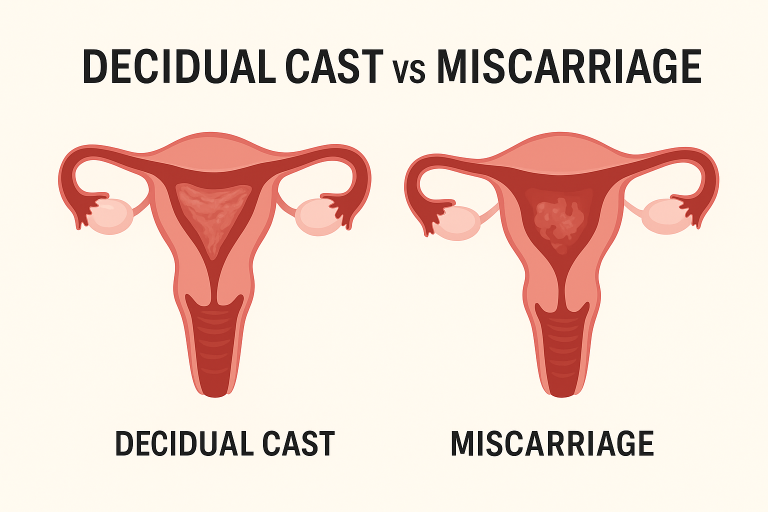
- It can sometimes be confused with miscarriage or pregnancy-related tissue.
What Is a Decidual Cast?
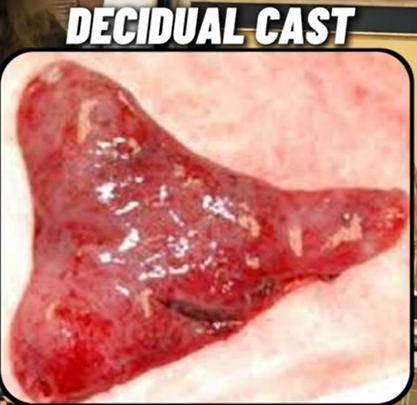
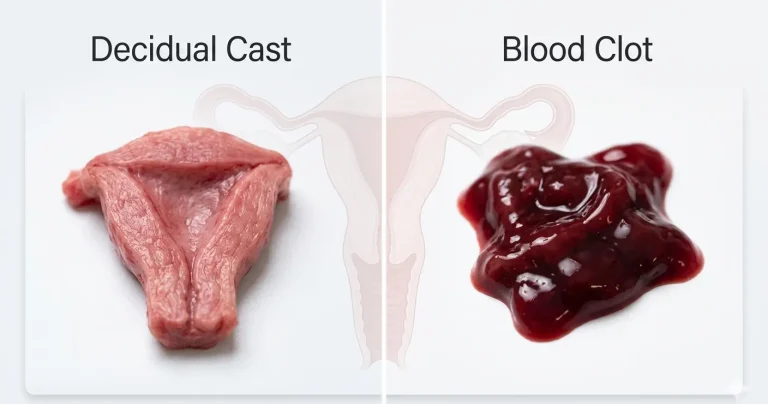
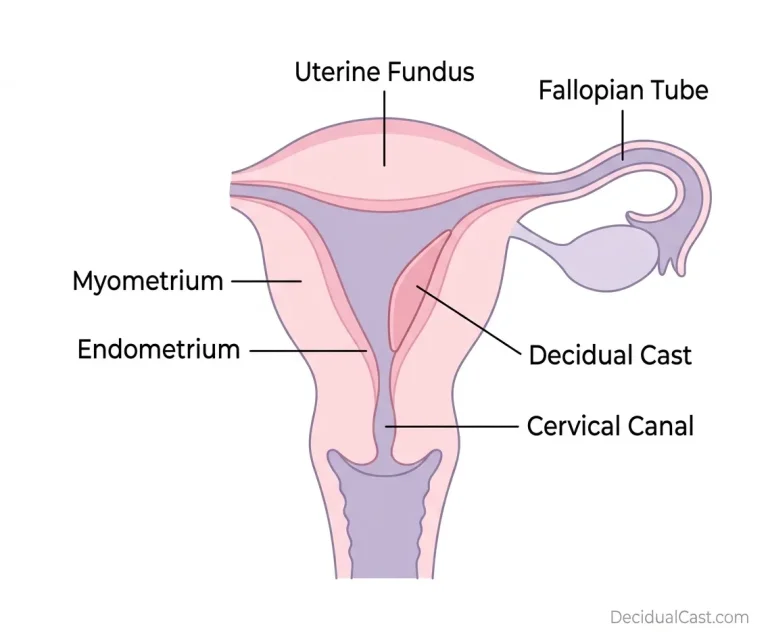
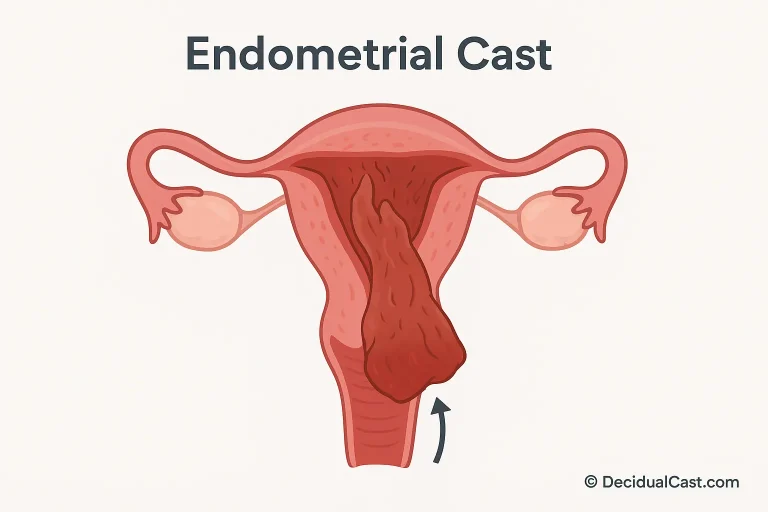
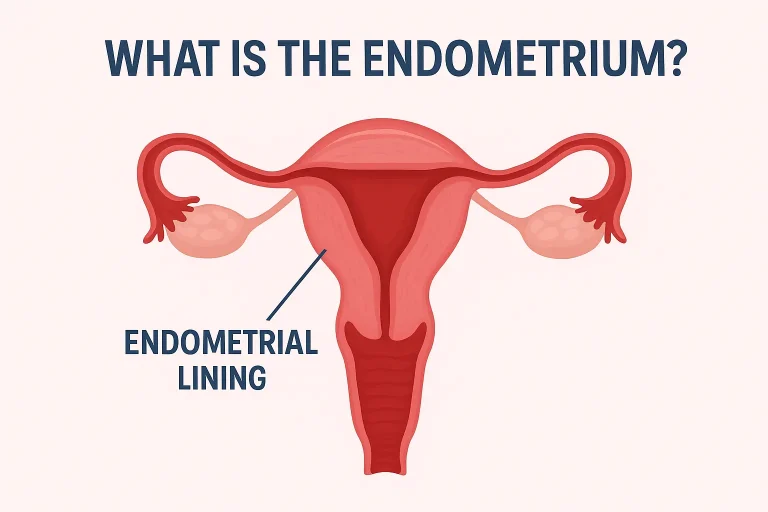
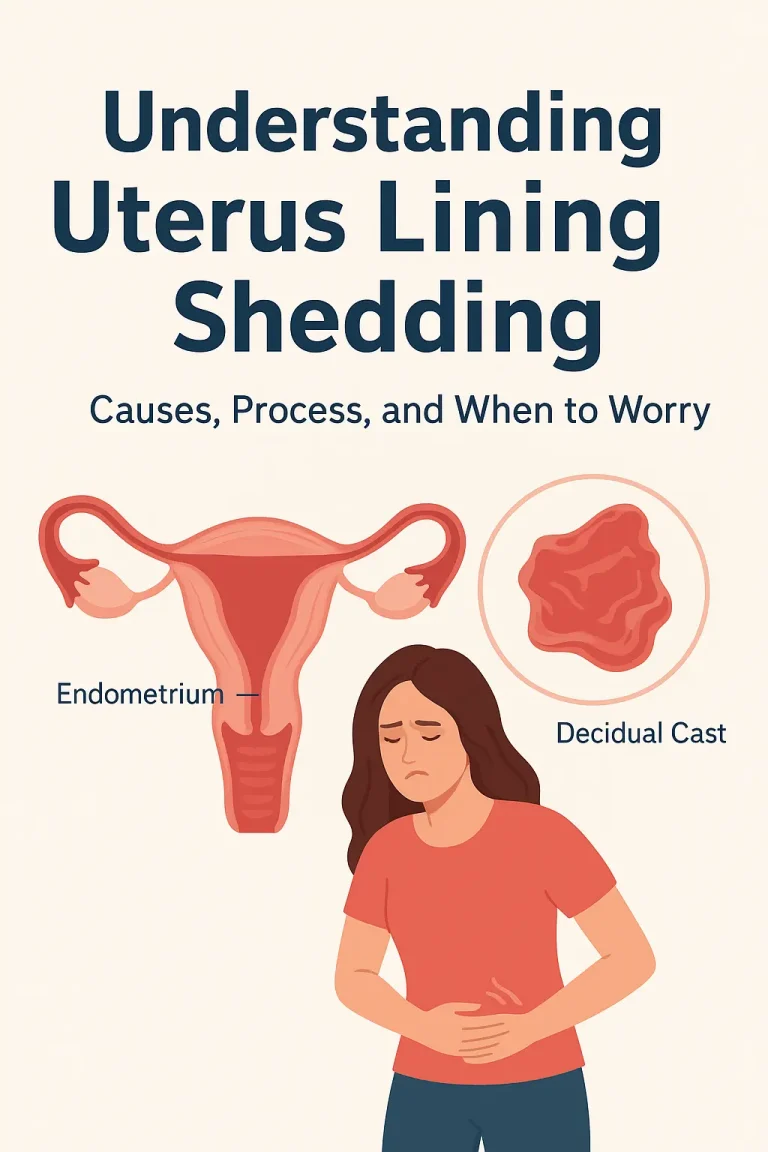
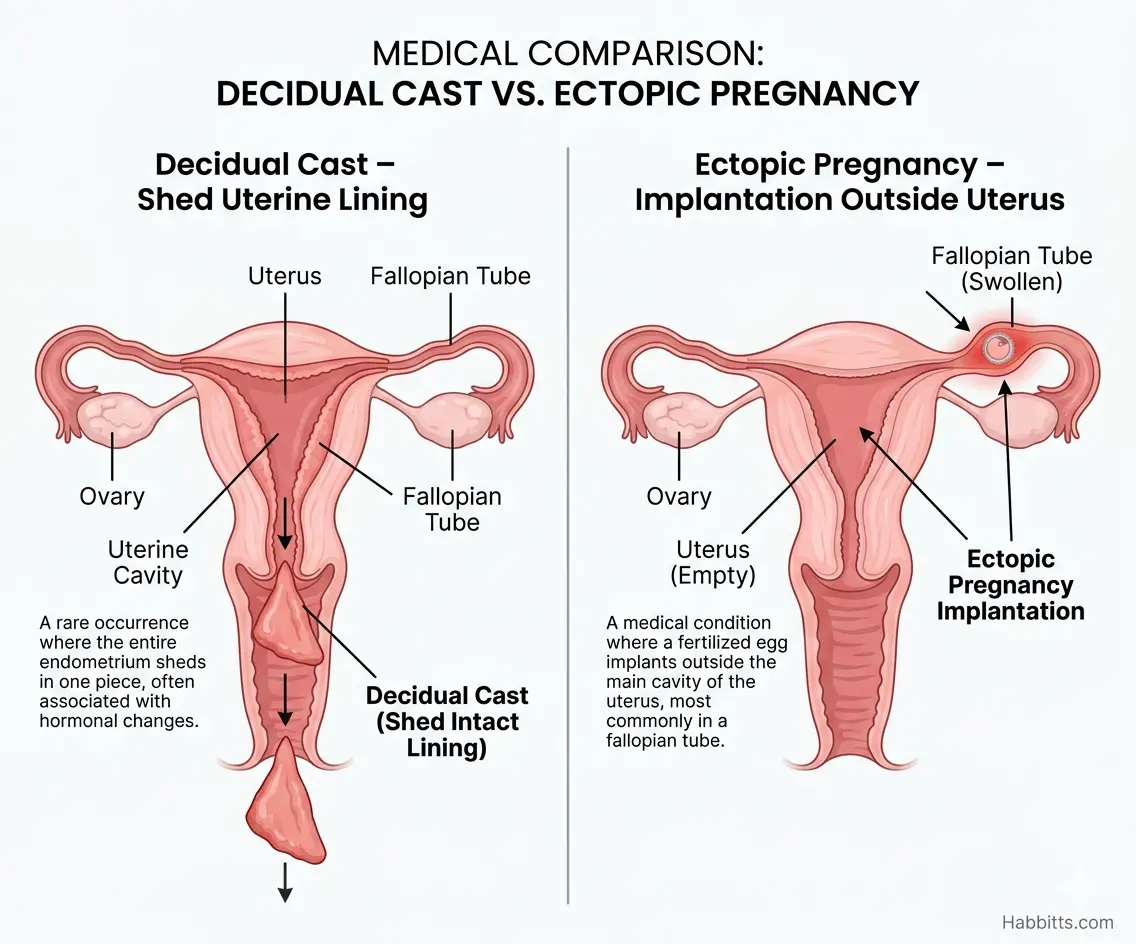
A decidual cast happens when the entire endometrial lining sheds in one piece instead of gradually breaking down during menstruation.
How it forms:
- The uterine lining thickens under progesterone influence
- The tissue becomes dense (decidualized)
- It detaches as a single intact structure
Key features:
- Passage of a fleshy, tissue-like mass
- Severe cramping (dysmenorrhea)
- Relief after the tissue passes
What Is Endometriosis?
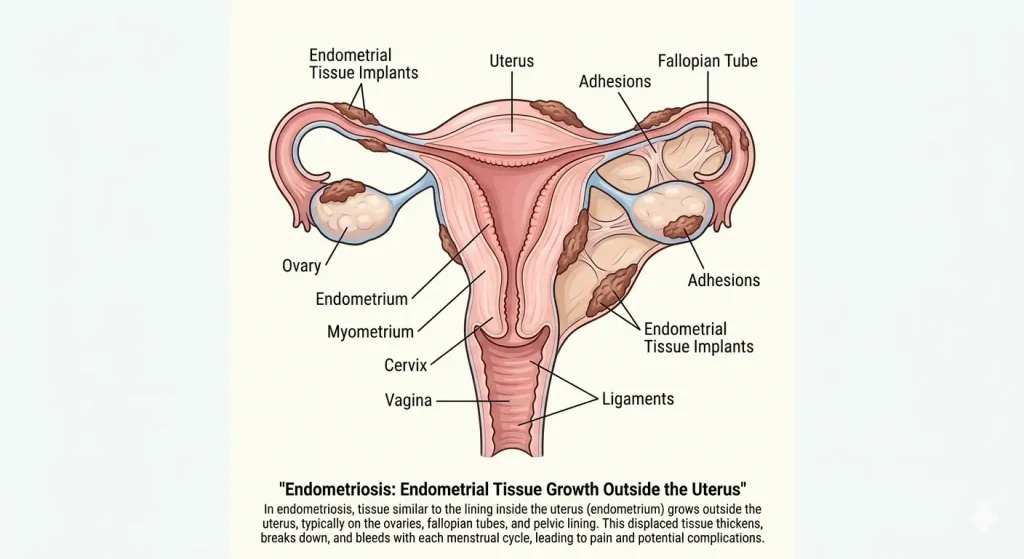
Endometriosis is a condition where tissue similar to the uterine lining grows outside the uterus.
Key mechanisms:
- Hormone-responsive tissue grows in abnormal locations
- Causes inflammation and pain
- Leads to chronic symptoms
Common symptoms:
- Pelvic pain
- Painful periods
- Heavy bleeding
- Fertility issues
Can Endometriosis Cause a Decidual Cast?
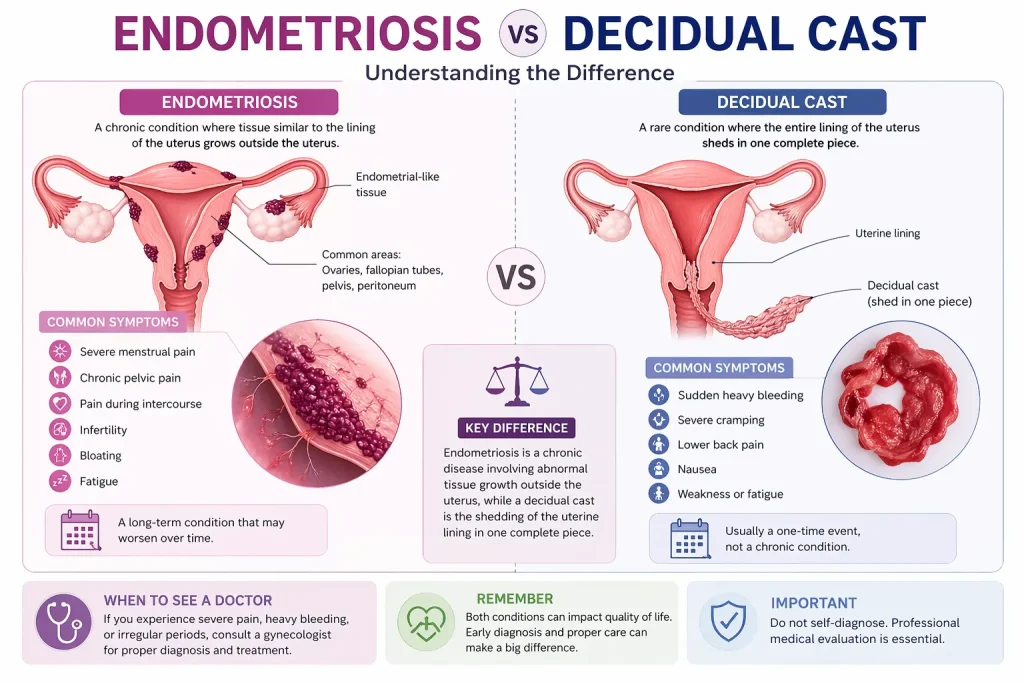
There is currently no clinical evidence that Endometriosis directly causes a Decidual cast.
However:
- Both involve hormonal changes
- Both affect endometrial behavior
Possible connection:
- Hormonal imbalance
- Progesterone sensitivity
- Abnormal shedding patterns
Quick Comparison
Decidual Cast: Sudden, short-term, tissue expulsion event.
Endometriosis: Chronic, long-term inflammatory condition affecting pelvic organs.
Both may involve hormonal sensitivity, but they are clinically different conditions.
Why a Decidual Cast May Occur in Endometriosis Patients
Some patients with endometriosis may still experience a decidual cast due to overlapping factors.
1. Hormonal Therapy
- Birth control pills
- Progesterone treatments
2. Progesterone Fluctuations
- Sudden hormone drop
- Leads to rapid shedding
3. Inflammatory Effects
- Endometriosis creates inflammation
- May disrupt normal uterine function
Symptoms of a Decidual Cast vs Endometriosis
These conditions can feel similar but behave differently.
| Feature | Decidual Cast | Endometriosis |
|---|---|---|
| Duration | Short-term | Chronic |
| Pain | Sudden, intense | Ongoing |
| Tissue passage | Yes | No |
| Cause | Hormonal | Inflammatory |
Additional symptoms:
Decidual Cast:
- Sudden severe cramps
- One-time tissue passage
Endometriosis:
- Long-term pelvic pain
- Pain during intercourse
Is Passing a Decidual Cast a Sign of Endometriosis?
No. Passing a decidual cast is not a confirmed symptom of Endometriosis.
When to investigate further:
- Chronic pelvic pain
- Recurrent menstrual issues
- Fertility concerns
Other Causes of Decidual Cast
A Decidual cast can occur due to several reasons:
- Hormonal contraceptives
- Hormonal imbalance
- Ectopic pregnancy
- Miscarriage
Is a Decidual Cast Dangerous?
In most cases, it is not dangerous.
Seek medical help if:
- Severe pain
- Heavy bleeding
- Pregnancy possibility
- Dizziness or fever
Also It is important to rule out serious conditions like:
How Rare Is a Decidual Cast?
What we know:
- Mostly reported in case studies
- Likely underdiagnosed
- Often linked to hormonal contraceptives
When Should You See a Doctor?
Consult a doctor if you have:
- Severe pain
- Heavy bleeding
- Unusual symptoms
- Pregnancy concerns
Early evaluation ensures safety.
How Doctors Diagnose Endometriosis and Decidual Cast Cases
For Decidual Cast:
- Medical history
- Tissue review
- Ultrasound
For Endometriosis:
- Pelvic exam
- Imaging
- Laparoscopy
Treatment Options If You Have Both Conditions
Decidual Cast:
- Pain relief
- Usually no long-term treatment
Endometriosis:
- Hormonal therapy
- Pain management
- Surgery (if severe)
Can endometriosis cause a decidual cast?
No, there is no proven medical evidence that :contentReference[oaicite:0]{index=0} directly causes a :contentReference[oaicite:1]{index=1}. However, both conditions are influenced by hormonal changes, which may sometimes overlap in symptoms.
Final Thoughts
it is important to separate appearance from diagnosis. While a decidual cast may look alarming, it is most often linked to hormonal changes, particularly those involving progesterone. On the other hand, Endometriosis is a chronic condition with a different underlying mechanism. The two may overlap in hormonal context, but one does not directly cause the other.
As a general rule, if something feels unusual or outside your normal experience, it is always worth discussing with a qualified healthcare provider. Clear answers reduce fear, and early understanding leads to better outcomes.
Your body often gives signals before problems develop further—the key is to recognize them, not fear them.
FAQs
Can endometriosis cause a decidual cast?
No direct link exists. Both are hormone-related, but one does not directly cause the other.
Is passing a decidual cast a symptom of endometriosis?
No. It is not a standard symptom, but overlapping hormonal factors may exist.
Why did I pass tissue like this—could it be linked to endometriosis?
It may be due to hormonal changes. Endometriosis could play an indirect role, but other causes are more common.
Can a decidual cast happen more than once?
Yes, but it is rare.
Is a decidual cast dangerous?
Usually not, but medical evaluation is recommended.
Does it affect fertility?
A decidual cast does not. Endometriosis may affect fertility if untreated.