Womb Lining Shedding: Causes, Symptoms, What’s Normal & When to Seek Medical Care
Medical disclaimer: This article is for educational purposes only and is not a substitute for professional medical advice, diagnosis, or treatment. Always consult a gynecologist or healthcare provider about your specific symptoms.
Womb lining shedding — the medical term is endometrial shedding — is the process behind every menstrual period. For most people, it’s a routine, healthy part of the reproductive cycle. But sometimes the lining sheds in ways that look unusual, feel unusually painful, or happen at the wrong time, and it can be hard to know whether what you’re experiencing is normal or a sign of an underlying condition like endometriosis, adenomyosis, fibroids, PCOS, or a decidual cast.
This guide breaks down exactly what womb lining shedding is, what’s considered normal, the most common (and rarest) causes of abnormal shedding, and the specific red-flag symptoms that mean it’s time to see a doctor.
What Is Womb Lining Shedding?
Womb lining shedding refers to the body expelling the endometrium — the inner lining of the uterus — through the vagina when pregnancy doesn’t occur in a given menstrual cycle. This shed tissue, mixed with blood, mucus, and cervical fluid, is what makes up your period.
What happens during normal menstruation?
Each month, the uterus prepares a thickened lining as a potential home for a fertilized egg. If no embryo implants, hormone levels drop, the blood supply to the endometrium constricts, and the tissue breaks down and is released through the cervix and vagina. This is menstruation — a built-in renewal cycle that repeats roughly every 21–35 days from puberty through menopause, except during pregnancy or while using certain types of hormonal contraception.
Why does the womb lining shed every month?
The endometrium thickens in anticipation of a possible pregnancy. Without fertilization and implantation, there’s no biological reason for the body to maintain that extra tissue, so it sheds and the cycle resets. This shedding-and-rebuilding pattern is controlled by a feedback loop between the brain (hypothalamus and pituitary gland) and the ovaries, known as the hypothalamic-pituitary-ovarian (HPO) axis.
What is the endometrium?
The endometrium is the mucosal tissue lining the inside of the uterine cavity. It has two layers: the functional layer (which thickens and sheds each cycle) and the basal layer (which stays intact and regenerates the functional layer afterward). Its thickness is often measured during pelvic ultrasounds and can be a useful diagnostic marker for conditions like endometrial hyperplasia or polyps.
How hormones control the menstrual cycle
The menstrual cycle is driven primarily by two ovarian hormones — estrogen and progesterone — along with follicle-stimulating hormone (FSH) and luteinizing hormone (LH) from the pituitary gland.
Estrogen’s role
Estrogen rises during the first half of the cycle (the follicular phase), stimulating the endometrium to thicken and build new blood vessels and glands in preparation for a possible pregnancy.
Progesterone’s role
After ovulation, the ruptured follicle (now called the corpus luteum) releases progesterone, which stabilizes and matures the lining. If pregnancy doesn’t occur, progesterone and estrogen levels fall sharply, triggering the breakdown and shedding of the endometrium — your period.
What Does Normal Womb Lining Shedding Look Like?
Normal menstrual blood vs uterine lining
Menstrual flow isn’t pure blood — it’s a mixture of blood, endometrial tissue fragments, cervical mucus, and vaginal secretions. Small flecks or strings of tissue are a normal part of this mixture, especially on heavier days.
How much tissue is normal?
Most people lose between 30–80 ml of menstrual fluid per cycle, with small, soft tissue fragments mixed in. Occasional small clumps of lining tissue, generally no larger than a coin, fall within the normal range.
Why periods sometimes contain clots
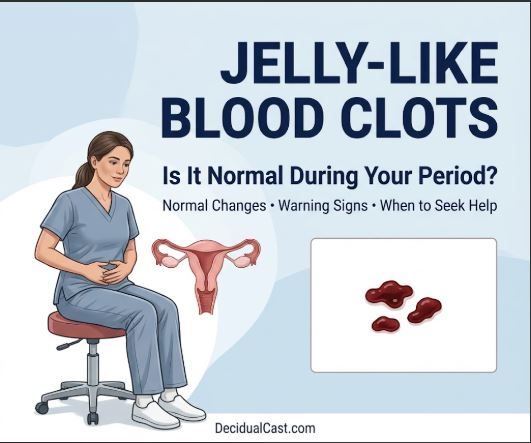
When blood pools in the uterus or vagina before being expelled, the body’s anticoagulants can be overwhelmed, allowing the blood to clot. Small clots (smaller than a quarter) on heavy-flow days are typically normal.
How long normal shedding lasts
A typical period lasts between 2 and 7 days, with the heaviest shedding usually occurring in the first 1–3 days.
What color and texture are considered normal
Menstrual blood can range from bright red to dark brown or even black, especially at the start and end of a period when flow is slower and blood has more time to oxidize. Texture can vary from watery to thick or slightly stringy with small clots — all within the range of normal.
Signs Your Womb Lining Shedding May Be Abnormal
While variation is normal, certain patterns suggest something beyond a typical period.
Passing large pieces of tissue
Passing tissue larger than a golf ball, or an intact, organ-shaped piece of tissue, is not typical menstrual shedding and may indicate a decidual cast, miscarriage, or retained tissue.
Heavy bleeding
Soaking through a pad or tampon every hour for several consecutive hours, or bleeding that lasts longer than 7 days, may indicate menorrhagia or abnormal uterine bleeding (AUB).
Severe pelvic pain
Cramping that doesn’t respond to over-the-counter pain relief, or pain that disrupts daily activities, can point to endometriosis, adenomyosis, fibroids, or a decidual cast.
Bleeding outside your period
Spotting or bleeding between periods, after sex, or after menopause warrants medical evaluation.
Bad-smelling discharge
Foul-smelling vaginal discharge alongside abnormal bleeding can be a sign of infection, such as pelvic inflammatory disease (PID).
Fever or signs of infection
Fever, chills, or feeling generally unwell in combination with abnormal bleeding should prompt urgent medical attention, as these can signal infection or retained tissue.
Causes of Womb Lining Shedding
Normal menstrual cycle
The most common cause of womb lining shedding is simply a regular period, occurring when no pregnancy implants in that cycle.
Hormonal changes
Fluctuations in estrogen and progesterone — whether from stress, significant weight changes, thyroid dysfunction, or natural cycle variation — can cause lining to shed earlier, later, or more heavily than usual.
Pregnancy-related changes
Early pregnancy loss
A miscarriage involves the shedding of pregnancy tissue along with the thickened endometrial (decidual) lining, sometimes mistaken for an unusually heavy period.
After childbirth
After delivery, the body sheds the lining that supported the pregnancy through a process called lochia — vaginal discharge that gradually transitions from red to pink to white/yellow over several weeks.
After abortion
Both medical and surgical abortion involve shedding of the uterine lining and pregnancy tissue, with bleeding patterns that vary depending on the method and gestational age.
Hormonal birth control
Birth control pills
Combined oral contraceptives create a thinner, more stable lining; stopping the pill or missing doses can trigger shedding or breakthrough bleeding.
Depo-Provera
This progestin-only injection often causes irregular spotting initially, and lining may shed unpredictably as the body adjusts or once the injection wears off.
Hormonal IUDs
Devices like Mirena or Kyleena thin the endometrial lining over time, often leading to lighter periods or no periods at all, with occasional irregular shedding during the adjustment period.
Hormonal imbalance
Conditions such as thyroid disorders, excess androgen production, or PCOS can disrupt the typical estrogen-progesterone balance, leading to irregular or heavier-than-normal shedding.
Perimenopause
As ovarian hormone production becomes erratic in the years before menopause, lining can build up unevenly and shed irregularly, leading to unpredictable, sometimes heavy, periods.
Menopause (postmenopausal bleeding)
Any bleeding or shedding after 12 consecutive months without a period is considered abnormal and should always be evaluated, since it can indicate atrophy, polyps, hyperplasia, or — less commonly — endometrial cancer.
Medical Conditions That Can Affect Womb Lining Shedding
Decidual Cast
A decidual cast is a rare event where the entire endometrial lining sheds in one intact, uterus-shaped piece rather than breaking down gradually. It’s most often linked to hormonal contraception (especially progestin-only methods) and can cause significant pain. (See our full guide on decidual casts for an in-depth look.)
Endometrial Hyperplasia
This is an abnormal thickening of the uterine lining, usually caused by excess estrogen without enough progesterone to balance it, and can lead to heavy or irregular shedding.
Endometriosis
A condition where endometrial-like tissue grows outside the uterus, causing painful inflammation, heavy periods, and sometimes infertility.
Adenomyosis
This occurs when endometrial tissue grows into the muscular wall of the uterus, often causing heavy, painful periods and an enlarged uterus.
Fibroids
Noncancerous growths in or around the uterus that can distort the uterine cavity and lead to heavier, longer, or more painful shedding.
PCOS
Polycystic ovary syndrome disrupts ovulation, which can cause infrequent periods followed by unpredictable, sometimes heavy shedding when the lining finally breaks down.
Abnormal Uterine Bleeding
AUB is an umbrella term for any bleeding pattern that falls outside normal frequency, duration, or volume — it’s a symptom rather than a single diagnosis, often rooted in one of the conditions on this list.
Endometrial Polyps
Small, usually benign growths on the inner uterine wall that can cause spotting, irregular bleeding, or heavier shedding.
Pelvic Inflammatory Disease
An infection of the reproductive organs, often from an untreated sexually transmitted infection, that can cause abnormal bleeding, pain, and foul-smelling discharge.
Rare causes
Endometrial cancer
Though uncommon, especially in younger women, abnormal bleeding — particularly after menopause — is the most frequent early symptom of endometrial cancer and should never be dismissed.
Blood clotting disorders
Conditions like von Willebrand disease can impair normal clotting, leading to unusually heavy menstrual shedding.
Decidual Cast vs Normal Womb Lining Shedding
This is one of the most confused — and under-explained — comparisons in women’s health content, since both involve the uterine lining leaving the body, but the experience and implications differ significantly.
Key differences
A decidual cast involves the entire endometrial lining shedding as one continuous, triangular or uterus-shaped piece of tissue, while normal shedding breaks down gradually into smaller fragments mixed with blood over several days.
Symptoms
Decidual casts are typically associated with sudden, severe, one-sided or cramping pelvic pain just before the tissue passes, followed by pain relief once it’s expelled. Normal shedding involves more gradual, manageable cramping throughout the period.
Appearance
A decidual cast looks like a smooth, fleshy, triangular piece of tissue resembling the shape of the uterine cavity. Normal shed tissue appears as small, irregular fragments or clots.
Pain level
Decidual cast pain is often described as sharp and significant, sometimes mistaken for an ectopic pregnancy or miscarriage, whereas typical period cramps are milder and more diffuse.
When each occurs
Decidual casts are strongly associated with hormonal birth control (particularly progestin-only methods), although they can occasionally occur in natural cycles. Normal shedding occurs every menstrual cycle regardless of contraception.
Comparison table
| Feature | Normal Shedding | Decidual Cast |
|---|---|---|
| Tissue form | Small fragments | One intact, uterus-shaped piece |
| Pain | Mild-moderate cramping | Sudden, often severe pain |
| Duration | 2–7 days | Pain resolves quickly after passage |
| Common trigger | Routine cycle | Hormonal birth control, hormonal shifts |
| Frequency | Every cycle | Rare, usually a one-time event |
Womb Lining Shedding During Pregnancy
Is it normal?
Bleeding during pregnancy is never something to ignore, even though some causes are harmless. Any bleeding should be reported to a healthcare provider.
Can you shed your uterine lining while pregnant?
A pregnant uterus does not undergo a typical menstrual shed, since hormone levels (especially progesterone) stay elevated to maintain the lining and support the pregnancy. Bleeding in pregnancy can come from implantation, a subchorionic hemorrhage, cervical changes, or, in serious cases, miscarriage.
Decidual tissue during pregnancy
The thickened lining that supports pregnancy is called the decidua. In early pregnancy loss, the decidua and pregnancy tissue shed together, which can resemble heavy menstrual bleeding with clots.
When bleeding may signal an emergency
Heavy bleeding, severe abdominal pain, dizziness, or passing tissue during a confirmed pregnancy requires immediate medical attention, as these can indicate miscarriage or ectopic pregnancy.
Womb Lining Shedding Without Blood
Possible explanations
It’s possible to notice tissue-like discharge with little or no visible blood, particularly with very light periods, hormonal contraception, or shedding that occurs slowly.
Hormonal causes
Hormonal IUDs and other progestin-based contraceptives can thin the lining so much that shedding produces minimal blood, sometimes just light tissue or mucus-like discharge.
After birth control
After stopping certain birth control methods, the body may shed a thin, built-up lining gradually, which can appear as light discharge rather than typical bleeding.
When to contact a doctor
If “shedding without blood” is accompanied by pain, odor, or a positive pregnancy test, it’s worth getting evaluated to rule out infection or retained tissue.
Womb Lining Shedding Not During Your Period
Breakthrough bleeding
Irregular shedding between periods, often called breakthrough bleeding, is common with hormonal birth control, especially in the first few months of use.
Ovulation
Some people experience light spotting around ovulation due to the brief estrogen dip that occurs mid-cycle.
Pregnancy-related bleeding
Implantation bleeding, early miscarriage, or an ectopic pregnancy can all cause shedding-like bleeding outside the expected period window.
Hormonal disorders
Conditions like PCOS or thyroid dysfunction can cause the lining to build up unevenly and shed at unpredictable times.
Medical evaluation
Any bleeding pattern that’s new, persistent, or paired with pain should be assessed with a pelvic exam, ultrasound, and sometimes bloodwork to rule out structural or hormonal causes.
Womb Lining Shedding After Stopping Birth Control
Birth control pills
After stopping the pill, many people experience a “withdrawal-like” bleed within a few days as hormone levels drop, followed by a return to their natural cycle within 1–3 months.
Hormonal IUD removal
Removing a hormonal IUD can trigger shedding of the thin lining that built up during use, and natural cycles typically resume within a few weeks.
Depo-Provera
Because Depo-Provera stays in the system longer, it may take several months to a year for periods and natural shedding patterns to return after the last injection.
When your cycle returns
Most people see a regular cycle resume within 3 months of stopping hormonal contraception, though this varies by method and individual hormone levels.
What Does Womb Lining Shedding Look Like?
Common colors
Normal shed tissue and blood can range from bright red, to brown, to nearly black, depending on how quickly it’s expelled.
Common textures
Texture ranges from smooth and watery to slightly stringy or jelly-like, especially when mixed with cervical mucus.
Blood clots vs tissue
Clots tend to be dark red, gelatinous, and shapeless, while shed endometrial tissue is often paler, pinkish-grey, and slightly more solid or fibrous.
Decidual cast appearance
A decidual cast is notably different — a single, smooth, triangular piece of tissue that maintains the shape of the uterine cavity.
Pictures and medical illustrations
Because tissue appearance varies so widely and can be distressing to view, it’s best to describe what you’re seeing to your doctor rather than rely on internet images for self-diagnosis; your provider can confirm what’s typical versus concerning.
Is Womb Lining Shedding Painful?
Normal cramping
Mild to moderate cramping, caused by uterine contractions helping expel the lining, is a normal part of menstruation.
When pain becomes severe
Pain that doesn’t improve with over-the-counter medication, worsens over time, or is accompanied by other symptoms like fever or heavy bleeding is not typical and should be evaluated.
Pain associated with decidual casts
The pain preceding a decidual cast’s passage is often described as sudden and intense, sometimes one-sided, and tends to ease significantly once the tissue is expelled.
Pain associated with endometriosis
Endometriosis-related pain is often described as deep, chronic pelvic pain that can extend beyond the menstrual period and worsen over time without treatment.
Diagnosis
Medical history
Your doctor will ask about cycle length, flow, pain levels, contraception use, and any recent changes to build a clinical picture.
Pelvic examination
A physical exam can help identify tenderness, masses, or structural abnormalities.
Ultrasound
Transvaginal ultrasound is the primary imaging tool used to assess endometrial thickness, fibroids, polyps, and ovarian cysts.
Pregnancy test
Ruling out pregnancy is a standard first step whenever abnormal bleeding or shedding occurs.
Blood tests
Bloodwork can check hormone levels, thyroid function, and clotting factors, and screen for anemia from heavy bleeding.
Biopsy
An endometrial biopsy may be recommended, particularly for postmenopausal bleeding or suspected hyperplasia, to rule out precancerous or cancerous changes.
Treatment
When no treatment is needed
If shedding falls within normal variation and isn’t accompanied by concerning symptoms, no treatment is typically necessary beyond routine monitoring.
Pain relief
Over-the-counter NSAIDs like ibuprofen are often effective for typical menstrual cramping and can also reduce blood flow.
Hormonal medications
Birth control pills, hormonal IUDs, or other hormonal therapies can help regulate shedding patterns and reduce heavy bleeding.
Treatment for underlying conditions
Conditions like fibroids, endometriosis, or PCOS each have specific treatment pathways, ranging from medication to minimally invasive procedures.
Surgery
In more severe or treatment-resistant cases, procedures such as fibroid removal, endometrial ablation, or — rarely — hysterectomy may be considered.
When Should You Seek Medical Care?
Heavy bleeding
Soaking through protection hourly for multiple hours, or bleeding for more than 7 days, warrants medical evaluation.
Large tissue passage
Passing tissue larger than a golf ball or an intact, uterus-shaped piece should be assessed promptly.
Positive pregnancy test
Any bleeding or tissue passage alongside a positive pregnancy test needs urgent evaluation to check for miscarriage or ectopic pregnancy.
High fever
A fever along with abnormal bleeding may indicate infection requiring prompt treatment.
Fainting
Dizziness, lightheadedness, or fainting with heavy bleeding can indicate significant blood loss and needs immediate attention.
Emergency symptoms
Seek emergency care for severe, unrelenting pain, signs of shock (rapid heartbeat, pale or clammy skin), or heavy bleeding that doesn’t slow down.
Can Womb Lining Shedding Be Prevented?
Hormonal management
For those with heavy or irregular shedding, hormonal birth control or other prescribed therapies can help regulate the cycle and stabilize the lining.
Managing underlying conditions
Treating root causes like PCOS, thyroid disorders, or fibroids can reduce abnormal shedding patterns over time.
Lifestyle factors
Maintaining a healthy weight, managing stress, and addressing nutritional deficiencies (like iron) can support more regular hormonal function, though they won’t eliminate shedding caused by structural conditions.
Frequently Asked Questions
Is womb lining shedding normal?
Yes — it’s the basis of every menstrual period and a normal, healthy part of the reproductive cycle.
Can the entire uterine lining come out at once?
In rare cases, yes — this is known as a decidual cast, and it’s most commonly linked to hormonal birth control.
Can you mistake a miscarriage for womb lining shedding?
Yes, especially in very early pregnancy, since both can involve heavy bleeding and tissue passage; a pregnancy test and medical evaluation can help distinguish between the two.
Does shedding mean you’re not pregnant?
Typically, yes — true menstrual shedding doesn’t usually occur during a viable pregnancy, but any bleeding during pregnancy should still be checked by a doctor.
Can stress affect womb lining shedding?
Yes, chronic stress can disrupt hormone levels and lead to irregular or delayed shedding.
Can birth control cause womb lining shedding?
Yes — both starting and stopping hormonal birth control, as well as certain methods like Depo-Provera, can trigger irregular shedding or, rarely, a decidual cast.
How much tissue is normal during a period?
Small fragments and occasional clots smaller than a quarter are generally normal; larger or more frequent tissue passage should be evaluated.
Should I save the tissue for my doctor?
If you pass an unusually large piece of tissue, it can be helpful to place it in a clean container and bring it to your appointment, as this can assist your doctor in determining whether it’s a decidual cast, miscarriage tissue, or something else.
Can womb lining shedding happen more than once?
Outside of a normal monthly cycle, repeated abnormal shedding episodes (like recurring decidual casts) are uncommon but possible, and warrant follow-up with a gynecologist.
Can teenagers experience abnormal uterine lining shedding?
Yes — irregular cycles are common in the first few years after a teen starts menstruating, but heavy bleeding, severe pain, or very prolonged periods should still be evaluated.
Key Takeaways
- Womb lining shedding is the normal biological basis of menstruation, driven by the rise and fall of estrogen and progesterone.
- Mild cramping, small clots, and color variation from bright red to brown are all within the range of normal.
- Passing large tissue, soaking through protection hourly, severe pain, or bleeding outside your period are signs to seek medical evaluation.
- A decidual cast — the rare shedding of the entire lining as one piece — is distinct from typical menstruation and is often linked to hormonal birth control.
- Conditions like endometriosis, adenomyosis, fibroids, PCOS, and endometrial hyperplasia can all affect how the lining sheds.
- Any bleeding after menopause should always be checked by a doctor.
- When in doubt about what’s normal for your body, a gynecologist can help confirm whether your shedding pattern needs further investigation.