What Does Passing a Decidual Cast Feel Like? Real Symptoms & Pain Level
Short Summary!
Ever heard of a decidual cast—when your uterus lining comes out in one piece instead of during a regular period? It’s rare, but if it happens, you’ll notice.
Pain often hits like a wave: sudden, sharp cramps that feel much stronger than your usual menstrual cramps. One woman described it as “the worst pain I have ever been in… I nearly puked.”
Before the cast appears you might feel intense pressure in your lower abdomen or pelvis—like you’re in active labour for a few minutes. Then the tissue passes (sometimes intact, sometimes in pieces). One person noted that “two huge lumps passed at once… then all the pain was gone.”
After it passes, the relief can be dramatic. The heavy cramps fade, the bleeding slows, and many feel normal again within hours or a day. But if pain and bleeding persist, or you’re pregnant or unsure—see your doctor.
Home tips:
- Use a heating pad and keep hydrated
- Take an over-the-counter pain reliever (if you can)
- Rest and avoid heavy activity
It’s important to remember: a decidual cast isn’t usually harmful long-term, but it is a sign your body experienced something intense. Your next period may feel “normal” again—but talking to your gynecologist helps rule out other causes.
Read the full article on DecidualCast.com to learn more about symptoms, recovery, and when to seek medical help.
Understanding the Physical Process
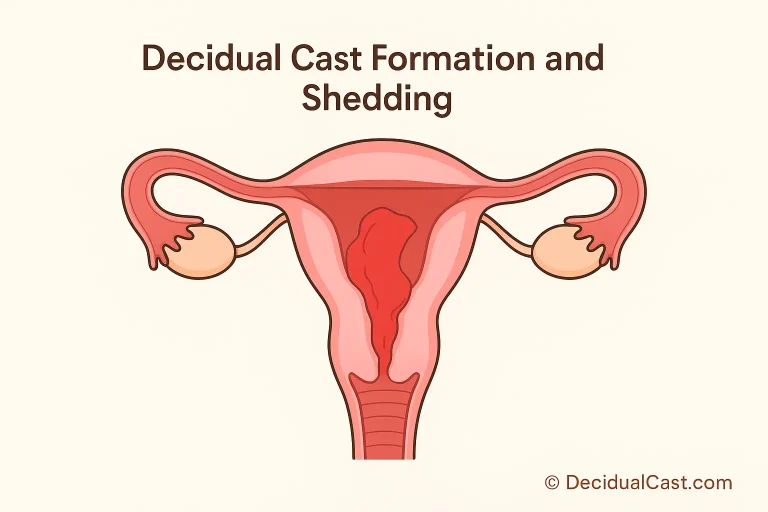
A decidual cast occurs when the entire functional lining of the uterus (the decidua or endometrium) sloughs off and is expelled as one whole piece that often retains the shape of the uterine cavity. This is also called membranous dysmenorrhea in clinical literature. It’s uncommon, but well-documented in case reports and medical reviews.
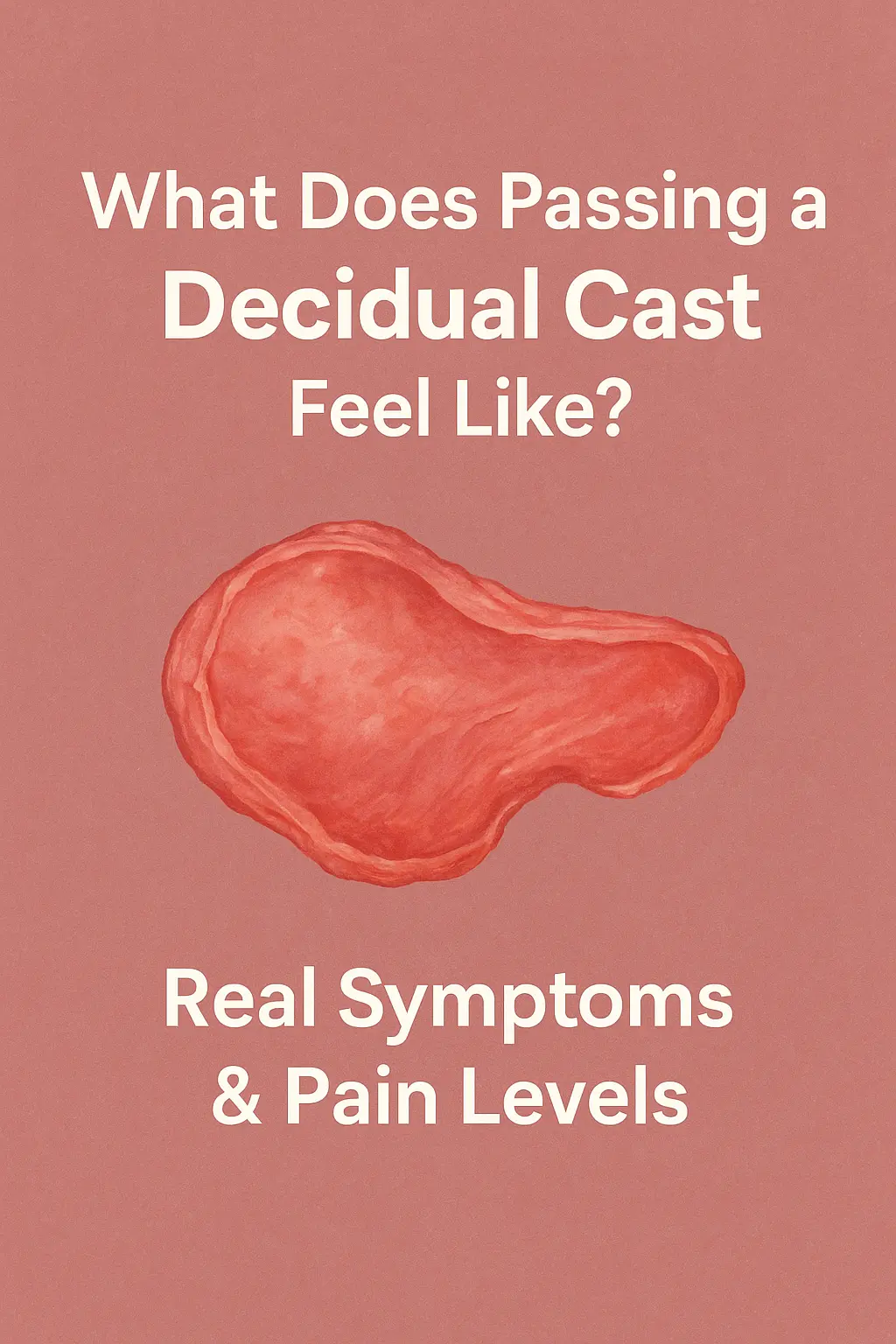
Physically, passing a decidual cast is different from a normal period. Instead of small amounts of blood and tissue over several days, the uterus expels a large, intact sheet of tissue (sometimes several centimeters across) that can appear like a white/red “membrane” mixed with blood. The cast forms within the uterine cavity and is pushed through the cervix during intense contractions.
How Painful a Decidual Cast Feel?
Reports from both clinical sources and patient accounts describe severe cramping and intense abdominal pain while a decidual cast is being expelled. Many clinicians say the pain may be more intense than typical menstrual cramps because the uterus is contracting strongly to expel a large, intact piece of tissue through an often undilated cervix. Case reports and reputable health centers note that pain can be comparable to strong labor-type contractions for some people.
Important points about pain intensity:
- Pain levels vary widely: some people report extreme, short-lived pain; others describe heavy cramping for hours or a couple of days.
- Once the cast is passed, many people experience rapid relief of the most severe pain, though some cramping or spotting can continue for a short period.
Related Reading: What Is a Decidual Cast and Why It Happens →
Common Sensations Reported
Below are common, consistent sensations described in medical literature and by patients who have passed a decidual cast.
Sharp Cramping
Many people report sharp, wave-like cramps that come in strong pulses as the uterus contracts to push the cast out. These contractions can feel much stronger than usual period cramps and sometimes include lower-back pain, groin pressure, or pain radiating down the legs.
Pressure Before Passing Tissue
A common prelude is a build-up of pressure or a heavy, “bearing down” feeling in the pelvis — similar to active labor sensations in intensity but usually shorter in duration. This pressure often precedes the moment the tissue starts to move through the cervix. Patients sometimes describe needing to use the bathroom, pass stool, or feel an urge to push just before the cast appears.
What Patient-Experience Say
“I started to worry a little bit… the actual worst pain I have ever been in in my life… I nearly puked it hurts so bad… then I saw this huge thing laying at the bottom of the tub… and I thought ‘my uterus fell out’.”
— MenopauseMatters forum user
“It was like a stabbing, ripping type of cramp centre pelvic and lower abs area… I also saw a piece of tissue about the size and shape of a uterus.”
— Endometriosis-UK / HealthUnlocked forum user
“This happened a few years ago—two huge lumps passed at once. Very painful, and the pain’s been likened to having a miscarriage but as soon as it left my body it was like peace had descended… no more bleeding or pain, life returned to normal.”
— MenopauseMatters forum user
Does the Cast Come Out All at Once or in Pieces?
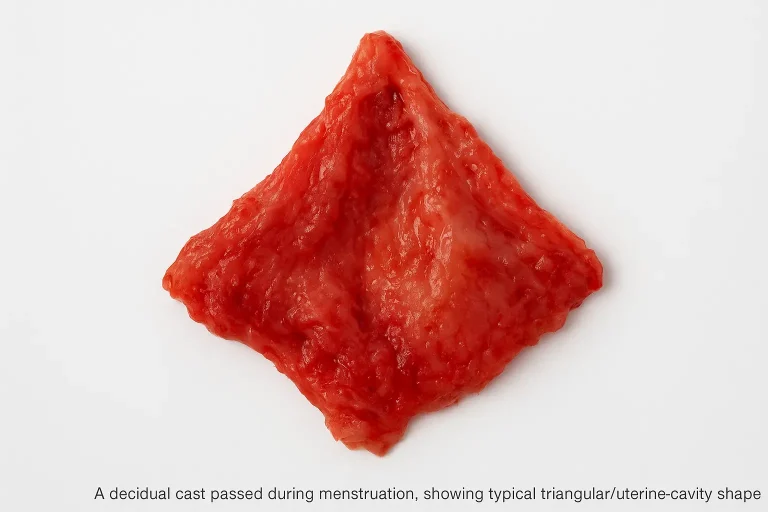
A true decidual cast typically is expelled as a single piece that mirrors the uterine cavity — hence the name “cast.” Clinical descriptions and case reports emphasize that the cast often remains intact and shaped like the uterine cavity when passed. However, variations exist: sometimes the cast may fragment during passage and appear in pieces.
Practical takeaway:
- If you see an intact, rubbery membrane-like piece of tissue, that is classic for a decidual cast.
- If the tissue is fragmented into clots or pieces, it may still represent partial casting or other types of menstrual tissue — a clinician can help distinguish them.
Recovery After Passing a Decidual Cast
Most people experience significant symptom relief immediately after the cast is passed, because the uterine contractions stop once the obstruction (the cast) is expelled. Cramping typically reduces substantially, and bleeding tapers to normal menstrual levels within hours to a couple of days.
However:
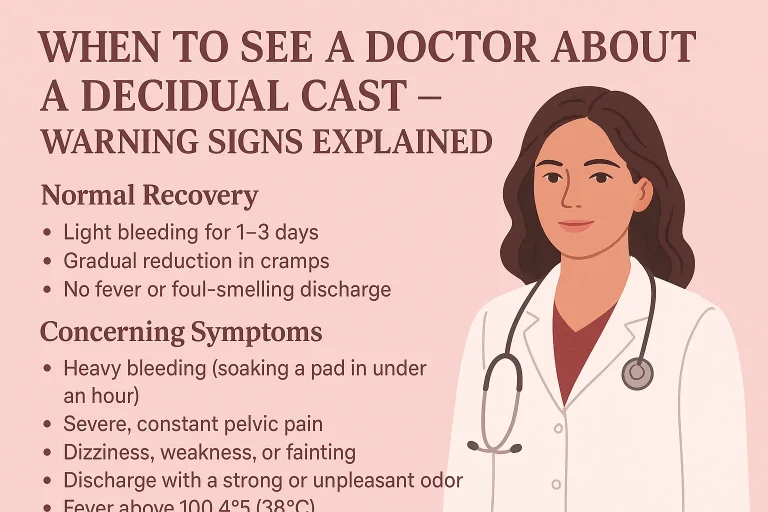
- If pain or heavy bleeding continues, or if you develop fever, foul-smelling discharge, or dizziness, you should seek medical attention — these symptoms can suggest infection or retained tissue.
- Doctors sometimes perform ultrasound or pregnancy testing to rule out other causes (e.g., miscarriage, ectopic pregnancy) when a patient presents after expelling tissue. This is especially important if pregnancy was possible or unknown.
Home Care & Pain Relief Tips
If you experience intense cramps or pass a decidual cast at home, these supportive measures commonly help with comfort and recovery:
- Rest and hydrate. Heavy bleeding and cramping can dehydrate you — drink fluids and rest.
- Heat therapy. A warm pad on the lower abdomen often relieves cramping.
- Over-the-counter pain relief. NSAIDs (ibuprofen or naproxen) reduce prostaglandins and can significantly lower cramp intensity — follow dosing guidance on the package or your clinician’s advice.
- Track the tissue and symptoms. If safe for you, take a photo of the tissue (for your clinician) and note timing, bleeding amount, and pain level. This helps doctors diagnose and counsel accurately.
- When to get urgent help: heavy bleeding soaking a pad every hour, prolonged severe pain not relieved by analgesics, fever, fainting, or signs of infection — go to ER or contact your OBGYN.
FAQs
Is the pain worse than a period?
Often, yes — many people report that the cramping and contractions associated with a decidual cast can be more intense than regular period cramps, because the uterus is contracting strongly to expel a large intact sheet of tissue. However, pain experience varies. Some people describe it as comparable to severe dysmenorrhea or the intensity of strong labor-type contractions.
Does it come out all at once or in pieces?
Classically, a decidual cast is passed as one intact piece that holds the shape of the uterus, but sometimes it can fragment and appear in pieces during passage. Either presentation can occur, and a clinician can examine the tissue if needed to confirm.
Should I take a pregnancy test after passing tissue?
If you could have been pregnant (missed period, unprotected sex, or pregnancy symptoms), take a pregnancy test and consult your clinician. A negative pregnancy test with the passage of a large intact uterine membrane makes a decidual cast more likely; a positive test may prompt evaluation for miscarriage or ectopic pregnancy. Medical assessment (ultrasound/hCG) is important when pregnancy is possible.
Can a decidual cast happen after starting or stopping hormonal birth control?
Yes — case reports and clinical reviews link decidual casts with sudden hormonal shifts, particularly around starting or stopping progesterone/progestin-containing therapies. Discuss any recent birth control changes with your clinician.