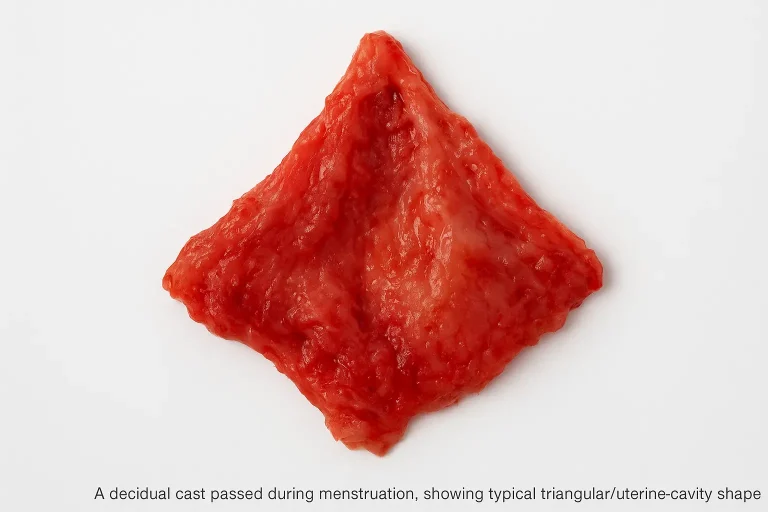
What Causes a Decidual Cast? Hormones, Birth Control & More
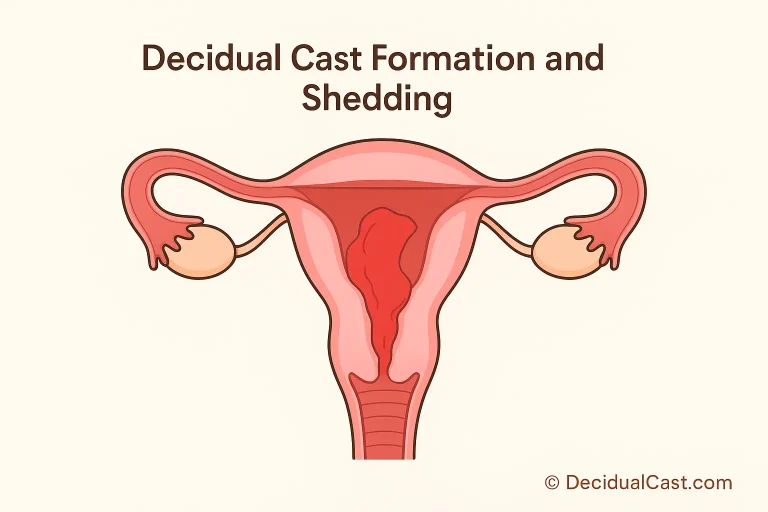
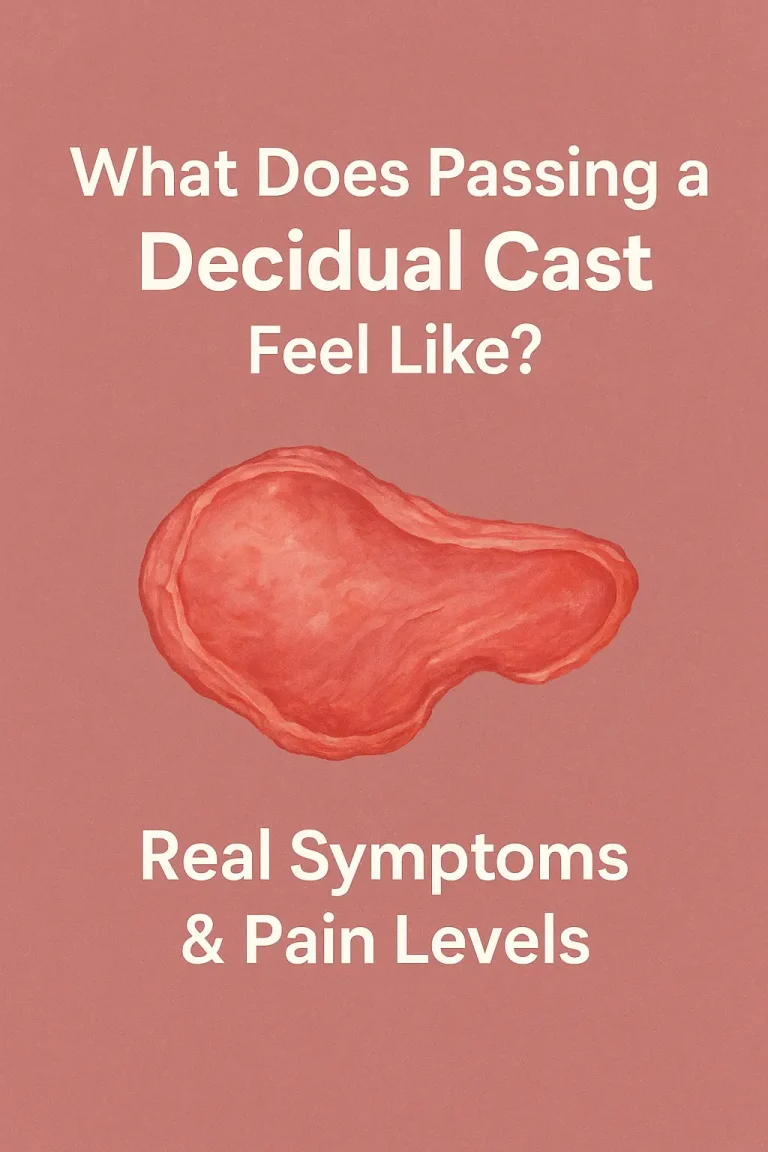
A decidual cast forms when the uterine lining (endometrium) sheds all at once instead of gradually during a normal period. While it’s rare, the experience can be painful and confusing. Understanding what causes a decidual cast helps you make sense of why it happens — and how to prevent it from happening again.
Hormonal Causes
Hormones control nearly every phase of your menstrual cycle — from the buildup of the uterine lining to its shedding. When these hormone levels fluctuate too quickly or become unbalanced, the uterus may respond in unexpected ways.
The Role of Progesterone and Estrogen
The hormone progesterone plays a major role in thickening and stabilizing the uterine lining. Normally, when progesterone drops before a period, the lining breaks down gradually. However, if progesterone levels drop suddenly — such as after stopping hormonal birth control, switching contraceptive methods, or ending early pregnancy — the entire lining can detach in one solid piece, forming a decidual cast.
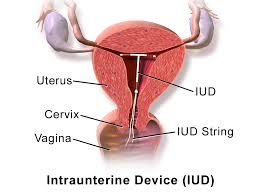
Studies and medical reports link decidual casts most often to progestin-only contraceptives (like Depo-Provera or certain hormonal IUDs). These methods cause the lining to become highly “decidualized,” meaning it thickens in a way similar to early pregnancy. When hormone support is withdrawn, the lining can separate all at once.
In short: Sudden hormonal withdrawal — especially a drop in progesterone — is the leading cause of decidual cast formation.
Birth Control and Decidual Cast Connection
Many women report passing a decidual cast shortly after starting, switching, or stopping birth control pills or injections. This is because birth control directly affects hormone levels that regulate the uterus. Methods that use progestins (synthetic progesterone) can sometimes overstimulate the endometrium, then trigger abrupt shedding once the hormones fluctuate.
If you recently changed contraception and experienced this, it’s important to consult a gynecologist. Passing a decidual cast doesn’t necessarily mean your birth control is unsafe, but your doctor might adjust the dosage or switch your method to prevent recurrence.
Other Possible Triggers
Stress and Lifestyle
High levels of stress can indirectly contribute to hormonal imbalances. Chronic stress raises cortisol, which may interfere with normal reproductive hormones like estrogen and progesterone. While stress alone doesn’t directly cause a decidual cast, it can worsen underlying imbalances that make one more likely.
Rapid Hormonal Fluctuations
Any event that alters hormone levels quickly — such as pregnancy, miscarriage, emergency contraception, or certain fertility medications — can trigger a decidual reaction. The body essentially gets “confused,” causing the uterus to shed its lining too completely and too fast.
How to Prevent It From Recurring
- Track menstrual cycles and hormonal changes, especially after starting or stopping birth control.
- Talk to your doctor before switching contraceptives.
- Manage stress through rest, gentle exercise, or relaxation techniques.
- Eat a balanced diet rich in zinc, vitamin B6, and magnesium to support hormonal balance.
- Seek medical advice if painful, large tissue clots occur again — your doctor may run hormone or ultrasound tests.
FAQs
Can stress cause a decidual cast?
Stress alone isn’t a direct cause, but it can disrupt hormone balance — especially progesterone and estrogen levels — which might increase your risk of irregular uterine shedding.
Do I need treatment after passing one?
Most women recover naturally once the tissue passes. However, if pain or bleeding continues, or if you suspect pregnancy, visit your healthcare provider for an ultrasound and evaluation. Your doctor may check hormone levels or review your contraceptive method.
Written by Muhammad Ali – Health Researcher & Medical Content Specialist
Reviewed for medical accuracy. © DecidualCast.com