What Does a Miscarriage Look Like? Early Signs & Symptoms

Experiencing unexpected bleeding or cramping during pregnancy can feel frightening, especially when you do not know what is normal and what may be a sign of pregnancy loss. Many people search for answers about what a miscarriage looks like because the physical symptoms can vary widely from one person to another. Some may notice light spotting and mild cramps, while others experience heavier bleeding, clots, tissue passage, or strong abdominal pain. The appearance often depends on how far along the pregnancy is and the type of miscarriage involved.
In early pregnancy, miscarriage may resemble a very heavy period with severe cramping and blood clots. Some women also notice gray, pink, or white tissue, watery discharge, or a sudden loss of pregnancy symptoms such as nausea or breast tenderness. While these symptoms can be alarming, not all bleeding during pregnancy means a miscarriage. This guide explains the common signs, bleeding patterns, tissue appearance, treatment options, and when medical care is necessary in a clear and compassionate way.
What Does a Miscarriage Look Like?
A miscarriage can look different for every person and often changes depending on how early or late the pregnancy is. In very early pregnancy, it may resemble a heavier period, while later it may involve stronger bleeding and visible pregnancy tissue. Because symptoms vary widely, medical evaluation is often needed to confirm what is happening.
🩸 Early Bleeding
Light spotting or red/brown bleeding that becomes heavier than a normal period. It may start and stop or continue steadily.
🩹 Cramping
Period-like cramps or stronger abdominal pain as the uterus contracts. Pain may come in waves or feel continuous.
🧫 Blood Clots
Small to large clots may pass with bleeding. Some may appear darker or thicker than usual menstrual clots.
🌫️ Tissue Changes
Gray, pink, white, or jelly-like tissue may appear in some cases, especially in later early pregnancy loss.
💧 Fluid or Discharge
Clear or pink fluid, watery discharge, or sac-like material may be noticed during miscarriage.
📉 Loss of Symptoms
Pregnancy symptoms like nausea, fatigue, or breast tenderness may suddenly reduce or disappear.
Important: Some people only experience light spotting and mild cramps without seeing any tissue. Others may pass clots or pregnancy tissue over several hours. Because experiences vary, ultrasound and blood tests are often needed for confirmation.
What Is a Miscarriage?

A miscarriage is the natural loss of a pregnancy before 20 weeks, most commonly during the first trimester. In many cases, pregnancy loss happens because the embryo does not develop normally, often due to chromosomal problems that are outside anyone’s control. Miscarriages are more common than many people realize, and they can happen even before someone knows they are pregnant.
Although the experience is different for everyone, miscarriage often involves bleeding, cramping, and the passing of tissue from the uterus. Some miscarriages happen quickly over a few hours, while others develop slowly over several days or weeks. Understanding what happens physically and emotionally can help people feel more prepared and less alone during a difficult experience.
Early vs Late Miscarriage
An early miscarriage happens during the first trimester, usually before 12 weeks of pregnancy. This type is the most common and often involves bleeding similar to a heavy menstrual period along with cramps and blood clots. Because the pregnancy is still very small in the early weeks, visible tissue may be minimal or difficult to recognize.
A late miscarriage occurs after the first trimester and may involve more noticeable tissue, stronger contractions, and heavier bleeding. As pregnancy progresses, symptoms can become more physically intense because the fetus and pregnancy tissue are larger. Medical care is especially important in later pregnancy loss to monitor bleeding, pain, and possible complications.
How Common Is Miscarriage?
Miscarriage is a common pregnancy complication, especially in the early weeks. Many losses occur before a person even realizes they are pregnant. Doctors estimate that a significant number of known pregnancies end in miscarriage, particularly during the first trimester when fetal development is most vulnerable.
The risk can increase with certain factors such as advanced maternal age, uncontrolled health conditions, smoking, or previous pregnancy complications. However, many miscarriages occur in otherwise healthy pregnancies and are not caused by exercise, stress, or normal daily activities. Experiencing one miscarriage does not necessarily mean future pregnancies will also end in loss.
What Usually Happens During a Miscarriage?
During a miscarriage, the uterus begins to empty its contents, which can lead to bleeding, cramps, and the passing of blood clots or tissue. Some people experience symptoms gradually, beginning with light spotting that later becomes heavier. Others may have sudden bleeding and severe cramping within a short period of time.
The physical process can last anywhere from several hours to a few weeks depending on the stage of pregnancy and whether all pregnancy tissue passes naturally. Afterward, bleeding often becomes lighter and changes from bright red to brown before stopping completely. Emotional recovery may take much longer, and many people continue to experience grief or anxiety after the physical symptoms improve.
What Does Early Miscarriage Look Like at 5–6 Weeks?
At 5–6 weeks of pregnancy, miscarriage often starts subtly and then becomes more noticeable over time. It may begin with light spotting that gradually turns into heavier bleeding. The blood can appear pink, red, or brown, and small clots may form as the uterus begins to empty. Many people describe it as a stronger and more painful version of a menstrual period.
At this stage, the pregnancy is still very early, so the embryo is usually too small to be seen. Some individuals may notice thicker clots or jelly-like tissue, while others only experience bleeding and cramping without any visible tissue. Because early symptoms can also resemble normal pregnancy changes, medical tests are often needed for confirmation.
🗓️ 1–2 Weeks
Often mistaken for a normal period with very light bleeding or spotting.
🗓️ 3–4 Weeks
Light spotting or small clots that may come and go intermittently.
🗓️ 5–6 Weeks
Heavier bleeding with stronger cramps and possible small tissue or clot passage.
🗓️ 7–8 Weeks
More noticeable bleeding with larger clots or sac-like tissue appearing in some cases.
🗓️ 9–10 Weeks
Stronger cramping and heavier bleeding, with pregnancy tissue becoming more recognizable.
Important: Symptoms vary widely from person to person. Some may experience heavy bleeding and cramps, while others only notice light spotting. Ultrasound and blood tests are the only reliable way to confirm what is happening.
What Does Miscarriage Bleeding Look Like?
Miscarriage bleeding can range from light spotting to very heavy bleeding with clots. Some people notice brown discharge first, which is older blood leaving the uterus slowly. Others suddenly experience bright red bleeding that soaks through pads and continues for several hours.
The bleeding pattern may also change throughout the miscarriage. It often starts lightly, becomes heavier during tissue passage, and gradually decreases afterward. Passing clots larger than a coin, combined with severe cramps, may indicate pregnancy tissue is being expelled. However, every pregnancy loss is different, and some miscarriages involve only moderate bleeding.
What Do Miscarriage Clots Look Like?
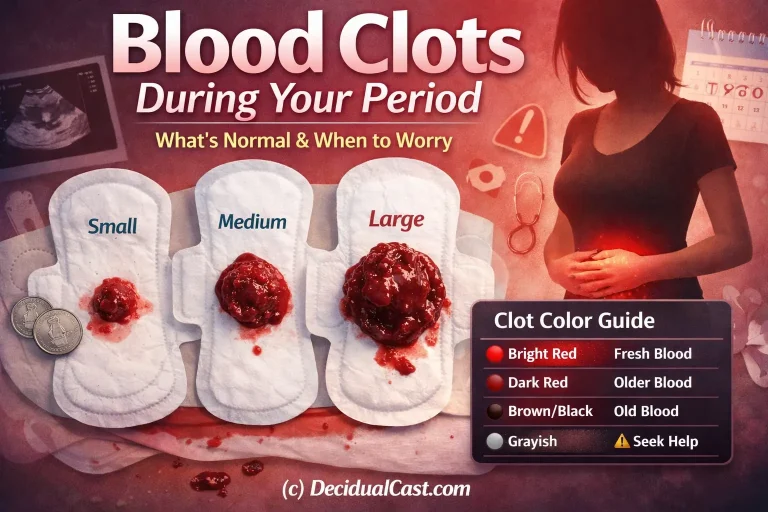
Miscarriage clots may appear dark red, deep brown, or jelly-like in texture. Some are small and soft, while others can be larger and thicker than typical menstrual clots. These clots often contain blood mixed with tissue from the pregnancy.
In early pregnancy, clots may not look very different from heavy period clots. Later miscarriages can involve larger tissue fragments or sac-like material. The amount and appearance vary greatly, which is why many women are unsure whether they experienced a miscarriage or an unusually heavy period.
What Does Miscarriage Tissue Look Like?
Pregnancy tissue can look different depending on gestational age. In very early miscarriages, it may appear as gray, white, or pink tissue mixed with blood clots. Some tissue looks stringy or fleshy, while other pieces may resemble thick mucus.
As the pregnancy develops further, the tissue may become more recognizable. Some women notice a sac-like structure filled with fluid, while others do not identify anything unusual. The appearance can be emotionally distressing, which is why healthcare providers encourage seeking support and medical guidance during the process.
Will You See the Embryo or Gestational Sac?
In very early miscarriages, the embryo is usually too small to be clearly visible. Most people only notice bleeding, tissue, or clots rather than a recognizable embryo. Around 7 to 10 weeks, however, some women may see a small sac-like structure or tiny fetal tissue during miscarriage.
The gestational sac may appear translucent, whitish, or pinkish and can resemble a small fluid-filled bubble. Seeing pregnancy tissue can be emotionally difficult, and reactions vary widely from person to person. Some people prefer medical management to avoid witnessing the process directly.
What Does a Miscarriage Look Like in Early Pregnancy?
In early pregnancy, miscarriage symptoms are often mistaken for a heavy menstrual cycle. Spotting may begin slowly before turning into stronger bleeding with cramps and clotting. The tissue is usually small and may blend into the blood, making it difficult to identify.
Some miscarriages occur silently with very few symptoms until an ultrasound reveals the pregnancy is no longer developing. Others involve noticeable cramping, back pain, and sudden changes in pregnancy symptoms. Because early pregnancy loss varies so much, a doctor may use ultrasound and blood tests to confirm what is happening.
What Does a Miscarriage Look Like in the Toilet?

Many women first notice miscarriage bleeding while using the bathroom. Blood may drip into the toilet or appear when wiping. During heavier bleeding, clots or tissue may pass into the water, sometimes looking darker or thicker than normal menstrual blood.
The appearance can be upsetting and unexpected, especially for someone who did not know what to expect physically. While some people only notice small clots, others may pass larger tissue pieces or fluid-filled sacs. If heavy bleeding or severe pain occurs, medical attention should be sought immediately.
Texture and Color Differences
Miscarriage bleeding may range in color from bright red to dark brown. Fresh bleeding is usually bright red, while older blood often appears brown or rust-colored. Tissue may look gray, pale pink, or white depending on the stage of pregnancy.
Texture also varies throughout the process. Some clots are thick and jelly-like, while pregnancy tissue may appear fleshy or stringy. Clear fluid or watery discharge can also occur if the gestational sac ruptures. These differences are common and often reflect how the body is passing pregnancy tissue naturally.
Miscarriage Discharge: What to Expect
Some women notice discharge before or during miscarriage, including brown spotting, watery fluid, or mucus-like tissue. Brown discharge usually indicates older blood leaving the uterus slowly and may occur before heavier bleeding begins.
Watery or pink discharge can sometimes happen if fluid from the pregnancy sac is released. Unpleasant odor, fever, or greenish discharge may signal infection and should be evaluated by a doctor quickly. Monitoring the amount, color, and consistency of discharge can help healthcare providers understand what stage of miscarriage may be occurring.
Common Signs and Symptoms of Miscarriage
Miscarriage symptoms can vary widely depending on how early the pregnancy is and how the body responds. Some people only notice light spotting and mild cramps, while others experience heavier bleeding, stronger pain, or tissue passage. In some cases, there may be no obvious symptoms until an ultrasound confirms that the pregnancy is no longer developing.
It is important to remember that not all bleeding during pregnancy means miscarriage. Light spotting can be normal in early pregnancy. However, bleeding combined with severe pain, large clots, dizziness, or fever should always be checked by a healthcare provider as soon as possible.
🩸 Vaginal Bleeding or Spotting
Bleeding may start as light spotting and progress to heavier flow with clots or tissue. It can appear brown, pink, or bright red like a heavy period. Persistent or heavy bleeding should always be evaluated.
🤍 Cramping and Abdominal Pain
Cramping may feel stronger than menstrual pain, caused by uterine contractions. Pain can be dull, sharp, or wave-like and often increases with heavier bleeding.
🔙 Lower Back Pain or Pressure
A persistent ache or pressure in the lower back or pelvis may occur. When combined with bleeding or cramps, it may indicate pregnancy loss.
🧫 Passing Tissue or Clots
Clots or tissue may appear jelly-like, gray, pink, or white. In early pregnancy, tissue may be difficult to distinguish from blood clots.
📉 Sudden Loss of Pregnancy Symptoms
Symptoms like nausea, breast tenderness, or fatigue may suddenly decrease if hormone levels drop. However, symptoms can also fluctuate normally in early pregnancy.
🌡️ Fever or Chills
Fever, chills, or foul-smelling discharge may indicate infection and require urgent medical attention, especially if combined with bleeding or pain.
⚡ Fatigue or Weakness
Severe tiredness, dizziness, or weakness may occur due to blood loss or hormonal changes. Sudden or extreme weakness should not be ignored.
Important: Many of these symptoms can also occur in normal early pregnancy. Only a healthcare provider can confirm whether a miscarriage is happening through ultrasound or blood tests.
Types of Miscarriage
Miscarriage is not a single medical condition but a term used for different types of pregnancy loss. Some miscarriages happen naturally without medical treatment, while others require medication or surgery to remove remaining tissue from the uterus. The symptoms and physical appearance can vary depending on the type involved.
Doctors classify miscarriages based on whether the pregnancy tissue has passed completely, whether the pregnancy stopped developing, or whether infection is present. Understanding these categories can help explain what symptoms to expect and which treatment options may be necessary.
1. Threatened Miscarriage
A threatened miscarriage happens when bleeding occurs during pregnancy, but the cervix remains closed and the pregnancy may still continue normally. Women often notice spotting, mild cramps, or brown discharge without passing tissue.
Some threatened miscarriages resolve without complications, while others progress into pregnancy loss. Ultrasound scans and blood tests are usually needed to monitor the pregnancy and check fetal development.
2. Complete Miscarriage
A complete miscarriage occurs when all pregnancy tissue has passed out of the uterus. Heavy bleeding and cramping usually decrease afterward, and ultrasound examination confirms that the uterus is empty.
Many women experience relief from pain once the miscarriage is complete, although light bleeding may continue for several days. Medical treatment is often unnecessary if no tissue remains inside the uterus.
3. Incomplete Miscarriage
An incomplete miscarriage means some pregnancy tissue has passed, but part of it remains inside the uterus. Bleeding may continue for a longer time, and cramps can remain severe because the uterus is still trying to empty itself.
Women with incomplete miscarriage sometimes need medication or a surgical procedure to remove the remaining tissue. Without treatment, there may be an increased risk of infection or prolonged bleeding.
4. Missed Miscarriage
A missed miscarriage happens when the pregnancy stops developing but no immediate bleeding or tissue passage occurs. Many women discover this type during a routine ultrasound when no heartbeat is found.
Symptoms may include a gradual loss of pregnancy signs such as nausea or breast tenderness. Because the body has not yet expelled the pregnancy tissue, treatment or careful monitoring may be recommended.
5. Septic Miscarriage
A septic miscarriage occurs when an infection develops in the uterus during or after pregnancy loss. This is a medical emergency that can become life-threatening if not treated quickly.
Symptoms often include fever, chills, foul-smelling discharge, severe abdominal pain, and heavy bleeding. Treatment usually involves antibiotics and removal of infected tissue from the uterus.
6. Anembryonic Pregnancy (Blighted Ovum)
An anembryonic pregnancy, also called a blighted ovum, happens when a fertilized egg implants in the uterus but the embryo never develops properly. A gestational sac may still form even though there is no developing fetus inside.
Women may continue experiencing early pregnancy symptoms for some time because hormone levels can remain elevated. Eventually, bleeding and cramping often begin as the body recognizes the pregnancy is not developing.
7. Embryonic or Fetal Demise
Embryonic or fetal demise refers to a pregnancy in which development stops after an embryo or fetus has already formed. This condition is usually confirmed through ultrasound when no heartbeat is detected.
Some women experience spotting, cramps, or loss of pregnancy symptoms, while others have no warning signs at all. Depending on the stage of pregnancy, treatment options may include waiting for natural passage, medication, or a medical procedure.
Miscarriage vs Period — How to Tell the Difference
It can sometimes be difficult to tell the difference between a miscarriage and a heavy menstrual period, especially in very early pregnancy. Both can involve bleeding, cramps, and blood clots. However, miscarriage symptoms are often more intense and may include tissue passage or sudden changes in pregnancy symptoms.
Pregnancy loss may also involve stronger cramping, prolonged bleeding, or gray and pink tissue that does not usually appear during a normal period. If there is uncertainty, a pregnancy test, ultrasound, or blood work can help confirm whether a miscarriage has occurred.
| Symptom | Miscarriage | Period |
|---|---|---|
| Bleeding | Often heavier and prolonged | Regular menstrual flow |
| Clots | Larger clots possible | Usually smaller clots |
| Tissue | Gray or pink tissue possible | No pregnancy tissue |
| Cramping | Stronger and persistent | Mild to moderate |
| Pregnancy symptoms | May suddenly disappear | Not present |
Bleeding Differences
Miscarriage bleeding is often heavier than a regular period and may continue for longer. The flow can change quickly from spotting to heavy bleeding within hours. Some women soak through pads rapidly during the most intense stage.
Periods usually follow a predictable pattern and gradually become lighter over several days. Miscarriage bleeding is more unpredictable and may contain larger clots or tissue fragments.
Clots vs Pregnancy Tissue
Menstrual clots are usually dark red and soft, while miscarriage tissue may appear gray, pale pink, or fleshy. Pregnancy tissue can sometimes look stringy or thicker than ordinary clots.
In very early pregnancy loss, however, distinguishing between the two may be difficult without medical testing. This is why doctors may use ultrasound or hCG blood tests for confirmation.
Pain and Cramping Differences
Cramping from miscarriage is often more severe than normal menstrual cramps. The pain may feel intense, rhythmic, or similar to contractions as the uterus pushes out tissue.
Menstrual cramps are generally milder and improve with rest or pain relief medication. Miscarriage pain may continue for several hours and become stronger as bleeding increases.
When It Might Be More Than a Heavy Period
Bleeding that occurs after a positive pregnancy test should always be taken seriously. Passing tissue, severe cramps, dizziness, or heavy bleeding may suggest miscarriage rather than a normal menstrual cycle.
If symptoms worsen or bleeding becomes excessive, immediate medical attention is important. Doctors can evaluate whether the pregnancy is healthy or if another condition, such as ectopic pregnancy, may be involved.
What Causes a Miscarriage?
Most miscarriages happen because the pregnancy is not developing normally, especially in the first trimester. In many cases, there is nothing the pregnant person did to cause the loss. Everyday activities such as walking, working, light exercise, or sexual intercourse are not considered causes of miscarriage in a healthy pregnancy.
Causes can be linked to genetic, hormonal, medical, or environmental factors. Sometimes, no clear reason is found after a single miscarriage. However, repeated pregnancy loss may lead doctors to investigate underlying health conditions more closely.
🧬 Chromosomal Abnormalities
The most common cause of early miscarriage. It happens when the embryo has an abnormal number of chromosomes, preventing normal development, often in the first trimester.
Usually random • Not preventable⚕️ Hormonal or Health Conditions
Conditions like diabetes, thyroid disorders, autoimmune diseases, infections, or uterine abnormalities can affect pregnancy development and increase risk.
Medical factor related📊 Maternal Age & Risk Factors
Risk increases with age, especially after 35, mainly due to higher chances of chromosomal issues. Previous miscarriages, obesity, and smoking may also increase risk.
Age-related risk increase🌿 Lifestyle & Environmental Factors
Smoking, alcohol, drugs, toxic chemical exposure, poor nutrition, and lack of prenatal care may increase miscarriage risk, although many cases still occur without any risk factors.
Modifiable factors💬 Can Stress, Exercise or Sex Cause Miscarriage?
Normal daily stress, physical activity, exercise, working, and sexual intercourse do not cause miscarriage in most healthy pregnancies. These activities are generally safe unless a doctor advises otherwise.
Stress alone is not considered a direct cause. Most miscarriages happen due to internal developmental problems that cannot be controlled or prevented.
Medical consensus: These are not causes of miscarriage in normal pregnancies
How Is a Miscarriage Confirmed?
Although symptoms like bleeding and cramping may suggest miscarriage, doctors usually need medical tests to confirm whether the pregnancy is still developing. Some pregnancy complications can resemble miscarriage, including ectopic pregnancy or implantation bleeding, so proper evaluation is important.
Diagnosis often involves ultrasound imaging, blood tests, and physical examination. These tests help determine whether the pregnancy is progressing normally, whether tissue remains in the uterus, and whether emergency treatment is necessary.
Ultrasound Findings
Ultrasound is one of the most important tools used to diagnose miscarriage. It allows doctors to examine the uterus, measure fetal development, and check for a heartbeat. In early pregnancy, a transvaginal ultrasound may provide clearer images than an abdominal scan.
Certain ultrasound findings may indicate pregnancy loss, such as an empty gestational sac, absence of fetal heartbeat, or lack of expected growth over time. Sometimes repeat ultrasounds are needed if the pregnancy is too early to confirm viability during the first scan.
Blood Tests (hCG Levels)
Doctors may also measure human chorionic gonadotropin (hCG) levels through blood tests. In a healthy early pregnancy, hCG levels usually rise steadily over time. Falling or slowly increasing levels may suggest miscarriage or abnormal pregnancy development.
Blood testing can also help monitor whether pregnancy tissue has completely passed after miscarriage treatment. In some cases, repeated tests over several days are necessary to understand how the pregnancy is progressing.
Physical Examination
A physical examination helps doctors evaluate bleeding, cervical changes, and signs of infection. During the exam, healthcare providers may check whether the cervix is open and whether tissue is visible in the vaginal canal.
Doctors also assess symptoms such as abdominal tenderness, fever, or unusual discharge. These findings can help determine whether the miscarriage is complete, incomplete, or associated with complications requiring urgent treatment.
What Steps Confirm a Miscarriage?
Confirmation of miscarriage usually involves combining symptoms, ultrasound results, and laboratory testing. Doctors often review bleeding patterns, pain levels, and pregnancy symptoms alongside imaging and blood work.
In some situations, diagnosis may take several days because very early pregnancies can be difficult to evaluate immediately. Repeat ultrasounds or additional hCG testing may be necessary before doctors can confirm whether the pregnancy is continuing normally or has ended.
Treatment Options After a Miscarriage
Treatment after miscarriage depends on how much pregnancy tissue remains in the uterus, the severity of symptoms, and the patient’s personal preferences. Some miscarriages resolve naturally without medical intervention, while others require medication or procedures to prevent infection and heavy bleeding.
Doctors usually discuss several options based on the stage of pregnancy and the patient’s health condition. Emotional support and follow-up care are also important parts of recovery after pregnancy loss.
Expectant Management
Expectant management means allowing the miscarriage to happen naturally without medical treatment. The body gradually passes the pregnancy tissue over time through bleeding and cramping.
Some women prefer this option because it avoids medication or surgery. However, the process can take days or even weeks, and follow-up appointments are usually needed to confirm that the uterus has emptied completely.
Medical Management
Medical management uses medication to help the uterus expel pregnancy tissue more quickly. The medicine causes bleeding and cramping similar to a natural miscarriage but allows the process to happen within a more predictable timeframe.
This option may be recommended if tissue remains inside the uterus or if someone prefers to avoid surgery. Doctors usually explain how much bleeding is expected and when emergency care may be needed.
Suction Aspiration or D&C
Suction aspiration, sometimes called dilation and curettage (D&C), is a medical procedure used to remove pregnancy tissue from the uterus. It may be performed if heavy bleeding continues, infection develops, or tissue does not pass naturally.
The procedure is usually brief and can often be done with anesthesia or pain relief. Many women choose this option because it shortens the physical process and reduces prolonged bleeding.
Managing Blood Loss and Pain
Bleeding and cramping are common during miscarriage recovery. Doctors may recommend rest, heating pads, hydration, and pain medication to manage discomfort during the healing process.
Heavy bleeding should gradually decrease over time. If bleeding suddenly becomes severe, develops a foul odor, or is accompanied by fever, medical care should be sought immediately because infection may be present.
Recovery Timeline
Physical recovery after miscarriage varies from person to person. Some women stop bleeding within a few days, while others continue spotting for several weeks. Cramping often improves once most pregnancy tissue has passed.
Emotional healing may take much longer than physical recovery. Feelings of sadness, anxiety, or grief can continue for weeks or months, and support from healthcare professionals, family, or counselors may help during this period.
Emotional Impact and Recovery
Miscarriage can affect emotional health as deeply as physical health. Many people experience grief, sadness, anger, confusion, or guilt after pregnancy loss. These emotions are normal and can occur regardless of how early the miscarriage happened.
Healing is different for everyone. Some people recover emotionally within weeks, while others need much longer to process the experience. Compassionate medical care and emotional support can play an important role in recovery.
Coping With Pregnancy Loss
Coping with miscarriage often involves acknowledging the emotional impact instead of ignoring it. Talking with trusted family members, friends, or healthcare providers may help reduce feelings of isolation.
Some people find comfort in support groups, journaling, or counseling. Others may prefer private grieving and time away from stressful situations. There is no “correct” way to process pregnancy loss emotionally.
Emotional and Physical Recovery
Physical symptoms may improve within days or weeks, but emotional recovery often takes longer. Hormonal changes after miscarriage can also affect mood, energy levels, and sleep patterns.
It is common to feel emotionally overwhelmed even after the physical pain decreases. Allowing time for rest, self-care, and emotional support can help make recovery easier.
Supporting Parents After Pregnancy Loss
Support from partners, friends, and family members can make a significant difference after miscarriage. Listening without judgment and offering emotional reassurance may help grieving parents feel less alone.
Simple gestures such as checking in regularly, helping with daily tasks, or acknowledging the loss respectfully can provide comfort. Emotional reactions vary widely, and each person may grieve differently.
When to Seek Emotional Support
Professional emotional support may be helpful if sadness, anxiety, or hopelessness becomes overwhelming. Persistent depression, panic attacks, or difficulty functioning in daily life should not be ignored.
Counselors, therapists, and pregnancy loss support groups can provide coping strategies and emotional guidance. Seeking help is a sign of strength and can support long-term healing after miscarriage.
When to Seek Emergency Medical Help
Some miscarriage symptoms require immediate medical attention because they may indicate severe bleeding, infection, or ectopic pregnancy. While mild cramping and bleeding are common during miscarriage, certain warning signs should never be ignored.
Seeking emergency care quickly can help prevent serious complications. Heavy bleeding, severe pain, fainting, or fever may signal that urgent treatment is needed.
Emergency Warning Signs:
- Soaking multiple pads within a short time
- Severe abdominal pain
- Fever or chills
- Fainting or dizziness
- Foul-smelling vaginal discharge
Heavy Bleeding
Heavy bleeding during miscarriage can sometimes become dangerous if too much blood is lost. Passing very large clots or soaking through sanitary pads rapidly may indicate a medical emergency.
Dizziness, weakness, or pale skin combined with heavy bleeding should be evaluated immediately. Doctors may need to stop the bleeding or remove remaining pregnancy tissue.
Severe Pain
Severe abdominal or pelvic pain that does not improve may indicate complications such as ectopic pregnancy or retained tissue. Pain that becomes sharp, one-sided, or unbearable should never be ignored.
While cramping is common during miscarriage, extreme pain is not considered normal and often requires urgent medical evaluation.
Fever or Infection Symptoms
Fever, chills, and foul-smelling discharge can be signs of infection inside the uterus. Infection after miscarriage can become serious quickly if treatment is delayed.
Doctors usually treat infection with antibiotics and may recommend additional procedures if tissue remains inside the uterus.
Signs of Septic Miscarriage
A septic miscarriage happens when pregnancy tissue becomes infected inside the uterus. Symptoms may include severe fever, abdominal pain, rapid heartbeat, weakness, and unpleasant vaginal discharge.
This condition is a medical emergency and requires immediate treatment. Without prompt care, infection can spread throughout the body and become life-threatening.
Can You Get Pregnant Again After a Miscarriage?
Many people are able to have healthy pregnancies after miscarriage. Experiencing one pregnancy loss does not usually reduce the chance of becoming pregnant again in the future.
Recovery time varies emotionally and physically, and deciding when to try again is a personal choice. Doctors may provide recommendations based on individual health needs and pregnancy history.
When Is It Safe to Try Again?
Ovulation can return within a few weeks after miscarriage, meaning pregnancy is possible again relatively quickly. Some couples choose to try again immediately, while others prefer to wait for emotional recovery.
Doctors may recommend waiting until bleeding stops and at least one normal menstrual cycle occurs before trying to conceive again, especially after later pregnancy loss or surgery.
Chances of Having Another Miscarriage
Having one miscarriage does not mean another loss will definitely happen. Many women who miscarry later go on to experience healthy pregnancies and deliveries.
The risk may increase slightly after multiple miscarriages, particularly if there are underlying medical or genetic conditions. Even so, many people with repeated losses still achieve successful pregnancies with proper care.
When to Consider Special Testing
Doctors may recommend additional testing after repeated miscarriages, especially after two or three consecutive losses. Testing may include hormone evaluations, genetic screening, blood clotting tests, or imaging of the uterus.
The goal is to identify any treatable medical conditions that could affect future pregnancies. Early diagnosis may improve the chances of a healthy pregnancy later on.
Key Takeaways
Miscarriage symptoms can include bleeding, cramps, clots, tissue passage, and loss of pregnancy symptoms.
Not all spotting during pregnancy means miscarriage.
Heavy bleeding, fever, severe pain, or dizziness require urgent medical attention.
Most miscarriages happen because of chromosomal abnormalities beyond anyone’s control.
Many people go on to have healthy pregnancies after miscarriage.
Emotional recovery is just as important as physical healing.
Medical support and emotional support can both help during recovery.
Conclusion
Experiencing a miscarriage can be both physically distressing and emotionally heavy, especially when symptoms appear suddenly and without warning. Bleeding, cramping, clots, and tissue passage may look different for each person and can change depending on how early or late the pregnancy is. Knowing what signs to look for and when to seek medical help can make the situation feel more manageable and less uncertain.
It is important to understand that miscarriage is relatively common and, in most cases, happens due to natural developmental factors that are beyond anyone’s control. Emotional reactions such as sadness, confusion, or grief are normal and valid. With proper medical guidance, emotional support, and time for recovery, many individuals are able to heal and go on to have healthy pregnancies in the future.
FAQs
Common signs include bleeding, cramping, passing tissue, and sudden loss of pregnancy symptoms. However, ultrasound scans and blood tests are often needed for confirmation.
An early miscarriage may resemble a heavy menstrual period with bleeding, cramps, and small clots. Some women also notice gray or pink tissue mixed with blood.
Miscarriage tissue may appear gray, white, pink, or fleshy. It can look stringy, jelly-like, or thicker than normal menstrual clots.
Not always. Some miscarriages involve only mild cramps and spotting, while others cause severe cramping and heavy bleeding.
Yes. Very early miscarriages are commonly mistaken for heavy menstrual periods because the symptoms can look similar.
Bleeding may last from a few days to several weeks depending on the stage of pregnancy and treatment method used.
No. Some women notice tissue or clots, while others only experience bleeding and cramps without visible tissue.
Normal daily stress is not considered a direct cause of miscarriage. Most pregnancy losses happen because of developmental problems beyond anyone’s control.
Seek immediate medical care if you experience severe bleeding, intense pain, fever, fainting, or foul-smelling discharge.